Language
You can read the magazine in one of the following languages

13-min read

 Bookmark now

 Copy Link
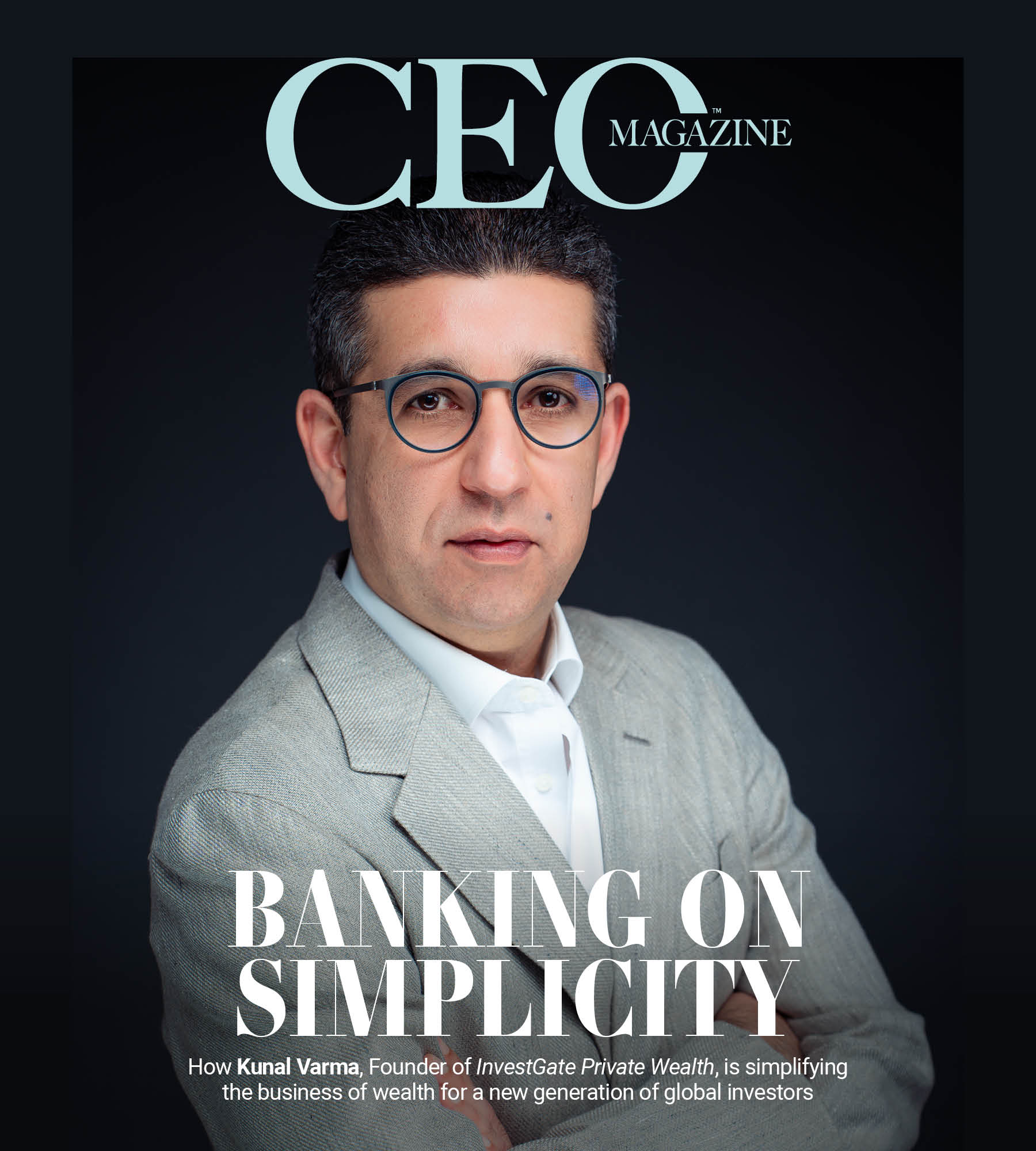
Kunal Varma has spent most of his career inside the kind of institutions that dominate global wealth management. He’s worked across markets, sat within layers of governance and watched the industry standardize itself around the same playbook – the same products, the same processes and the same promises.
And after more than two decades, he came to a blunt conclusion: For many clients, the model isn’t working.
“I started realizing over the past 25 years that the larger institutions are bound by layers of committees and a lot of structure, and that open architecture and the way to go to market are not very clear,” he tells The CEO Magazine.
It’s not that clients don’t have options – they have plenty. In the Middle East especially, they often have multiple banking relationships, multiple platforms and multiple relationship managers (RMs). And yet, they still feel underserved.
The issue, Varma argues, is that the industry has built scale but lost specificity. It’s optimized for high volume, high predictability and tidy segmentation. Yet the modern client – particularly the globally mobile entrepreneur, business owner or multi-jurisdictional family – is anything but tidy.
The result is a widening gap between what clients need and what most institutions are set up to deliver.
“I came to the conclusion that everyone seems to be unhappy,” he says. “My RM has left; they’re not incentivized well enough. The process is clunky; it doesn’t work well. There is a lack of technology being deployed. Everyone is selling the same product.”
That frustration became the spark for Varma to build something new: InvestGate Private Wealth – a boutique advisory firm designed to sit in the middle of a market opportunity he believes has been hiding in plain sight.


There are, Varma says, plenty of firms serving mass-market clients through retail channels. There are also global private banks and asset managers focused on ultra-high-net-worth clients, often with rigid thresholds and revenue expectations. Between those opposite ends sits a cohort of clients with significant wealth, complex needs and increasing global movement – but not always the scale that makes them a priority for large private banking platforms.
“We recognized this gap that needs to be tapped. One, not just to monetize that gap but to actually add value because sometimes we create so much complexity around how wealth allocation needs to happen and how it needs to be managed,” Varma explains.
InvestGate’s pitch is simple, yet ambitious: declutter complexity, build trust and operate like a wealth ‘concierge’ for clients managing assets, interests and family priorities across multiple countries, asset classes and generations.
“We are not one-size-fits-all. We don’t want to be,” he insists. “We are not everything for everybody. We have a niche set of clients we want to address. And we want to have a very niche proposition that we take to the market.”
Varma’s career has been shaped by emerging markets and global mobility. He began in financial consulting, moved through core banking in Dubai and spent years inside major institutions – including Standard Chartered – across multiple jurisdictions.
“I’ve been in banking and finance for the past 24 years across jurisdictions. I was in Dubai for the first six years of my career. Then I went to the United Kingdom. I spent three years there, and then I moved to Bahrain,” he shares.
His exposure gives a practical approach to wealth, informed by the lived realities of clients who move capital across markets with different tax regimes, exchange controls and legal structures – and by the operational limitations of institutions trying to serve them from a distance.
“The issue doesn’t only persist if I speak to clients in Dubai or in Bahrain or in Saudi, it also persists when I speak to clients in India or the United Kingdom – it’s the same issue,” he stresses.
In Varma’s mind, the industry’s shortcomings are less about capability and more about design. Big institutions can do almost everything – but not always in a way that feels personal and coherent. They also tend to sell what they have, not necessarily what the client actually needs.
“Product is commoditized,” he points out. “Everyone is selling the same product to similar profiles of customers. The differentiation is the relationship.”
InvestGate is built around that belief: that advice and relationships are not add-ons but the product itself. Varma isn’t pretending the firm will reinvent investing. The shift, he says, is in how advice is delivered, how complexity is handled and how much a client feels genuinely supported beyond the portfolio.


And crucially, the firm is structuring itself to operate within the regulatory architecture of the markets it wants to serve.
“We got licensed back in November by the Dubai Financial Services Authority,” Varma shares. “We are looking to get our license for another key market in the Middle East, which is the other center we intend to run.”
Licensing is part of Varma’s philosophy that a boutique firm can’t deliver trust and proximity while running a ‘suitcase banker’ model – flying in and out of markets, taking meetings and leaving clients to navigate everything else alone.
“We will not create a fly-in, fly-out model,” he confirms. “We want to be where the client is. We want to build a franchise that is closer to the client.”
The InvestGate framework is built around three gaps Varma believes are widening as wealth globalizes: the advice gap, the complexity gap and the governance gap. The first is the simplest to explain and arguably the most urgent.
“The wealth versus advice gap is what I call it,” Varma says. “And in our view, wealth is growing faster, yet advice penetration is not growing as fast.”
He frames it with big numbers, providing evidence that the industry’s advisory layer hasn’t expanded at the same rate as the assets it’s meant to guide.
“There is US$350 trillion in wealth assets under management globally,” he shares. “Out of that, 40 percent is professionally managed. Sixty percent lies across various asset classes in deposits and so on and so forth.”


His point is not that every dollar should be professionally managed. It’s that the portion that is professionally managed is growing, and the opportunity is especially significant in emerging markets – a space Varma knows well and where he sees demand rising.
The second gap is complexity – not so much in portfolio construction but in the life structure around the portfolio.
“The United Arab Emirates attracted close to 10,000 millionaires and billionaires over 2025,” Varma says. “People are leaving homes with complex structures, tax regimes, exchange-controlled regimes and coming and congregating into a certain hub.”
When clients move jurisdictions, the wealth doesn’t travel alone, he explains. It brings business interests, family structures, tax questions, asset ownership challenges and often a need for local access to property, lending and governance advice. This is where Varma believes most standardized wealth platforms struggle.
“You can’t just be sitting in a market and trying to sell commoditized products to these clients because their needs are completely different,” he insists.
The third gap is governance – the way families manage decision-making, legacy planning and generational transition, especially as the next generation brings different preferences, risk appetites and investment advice.
“First-generation wealth is maturing much faster than the structures that are available to them,” Varma shares.
To Varma, integrity and client-first behavior aren’t choices – they’re table stakes. Where InvestGate wants to differ, he says, is in how it operationalizes relevance.
“How do you truly become a wealth concierge?” he asks.
He defines ‘concierge’ not as white-glove luxury per se but as breadth and coordination – the ability to help clients with the practical things that shape their wealth decisions, not just the market exposure.
“How do you give them the feeling of decluttering complexity? How do you give them the feeling of cross-border structuring? How do you give them advice on alternate assets, which include art, property, et cetera?” he says.
“We are going to provide a service to the customers because sometimes we create so much complexity,” he says. “And our view was, we are going to declutter all of this.”
The concierge framing also shapes how Varma talks about differentiation. For clients with multiple relationships, the product menu is rarely the pain point. The pain point is fragmentation – platforms that don’t speak to each other, advice that doesn’t connect to real-world constraints and a lack of visibility across the total picture.
“Customers typically have two to three banking relationships in the Middle East. They struggle because they have to go into each bank’s online platform, look at how much money they have and so on and so forth,” he explains.
InvestGate’s answer is to provide a consolidated view – at least across assets deployed through its ecosystem – with more emphasis on data, reporting and forward-looking analysis.
“We will provide our customers with a consolidated view of their portfolio – which asset class, which geography,” Varma details.
He doesn’t pretend algorithms can predict the future with certainty. But he argues that wealth managers need to do better than generic outlook statements that sound identical across competitors.
“Our view is going to be backed by data,” he stresses. “We are not saying this is the market outlook. We interpret what the data is signaling, validate it through forward-looking models and then translate it into a structured view of what comes next.”
Since InvestGate has been built to serve complex, cross-border lives, Varma believes physical proximity isn’t an option despite the higher cost.
“We want to be where the client is, which means there is more overhead on us,” he reveals. “There’s capital overhead, there’s regulatory burden, but we are willing to take that challenge.”


That stance is partly cultural and partly strategic. Varma sees the fly-in model as a symbol of institutional distance – a reminder to the client that the relationship is portable and replaceable. A boutique, in his view, needs to offer the opposite, giving a sense of permanence.
“Being in the place where our clients are and having physical presence there with the advisory support given to these customers, I think that’s going to really help us differentiate,” he says.
In a region attracting global wealth, that presence also matters because client needs don’t tend to arrive in neat categories. Varma gives tangible examples – tax structuring for clients coming from the United Kingdom, property acquisition in the United Arab Emirates, refinancing across borders and the ways leverage and liquidity can interact with long-term asset ownership.
“Our view goes to cross-border debt structuring, which means if you have properties in the United Kingdom, we can get your refinancing done on those properties, facilitate that, and we can allow liquidity to play up there,” Varma says.
This is where InvestGate’s proposition becomes clearer. It wants to operate as an orchestrator – bringing specialists, lenders and partners into a coherent plan – rather than simply selling products off a shelf.
And Varma’s broader point is that, in an era of rapid change – geopolitical instability, tariff uncertainty, post-COVID behavioral shifts – the ‘simple’ part is not the market exposure. The simple part is the client. The complexity is everything around them.
“Clients are simple, needs are complex,” he points out. “Addressing the client’s simplicity and the complex needs through simple structures will help solve the problem.”
When it comes to partnerships, Varma says, they are a critical support system in InvestGate’s operations.
“This whole company is being formed with that partnership backbone as well,” he says.
He recognizes that building everything internally will only slow them down and open them to increased risk, especially in a fast-changing landscape. In his view, partners have already built capabilities over decades and plugging into that ecosystem is how a boutique firm can move faster while staying focused.
“Partnerships allow flexibility,” he explains. “You get quicker response time; the partner allows the company to grow with it.”
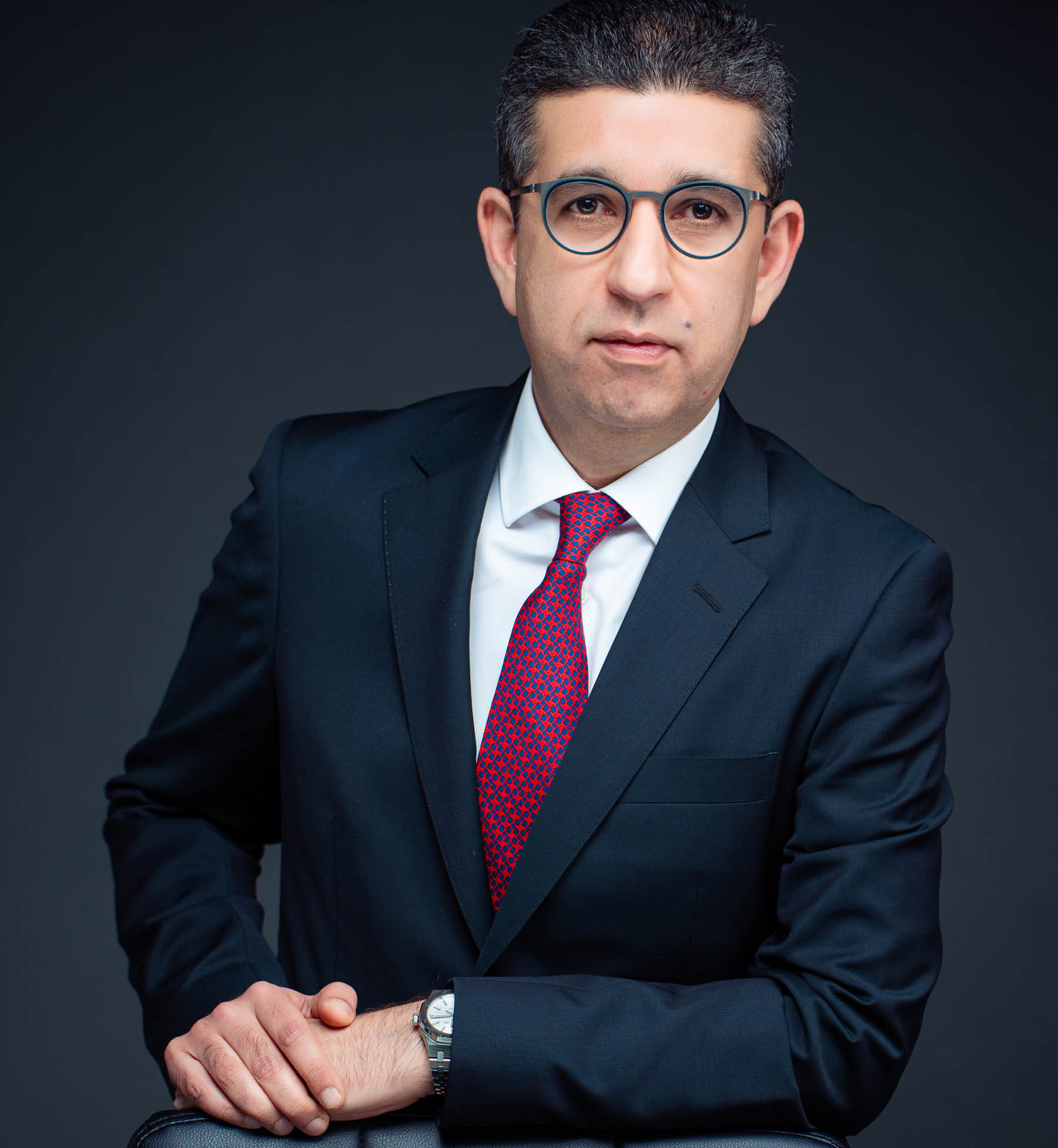

He also rejects the notion that partnership is a concession. “If you are not willing to share the piece of the pie with somebody, you’re not going to grow fast enough,” Varma insists.
At the same time, Varma is deliberate about keeping the partner ecosystem tight. Rather than building a sprawling list of providers that creates friction and a diluted focus, he prefers a smaller roster where relationships can be deep and expectations clear.
“I don’t want to have thousands of partners because that only creates conflict,” he says.
In practice, he describes a partner set that includes custodian banks across multiple booking centers, aggregators across asset classes and specialist partners for structuring and insurance – aimed at giving clients breadth without overwhelming them with options.
“We have five or six banks, two to three aggregators, and we also wanted to look at all of these legacy and trust structuring partners,” he says. “We are working very closely with a trust and an insurance partner who, again, aggregates the best policy for your needs.”
InvestGate wants to open the universe wide and then narrow it down into a short list that matches the client’s actual needs.
“What we do then with the partner is trim that down so it matches the need,” he explains.
When it comes to success, Varma’s definition comes down to something that is hard to measure and even harder to fake.
“To me, success is based on the trust of our clients,” he says.
Varma explains trust as lived experience: The client who believes the firm will show up, solve problems across the full wealth picture and stay consistent as needs evolve.
“They’ve helped me allocate capital. They’ve helped me secure property, they’ve helped me with private deals, they’ve helped me with cross-border lending, and they’ve helped me with M&A advisory on my business side,” he explains.


His frustration with the industry is that it often reduces relationships to returns. He wants a model that makes wealth management feel less like a transaction and more like a long-term partnership built around real human concerns: protection, legacy, decision-making and clarity.
“Wealth management, unfortunately, just becomes about numbers for everyone,” he says. “What was my return? What did I actually make?”
Trust, in his view, has to extend beyond clients – to the team and to partners – because the firm is only as strong as the ecosystem behind it.
“It’s not only trust by clients, it’s trust by the people who work with you, and it’s the trust by the partners who actually collaborate with you,” Varma explains. “Money is a tool, is a conduit, and legacy is the story,” he says.
That idea sits neatly at the center of InvestGate’s pitch. The firm is not claiming it can make complexity disappear. It’s claiming it can manage it with less noise and a more human approach to what is, ultimately, a deeply personal domain.
“We want to be a human side-based company backed by data, backed by expertise who can really whittle down and showcase what really matters to our customers,” he shares.
That’s the differentiator – a commitment to make wealth feel less overwhelming for the people InvestGate serves.
“And truly creating legacy will only happen if trust really exists and the human side of everything is addressed through the company,” Varma confirms.
 RELATED ARTICLES


 Home
Home
 Podcasts
 Covers
 Be Featured
 Community