Language
You can read the magazine in one of the following languages

6-min read

 Bookmark now

 Copy Link
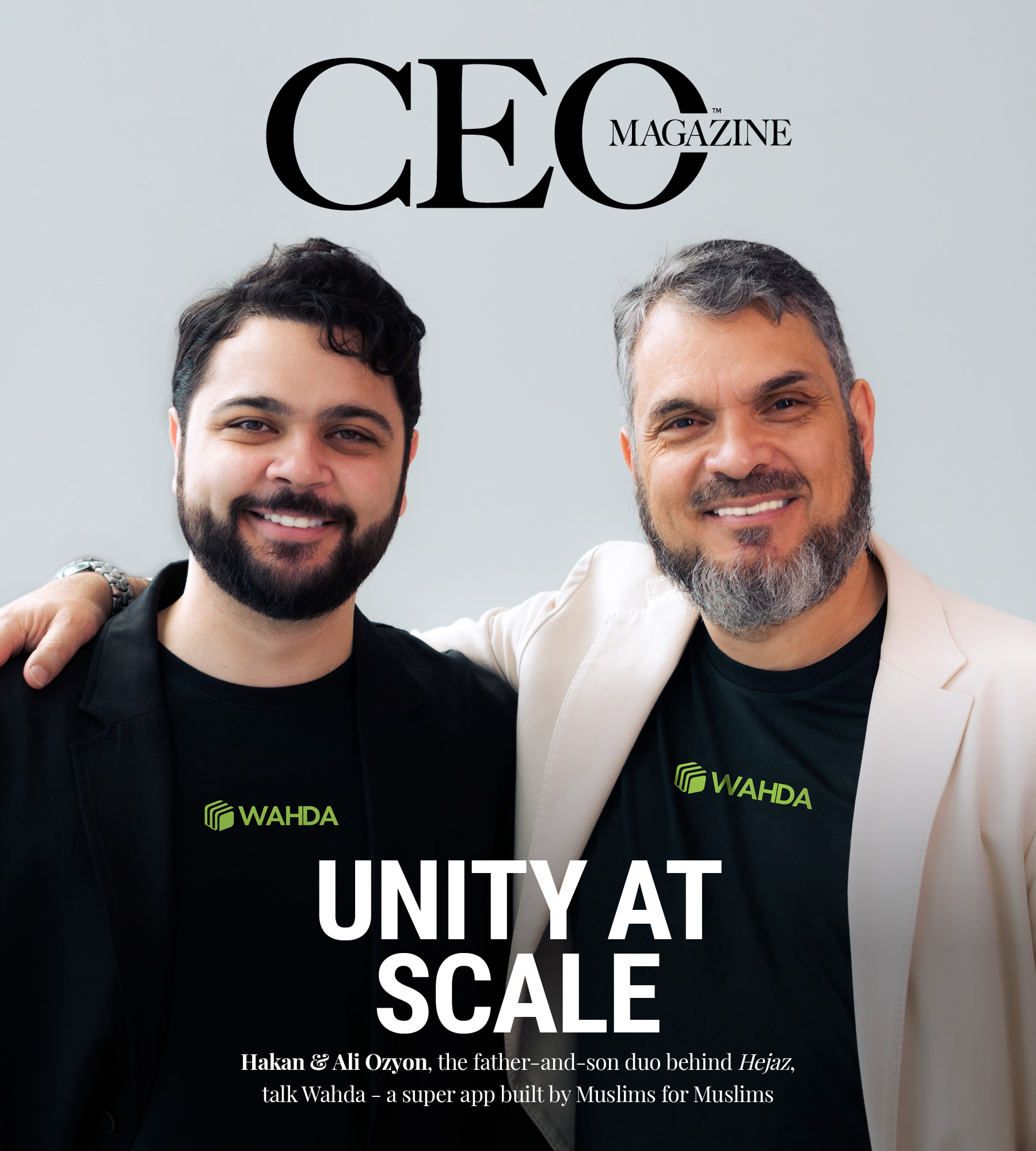
Wahda is an Arabic word that means unity. It’s simple, universal and crosses the boundaries of dialect and nationality. And it’s a word that practically everyone in the Muslim world understands.
That, Ali Ozyon, CMO of Hejaz, says is exactly the point.
“There are more than two-billion Muslims in the world,” he tells The CEO Magazine. “We are a massive, consuming community. So we decided that it was time to build something for us – made by Muslims for Muslims.”
The platform bearing that name, Wahda, is the most ambitious project yet from Hejaz, the Islamic financial firm founded by Ali’s father CEO Hakan Ozyon more than a decade ago.
Where Hejaz built Sharia-compliant pathways to wealth, Wahda is building something else entirely – not just an app, but a connected ecosystem designed to sit at the center of people’s daily lives.
Combining messaging, social media, Islamic utilities, events, maps and more into a single, seamless experience with full encryption, transparent AI and a privacy infrastructure, Wahda is dubbed a ‘super app.’ And its founders say no existing platform can match it.
“It’s the first of its kind,” Hakan says plainly.
Though Wahda may be new, the thinking behind it has been building for years. For Hakan, a move into technology was always the plan.
“We’ve never, at any stage, believed that we were just going to remain in finance,” Hakan confirms. “We’ve always had the ambition to go further than that.”
This ambition underpins Wahda – a public-facing product with a much larger idea behind it. The Ozyons believe mainstream platforms have become too generalized, too fragmented and too detached from the values and lived concerns of the users they serve.
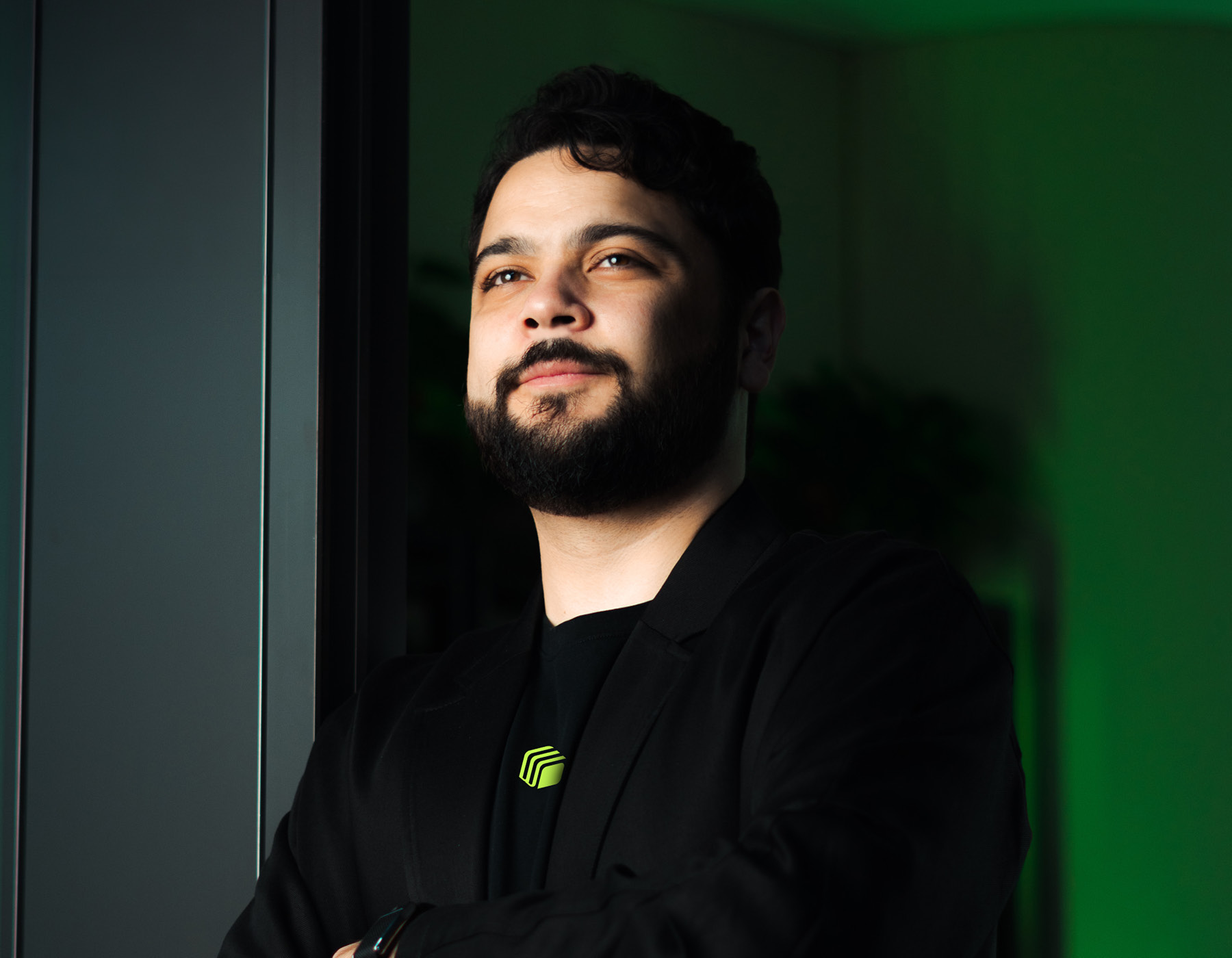

Ali puts it bluntly, saying, “Many platforms say they’re built for everyone; but when you build something for everyone, you’re pretty much building it for no-one, because nothing is tailored.”
For all their scale, many existing digital platforms often feel fragmented and impersonal – more like a collection of tools rather than a cohesive experience. They’re often built to maximize engagement rather than genuinely support the people using them.
That gap is what gives Wahda its edge. It is not seeking to replace the internet. It is trying to create a parallel ecosystem within it where users feel they are not simply tolerated, harvested for data or flattened into a generic audience segment; they’re being considered from the start.
At its core, Wahda has been built around one of the simplest human behaviors: communication.
“Wahda is a messaging-first focused app,” Ali reveals. “It takes over your communication, so you’ll no longer need WhatsApp, Messenger or Telegram.”
Everything else builds out from that central function. Instead of jumping between apps, users comfortably stay within one environment, where features are designed to work together.
“The idea is essentially to create seamless communication,” Ali says. “Everything just speaks to each other.”
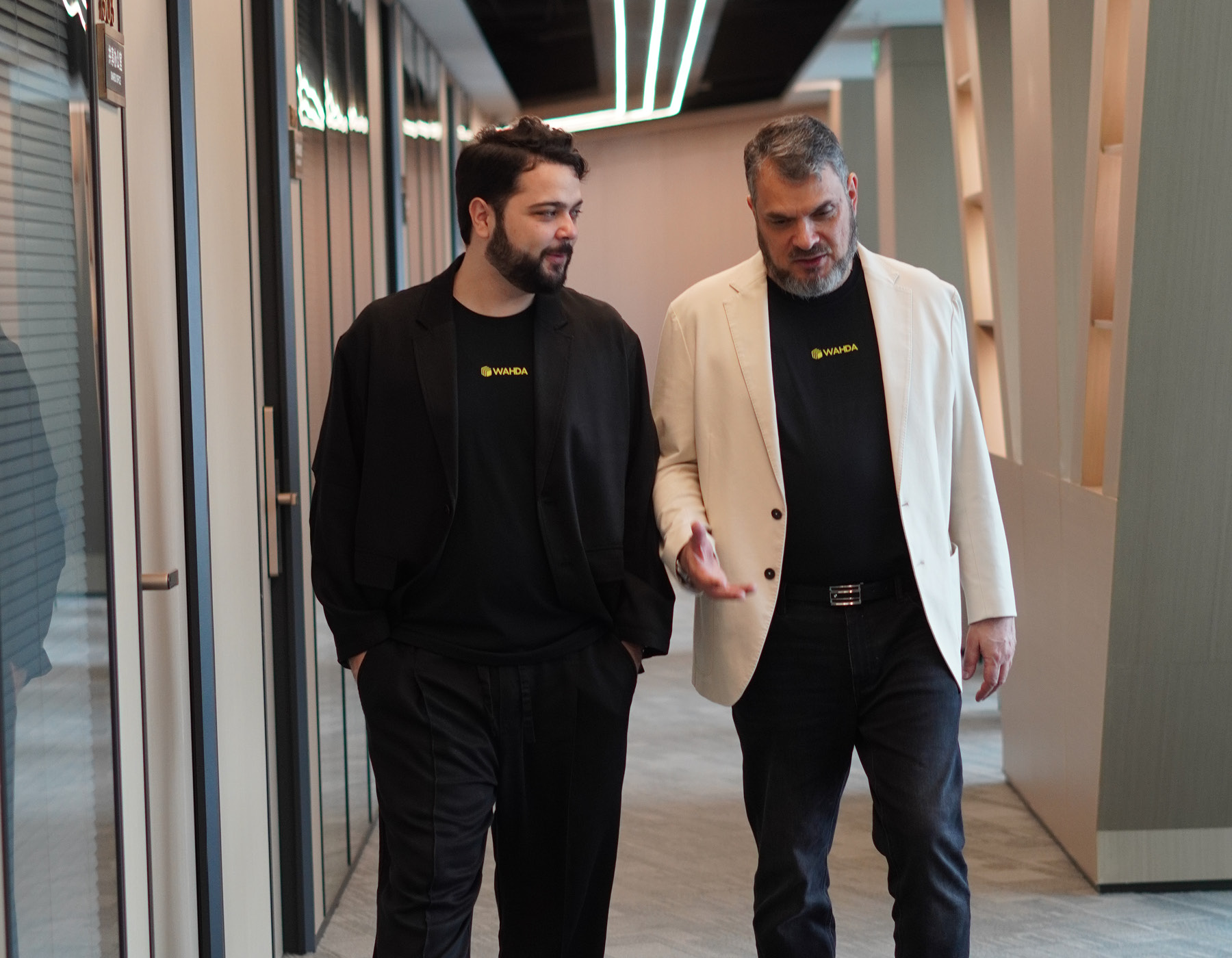

It’s an ambitious model, particularly given the scale of the product from day one. The MVP version of Wahda launched with more than 300 functions – something rarely attempted at this stage.
But both Ali and Hakan come back to the same point: If the experience is right, complexity disappears.
“Yes, you can have 10 million features, but that’s beside the point,” Ali says. “If you build out the platform with an incredible user experience, suddenly, all these features seem like one big feature.”
Unlike established platforms working with legacy systems, Wahda has been built from scratch with future expansion in mind.
“We built the infrastructure to cater for what we’re planning for the next five years,” Hakan says.
“Smart companies don’t stay in one spot. Good companies are nimble. They see opportunities, and they move fast – which is exactly what we’re doing.”
As the company expands, the principle guiding it is trust. “The Muslim community right now, they don’t trust,” Hakan says. “They want a place where they can call home.”
Wahda’s approach is to address that concern directly. The platform has been built in-house, with its infrastructure, IP and development kept internally. Private messaging is fully encrypted and, according to the team, inaccessible even to them.
“I asked the team, ‘Do we have visibility on what people are talking about?’” Ali says, recalling a recent backend demo. “And obviously the tech team said we have absolutely zero visibility on what people are talking about in the chat.”
That lack of visibility, he suggests, sits within a wider context. Geopolitical tensions, mounting evidence of content suppression and a growing concern about data security have accelerated what Ali describes as a mass reckoning.
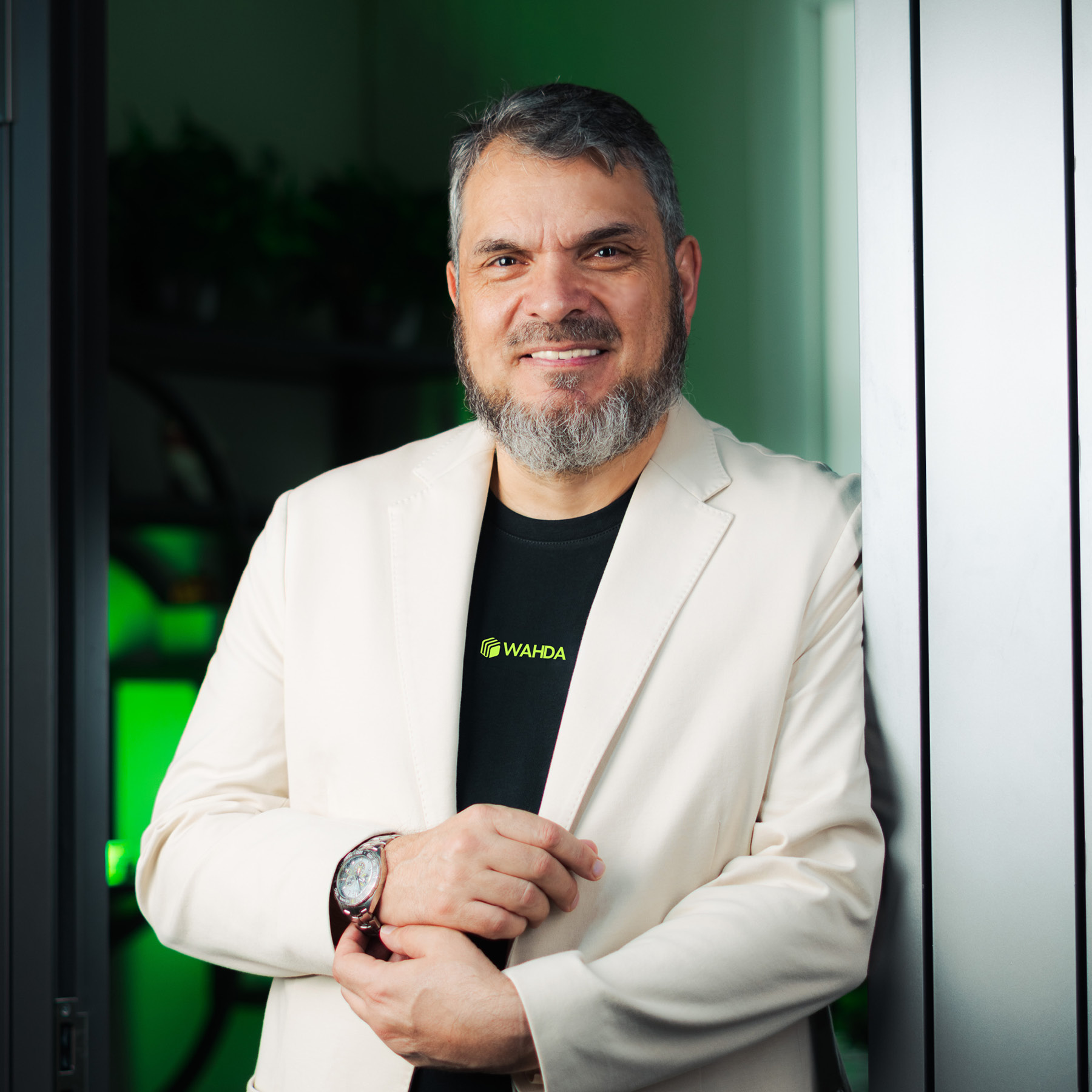

“There’s a massive shift in people demanding platforms that don’t moderate what’s happening in the world,” he says. “It’s no secret that there are many platforms that silence what people want to put out there.”
Still, both are quick to clarify that Wahda is not entirely unmoderated.
“We are taking a lighter touch on moderation,” Ali explains. “Of course, there’s going to be moderation for any type of nudity, any type of hate speech or abuse. But there won’t be any agendas.”
Hakan provides another view.
“Islam is centered on justice and safety,” he says. “So for Wadha, people can go and feel comfortable. There is no injustice. And they can express themselves – as long as it’s done in a tactful way.”
The mission, the Ozyons agree, is to onboard as many Muslims as possible while welcoming a lot of non-Muslims as well.
“There’s a lot of hatred in the world now,” Hakan says. “Wadha is a safe place.”
For all its innovation, at its heart Wahda is a labor of love – a father-and-son build shaped by two distinct but complementary perspectives.
Scale, infrastructure and long-term opportunity are important to Hakan, while Ali lights up about behavior, community adoption and what it means to give people a place where they feel safe. Together, those two lenses shape the direction the platform is taking and what true success looks like.
“Success is a matter of ‘we tried,’” Ali says.
“If it doesn’t stick, at least we tried to make a change and give the community what they wanted. Even if we just get 10,000 people on the app, at least those 10,000 people are in a safe place where they’re not under surveillance.”
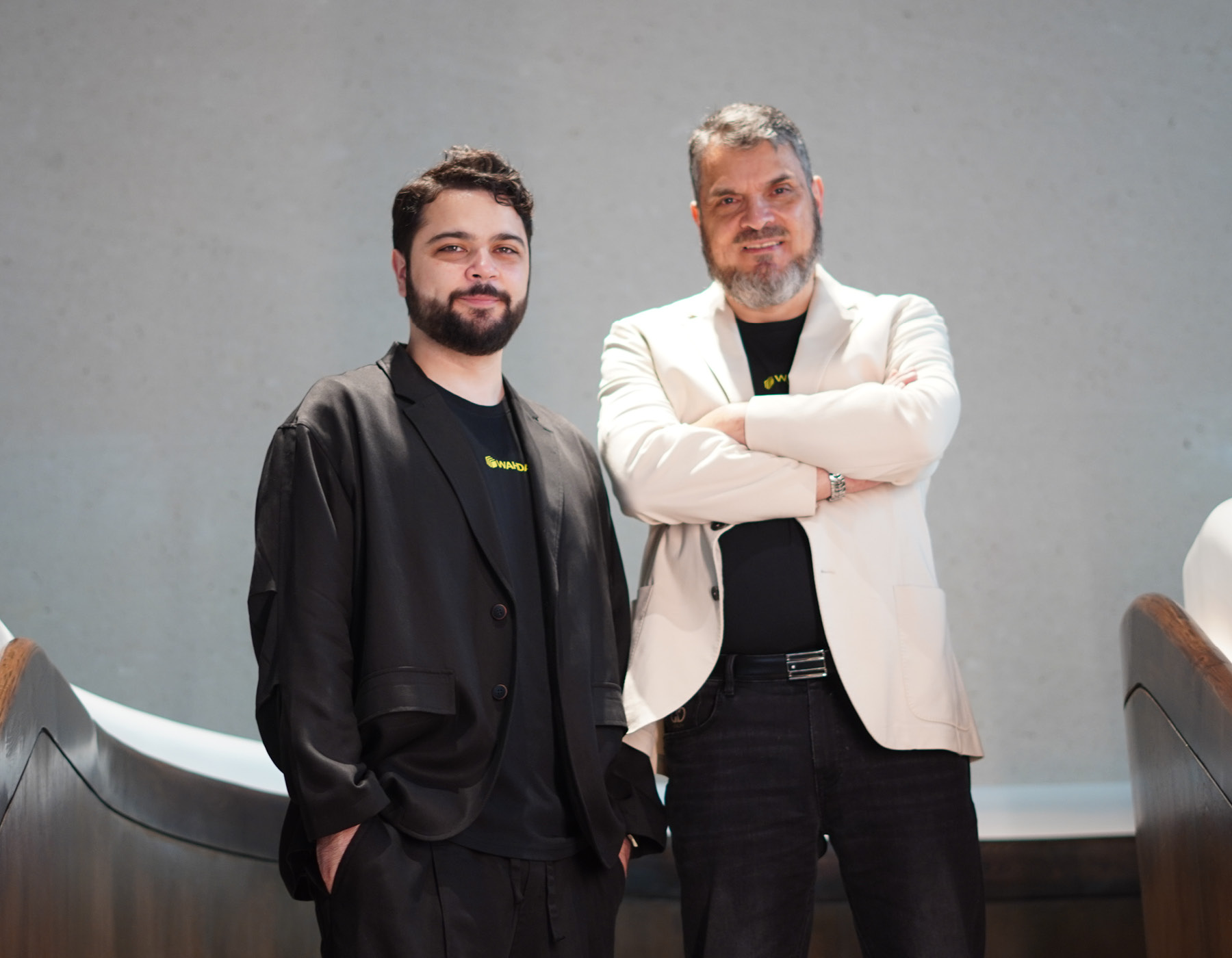

Hakan thinks bigger – much bigger.
“I want the Wahda app to be the largest, most successful app in the world,” he says.
It is an audacious line, but then Wahda is an audacious project built on the belief that a platform can be useful without being manipulative, safe without being sterile and expansive without losing its point of view.
It’s precisely what makes the launch so interesting. Wahda is trying to answer a question more tech companies may soon have to confront: What happens when users stop asking for more features and start asking who digital life is really built for?
For the Ozyons, the answer is already there in the name. Unity. One place for many people. And, if they get it right, something that feels a little more like home.
 RELATED ARTICLES


 Home
Home
 Podcasts
 Covers
 Be Featured
 Community