Language
You can read the magazine in one of the following languages

4-min read

 Bookmark now

 Copy Link
The experience of having one’s vision restored is usually accompanied by a wide range of intense emotions. Among the joy, disbelief and relief, the one that perhaps pervades the longest is a sense of freedom.
As the global leader in implantable phakic intraocular lenses, a miraculous ophthalmological innovation that places a minuscule lens into patients’ eyes, STAAR Surgical is in the business of creating visual freedom.
Its Interim Co-CEO and President Warren Foust has leadership experience in companies of a vast scale and scope, but his current role requires a uniquely deft approach.
“In a large global healthcare company, leadership is often about optimizing across a broad portfolio,” Foust tells The CEO Magazine.
“At STAAR, we are more focused, which means being closer to the business, the customer and the execution. In a focused organization, decisions translate quickly into outcomes, so alignment, speed and accountability are critical.
“What surgeons and eye care hospitals do changes patients’ lives, grounded in clinical evidence and real-world outcomes. We are privileged to support that work,” he says.
Foust sees STAAR’s core value as primarily rooted in having a strong product that provides clinical value.
“In MedTech, everything flows from that foundation. A product that delivers consistent, differentiated outcomes creates the basis for long-term success,” he explains.
Its flagship product is the implantable phakic intraocular lens (EVO ICL), which corrects eyesight issues of myopia and astigmatism. Unlike laser eye surgery, ICLs are reversible, preserve cornea tissue and do not cause dry eyes.
“We look at surgeon adoption and patient satisfaction, and at STAAR, 99.4 percent of patients say they would choose EVO again,” Foust says proudly.
“Our focus is strengthening execution, improving profitability and translating product strength into sustainable growth.”
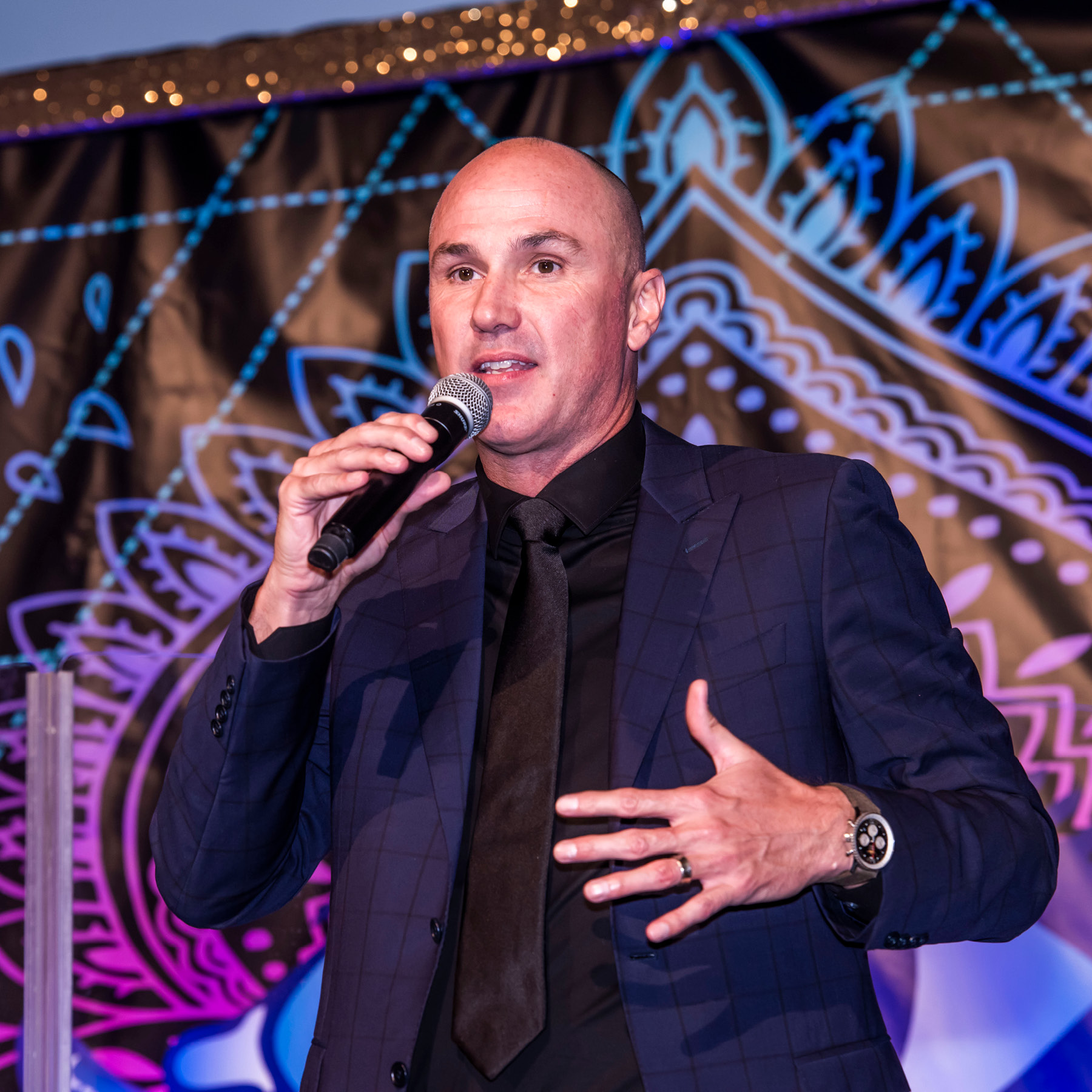
“What surgeons and eye care hospitals do changes patients’ lives, grounded in clinical evidence and real-world outcomes. We are privileged to support that work.”
Although Foust sees the edge that STAAR has over its competition as tied to science and market execution, one factor stands above the others.
“Trust ultimately determines who wins. Science provides the foundation, execution ensures access and consistency and trust ties it all together,” he says. “Trust is built through predictable outcomes, product quality and how reliably you support training, respond to feedback and supply products.
“In a focused market, trust compounds into a durable advantage. Our priority is to continue earning and strengthening that trust every day.”
A tension at STAAR is between the requirement for short-term performance and the longer cycle required to build surgeon confidence and patient adoption.
“We are fortunate to have differentiated materials and technology, along with more than 30 years of clinical safety and efficacy,” Foust explains. “At the same time, we must deliver near-term performance while investing in the future.”
Foust identifies overextension as a key danger for a business like STAAR, which are narrow in scope but deeply specialized.
“The biggest mistake a leader in this company could make would be trying to do too much, too fast. Focus matters,” he says.
When deciding where the company needs to increase its scale, Foust tends to look through a critical lens.
“I start with the constraint: What is most limiting to sustainable growth? That may mean prioritizing clinical education, strengthening manufacturing or accelerating commercial efforts once the foundation is in place,” he says.
“The key is sequencing and balance – investing for growth while reinforcing the capabilities needed to support it.”

“Science provides the foundation, execution ensures access and consistency and trust ties it all together.”
Having sold its ICLs in more than 75 countries and with its largest market being outside of its native United States, STAAR has successfully tailored its strategy to different audiences without diluting its brand or science.
“Success requires adapting locally, supported by a thoughtful regulatory, clinical and commercial strategy,” he reflects.
“Adoption varies by market, often shaped by regulatory timing. China, our largest market, saw earlier approvals and strong adoption, and we’ve applied those learnings globally.
“In the United States, we are earlier in the adoption curve following FDA approval in 2022, with lens-based refractive surgery continuing to grow.”
Looking ahead to the future, Foust sees his leadership as defined to elevate the impact STAAR’s revolutionary ophthalmological products are having on people’s lives.
“The aim is to deliver consistent, high-quality outcomes – clinically and operationally – and be a company people trust. We have a strong history of innovation, and I want STAAR to continue advancing care with differentiated solutions for unmet patient needs.”

 RELATED ARTICLES


 Home
Home
 Podcasts
 Covers
 Be Featured
 Community