Language
You can read the magazine in one of the following languages

4-min read

 Bookmark now

 Copy Link
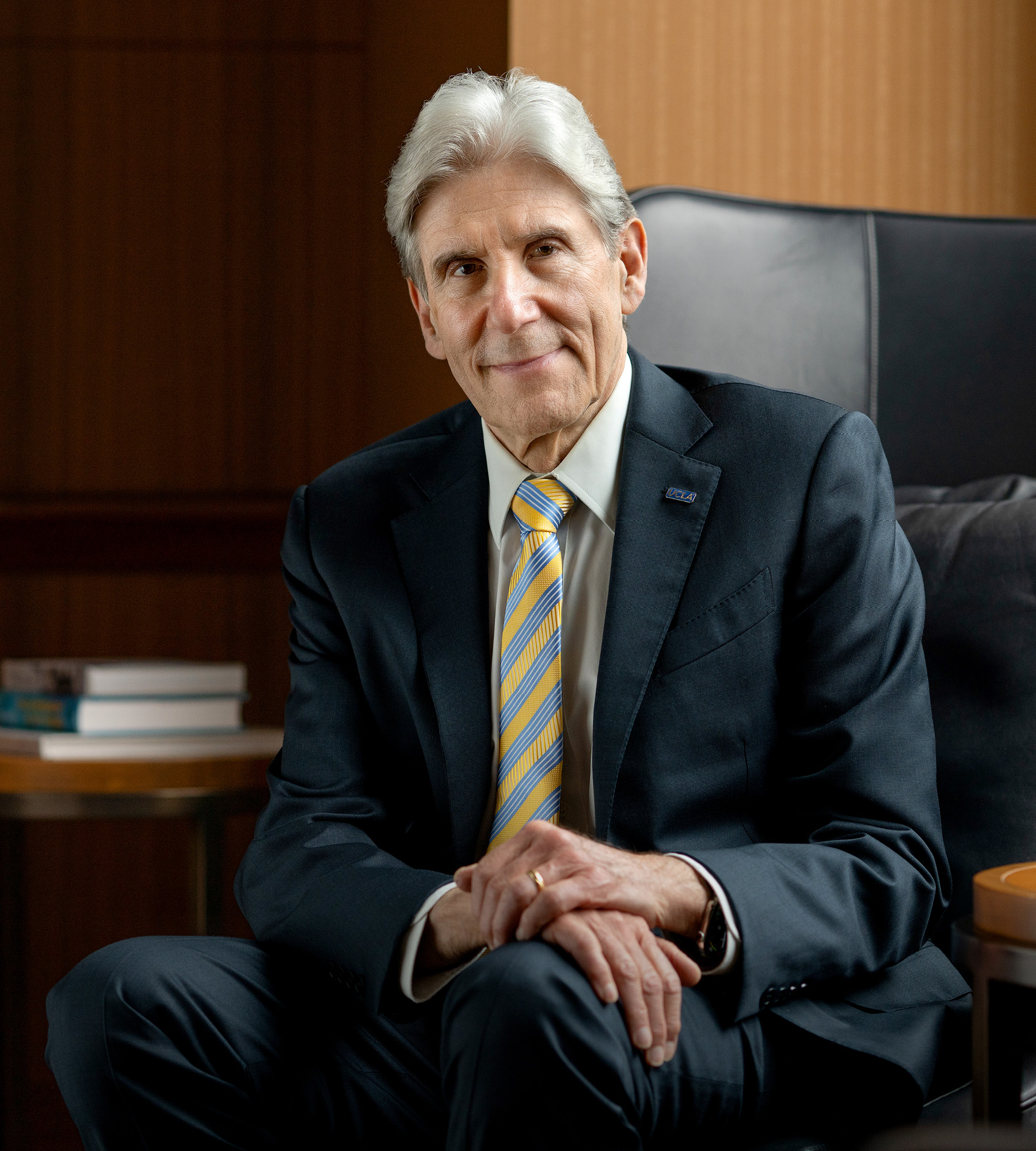
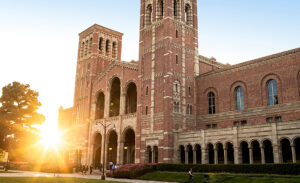
If Julio Frenk had to choose just three words to describe the University of California, Los Angeles (UCLA), one of the most respected universities in the world, they would be leading, comprehensive and research.
“Those three words are crucial,” Frenk, who assumed the role as the seventh Chancellor of UCLA on 1 January 2025 and previously served as Mexico’s Secretary of Health, tells The CEO Magazine.
“UCLA is consistently ranked as one of the leading universities in the world,” he continues. “It covers every field of human endeavor, including, importantly, the field of medicine. And, lastly, it is a research university, meaning that alongside our education mission, we have a research mission.
“The people here are the ones who write the textbooks, not just the ones who read them back to students.”
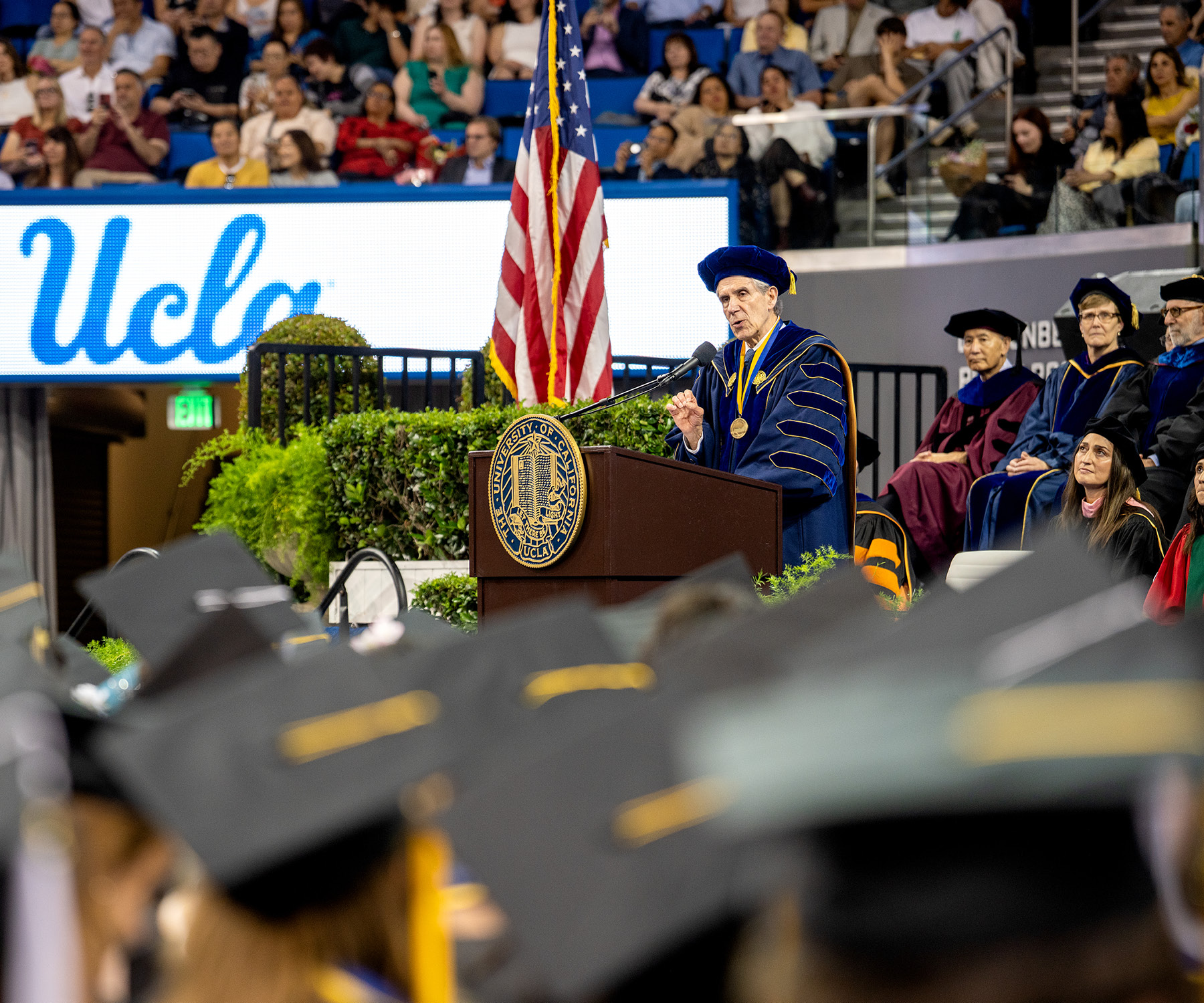
“The people here are the ones who write the textbooks, not just the ones who read them back to students.”
The trio of words demonstrates exactly how much the university has achieved since it was founded in 1919. Although young by university standards – particularly compared to European universities like Bologna, Cambridge and Oxford – if you measure accomplishment relative to age, UCLA becomes one of the most successful universities in the world.
“The number of Nobel Prize laureates that we have produced is extremely impressive,” Frenk says.
And then there’s the fact that the message that heralded the birth of the internet was sent from its campus.
“It’s the place where leading PET and CT programs were built, technologies that have revolutionized diagnosis in medicine,” he continues.
Against a backdrop of significant achievement, Frenk outlines the next step for UCLA through a strategic plan called ‘One UCLA.’ Again, it all comes back to three key ideas.
“We have three aspirations as we look toward the future,” he explains. “To be a connective university, an impactful university and an exemplary university.”
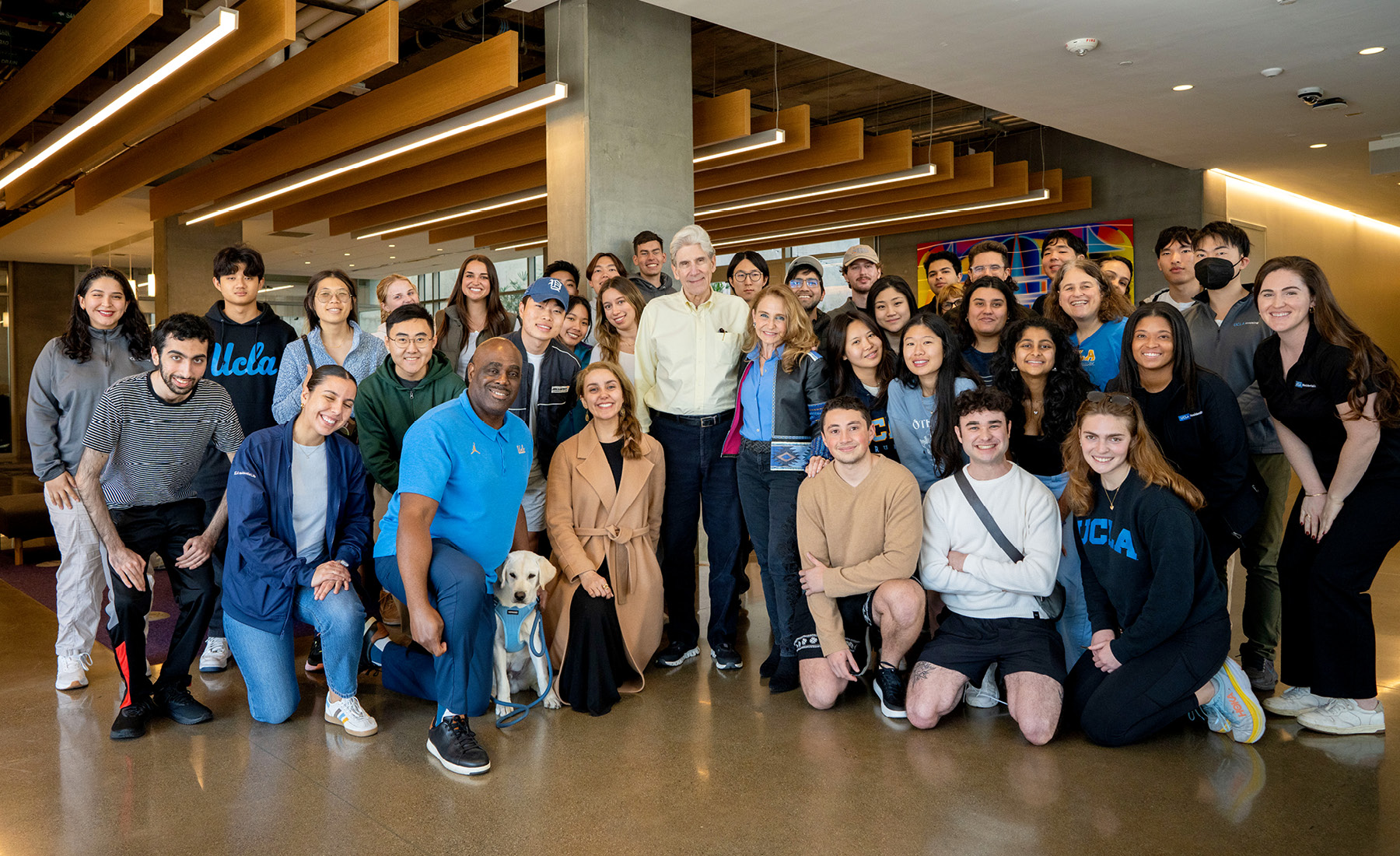
“We have three aspirations as we look toward the future. To be a connective university, an impactful university and an exemplary university.”
Connective, because UCLA links not only people inside and outside its community, but also generations and fields of knowledge through interdisciplinary research and geographies as a global institution.
“Impactful means that we are not satisfied with only pushing the front tiers of knowledge. We also want to have a positive impact in society. We want to translate science into solutions,” Frenk says.
Finally, exemplary stands for the values and behaviors the institution embraces.
“These set an example for the wider society of which we are part,” he says.
From these three aspirations come four flagship initiatives for UCLA to work toward.
Explaining the first, UCLA Connects, Frenk says, “It is about how we, in this time of great polarization, develop students’ ability to disagree respectfully.
“We embrace diversity in all its dimensions, including diversity of viewpoints. We actually cultivate people to think differently and create an environment where we are teaching students to disagree respectfully.”
He sees the students then serving as a model of how society can process its differences through dialogue and reason.
UCLA Research & Innovation Blueprint is the second flagship initiative.
“We’re emphasizing the need to undertake research that advances the frontier of knowledge by designing a way to translate our findings into technology and innovations that improve the quality of life,” he explains.
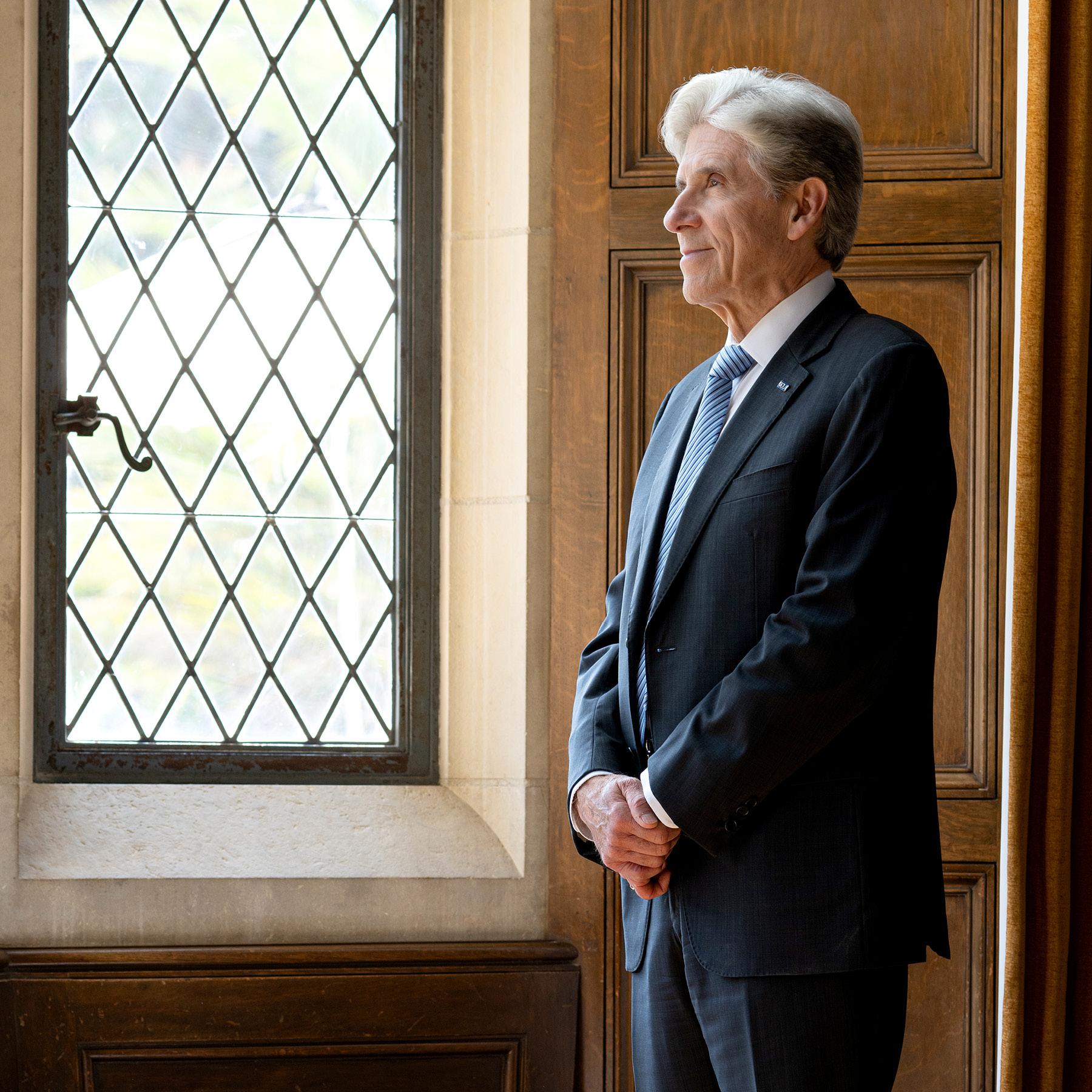
“This is the most dynamic labor market in history and you cannot learn everything you need in this market while you are at university.”
The university acquired the former Westside Pavilion shopping mall in 2024. As the UCLA Research Park, it will initially welcome anchor tenants in the quantum computing and immunology fields.
“It is a bold vision of an innovation ecosystem where we co-locate researchers and technologists with venture capital and entrepreneurs who are willing to take those technologies and build new companies with them,” Frenk explains.
UCLA for Life, the third initiative, is the idea that university is not a closed system of education where students spend a period of their lives and then it’s done and dusted.
“This is the most dynamic labor market in history and you cannot learn everything you need in this market while you are at university,” he says.
Instead, Frenk and his team are rethinking UCLA not as a closed loop starting with admissions, followed by an educational process and finished with a graduation, but as a provider of dynamic educational services that meet the evolving needs of people throughout their careers.
The final flagship, Effective UCLA, is about impact: “Transforming the way we work so that we’re a much more efficient organization that adds maximum value to society,” he says.
Frenk has big, bold plans but knows they are achievable, thanks to the strong position the university was in when he took the reins.
“I am very grateful to my predecessors. They did a great job of building a fantastic institution, and I want to make sure that my successors say the same thing about me,” he says.
“I want to hand it over in better shape than I found it.”
 RELATED ARTICLES


 Home
Home
 Podcasts
 Covers
 Be Featured
 Community