Language
You can read the magazine in one of the following languages
5-min read

 Bookmark now

 Copy Link
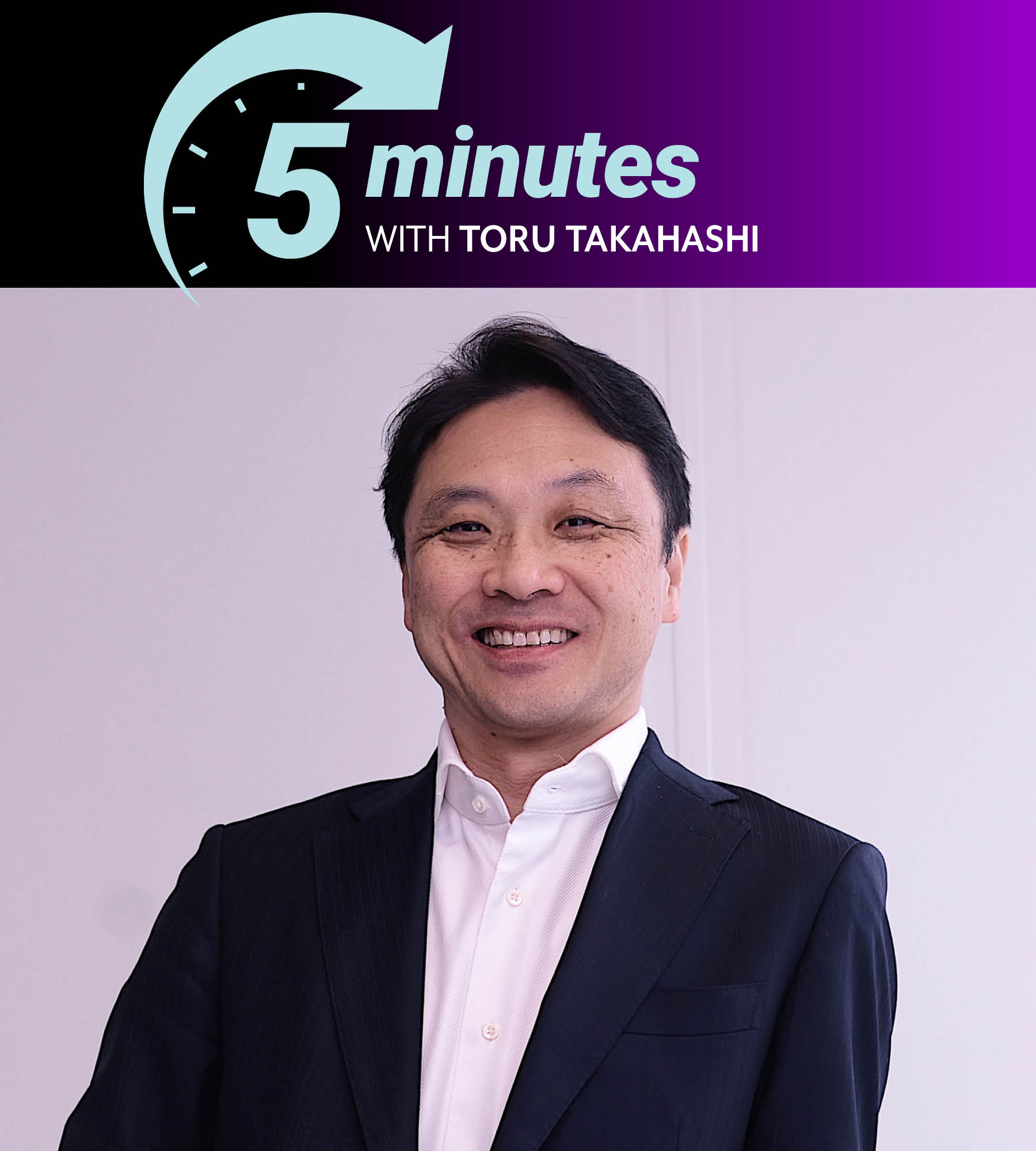
Efficiency has long been used to measure success, but GLOBIS Europe’s Global Chief Strategy Officer Toru Takahashi urges future business leaders to challenge this mindset.
“Traditional notions of efficiency were designed in an industrial era that prioritized minimizing input and maximizing output for standardized production,” he tells The CEO Magazine.
Today’s world demands uniqueness and innovation – not uniformity. In such a context, Takahashi argues, conventional efficiency metrics fall short and can even be harmful.
“Leaders must instead recognize the value of seemingly ‘inefficient’ activities, such as exploration and experimentation, which are essential for innovation,” he says.
Here, Takahashi reflects on a global career spanning Asia, Europe and the Middle East, and how it has reshaped his understanding of leadership in practice – from the declining relevance of traditional ROI metrics, to the growing need for cultural intelligence in a fragmented world and a shift away from authority toward human connection.
Your concept of the ‘efficiency of inefficiency’ suggests that growth requires time, reflection and even discomfort. How can leaders reconcile that with the pressure to deliver immediate results?
Research increasingly shows that organizations driving innovation deliberately embrace what was once considered inefficiency. They invest in diversity, encourage external collaboration, allow time for reflection, create space for unstructured activities and even tolerate failure. These practices may not yield immediate results, but they cultivate long-term innovation.
For leaders, understanding this relationship provides confidence to balance short-term performance pressures with the intentional creation of environments where innovation can emerge.
Kokorozashi is central to your thinking. What does this look like in practice for leaders navigating uncertainty?
In times of uncertainty, people naturally question the meaning of their work and even their own existence. Kokorozashi, or a personal mission aligned with societal good, provides a powerful anchor.
When individuals define themselves in relation to society, they gain confidence and direction, even when the future is unclear. It becomes a compass that guides decision-making and inspires action, helping leaders and teams navigate ambiguity with a deeper sense of purpose.

“When individuals define themselves in relation to society, they gain confidence and direction, even when the future is unclear.”
You’ve said leadership is less about authority and more about alignment of values, purpose and people. How did this philosophy take shape over the course of your career?
Having worked across the Middle East, Asia and Europe, I have come to believe that solving global challenges requires broad participation. The world belongs to all of us and solutions must be collectively owned. In such situations, authority alone does not work. Alignment of values and purpose becomes essential. Through this process, I have repeatedly seen more diverse perspectives leading to better, more resilient solutions.
A defining chapter of your journey was your work across Iran and Europe. How did that experience challenge your assumptions and reshape how you lead?
My first overseas assignment in Iran fundamentally changed my perspective. The reality I experienced there was very different from the image I had formed through media and prior assumptions. By seeing the world from Iran’s perspective, I realized that there is no absolute ‘good’ or ‘bad’, but rather multiple forms of justice shaped by context.
This experience taught me to constantly view situations through multiple lenses, a habit that has deeply influenced my leadership approach.
How can leaders develop the kind of cultural intelligence needed to operate effectively across borders today?
The most effective way to build cultural intelligence is through direct exposure. Leaders must place themselves in unfamiliar environments and truly experience them. When encountering discomfort or a sense of difference, it is important to reflect on why it arises.
Rather than seeing it as something strange, one should interpret it as evidence of a different underlying logic. Understanding these logics, often rooted in history and context, is essential for effective global leadership. Without a serious engagement with history, leaders risk misunderstanding the logic behind behaviors.
Your book, People who get results overseas don’t use cultural differences as excuses, challenges how leaders approach global business. What’s the core idea you hope readers take away?
At its core, my message is about developing contextual intelligence. In cross-cultural business, people often attribute challenges solely to cultural differences. However, context is shaped by many factors beyond culture, including economic conditions, industry maturity, business models and organizational structures.
By carefully analyzing these elements, leaders often find that culture is only a minor factor. Ultimately, using cultural differences as an excuse is neither productive nor constructive.
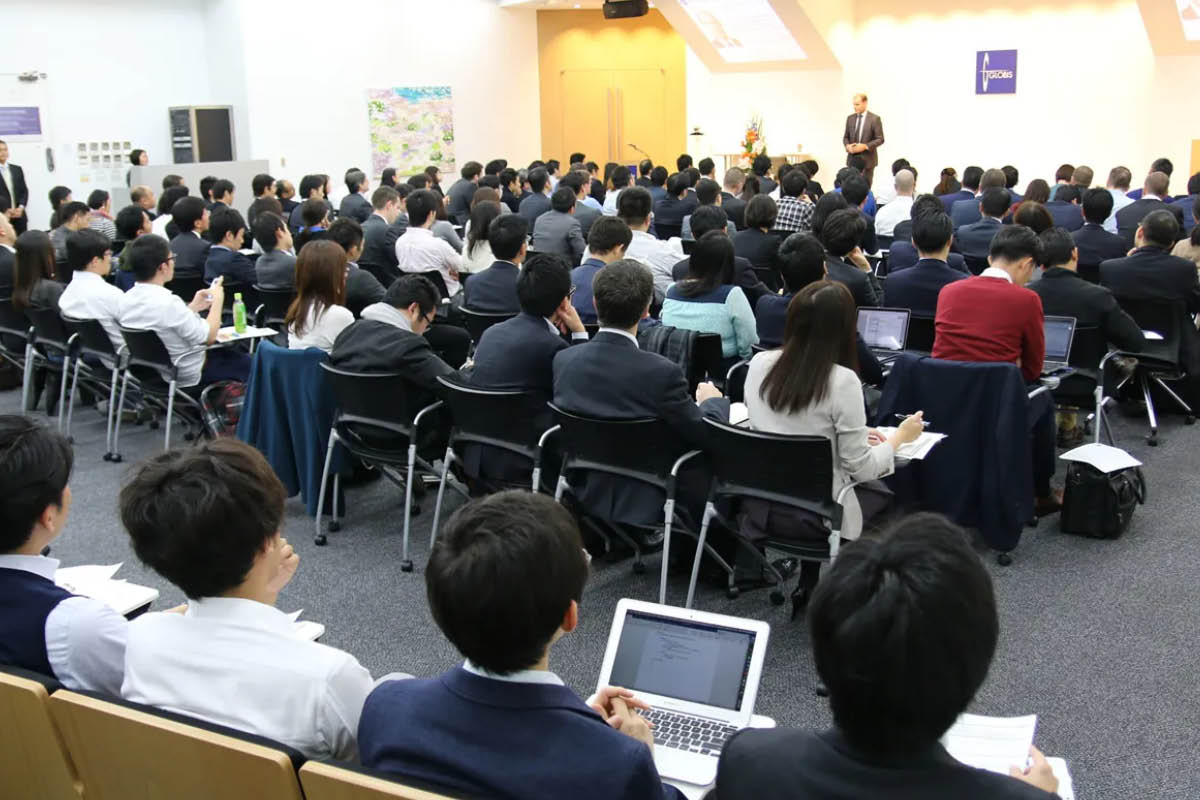
“Organizations need to create environments that stimulate curiosity.”
You argue that the global talent gap is not just about skills, but about mindset. What are businesses getting wrong when they try to address this challenge?
Many organizations focus heavily on identifying skill gaps and designing training to close them. While important, this approach alone does not drive real change. People learn and grow most effectively when they are genuinely interested and engaged. Without fostering curiosity and intrinsic motivation, skill development efforts remain superficial.
Organizations need to create environments that stimulate curiosity. Once the right mindset is in place, individuals will naturally take ownership of their growth.
As globalization evolves, you’ve pointed to a shift from capital flow to human capital flow. What does this next phase of global collaboration look like in practice?
We are beginning to see the limitations of traditional capitalism, which has not always led to true human wellbeing and has, in some cases, created societal distortions. This raises a fundamental question: What does it mean to be truly prosperous? I see this as a kind of ‘homework’ given to humanity.
The next phase of globalization must focus on human capital, redefining value beyond financial metrics. Global collaboration will involve collectively exploring this question and building a new philosophy that prioritizes human fulfillment.
Looking ahead, what is the single most important shift leaders must make today to stay relevant in the next decade?
The most important shift is to deliberately create inefficiency in one’s own growth. Leaders often optimize their time around their expertise, but that very efficiency can become a limitation. Leaders should intentionally invest time in areas that seem unrelated or even wasteful, such as learning different disciplines, engaging with unfamiliar perspectives or exploring outside their domain.
This kind of inefficiency expands thinking. In the next decade, relevance will come from those who are willing to go beyond their own specialization.
 RELATED ARTICLES


 Home
Home
 Podcasts
 Covers
 Be Featured
 Community