Language
You can read the magazine in one of the following languages
4-min read

 Bookmark now

 Copy Link
Developing the workforce of the future in the era of AI is already a challenge for business leaders globally. Some of the bigger tech firms and consultancies are urgently trying to equip their workforce with the right skills to survive in the era of AI. Each month, there are attention-grabbing headlines about major organizations removing huge sections of their workforce while also recruiting new employees into new roles.
These organizations are already looking to the future and preparing a workforce skilled in technical arenas such as cloud computing, machine learning and data engineering.
Leaders of these organizations have made calculated decisions that new hires are needed for these skills, which outgoing employees do not possess or cannot efficiently learn.
For all the discussion about how to reskill or upskill a workforce, there is plenty of evidence to suggest that, at the moment, a simple churn of the workforce is being undertaken by business leaders who believe this may be the easiest way of developing their future workforce.
But while there are plenty of organizations making these changes, many remain hesitant to look over the precipice and confront what AI really means for their business and workforce needs.
Why this hesitance? Uncertainty of what AI can do, how it will change their industry, leadership gaps in taking ownership of its implementation, fear of employee resistance and uncertainty about future skill needs are just some of the issues that business leaders face today.

The concept of the future of work has been in play for hundreds of years.
These challenges should not be underestimated and it is understandable why some business leaders may be intimidated when it comes to embracing AI and taking proactive measures to prepare their businesses and workforces for the future.
But if leaders want to forecast the future of work, history gives us clues.
After all, AI is not the first revolution business leaders have had to deal with, and the concept of the future of work has been in play for hundreds of years.
The concept of the future of work came to prominence with each of the industrial revolutions, starting with the first in the late 18th century, the second in the late 19th century and the third in the late 20th century.
Each of these saw major changes to the world of work in terms of worker demographics, locations, skills and knowledge needs, roles and structures, working practices, employment models, employee rights and regulations and the tools of their trade.
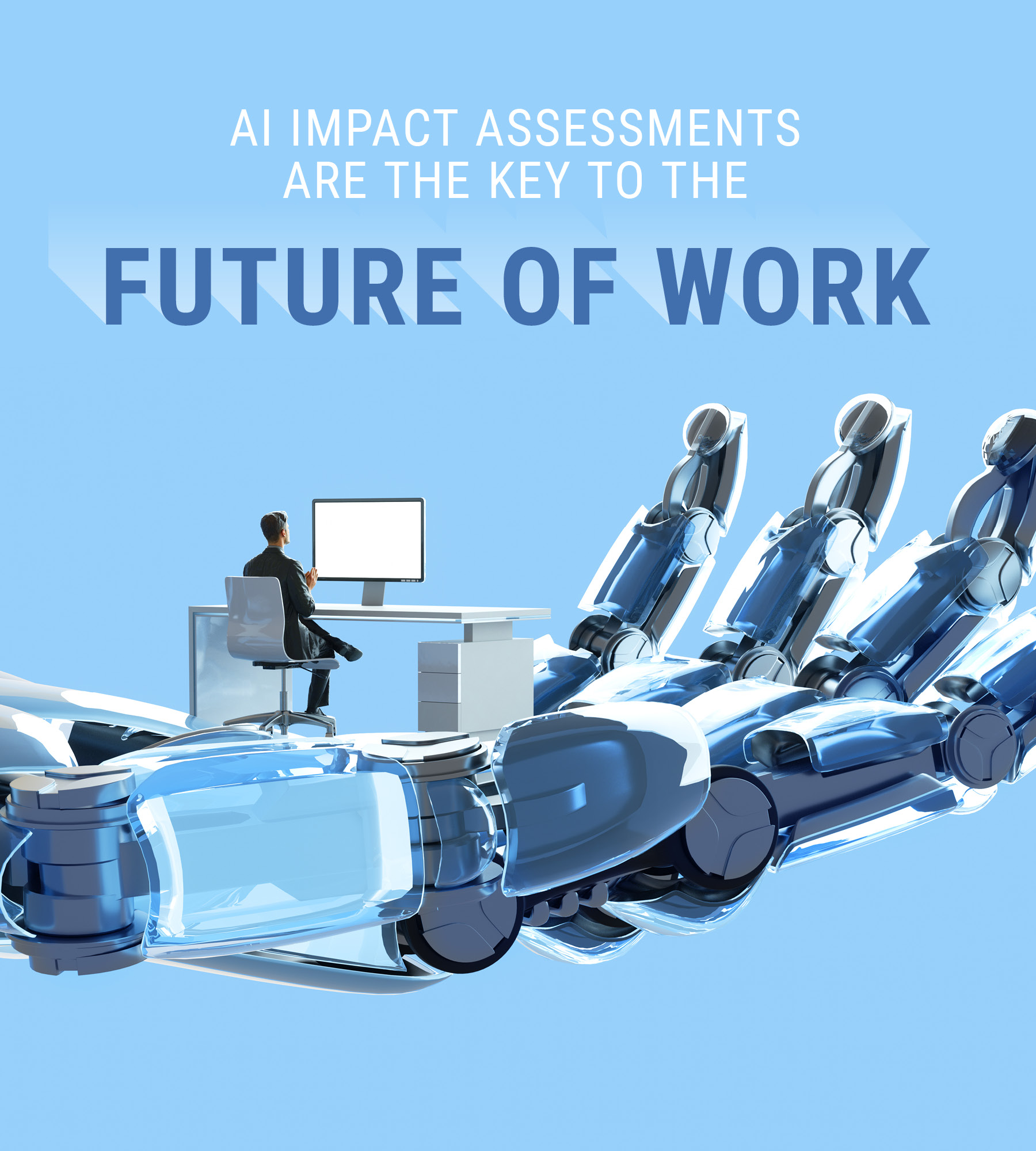
With AI, these areas of the workforce will be subject to great upheaval yet again and business leaders will have to consider how to prepare their workforce for these changes. Arguably, the one specific area of change that is causing the most trepidation for business leaders is preparing their workforce to have the right skills in the AI era.
In relation to the specific challenge of preparing their future workforce with the right skills, business leaders should follow a sequenced framework that can allow them to assess the end-to-end impacts of AI:
• The first assessment should examine the wider industry in which their organization exists in – questioning what new technologies, legislation or competitors are reshaping the industry.
• The second assessment should look at how the business needs to adapt in response to changes in its industry – questioning how internal systems, operations or market offerings need to be modified.
• The third assessment should evaluate how the business needs to organizationally adapt to support its new business strategies and directions – questioning how its internal structures need to change and what new functions, teams and cultures are needed.
• The fourth assessment should look at how the organizations employees need to change to fit into the newly desired organizational structure and strategies – questioning what new roles, skills and ways of working are needed.
Following the four phases of the proposed end-to-end assessment framework, business leaders will have a logical approach that can guide them in transforming their workforce in terms of organizational structure, size, roles and culture.
These findings in turn will help leaders identify what skills their organization will need in the future.
At this point business leaders will have to choose their strategy to develop this workforce. As discussed already, simply replacing workers is one option – out with the old, in with the new. But there is also the option to look at the existing workforce and identify workers who can be possibly reskilled.

Business leaders should follow a sequenced framework that can allow them to assess the end-to-end impacts of AI.
This option may take more time and effort with investments in skills gap analysis and subsequent employee training, but there are advantages too. Reskilling workers can allow a future workforce to not just have the skills to operate in the AI era but also keep years of in-house experience too. It will also allow for saving redundancy and recruitment costs and the pressures of hunting for the best resources in what may be a limited pool of talent.
The business case for reskilling a workforce exists, and the option to do so is strengthened with business leaders proactively assessing what AI really means for their industry, business, organizational structure and employees.

Nimalan Nadesalingam
Contributor Collective Member
As a senior global leader in digital transformation and AI, Nimalan Nadesalingam has led international management teams at Deloitte and DHL, delivering major technology and change portfolios across multiple continents. He is an adjunct professor of Change Management, Digital Transformation and AI, and the author of ‘Transformative Change’. A global keynote speaker, Nimalan is currently completing a doctorate on AI adoption. For more information, visit https://www.linkedin.com/in/nimalan-nades/
 RELATED ARTICLES


 Home
Home
 Podcasts
 Covers
 Be Featured
 Community