Language
You can read the magazine in one of the following languages

5-min read

 Bookmark now

 Copy Link
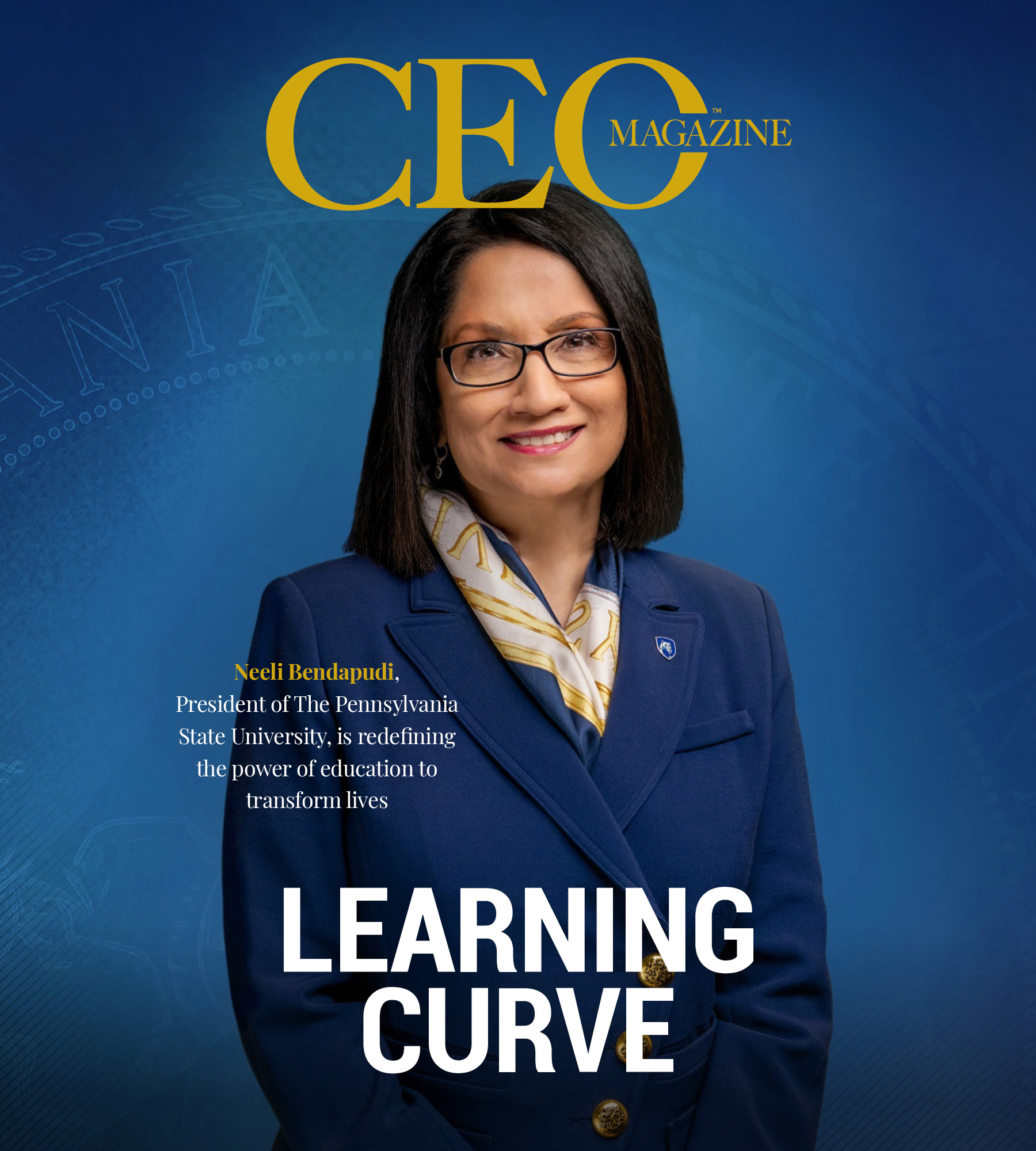
The story of Neeli Bendapudi, the President of The Pennsylvania State University (Penn State), is an ode to the transformative power of education. From a young age, she knew she would be involved in academia in one way or another once she had witnessed how a university degree could change lives.
“When I was about five years old, my father came to the United States for higher education to get a PhD. My mother stayed home with three little girls and we didn’t have money to go back and forth, and no phones at home,” she tells The CEO Magazine.
“We are a social and cultural beacon, providing people with a meaningful life of impact and purpose.”
“It really was a sacrifice for him. When he came back to India with that degree, I could see how it changed our life, not just mine, but our extended family. And so with him as an inspiration, that always felt like the path I wanted to follow.”
This experience inspired her belief – one that is reflected in the founding principles of Penn State – that education is essential to uplifting both individual lives and entire nations.
“Penn State was founded in 1855, and we became a land-grant university in 1863,” Bendapudi says. “In the middle of the Civil War, President Lincoln realized that in order for this union to succeed, higher education had to be far more accessible to the people, not just to elites.”
Today, Penn State’s US$10 billion operating budget funds renowned engineering and agriculture departments, an internationally recognized athletics program, as well as leadership in another, perhaps, unexpected field.
“We have one of the best musical theater programs in the country,” she says. “There’s hardly a Broadway show where there’s not a Penn Stater either on stage or behind the stage.”
She is proud of the diversity of its student population, with a wide reach both nationally and internationally.
“At our main campus, University Park, we have a record-high 42,822 residential undergraduate students enrolled this fall – including the campus’ third-largest-ever incoming class of 9,148 students,” she says.
“In total, we have more than 86,000 students enrolled across the university, and more than 28 percent of our first-year undergraduate students are the first in their families to go to college.
“We stand for the idea of excellence and the idea of making knowledge translatable for the public good. That was the notion of the land-grant university, that it’s not knowledge that sits in an ivory tower, but it is translated for the benefit of the sons and daughters of the working class.”
In keeping with the zeitgeist, Penn State recently launched a degree in AI engineering, which joins a growing array of AI-focused degrees and certificates. But Bendapudi stresses that ethical considerations must remain at the forefront of any discussion about AI.
“We are very proud to be at the forefront because we are one of the biggest producers of STEM graduates in the world, but we are looking at the ethical uses of AI. When should you use it? When should you not? What are the boundaries? How do you build trust in an AI environment?” she says.
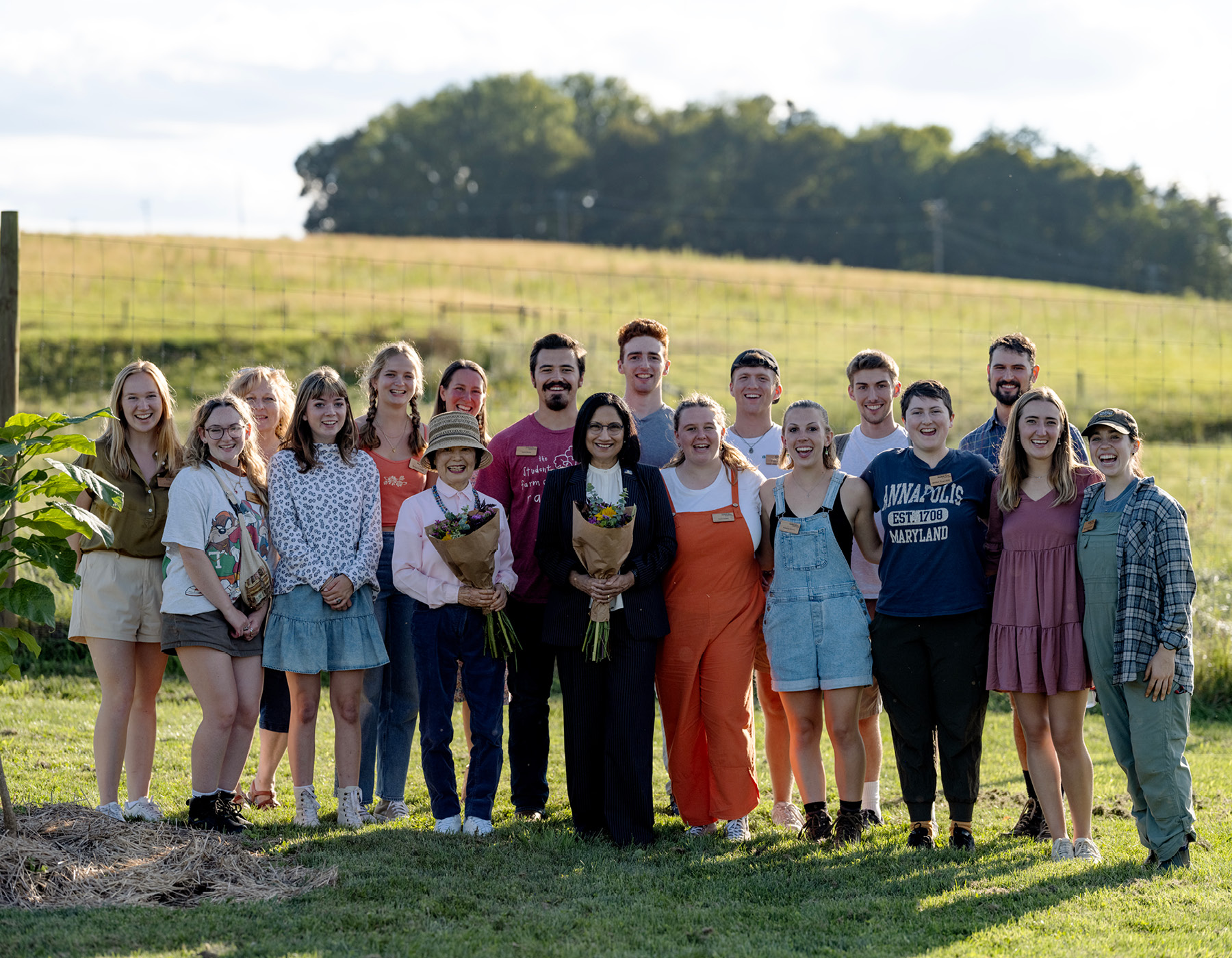
“At our main campus, University Park, we have a record-high 42,822 residential undergraduate students enrolled this fall.”
She explains that AI has created a fundamental, irreversible shift in the student–teacher dynamic.
“It is our responsibility not just to prepare students for the jobs of today, but to equip them with the skills to solve the problems of tomorrow. To future-proof our students means preparing them to continue learning and adapting to new skills, new technologies and new moments of technological disruption,” she says.
“Faculty across disciplines are pioneering research of AI, as well as with AI. Penn State faculty are already working in areas such as disease prediction and operational efficiency, with projects leveraging large language models, predictive analytics and AI-enabled decision support tools.
“Our research impact is both local and global, ranging from improving rural health in the United States to helping to tackle food security issues in Africa.”
The approach to learning overall is changing, as Penn State looks at curriculum that encourages experience, internships and co-curricular activities that align with traditional classroom work to inspire students to think beyond just the written text.
Penn State has engaged in more than 2,000 industry partnerships in the past decade, including with Fisher Scientific, which supplies lab equipment and also engages with the university’s research and academic communities through lab safety workshops and internship opportunities for students.

Pivoting, Bendapudi is confident that AI can have a positive impact on maximizing operational efficiency.
“I see a big opportunity to transform our internal operation to make us more efficient, particularly because of our scale,” she says.
“Penn State’s research enterprise reached a new milestone in fiscal year 2024–25 with US$1.44 billion in total research expenditures, the largest in the University’s history.
The revenue generated for the state, she reveals, is phenomenal.
“Penn State is good for Pennsylvania. Locally, we deliver almost US$16 billion to the Commonwealth’s economy annually,” she says.
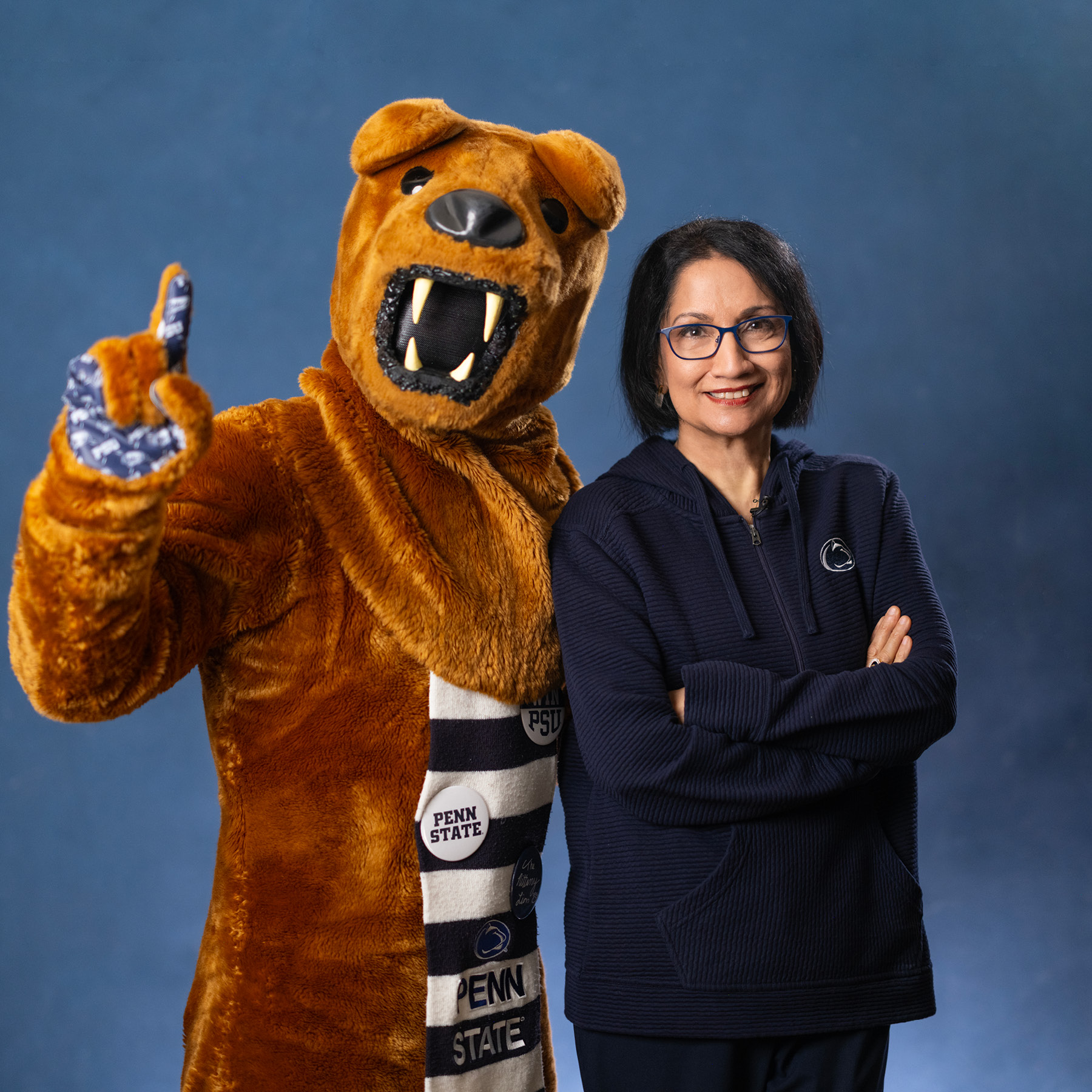
“No matter who you are, or where you come from, you come here and you belong.”
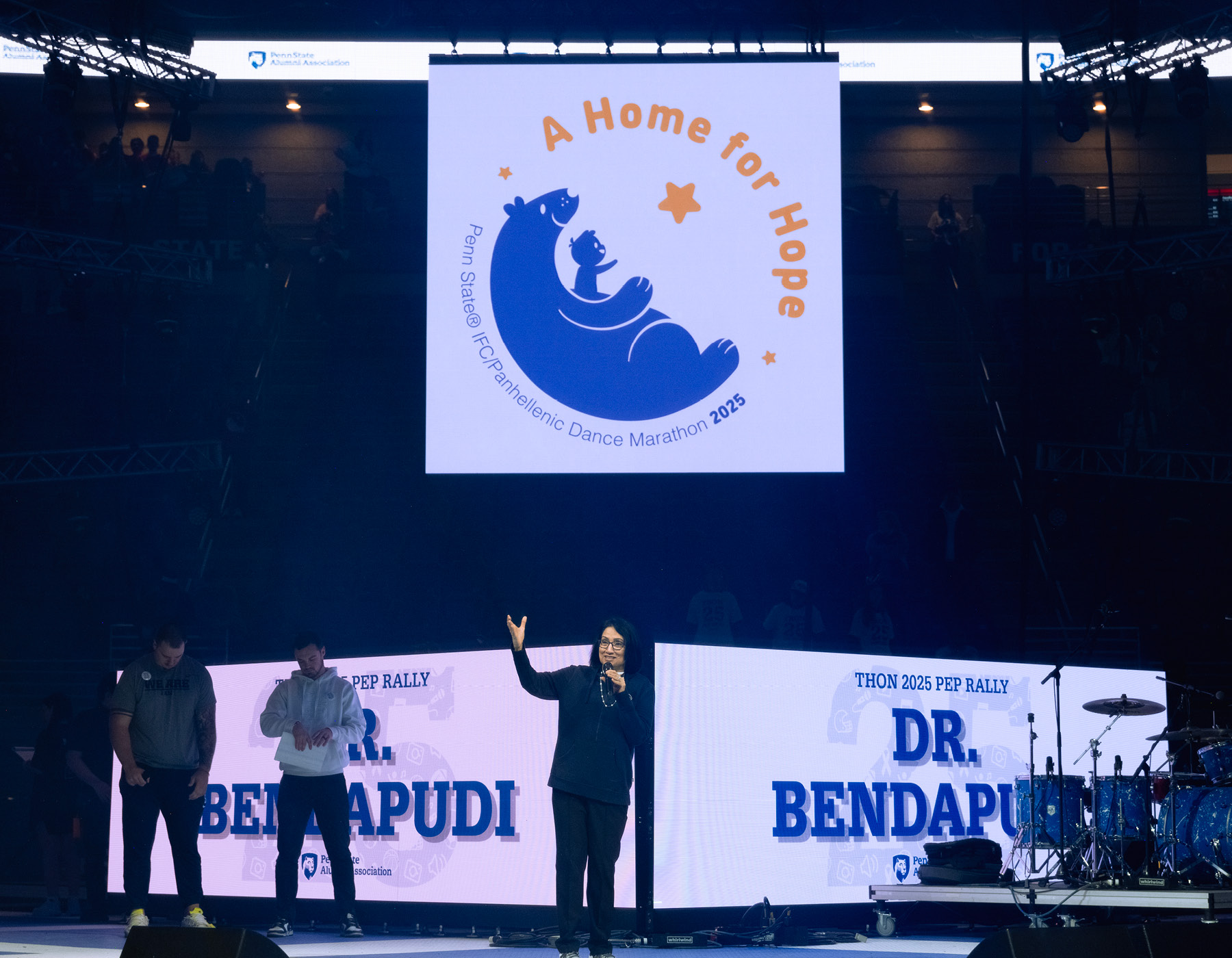
Equally as impressive is the dedication of its student population’s commitment to making an impact. Penn State is home to THON, the largest student-run philanthropy in the world, dedicated to fighting childhood cancer. Since its founding in 1977, it has raised more than US$254 million for Four Diamonds at Penn State Health Children’s Hospital, funding treatment, family support and critical research.
“We are fortunate to have tremendous community and industry support through partners such as PepsiCo, which allow us to make an incredible impact for these families,” she says.
For Bendapudi, the opportunity for students to get involved with noble causes such as this is proof of the unparalleled value of a university education.
“At Penn State, we really focus on the whole person. We allow our students to transform themselves, since there’s a transformative power to higher education. We are a social and cultural beacon, providing people with a meaningful life of impact and purpose,” she says.
“That’s the Penn State spirit. No matter who you are, or where you come from, you come here and you belong.”
 RELATED ARTICLES


 Home
Home
 Podcasts
 Covers
 Be Featured
 Community