Language
You can read the magazine in one of the following languages
14-min read

 Bookmark now

 Copy Link
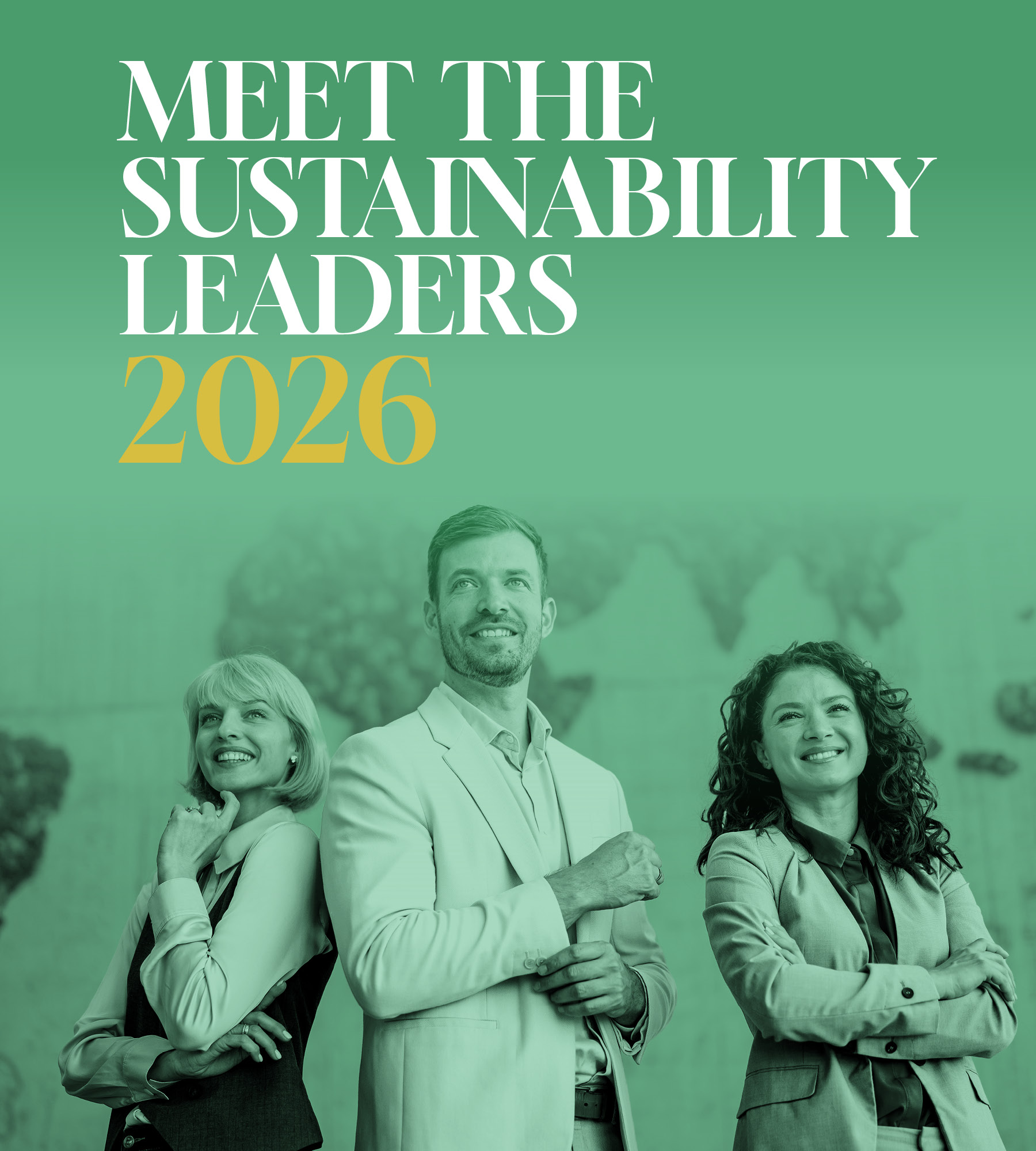
What was once viewed primarily through an environmental lens is now reshaping the very foundations of modern business – influencing everything from investment decisions to operational strategy, innovation, consumer trust and long-term resilience.
This year, The CEO Magazine is proud to unveil its global Sustainability Leaders 2026 spotlight, recognizing the executives, founders and changemakers helping to redefine what responsible leadership looks like across the globe.
For the leaders featured here, sustainability is not a standalone initiative or marketing exercise. Instead, it’s embedded into how they think, how they build and how they lead.
What also emerged across many of the responses was a shared shift away from lofty promises toward something more grounded.
From high-profile environmental advocate Jason Momoa, championing the cumulative power of small everyday choices, to Norrøna’s Jørgen Jørgensen, advocating for products designed to last, the emphasis is clear: real impact is built through consistency, not perfection.
Below, these leaders share the advice and lessons helping guide their sustainability journeys – insights designed to inspire the next generation of responsible leadership.

Jason Momoa, Founder & Chief Disruptor, MANANALU
“Our power shapes our planet. Every choice we make adds up. We don’t need perfection, we just need action. Seemingly small decisions multiplied by millions of people create real change.”

Jørgen Jørgensen, CEO & fourth-generation Owner, Norrøna
“Without real sustainability, there will be no nature. Without nature, there is no us. It’s that simple. Two essentials: one, make products that last. I often say a new Norrøna product is good. An older one is even better. And two, set ambitious sustainability goals. That’s the only way to drive real change.”

Omoyemi Akerele, Founder & CEO, Lagos Fashion Week
“Sustainability is a journey rooted in stewardship, collaboration and shared responsibility. It’s not just for climate activists; everyone has a role to play. I’ve learned that it’s OK to feel overwhelmed sometimes, but important to stay inspired and hopeful. Meaningful change happens when people feel included, empowered and part of the journey.”

Sarah Paiji Yoo, Co-Founder & CEO, Blueland
“If there is ever going to be systemic change, it’s not enough to build better products. There must also be financial strength to show up, speak out and help make these shifts.”

Emma Lewisham, Co-Founder & Creative Director, Emma Lewisham
“Sustainability has become a word that risks losing its meaning, so I have tried to make it personal. To me it means leading with thought, conscience and care. You cannot build an innovative product business of true excellence unless that standard lives across every facet of what you do.”

Kate Williams, CEO, 1% for the Planet
“Pick something you care about and commit. Get clear on your values, then act on them consistently. Choose one or two commitments and hold to them no matter the noise. Lean on community. Stay resolute. The world needs leaders who do something.”

Tom Szaky, Founder & CEO, TerraCycle and Loop
“Sustainability currently faces tremendous political and economic headwinds exacerbated by global supply chain crises and market instability. Flexibility and the ability to pivot will be critical for sustainability leaders to navigate the current moment. Realistic goals based on past success, rather than picking goal dates and working backward, drives impact.”

Timothy Turner-Sutton, Co-Founder & CEO, nōht
“We spent years trying to make a fabric that did not exist yet. The lesson was not about sustainability. It was about honesty. The planet does not need more promises. It needs more proof.”

Paul Robinson, COO, Bawah Reserve
“Sustainability starts with purpose, not marketing jargon. Prioritize progress – through a phased approach – over perfection, and empower your team to own the mission. Be transparent about challenges and open to collaboration. Most importantly, take the long view – real impact is built over time through consistent, values-driven decisions, not quick wins.”

Scott Maynard, Managing Director, Polestar Australia
“Credibility comes from radical transparency, clear targets and measurable action. By publishing life cycle data, tracing materials, pushing toward circularity and reducing emissions across the value chain, Polestar shows that progress is built on proof, not promises. For me, the key takeaway is that sustainability has to be operational: report openly on both wins and gaps, and use ambition to drive innovation.”

Caroline Hartline, Founder, Billie Green Intimates
“Sustainability is often overused and inconsistently defined in business. For me, it means environmental and human health stewardship in the products I create: safer materials, reducing unnecessary plastics throughout the supply chain and building products that are better for both people and planet. I’ve learned to anchor this in clear values and back every claim with credible research and data.”

David Ritter, CEO, Greenpeace Australia Pacific
“Sustainability leadership has two essential ingredients: moral courage and a recognition of the scientific and ecological realities we all operate within. The laws of science will never bend to profit or cost imperatives. The organizations whose leaders act from a shared obligation to protect people, future generations and all living beings will be the ones that shape the future.”

Daniel Motlop, Founder & CEO, Seven Seasons
“Sustainability starts with respect – for land, culture and community. With Green Ant Gin, that means listening to our culture, harvesting only what’s needed and ensuring the benefits flow back to our communities. If you build with purpose from the ground up, sustainability becomes part of every decision.”

Lara Henderson, Founder & CEO, Pure Mama Skincare
“Sustainability doesn’t have to come at the expense of efficacy. Start by questioning every ingredient and material you use and prioritize transparency over perfection. Small, considered choices – from formulation to packaging – add up and ultimately build deeper trust with your customer over time.”

David Larocca, CEO and Regional Managing Partner, EY Oceania
“Sustainability shouldn’t sit on the sidelines. Build it into everyday decisions, track what matters and keep it practical. And perhaps, most importantly, keep the ‘why’ front and center – when the choices become difficult, it’s important to keep circling back to purpose.”

Pamela Jabbour, Founder & CEO, Total Image Group
“Start before you feel ready. Commit publicly, measure what matters and lead consistently. Sustainability isn’t a campaign, it’s how you run your business. Set clear targets, build accountability into everyday decisions and share your progress openly. When purpose becomes part of operations, real and lasting impact follows.”

Kim Gilliland, Co-Founder & CEO, Soapnut Republic
“Sustainability succeeds when it’s simple, effective and accessible. At Soapnut Republic, our products match the performance of conventional alternatives while being safer for families and the environment. Education removes friction. When consumers understand the impact, they make better choices and become advocates.”

Rob Chan, Managing Director, Turo Australia
“Individual action is the catalyst for systemic revolution. Sustainability isn’t a department; it’s a collective commitment to rewire how we live and lead. Don’t just manage a company. Build a legacy. Align personal passion and professional excellence with planetary necessity to transform your industry. That is the future of business.”

John Pabon, UN Advisor & Greenwashing Expert
“We must balance the altruistic with the pragmatic. Altruism gets us out of bed despite the difficulty of our work. Pragmatism allows us to identify strategic, nimble, meaningful solutions. Basically, if you’re only a true believer, you’ll miss opportunities for impact. If you’re only a strategist, though, you won’t last.”

Adrian Williams, COO Pacific Region, Accor
“Sustainability is not a standalone initiative – it’s a transformation of how we design, operate and connect. We’ve learned progress comes from embedding responsibility into every decision, guided by science-based targets and measurable action. It reflects our team’s commitment to responsible hospitality, delivering positive impact in the communities where we operate.”

Nina Benoit, Director of Sustainability, Brightest
“Sustainability is all about resilience. Projects take time, require change and creativity. The reality, however, is that most people don’t like change. As sustainability leaders, it is our role to show the way to a more sustainable world, one step at a time, without giving in.”

Guy Brent, CEO, BioPak
“Every action we take, no matter how small, makes a difference. As sustainable packaging experts, we help food service businesses switch to recyclable, compostable and reusable packaging. From championing a world without waste to donating a portion of our profit to causes like OzHarvest, we know that purpose-led business works. When businesses lead this way, change spreads.”

Anna Podolsky, Founder & CEO, Lyka
“Progress beats perfection. As a B Corp, sustainability is built into every decision from internal innovation to partnering with suppliers. When we introduced Australia’s first thermoformed bioplastic packaging, we didn’t just reduce our packaging’s environmental impact, we enabled wider adoption across multiple food manufacturers, multiplying our impact.”

Kimberley Jonsson, CEO, CHU Underwriting Agencies
“Start by gathering the right data to identify where you can make the most significant impact and then determine the sustainability goals where you can make the most impact. Be transparent about your impact, set clear expectations and build sustainability into everyday decisions. When resilience reduces risk and cost, insurers can help shape safer, more affordable communities.”

Rebecca Williams, CEO, Seed & Sprout
“Sustainability isn’t something we add on – it’s how we build the business from the ground up. That means making choices that work commercially and environmentally. Our role is to educate for a most considered investment through thoughtful, in-house design, high-quality materials and honest trade-offs. It takes constant refinement, close collaboration with suppliers and a commitment to earning trust over time.”

Asmaa El-Khatib, Co-Founder & Managing Director, Nayah Boutique Stays
“Profit and purpose can coexist when you focus on discipline: treat every cost as a decision, price for value not just volume, and build systems that protect both people and property. Small, consistent choices – less waste, fairer work, smarter pricing – create lasting sustainability for owners, guests and communities.”

Cliff Cabungcal, President, Xpress Philippines
“Embracing sustainability requires both a top-down and bottom-up approach, especially in mobility. There will always be mistakes along the way, but when everybody buys into the vision, sustainability can and will yield positive results in the triple bottom line of profit, people and planet.”

Sayan Maitra, CEO, GreenLedger
“Start with real problems, not trends. Talk to customers before building. Design for how the world actually works, not how it should work. Simplicity builds trust. Compliance-driven markets move faster than hype-driven ones. Also, if you want impact, build systems that last – not presentations that impress.”

Arijit Ghosh, Founder, Fitness Fortitude
“Treat sustainability like fitness. Consistency beats intensity. You do not transform overnight, but every conscious choice compounds. Start small, measure your impact and never let perfection be the enemy of progress. Build habits, not just campaigns. The planet, like your body, rewards long-term commitment.”

Kumar Singirikonda, Director of DevOps Engineering, Toyota
“Sustainability begins with disciplined leadership. Automate relentlessly, design for reliability, remove waste before it scales and build technology meant to endure. When organizations focus on long-term operational intelligence instead of short-term speed, they achieve stronger innovation, lower costs, more resilient teams and a lasting positive impact.”

China SN Murthy Anupindi, CEO, ComplyWise
“True sustainability begins with eliminating avoidable waste at its source. Whether environmental or operational, prevention is always more powerful than correction. Build systems that learn, measure impact honestly and improve continuously. Sustainable growth comes from strengthening fundamentals – not from scaling inefficiencies.”

Chris de Cuyper, Co-Founder & Managing Director, Fremantle Seaweed
“Lead from the front by modeling the behavior you expect. Be open to cold outreach, as you’ll be surprised who you meet. Let your passion inspire others, and know when to seek expert counsel. Humility and drive go hand in hand.”

Sobia Aqeel, CEO, SAAF International
“Focus on purpose-driven entrepreneurship that creates both economic value and social impact. Support small businesses, empower women and promote responsible trade. When businesses grow sustainably and inclusively, they generate jobs, reduce poverty and strengthen communities, contributing meaningfully to the global vision of the United Nations’ Sustainable Development Goals.”

Emmah O’Connell, Founder & Director, EOC Group
“Sustainable impact starts with people. Build businesses that value relationships, create opportunities and think beyond short-term success. When leaders invest in communities, inclusive workplaces and ethical practices, they don’t just grow their businesses – they help shape a stronger, more sustainable future for everyone.”

Amiya Dharmapada Nath, Vice President, Japfa Comfeed India
“Sustainability begins with responsibility toward farmers, resources and future generations. Real change happens when science, innovation and practical farming solutions work together. Focus on improving efficiency, reducing waste and empowering farmers with knowledge. When farmers prosper and environmental stewardship moves together, agriculture can sustainably feed the world.”

Ana Margarita Hontiveros, Chief Reputation & Sustainability Officer, Aboitiz Equity Ventures
“Sustainability is ultimately about stewardship. Businesses grow best when we take responsibility for the impact we create – on people, communities and the environment. When that responsibility is embedded in governance and strategy, sustainability is more than an aspiration and becomes a way of doing business.”

Bernie Stephens, Co-Founder, Green Loop Global
“Design out waste where you can. Build for repeat use. Choose better materials where possible. Measure honestly. Keep improving. Credibility comes from action, not claims.”

Sanika Chavan, CEO & Co-Founder, SpoonShare
“Sustainability starts with recognizing waste as opportunity. Build solutions that combine technology with community action. Focus on measurable impact, collaborate widely and stay resilient. Small ideas, when scaled responsibly, can transform systems and create lasting change for both people and the planet.”

Renard Siew, Group Head of Corporate Sustainability, Yinson Holdings
“Sustainability is rarely about perfect solutions; it is about persistent progress. Start where you are, stay curious and build bridges across disciplines and people. The most meaningful change happens when we open doors for others because a sustainable future is, ultimately, something we build together.”

Annie Ta, Founder & CEO, Infiniti Property
“Sustainability is not a project – it’s a mindset. Start with small, consistent actions and build partnerships with people who share your long-term vision. When environmental responsibility aligns with economic value and community wellbeing, real change becomes scalable, impactful and lasting.”

Rory Moore, Sustainability & Corporate Responsibility Manager EMEA, Ericsson
“Treat sustainability as a leadership challenge, not a communications exercise. Focus on measurable action, connect it to real business priorities and bring people with you. The most meaningful change happens when purpose, credibility and execution come together.”

Matthew Wilkins, CEO, Venergy Solar Australia
“The energy transition will only succeed if it works for everyone. Focus on solutions that are scalable, economically viable and inclusive. When sustainability aligns with practical outcomes for communities and businesses, real change can happen at global scale.”

Sukhy Cheema, Founder & CEO, Branding London
“Purpose should guide every decision a business makes. When leaders align strategy, creativity and responsibility, they create organizations that inspire trust and long-term impact. The most successful companies of the future will be those that embed sustainability into their identity and actively contribute to a better world.”

Phil Parbury, Director – Operations, TOMRA
“Ultimately, sustainability must be economically viable. When environmental initiatives are financially sound, they become embedded in the core of the organization and remain resilient through market cycles and external shocks. The goal is to reach a point where the conversation shifts from, ‘Can we afford to do this?’ to the more strategic question: ‘Can we afford not to?’”

Misa Andriamihaja, Founder, Green Ventures Capital
“Aggressively pursue your dreams and ‘keep calm and carry on’ in face of headwinds, setbacks or any opposition. These are not the easiest of times for sustainability and climate professionals and investors, but the tide will turn. Remain true to yourself.”

Sumit Das, Manager, SRMB Steel
“Sustainability is a journey of intent, not obligation. Start with small, measurable changes, embed them into your core processes and scale with innovation. True impact comes when sustainability aligns with business value – driving efficiency, resilience and long-term growth for both the organization and the environment.”

Greg Caleo, Co-Founder & CEO, Cybermate Australia
“Lead with clarity, stay curious and focus on the people who need the most support. Real change happens when you simplify complexity, build confidence in others and commit to long‑term impact. Small, consistent actions create momentum and momentum creates transformation.”

Peter Majeranowski, Co-Founder & CEO, Circ
“Textile-to-textile recycling is moving from concept into real-world deployment, and that shift matters beyond sustainability. It’s about how materials are sourced, how supply chains are built and how this industry moves forward.”

Judy Sahay, CEO, Crowd Media Group
“Build something the world genuinely needs. Not something it tolerates, or something it uses out of convenience – something whose absence would leave society worse off. When you find that, sustainability stops being a goal you chase and becomes the natural consequence of everything you do.”
 RELATED ARTICLES
 14-min read
8-min read
3-min read



 Home
Home
 Podcasts
 Covers
 Be Featured
 Community