Language
You can read the magazine in one of the following languages
4-min read

 Bookmark now

 Copy Link
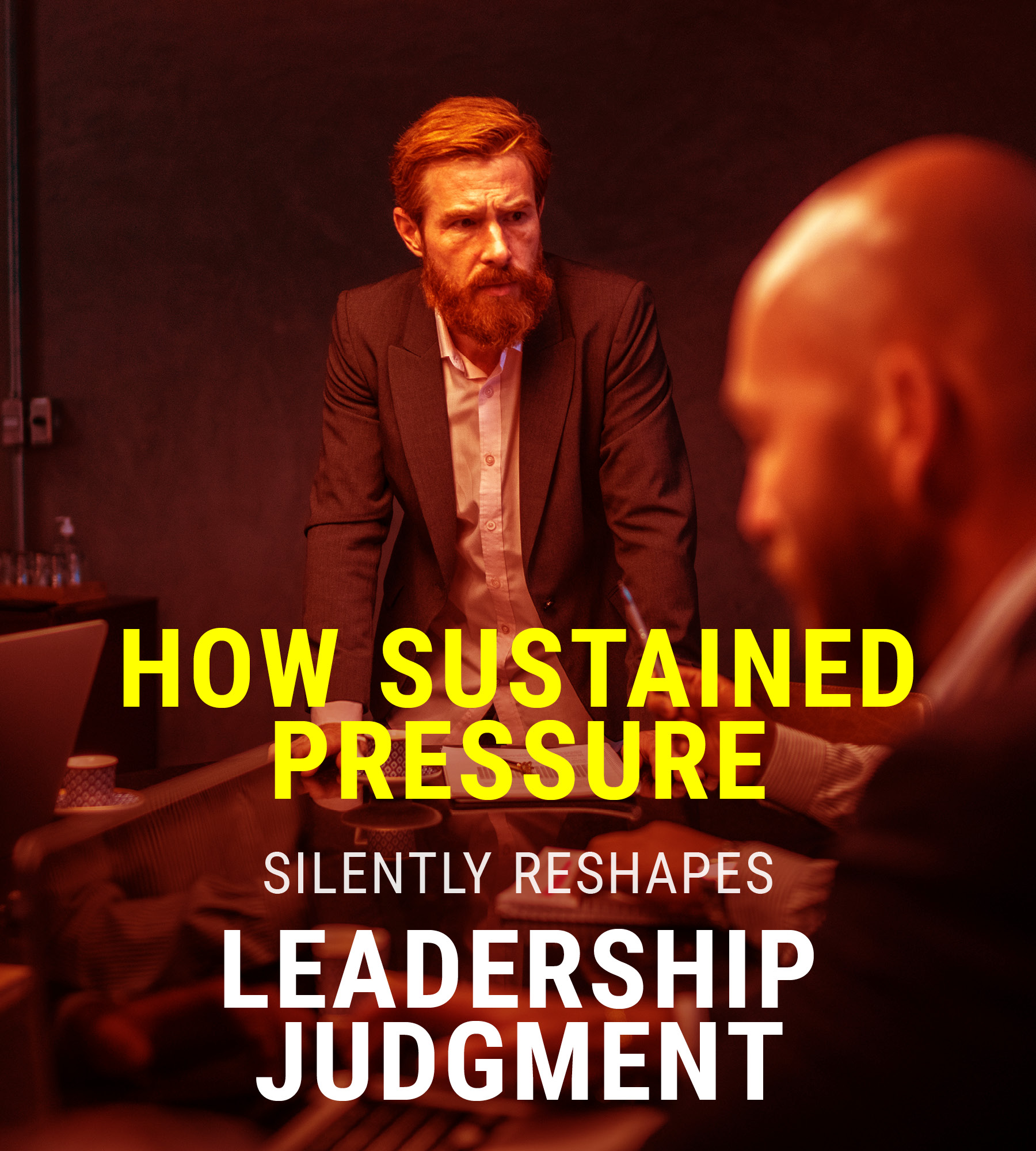
Leadership pressure rarely arrives as a dramatic moment. More often, it accumulates. Markets tighten. Regulation expands. Stakeholder expectations increase. Decision cycles accelerate while the margin for error narrows. Over time, the weight of responsibility becomes constant.
For CEOs and senior leaders, this environment is now normal. What receives far less attention, however, is the subtle way sustained pressure reshapes leadership behavior itself.
Most leaders don’t suddenly become ineffective when pressure increases. In fact, the opposite often occurs. Leaders become more focused, more decisive and more operationally engaged. Meetings become tighter. Conversations become more direct. Decisions move faster. From the outside, this can appear to be strong leadership. But internally, something more subtle may be taking place.
Judgment begins to narrow. Under prolonged pressure, leaders naturally compress their attention. Risk management, operational continuity and immediate outcomes begin to dominate the leadership agenda.
This is understandable. Organizations facing uncertainty need clarity and direction. However, sustained pressure has a psychological effect that is rarely discussed in leadership development. Attention narrows. Decision speed increases. Tolerance for ambiguity decreases. Consultation can begin to feel inefficient. Dissent can begin to feel like a delay.

What narrows in the mind of a leader can gradually narrow across the organization.
These changes are rarely deliberate. They emerge gradually as leaders adapt to the demands placed upon them. Yet leadership behavior does more than produce decisions. It produces signals. Employees observe how leaders behave under pressure. They notice the tone used in meetings, how disagreement is handled, how quickly decisions are made and whether alternative perspectives are welcomed or quietly discouraged.
Over time, these signals shape organizational climate. What narrows in the mind of a leader can gradually narrow across the organization. Debate becomes shorter. Risk tolerance decreases. Communication becomes more directive. Teams begin to prioritize speed over reflection.
None of these shifts may appear dramatic. Each one can feel justified in the moment. But accumulated over months or years, they begin to reshape culture. This is why organizational cultures rarely collapse suddenly. They drift.
For CEOs and senior leaders, recognizing this dynamic is critical because culture forms through behavior, particularly the behavior of those with authority.
When leaders operate under sustained pressure, their behavior becomes even more influential. Employees watch closely, often unconsciously mirroring the patterns they see at the top of the organization. This does not mean leaders should avoid decisiveness during difficult periods. In many situations, directive leadership is exactly what organizations require.
The challenge is not decisiveness. The challenge is unconscious permanence. When the behavioral compression created by pressure becomes the default leadership style, organizations can gradually lose the diversity of thinking and open dialogue that healthy cultures depend upon.
Effective leaders recognize that maintaining clarity under pressure requires discipline. They deliberately create structures that allow thinking to widen again. Some leadership teams maintain dedicated forums for strategic reflection rather than operational decision-making. Others encourage structured disagreement during executive discussions, ensuring alternative perspectives are heard before decisions are finalized.
Some CEOs deliberately invite challenge from trusted colleagues who are willing to question assumptions when pressure is high. These practices are not about slowing organizations down. They are about protecting judgment. Because the real risk of sustained leadership pressure is not always burnout or visible leadership failure. It is unnoticed adaptation.

Culture rarely follows what leaders say, it follows what leaders consistently do.
Leaders gradually adjust their behavior to manage increasing responsibility and those adjustments begin to shape the organization around them. Over time, culture follows behavior.
For CEOs, leadership under pressure is therefore not simply about endurance. It is about regulation. The discipline of recognizing when urgency has begun to narrow perspective and deliberately widening the space for reflection, challenge and broader judgment.
Organizations rarely drift because leaders stop caring. More often, they drift because pressure quietly changes how leaders think. And by the time the effects appear in performance indicators or employee engagement surveys, the behavioral patterns shaping culture have often been in place for some time.
Leadership under sustained pressure therefore demands more than resilience. It demands awareness. The awareness to recognize when pressure is beginning to shape judgment and the discipline to ensure that clarity, openness and thoughtful leadership remain visible across the organization.
Because culture rarely follows what leaders say, it follows what leaders consistently do – especially when the pressure is on.

Mark Jeffery
Contributor Collective Member
Mark Jeffery is an executive leader, leadership commentator and the author of ‘Lead Like a Father’. Through his writing and commentary, Mark encourages leaders to develop the discipline of maintaining clarity, humanity and connection while carrying significant organizational pressure. Find out more at https://www.leadlikeafather.com
 RELATED ARTICLES


 Home
Home
 Podcasts
 Covers
 Be Featured
 Community