Language
You can read the magazine in one of the following languages
5-min read

 Bookmark now

 Copy Link
At the executive level, most decisions don’t look reckless. They look strategic, commercial and rational. Increase revenue. Expand markets. Hire the coach. Acquire the company. Scale the team. Diversify income streams. On paper, they make sense.
But after two decades in business – through financial services, law, entrepreneurship and now executive coaching – I’ve learned that the quality of a decision is rarely determined by its logic alone. It’s determined by the energy underneath it.
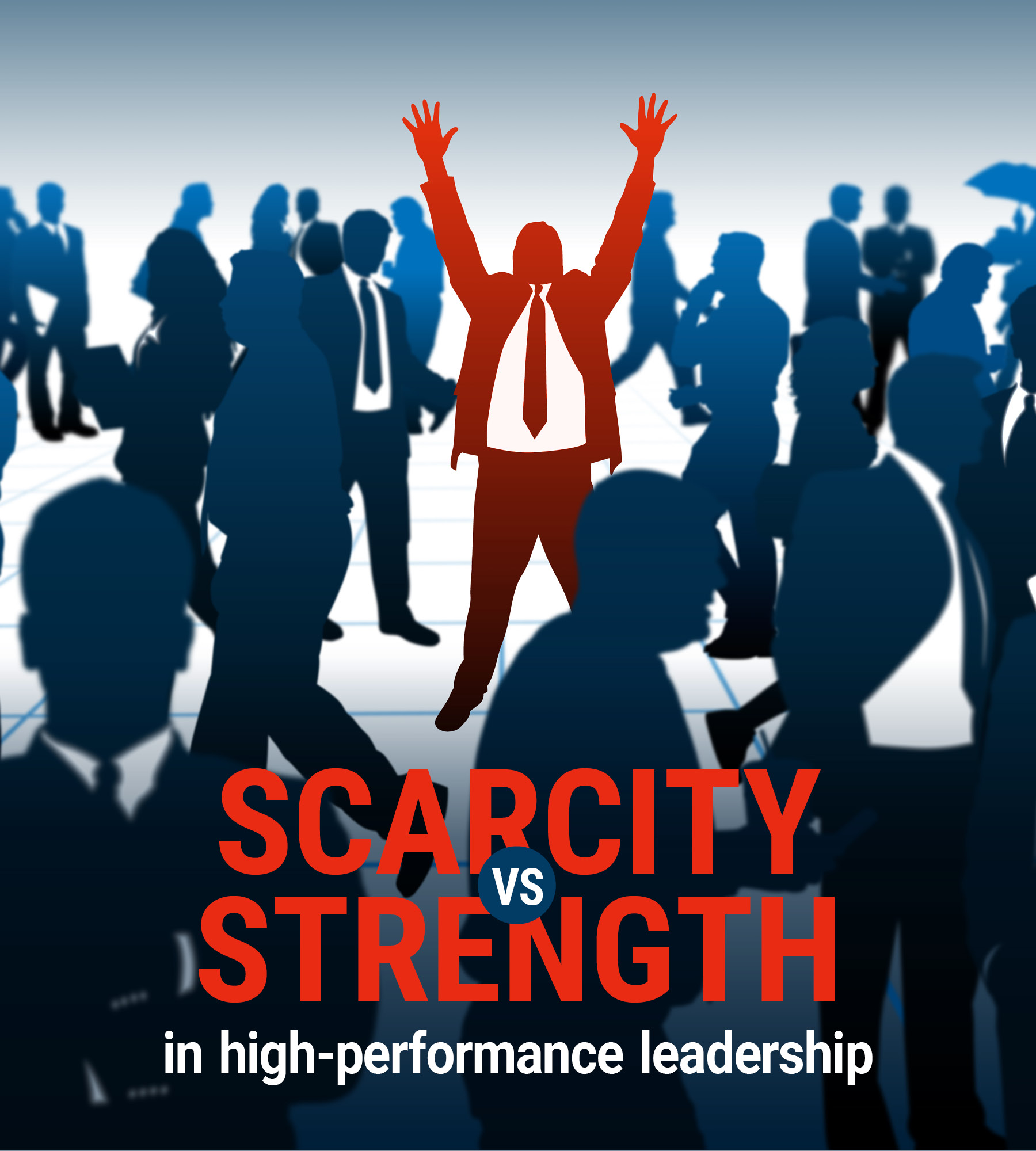
Because there is a profound difference between making a decision from scarcity and making one from strength – even if, on the outside, they look identical.
Scarcity at the CEO level doesn’t always sound like panic. It might sound like:
“We can’t afford to slow down.”
“Our competitors are moving faster.”
“If we don’t grow now, we’ll fall behind.”
“I should be further by this stage.”
“This next milestone will finally make things feel secure.”
These thoughts are subtle. They often masquerade as ambition and are socially rewarded. But beneath them is often an unspoken belief: “What we have isn’t quite enough yet. We need more.” More revenue. More recognition. More market share. More personal wealth.
There is nothing inherently wrong with growth. In fact, growth is healthy. The issue arises when growth is being used to resolve an internal deficit. Because when a decision is rooted in ‘not enough’, achieving the outcome rarely dissolves the feeling. It often magnifies it.
I’ve seen leaders double their turnover and immediately move the goalposts. I’ve seen founders exit successfully and feel more unsettled than before. I’ve seen high-performing executives earn more than they ever imagined and still feel behind.
Money magnifies identity. Success amplifies belief systems. It does not correct them.
Many senior leaders invest in coaching with a very clear commercial objective: increase profit, scale operations and optimize performance. And coaching absolutely can support those outcomes.
However, if the underlying driver is: “I need this because I’m not enough as I am,” no level of performance will resolve that.

If the underlying driver is: “I need this because I’m not enough as I am,” no level of performance will resolve that.
When coaching is sought out of fear – fear of being exposed, falling behind, not being capable enough – the engagement can unintentionally reinforce pressure. When it is sought from strength – from the belief, “I am capable and I value perspective” – the impact is transformational.
The distinction is subtle but critical. Support is powerful. But the reason you seek it matters.
In my work with high-performing leaders, I use a structure called The Imperfectly Perfect Pathway. It was designed for capable individuals who outwardly thrive but internally question. It begins not with tactics but with clarity of intention.
1. Clarity – What is truly driving this decision? Fear of losing ground or desire for expansion?
2. Priorities – Is this aligned with your long-term vision or reactive to external comparison?
3. Obstacles – What belief is underneath the urgency? Is it: “I’m behind” or “I need to prove myself”?
4. Operating System – Are you running an old script of relentless striving?
5. Reboot – What shifts when you operate from sufficiency rather than deficiency?
6. Fortification – How do you reinforce internal stability while pursuing external growth?
7. Integration – How do you lead from wholeness rather than pressure?
For many executives, the breakthrough is realizing they do not need more strategy. They need alignment.
A recurring pattern among high achievers is the belief that the next milestone will settle the internal restlessness. The next valuation. The next board position. The next income bracket.
But if the decision to pursue it is rooted in the belief that it will add something essential to you – status, security, worth – you unintentionally strengthen the part of you that feels incomplete.

This is not about abandoning ambition. It is about interrogating its source.
That voice becomes louder. “Good, but now what?” “You should be further.” “This still isn’t enough.”
The target keeps moving. This is not about abandoning ambition. It is about interrogating its source.
When a decision is made from trust rather than scarcity, the internal tone changes. It might sound like:
“This is an expansion, not a rescue.”
“I want this, but I don’t need it to validate me.”
“We are building from strength, not reacting from fear.”
“I can do this – and I can choose support.”
The commercial action may be identical, but the nervous system is different. There is steadiness rather than urgency. Choice rather than compulsion. Confidence rather than proving. And this is where leadership becomes both powerful and sustainable.
There is a particularly healthy position for CEOs to operate from: Knowing you are capable of building, leading and navigating complexity – and also recognizing you don’t need to carry it alone.
The extremes are familiar: “I can’t do this without help” or “I must do this alone to prove I deserve my seat.”
Neither creates resilient leadership.
The strongest position is: “I know I can do this. And I choose not to do it alone.”
That is strength without ego. Authority without isolation. Growth without proving. Believing you are enough doesn’t mean avoiding advisors, mentors or coaches. It means engaging them from partnership rather than dependency.
Before your next significant move – whether strategic, financial or personal – pause and ask: “If I deeply believed we were already enough, would I still make this decision?”
If the answer is yes, you are likely expanding. If the answer is no, you may be compensating. In both cases, awareness changes the quality of the outcome.
The aim is not to reduce ambition. The aim is to ensure that ambition is an expression of who you are – not a negotiation for your worth. Because the most sustainable, grounded and effective CEOs I work with are not the ones chasing to fill a void, they are the ones building from sufficiency. And that subtle internal shift changes everything.

Anna Perry
Contributor Collective Member
With a multifaceted career spanning finance, entrepreneurship, law and executive coaching and mentoring, Anna Pery is a seasoned professional dedicated to fostering growth and excellence in high-performing individuals and organizations. Beginning as a Financial Planning Manager at HSBC, she specialized in serving high-net-worth clients within the Premier team, honing skills in wealth management and strategic financial planning. Through tailored coaching programs, Anna helps elite clients and leaders navigate the complexities of their professional and personal lives, fostering resilience, clarity and fulfillment. For more information, visit https://www.alignedlife.co.uk
 RELATED ARTICLES


 Home
Home
 Podcasts
 Covers
 Be Featured
 Community