Language
You can read the magazine in one of the following languages
5-min read

 Bookmark now

 Copy Link
Sugar has been a pillar of the Indian economy for centuries. In ancient times, people would chew on sugarcane stalks and enjoy the juice. But around 500BC methods of boiling sugarcane juice into crystals were developed in India, revolutionizing the storage and transport of this ‘sweet spice’. The word ‘sugar’ even comes from the Sanskrit word ‘sarkara’.
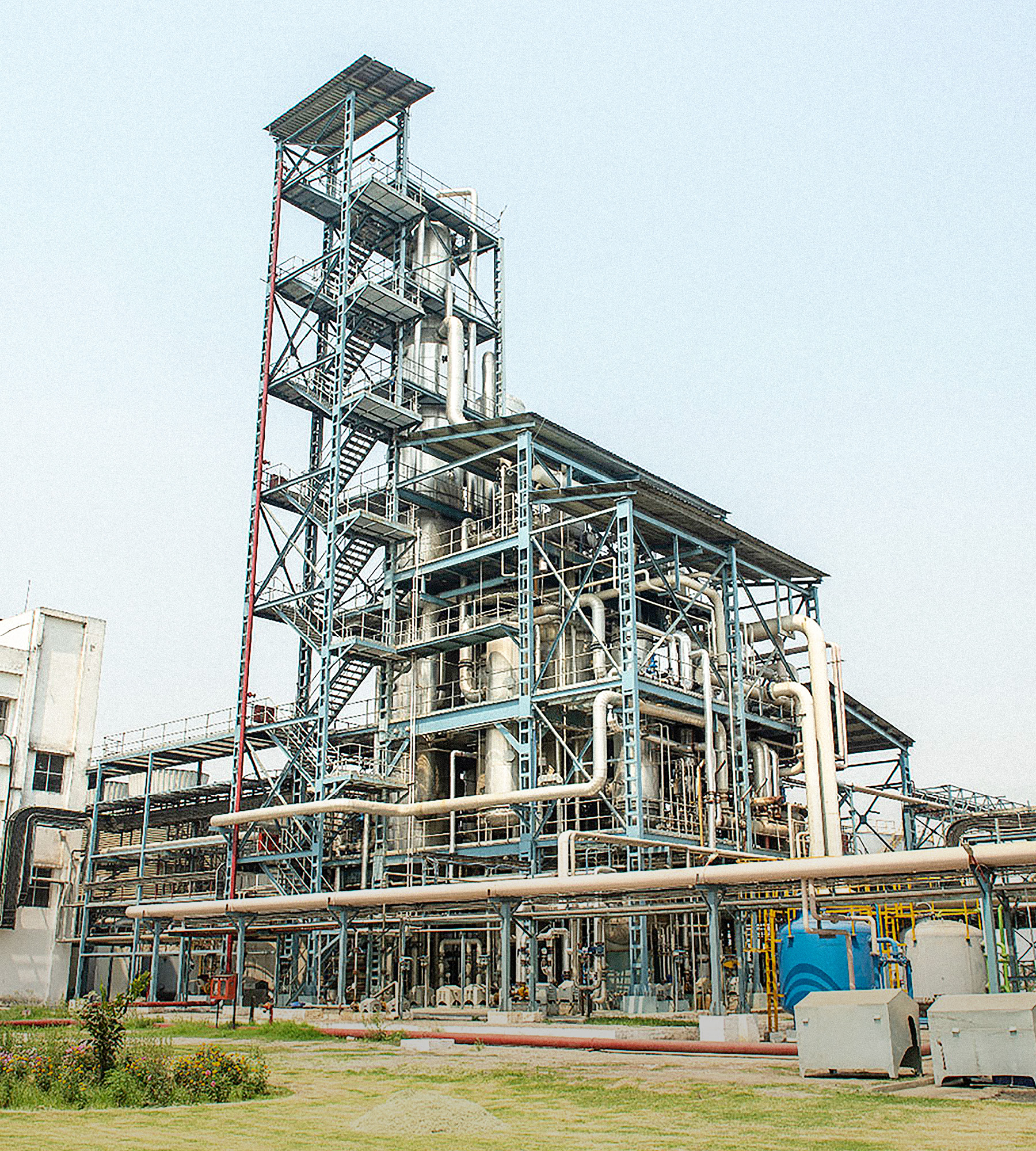
Today, Indian sugar producers are seeking to achieve greater success by diversifying, and the possibilities extend well beyond dessert. Balrampur Chini Mills (BCM), one of the country’s leading sugarmakers, was among the first to take sugar beyond its sweet origins into the realms of distillery and cogeneration.
BCM, a family business, has become one of India’s largest producers of sugar and ethanol, a green fuel which, when blended with petrol, makes for a lower cost alternative for vehicles. The company also produces its own green power using bagasse, a fibrous waste product of the sugar refining process.

Driving this greener direction is Avantika Saraogi, BCM’s Executive Director. A fourth-generation member of BCM’s founding family, Saraogi is well aware of the legacy she carries, as well as her responsibility to take her birthright into a brave new world.
“Our goal is to prove that sugarcane is the new oil,” Saraogi tells The CEO Magazine.
“Initially, I had two responsibilities. The first was sugarcane, and the second was value addition to the product and byproduct. So that means aligning all of the goals which are related to sugarcane availability – grower engagement, making the varieties, the strategy, the procurement and how we’ll get the biggest delta.”
What this meant for Saraogi was the unenviable task of influencing the minds of half a million farmers across 10,000 villages, as well as inspiring BCM’s 700-strong cane team.
“In this line of work, it takes a year or two of relentless work to get results,” she says. “One weather event can wipe it all away. And growers have their own needs and problems. If you don’t understand all of that, if you’re unable to align it, even your best strategy can fail.”
Every month, Saraogi visits BCM’s factories and talks with her company’s people, as well as visiting the growers in their homes and fields.
“I’m happy doing that,” she says. “I’m helping their children, I’m talking to them about their lives, their problems, how we can make things better and how they can get the best value from their fields while making sure we get the best value from the sugarcane they supply to us. My grandmother used to do this, so it comes very naturally to me.”
The family connection remains: Saraogi’s father still looks after the business side of BCM from the Lucknow head office.
“He also looks after the technical side, which is handled extremely efficiently. We’re very proud of the efficiency of our technical achievements.”
The company’s expertise and the passion of its employees have proven integral to riding storms of uncertainty in the industry.
“Our goal is to prove that sugarcane is the new oil.”
“Last year, viable cane areas dropped by 11 percent,” she says. “This is down to local agro-climatic factors. But our cane availability only dropped 1.6 percent, and that was because of good farm practices and the team wanting to rally to make BCM successful. One simple mantra I hold is that if five and a half lakh people are blessing you, you cannot fail. In my experience, it holds so true.”
Saraogi is also responsible for the value addition to BCM’s products and byproducts. Having started her journey with the company as a driver of new initiatives, it’s a task very much in her wheelhouse.
“Whenever any new technology emerges in the sugar industry, they want Balrampur to have it because they know we’ll make it successful,” she says. “Additionally, I do a lot of research to find new avenues. When I found the bagasse-based solution, I was hooked. I had to have it.”
Convincing the BCM board of the potential of green power generation took four and a half years of persistence on Saraogi’s part.
“It was a totally new area, and we have so much to lose,” she says. “But it’s our biggest pivot, and it will change not just Balrampur but the whole industry. I wanted to do something good with sugar.”
In its most recent pivot, the company, with the assistance of the Uttar Pradesh government, is launching the first-ever bioplastics plant in India. Like the other plants in BCM’s portfolio, it runs with state-of-the-art efficiency made possible by partners such as Yokogawa India, a leading provider of industrial automation and test and measurement technology. Unlike the others, however, the end result is polylactic acid (PLA), a plastic filament used for 3D printing.
“It’s 100 percent biobase, 100 percent compostable,” Saraogi says. “We’re achieving two global firsts with our plant: the first PLA plant that goes from sugarcane to PLA in one location and the first to be completely run on renewable energy.”
As if that weren’t enough, Saraogi is pressing on with her cultural changes inside BCM.
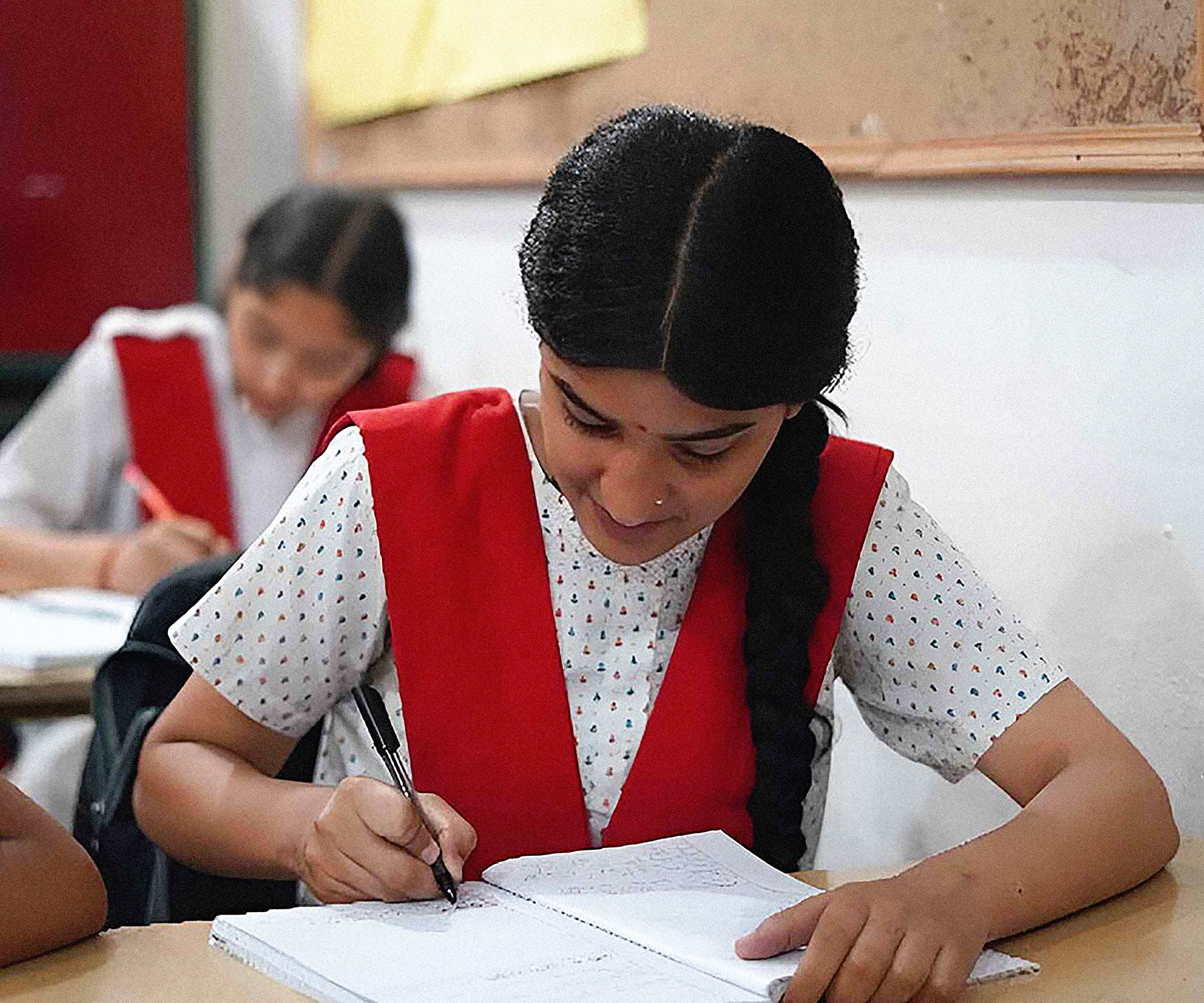
“Very few women work in sugar, and I’m trying to change that; it’s a slow process, but it’s happening.”
“One is the employment of women in this industry. Very few women work in sugar, and I’m trying to change that; it’s a slow process, but it’s happening,” she says. “Secondly, I’m trying to push for more automation and digitization where possible. Reducing the manual load is something we need to do in this industry.”
Whatever greenfield BCM delves into next (and Saraogi says her sights remain fixed on biomaterials and biochemicals), there remains that strong family foundation. Saraogi wears her grandmother’s ring every day to stay inspired.
“In the early days, there was a time when we didn’t have enough money to pay our farmers. My grandmother wouldn’t accept it; she’d create so much pressure in the office. ‘I don’t care, I will not eat until the farmers are paid’,” she says.
“And so they took out a loan and paid them. Now, we pay within seven to 10 days, and that’s a commitment which will last my lifetime. I’ll always get emotional talking about it, but my grandmother is literally the guiding principle for everything we do.”
 RELATED ARTICLES


 Home
Home
 Podcasts
 Covers
 Be Featured
 Community