Language
You can read the magazine in one of the following languages

5-min read

 Bookmark now

 Copy Link
Reimagining most of Singapore’s most iconic locations would be on any architect’s wish list. But Tay Yanling, Founding Partner of the multi-award-winning firm TA.LE Architects, has gone one step further and put sustainability at the heart of all her projects.
The most notable of these is City Square Mall and its new Singapore Sustainability Academy Annex, which uses surprising everyday materials like recycled plastic bottles, bubble wrap waste, old tennis balls, disposable chopsticks and sawdust waste from furniture factories. It’s a mindset shift from the design principles that came to the fore during the COVID-19 pandemic, Yanling reflects, which focused on the human experience of a public place.
Now, architectural strategy has evolved to become what she calls “humanity-centric”, looking at not just how people perceive and behave in the spaces they occupy, but also how a space can become significant from a sustainable, future-looking perspective.
That’s in line with Singapore’s Green Plan 2030, which commits to reducing the city-state’s carbon emissions and becoming a hub for sustainability innovation.
“A lot more attention is now being paid to the sustainable aspect. For example, with the usage of upcycled materials and more green products, there’s a shift toward this design style,” says Yanling, who founded the firm in 2014 because she wanted to do her part for the built environment and now for the good of the planet.

“We are designing for the future and longevity, not for convenience.”
“Gradually, the industry is starting to move toward becoming more sustainable and green. Wellness and comfort are equally important, but of course, now our interest is to see how we can use green and sustainable products in a very beautiful manner – innovative products that are not only meaningful but can maybe also be applied in a new way.
“In terms of this circularity that we are very passionate about, it’s not just about reducing waste or recycling, but a passion for doing things that are good for humanity, because we are designing for the future and longevity, not for convenience.”
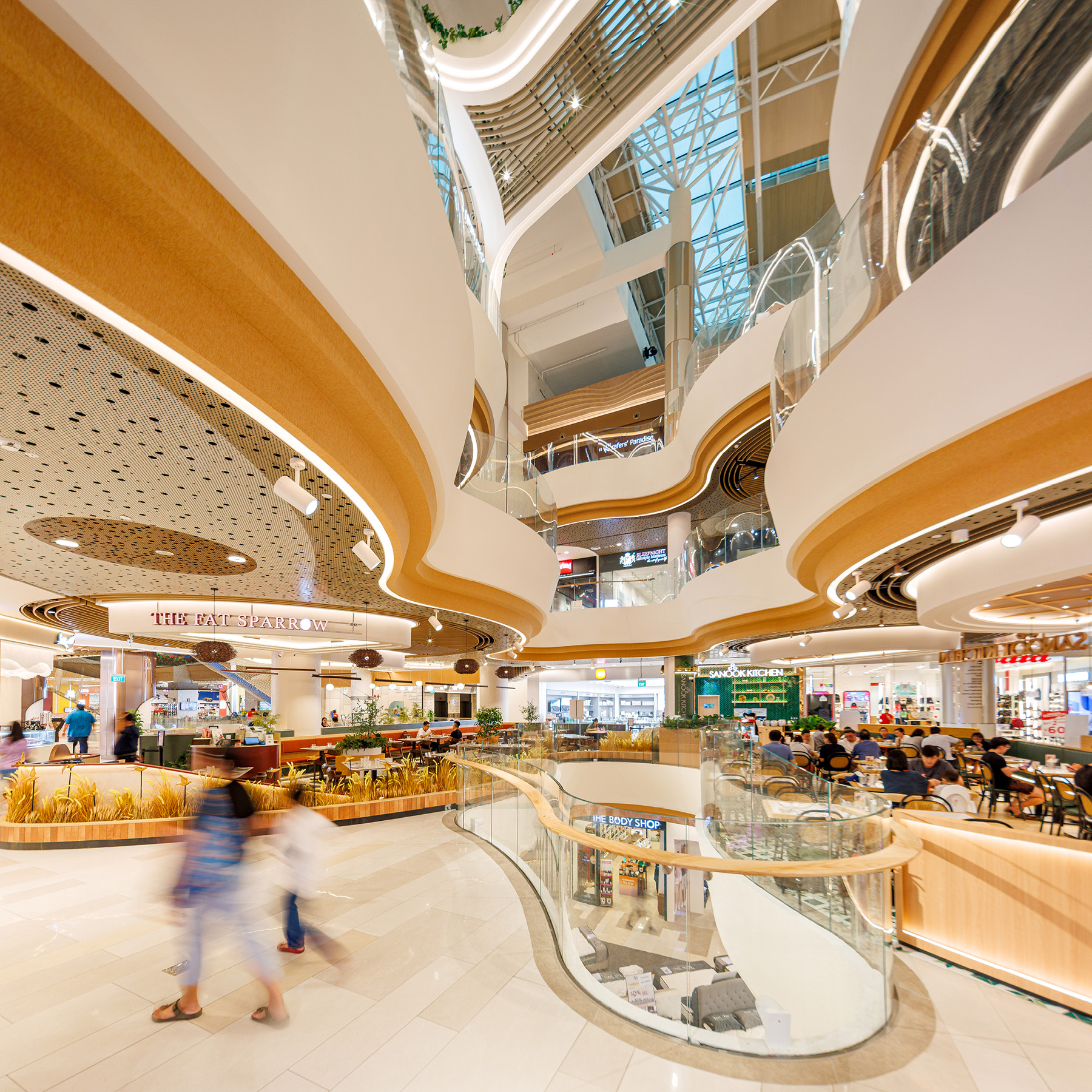
TA.LE Architects took on the City Square Mall as a US$38.5 million renovation project in 2024. With its gross floor area now covering 6.8 hectares, it reopened in 2025 as the country’s first eco mall, Yanling reveals.
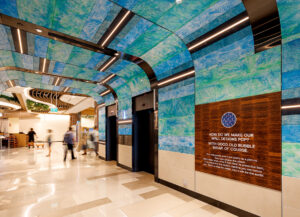
“We wanted to demonstrate the usage of innovative material and really get people excited and impressed by how different things are being used. For example, if you go to City Square Mall now, you’ll see a few more big atriums that are actually clad with a new, very innovative textile that’s actually made from polyethylene terephthalate (PET) bottles,” Yanling explains.
“The PET bottles are collected and shredded down to be repurposed into a high-tech textile, which is water-resistant, fire-resistant and mold-resistant. So it becomes not just a decoration but something quite advanced that helps the building, too.”
Moving through the mall, visitors will also see how green materials are used in its lift lobbies, which she says have become a “showcase of different green products” to provide an educational experience to guests.
Yanling gives the further example of waste bubble wrap, which has been artistically redesigned to become wall and ceiling panels, as have disposable chopsticks. Repurposed sawdust, otherwise thrown out by woodworking factories, has been reworked into a high-tech, fireproof material called ‘unistrate’ panels, which her team made into decorative screens to conceal smoke ducts and fire shutters.
“When we designed the lift lobbies, we were also aware that sometimes people don’t know how special some of these materials are, so we ensured that every lift lobby had an explanation board to tell shoppers about the materials that have been used and the ideas behind them,” she says.
“As you go through all the spaces that we crafted, it’s almost like in a gallery where you see things and then get an explanation right next to it, making the eco-educational experience more impactful.”
The City Square Mall project included the development of the EcoTrain, taking a decommissioned train cabin and transporting it to the outdoor garden plaza in front of the mall. Now an educational green gallery aimed at children, the EcoTrain has been fitted with energy-saving fitments, with part of the flooring made with old tennis balls and the ceiling with unistrate panels.
The mall’s roof also saw the addition of the Singapore Sustainability Academy Annex, a space for hosting sustainability and climate-focused events, which involves working with different non-governmental organization partners.
“It’s truly a very exciting research journey to see how we can move forward and test new ground with new material,” Yanling says.
“We had a lot of fun doing it, and we feel it is also educationally meaningful to the public, as we are equally excited about immersive experiences.
“Wherever there is urbanization, there will be challenges we can solve using design.”
“We always feel that an upcycled product should not remain in its original visual appearance and it must also look beautiful. It is important to allow the public to move beyond their usual first impression of upcycled products or materials.
“Visual stigmas of using upcycled products often stem from associations with being ‘worn,’ ‘imperfect’ or ‘amateur.’ These perceptions can also act as a barrier to wider public acceptance, particularly in interior design where a ‘pristine’ or ‘new’ aesthetic is traditionally valued.
“But if we can transform it, we can propel it to a different level and people start to become excited and impressed and want to know more.”
Inspired by the success of City Square Mall’s sustainability revamp, Yanling now has her sights set on expansion across South-East Asia into countries like Thailand and Malaysia.
“The next step will be for us to expand beyond Singapore. Wherever there is urbanization, there will be challenges we can solve using design,” she concludes.
 RELATED ARTICLES


 Home
Home
 Podcasts
 Covers
 Be Featured
 Community