Language
You can read the magazine in one of the following languages


4-min read

 Bookmark now

 Copy Link
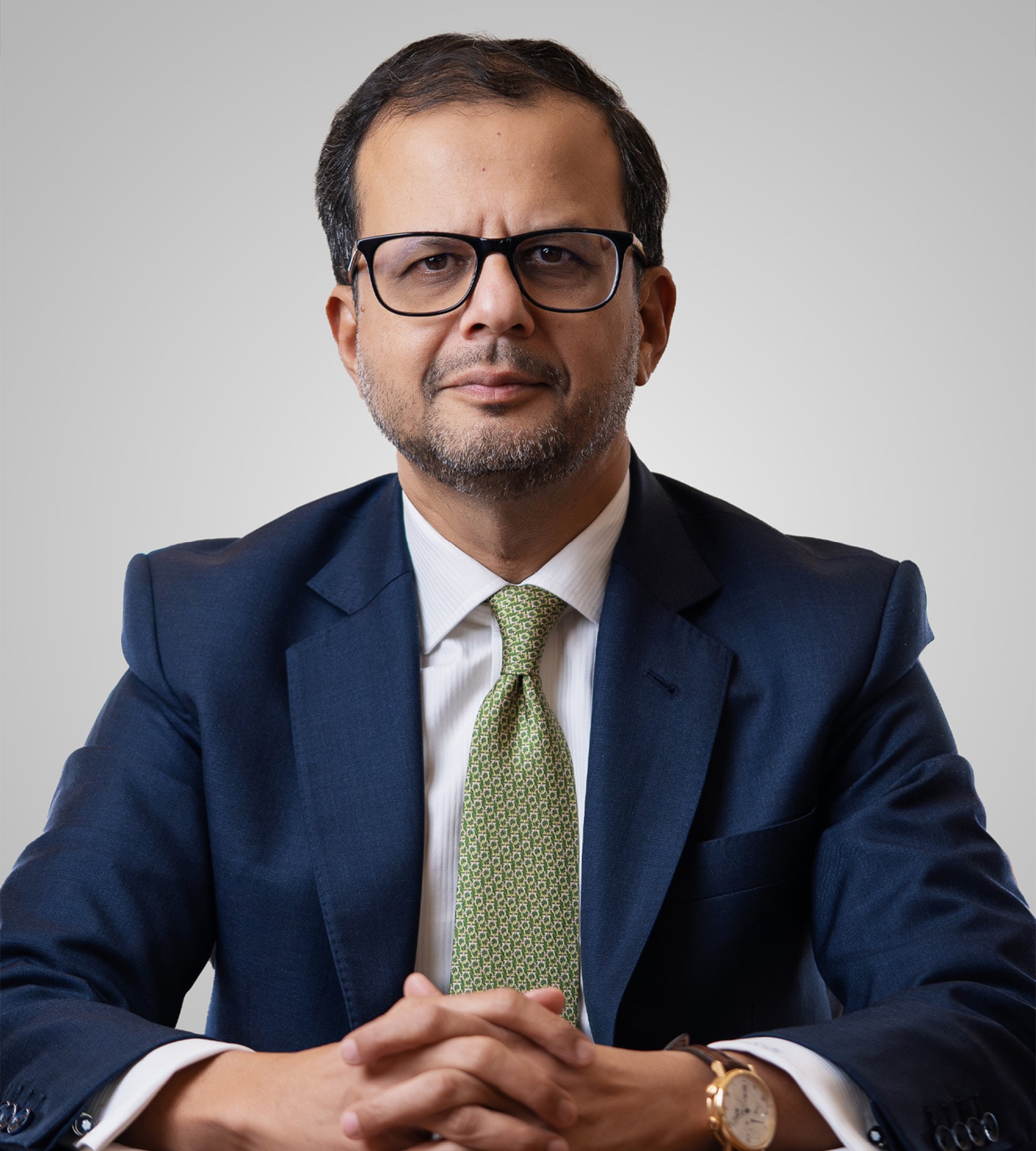
It was while managing one of TNB Genco’s plants during the early days of his career, that Shahrir Abdul Latiff learned that every decision matters. More than that, he quickly came to understand that reliability should never be taken for granted.
These are lessons that have stayed with him in every role he has held at TNB Genco in the close to four decades since that time, a major chunk of the company’s 77-year history. And they resonate just as strongly now in his position of Managing Director.
“I simply focus on giving my best and the journey led me here,” he tells The CEO Magazine.
“We are a steward of assets that are critical to Malaysia’s energy security. We are the largest power generation company in Malaysia and a critical pillar of the country’s energy ecosystem. We operate and manage 12 power plants and supply more than half of the electricity generated in Peninsular Malaysia.”

“We are entrusted with protecting national energy security and economic development.”
It is a task where reliability plays a pivotal role, with the company responsible for ensuring a continuous supply of power for its customers while preparing for the energy needs of tomorrow.
“We function as a business unit, but our role extends beyond that,” he says. “We are entrusted with protecting national energy security and economic development.”
This dual mission bestows upon TNB Genco a clear point of difference from other players in the utilities space, with vast numbers of Malaysian businesses, industries, hospitals and public services all depending on the electricity generated by its assets.
“As an organization with that dual responsibility, we must first deliver operational excellence by ensuring safe, reliable and efficient power generation,” Shahrir says.
“Secondly, we must prepare for the future. We are talking about energy transition, energy security. We need to strengthen our capabilities, embrace innovation and we need to be the key player Malaysia’s energy transition, especially Malaysia’s energy transition roadmap.”
With TNB Genco’s own ambitions firmly aligned with the growth plans of the nation, structure is key. Shahrir is reaffirming the two pillars that underpin the company’s expansion strategy – protecting core business while building for the future. The former hinges on operational excellence, while the latter is around building on those fundamentals.
“For us, building the future means responsibly developing new generation capacity that is sustainable,” he explains, highlighting the role of industry partners and players in bringing these to life.
“Currently demand is very high, especially from data centers.”

Advertisement
But balancing new developments with this soaring demand represents another balancing act. The entire process of establishing a new power plant, from inception to operation, can take between five to seven years, according to Shahrir.
“That’s why we are looking at green technology,” he reveals.
“Across our portfolio, we are moving away from coal – in our energy transition roadmap, we are aiming for 50 percent of coal to be retired by 2035, with a further target of zero coal by 2050. We are replacing coal with combined cycle gas turbines.”
Currently the type of machines available in the market are hydrogen ready, and that is a transition toward green energy.
“Of course, when you talk about gas power plants, they are not 100 percent green, but when we put an element of hydrogen that means we are moving towards green. But we still need this type of plant for energy security.”

“We are aiming for 50 percent of coal to be retired by 2035, with a further target of zero coal by 2050.”
When it comes to solar in Malaysia the potential comes mainly from solar plants, according to Shahrir.
“The intermittency of the power from solar is an issue, but we need the best load,” he says. “So this combined cycle gives the best load to us.”
These projects are already in TNB Genco’s pipeline and will be ticked off over the next five-to-10 years, with promising progress already being made, in his view.
“We have been performing quite well. But remember in our fleet, we have new and old plants. So in terms of efficiency, we are embarking into this modernization of our operation and maintenance of the plant,” he continues.
This is where AI comes into play through TNB Genco’s use of digital twins, intelligent predictive and diagnostic monitoring, anomaly detection, System one optimization systems, machine learning and more.
“These are the improvements that we are implementing at our existing assets,” Shahrir says. “AI assists us in gathering data and doing the priority maintenance. These are all the elements that we require to make the right decisions in a timely manner. I think that is very, very crucial.
“We need to improve further. Now, with hydrogen-ready gas turbines already in our pipeline and coming soon, we are preparing our capability to ensure that we are ready at all times to safely and reliably operate and manage our assets.”

“We are custodians of political national assets and future readiness.”
For Shahrir, it all comes back to the challenging tightrope that TNB Genco has walked for decades.
“I think that’s what the TNB Genco is all about: national responsibility, where we power half of Peninsular Malaysia, and stewardship,” he explains.
“We are custodians of political national assets and future readiness. We must strike the right balance between national responsibility and performing as a business entity.”
 RELATED ARTICLES
6-min read
5-min read
2-min read



 Home
Home
 Podcasts
 Covers
 Be Featured
 Community