Language
You can read the magazine in one of the following languages

5-min read

 Bookmark now

 Copy Link
Once upon a time it was a faceless engine powering countless platforms from the shadows. Now, AI has exploded into the mainstream, causing a stir wherever it goes. And as the old saying goes, with great power (and greater exposure) comes great responsibility.
Concerns around AI’s access to sensitive data are growing louder day by day. Many AI companies are taking this to heart, conscious of a future in which AI will play any number of roles.
“Organizations had ambitious plans for AI,” says James Manning, Co-Founder and CEO of Sharon AI, Australia’s leading sovereign AI infrastructure provider.
“But building this infrastructure is extremely complex and involves lengthy timelines and high financing needs, and often means sending sensitive data offshore.”
In 2021, Manning helped establish Sharon AI as a cloud storage solutions provider, but as AI began to gain a foothold in the public consciousness, he could see its potential as well as its limitations.
“We set out to close that gap by delivering trusted, sovereign AI infrastructure here at home,” he adds.
Sovereign AI, the ability to independently develop and govern AI using in-house infrastructure with no reliance on foreign parties, is another hot-button issue that has emerged during the rise of the technology. Sharon AI has seized the opportunity to meet Australia’s sovereign AI challenges.
“What sets Sharon AI apart in this regard is that it’s founded, led and run in Australia, with security and sovereignty at our core,” Manning says.
“We measure ourselves by the infrastructure we deliver and what it enables for customers, who include AI natives, enterprises, hyperscalers, government and researchers. Our aim is for them to spend their time using AI rather than wrestling with the infrastructure behind it.”
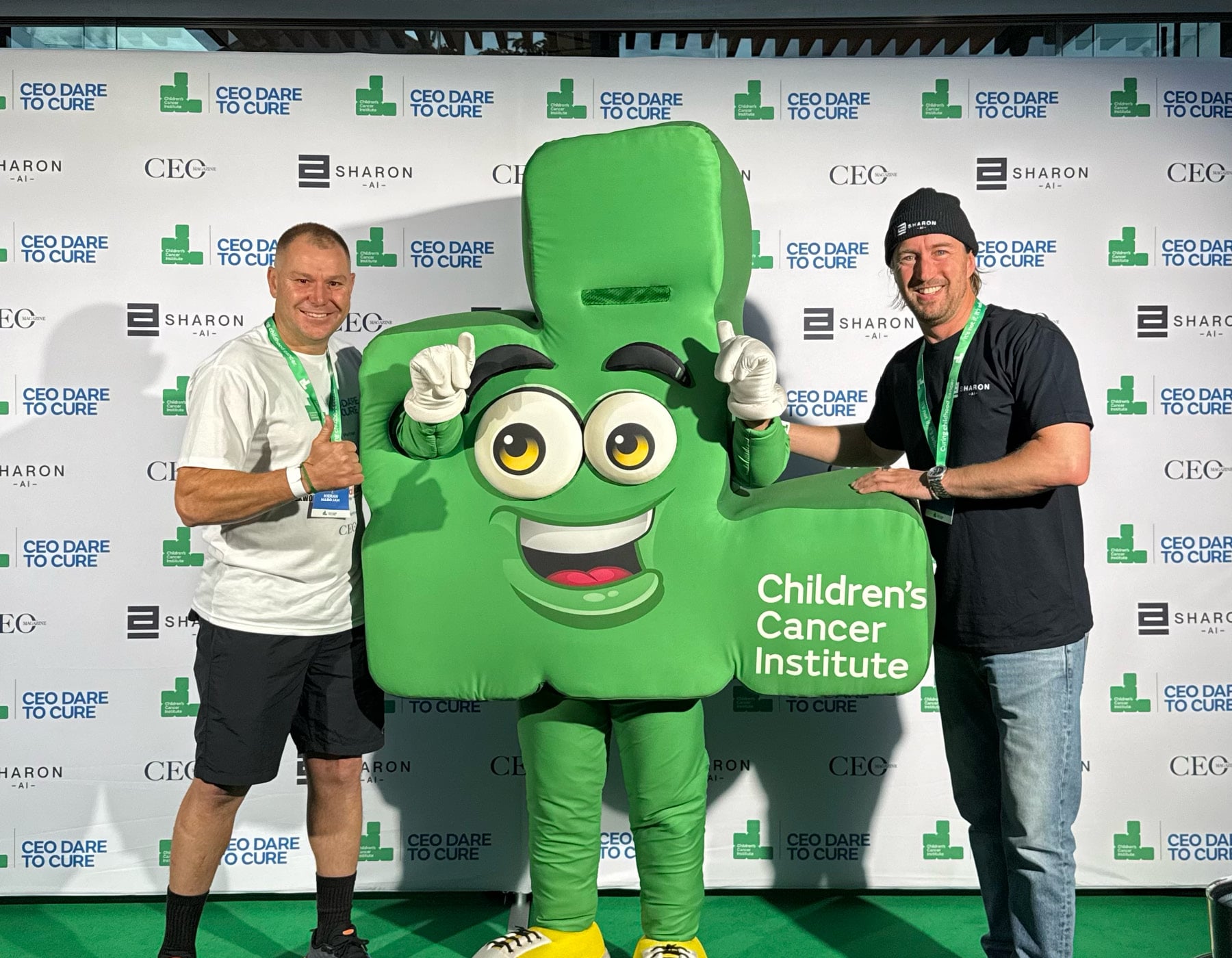
Kieran Habojan, Head of Sales Asia–Pacific, and Andrew Leece, Co-Founder and Head of Strategic Partnerships, at the event
“People do their best work when they believe their company stands for something beyond its own results.”
- James Manning
The biggest issue Manning could see was that to meet demand, AI would need access to vast processing power and storage. His experience in the technology, finance and infrastructure sectors had left him with a valuable lesson: technology only delivers change if it’s reliable and cost-effective.
“That’s shaped how we run Sharon AI,” he explains. “It’s a partner-first model, built on strong relationships with technology and infrastructure providers, so we can deploy quickly without carrying unnecessary risk.”
One of the biggest concerns surrounding the advent of AI is the fear that it may replace the human element in any given application. Sharon AI has addressed this in several ways; some subtle, some loud and clear.
“Human connection is the basis of most things worth living for,” says Kieran Habojan, Sharon AI’s Head of Sales Asia–Pacific. “It’s what moved me into a career where I get to meet remarkable people and organizations driving innovation and changing the way we live day to day.”
In an industry that can too often submit to clinical logic, Habojan has taken a different approach.
“The way I lead is to start with the person, understand what matters to them and work backwards from there,” he says.
Manning says that philosophy has spread throughout the company.
“People take ownership, work collaboratively and hold themselves to a high standard, because the work we do is critical to our customers,” he points out.
“People do their best work when they believe their company stands for something beyond its own results, so when employees bring a cause forward, it shows they feel trusted and that their voice counts.”
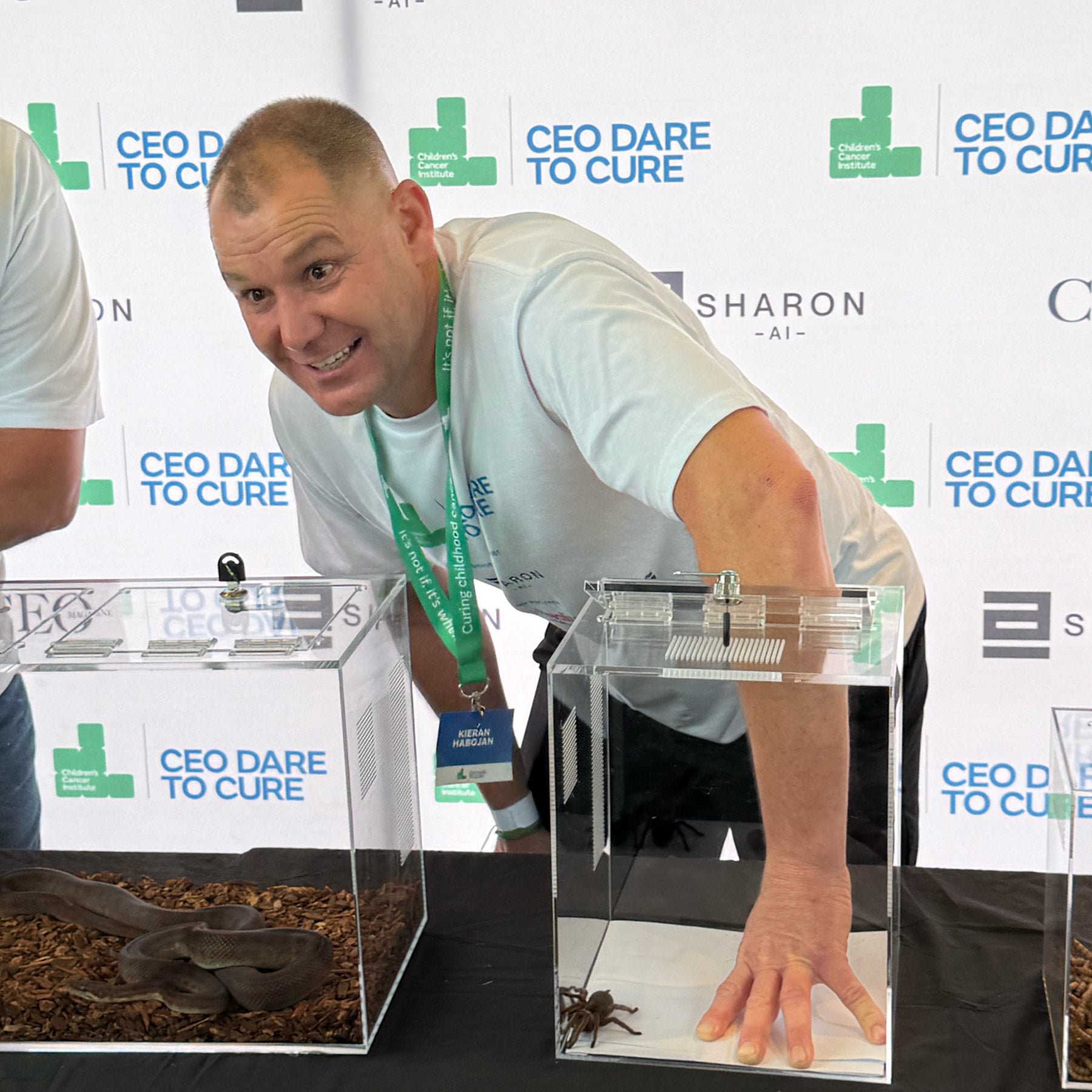
Habojan with his hand in a tarantula box for the ‘Wheel of Fear’ dare
“Our ambition is to build the sovereign AI infrastructure that lets Australian innovation scale globally.”
- Kieran Habojan
This is why Habojan, a Hodgkin’s lymphoma survivor in childhood, proposed that Sharon AI sponsor this year’s CEO Dare to Cure. Run by the Children’s Cancer Institute, the event asks Australian CEOs to take on daring challenges – from shaving their head to abseiling down a 30-meter waterfall – to raise money for groundbreaking children’s cancer research.
Habojan says it’s a good fit.
“I believe high-performance computing and AI can accelerate research into childhood cancer and many other serious diseases,” he says. “That belief is a big part of why I joined Sharon AI.
“Our ambition is to build the sovereign AI infrastructure that lets Australian innovation scale globally, and medical research is one of the clearest examples of what that makes possible.”
Manning believes childhood cancer research is a mission worth backing and hopes Sharon AI’s support encourages other leaders to take part.
“It reflects the values we hold as a company – a long-term view, a commitment to delivering on what we promise and a belief that progress comes from people with different expertise working toward the same goal,” he says.
“To other executives, my advice is to start with a cause your people care about and commit properly, because involvement from the whole team does more than a one-off donation.”
Manning hopes that using Sharon AI’s success to give back through causes such as CEO Dare to Cure will ultimately be a big part of the company’s legacy.
“Sharon AI is a young company, and we chose to back CEO Dare to Cure early because we believe in supporting those that help others,” he says.
“Business success and community impact belong together. Business leaders have a responsibility to make sure the success of their company reaches beyond shareholders.”
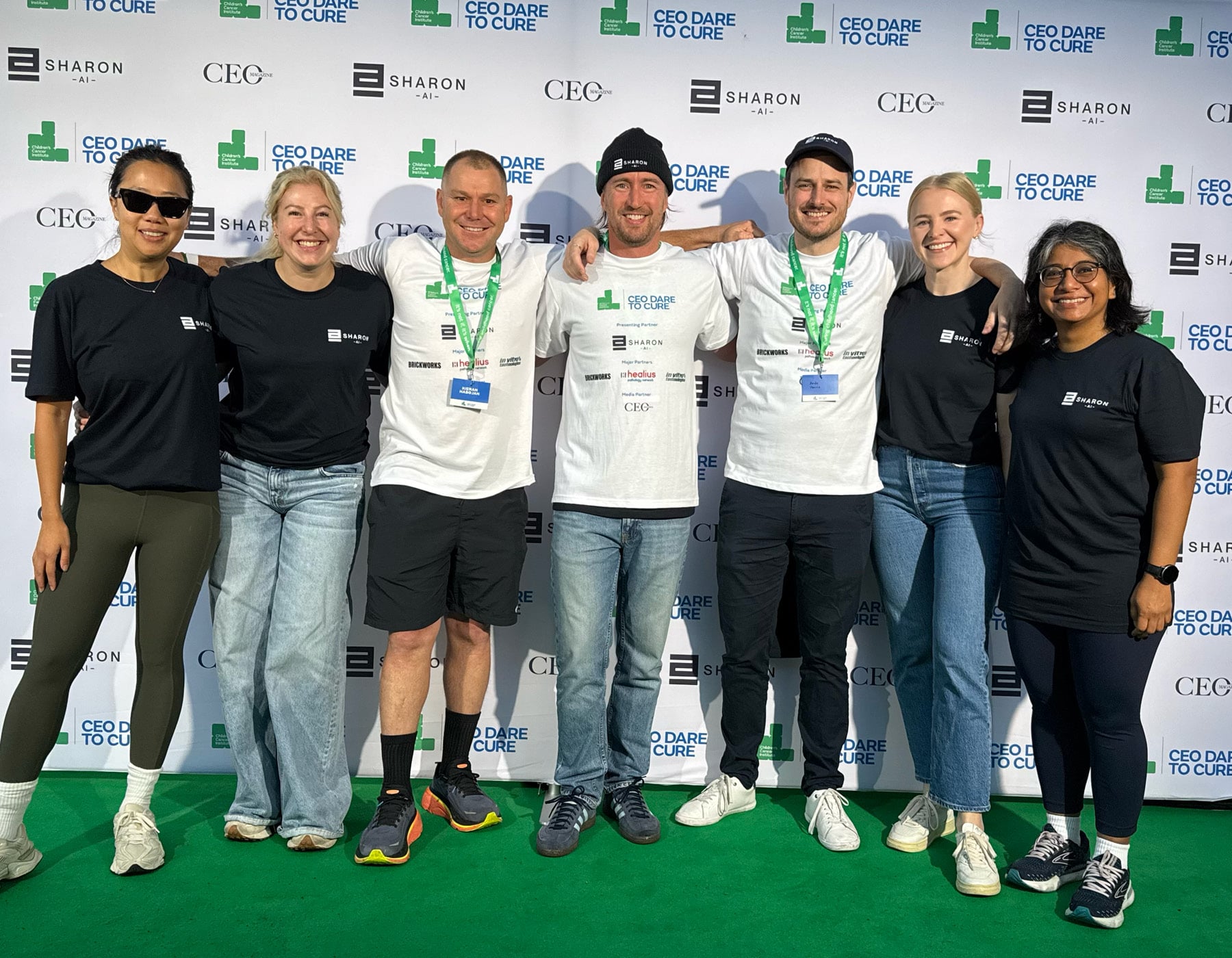
The Sharon AI team at the Dare to Cure event
“Business success and community impact belong together.”
- James Manning
Meanwhile, Sharon AI continues to grow. Its AI Factory platform has a secured capacity of 212 megawatts, with 120 megawatts contracted, and 68,000 NVIDIA graphics processing units are expected to be incorporated by mid next year.
“The numbers matter, but what matters more is what they make possible for customers and for the country’s sovereign AI capability,” Manning says. “Already, our customers are achieving amazing things using our AI Factories.”
Habojan says equally amazing things can be achieved internally as well. After all, he’d know.
“One passionate person can make a real difference to an organization like the Children’s Cancer Institute,” he says. “I’d love every CEO to get involved in CEO Dare to Cure.”
 RELATED ARTICLES
 SPOTLIGHTS ON LEADERS


 Home

 Podcasts

 Covers
 Be Featured

 Community