Language
You can read the magazine in one of the following languages

5-min read

 Bookmark now

 Copy Link
Smart cities are at the cutting edge of urban innovation, blending technology and sustainable infrastructure to create more efficient, connected, livable spaces.
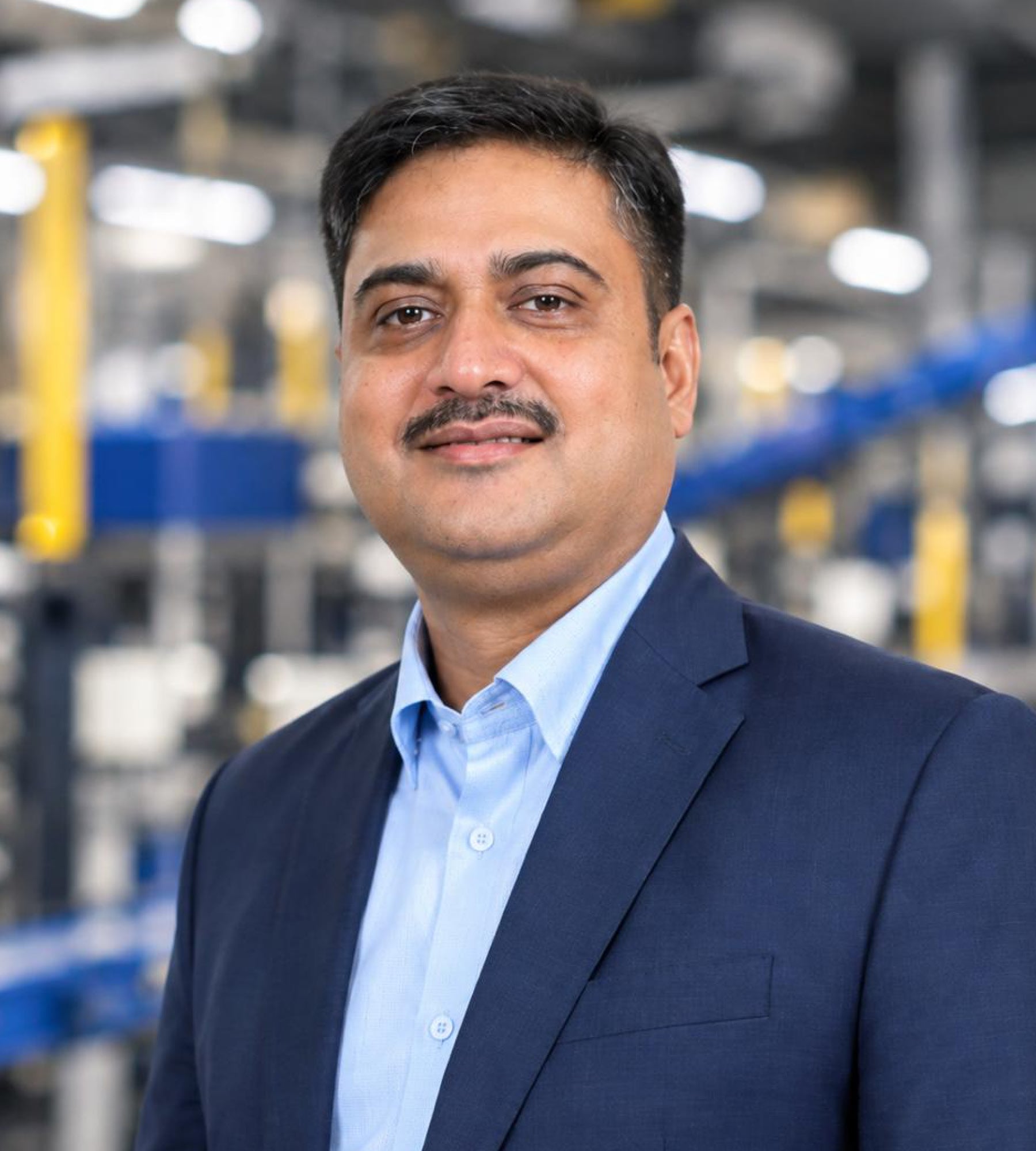
One of the leading experts in this area is Raghunath Babu, who served as Vice President of Singapore-based Surbana International Consultants for 17 years, working on sustainable urban planning and design across 21 countries.
“A smart city doesn’t mean a big city,” he explains. “It can mean any community, any place where it is sustainable and provides people with better standards of living.”
With his wealth of knowledge and experience, Babu took over as CEO Smart Cities for GMR Group in September 2024, a leading Indian infrastructure conglomerate and the world’s second-largest airport operator. His role is to lead a new business unit set up to bring smart solutions to airports and what the company calls ‘aerocities’.

“We are trying to understand how we can create a very sustainable ecosystem surrounding an airport.”
Inspired by the concept of an ‘aerotropolis’, where the economy and infrastructure of a city or part of a city is centered around an airport, GMR Group’s aerocities blend airport infrastructure with modern urban living.
By integrating hospitality, business, entertainment, education and lifestyle elements within walkable, well-connected districts, each aerocity creates a seamless experience for travelers, residents and professionals alike.
“We currently have aerocities in Delhi and Hyderabad, with two more under development in Goa and Bhogapuram,” Babu says. “GMR Group also has partnerships with other airports including in Cebu and Crete. It’s my aim to apply smart city technology solutions, which I’ve learned during my career and from closely observing Changi Airport Group.
“One of the things that attracted me to this role is the pace of technology implementation in India. People have been talking about smart cities for many years, but now it’s starting to take shape. I want to see, if not a large smart city implementation, then sustainable aerocities.”
What sets GMR Group’s aerocities apart is a commitment to fostering vibrant communities. These spaces are not only designed for business efficiency and connectivity, but also to nurture human interaction, artistic expression and cultural exchange.
“We are trying to understand how we can create a very sustainable ecosystem surrounding an airport. We want to make it a nice place to go, hang out and do business.
“Typically, when people visit from other cities, they have to travel from the airport into the city center, but we want our aerocities to be a destination in their own right,” Babu explains.
One of the advantages GMR Group has in this area is overseeing the airports and aerocities together. When internal stakeholders are managed by a single entity, smart city solutions can be easily applied.
“Smart cities solutions can be used to seamlessly coordinate services in real time. For example, passenger information from airlines or nearby highways can help inform crowd management at airports.
“This means how many immigration channels need to be open, how many security staff need to be in place and how many trolleys are available,” Babu explains.

Advertisement
Another example is Delhi International Airport’s new revolutionary Unified Total Airside Management system. This solution integrates real-time data from multiple sources across the airport, enabling operators to monitor aircraft movements, ground service equipment and vehicle activity using a single collaborative platform.
A key partner in GMR Group’s smart city initiatives is Awiros, a leading AI video platform driving automation across airport operations. From smart cart operations automation to vehicular traffic flow management, Awiros delivers real-time, AI-powered solutions that ensure a seamless and efficient experience for all airport stakeholders.
“All these initiatives are very important because if a beautiful place becomes congested, it will not be sustainable anymore,” Babu says.
“We have lots of different companies working within our airports and aerocities; my objective is to make them all work together to make the entire operation sustainable.”
Beyond simply ensuring that business is sustainable, it’s also important that GMR Group’s airports and surrounding aerocities are environmentally sustainable, a big challenge for such a carbon-intensive sector.
“In terms of carbon credits, usability and technology adoption, our aerocities should be among the best cities in the world. Our ESG framework is very clear that we need to reduce carbon footprints, so we are working on solutions that will minimize this impact,” Babu enthuses.
This initiative is supported by GMR Group becoming a member of the United Nations Global Compact (UNGC), the world’s largest corporate sustainability initiative.
As part of this, the company has pledged to align its strategies and operations with the 10 principles of the UNGC, which cover human rights, labor, environment, anti-corruption and the United Nations’ Sustainable Development Goals.
To date, all of GMR Group’s airports are green building certified by the United States Green Building Council or the Indian Green Building Council, ensuring sustainable practices from the design phase itself.
The company is also actively advancing climate action by pursuing carbon neutrality and net zero emissions through energy-efficient systems, renewable energy adoption and low-carbon technologies.

“In terms of carbon credits, usability and technology adoption, our aerocities should be among the best cities in the world.”
According to Babu, part of this includes creating green environments, as demonstrated by Delhi Airport, which has planted over 700,000 seedlings to improve the overall aesthetic of the airport and the surrounding environment.
“Our airports are huge and it can take several minutes to drive from the perimeter to the terminal. Along the way, you’ll see on the roadsides very elaborate landscaping and a green factor that will reduce the carbon dioxide in the air significantly,” he notes.
Looking ahead, GMR Group is set to grow from strength to strength with the upcoming construction of Aerocity Goa, the first aerocity in West India in proximity to a destination airport.
Thanks to the company’s commitment to cutting-edge technology, sustainability and livability, it is poised to transform the lives of millions across India and the world.
“We are focused on business excellence and are taking it as seriously as Changi Airport. There’s nothing like that in any other infrastructure company in this country at this point in time,” Babu concludes.
 RELATED ARTICLES
 SPOTLIGHTS ON LEADERS



 Home
Home
 Podcasts
 Covers
 Be Featured
 Community