Language
You can read the magazine in one of the following languages

6-min read

 Bookmark now

 Copy Link
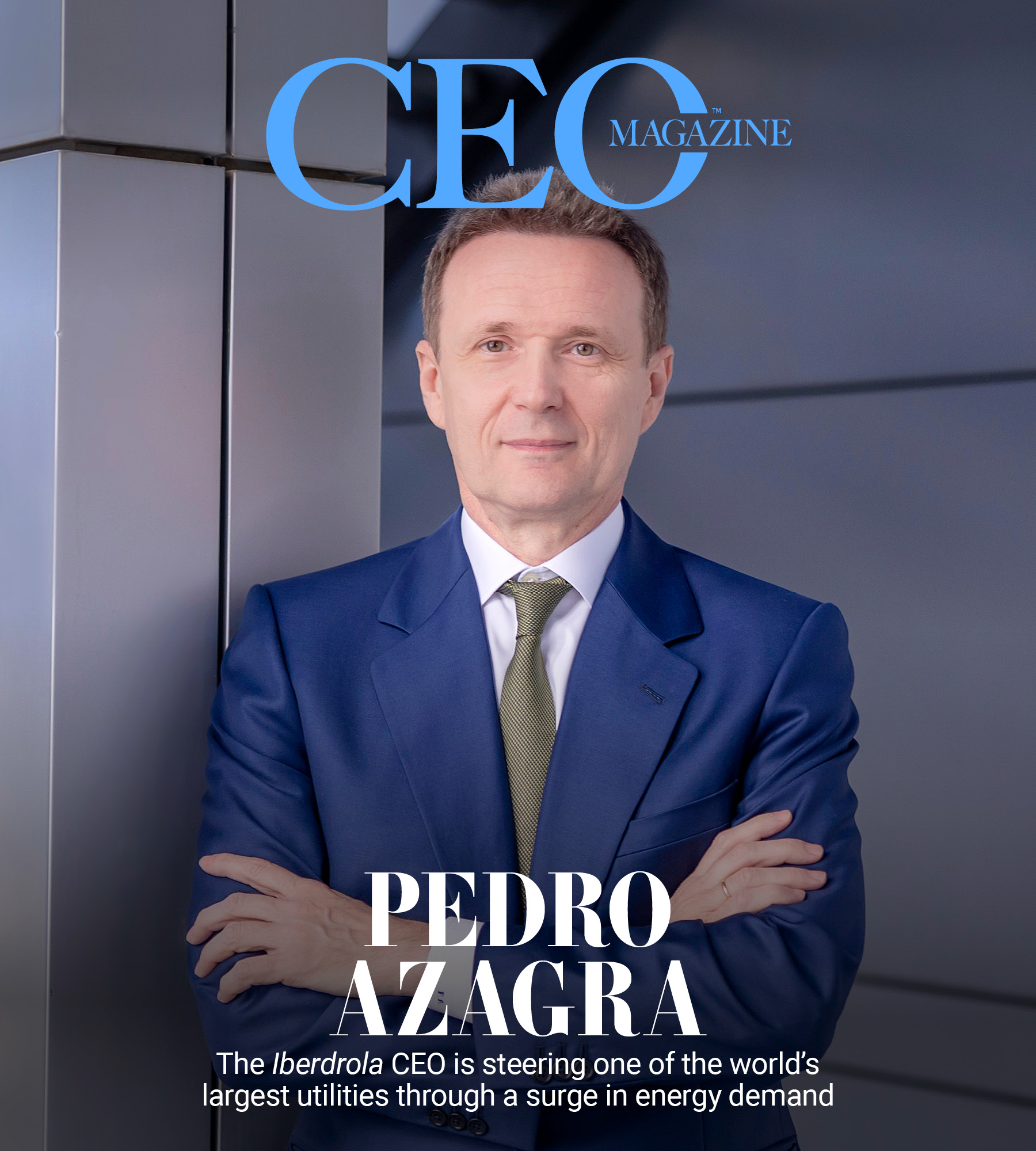
Long before heat pumps went mainstream and we all started carrying multiple smart devices, one company had already determined that our growing need for energy was unstoppable: Iberdrola.
“We’ve been saying it nonstop for over 20 years,” CEO Pedro Azagra tells The CEO Magazine. “Increasing energy demand is leading the global energy transition, reshaping industries, economies and geopolitics.”
A major driver of economic growth, electrification enables energy supplies that are reliable, secure and predictably priced, Azagra explains.
“Increasing demand is not cyclical or affected by temporary economic trends,” he points out. “It’s structural and supports long-term growth.”
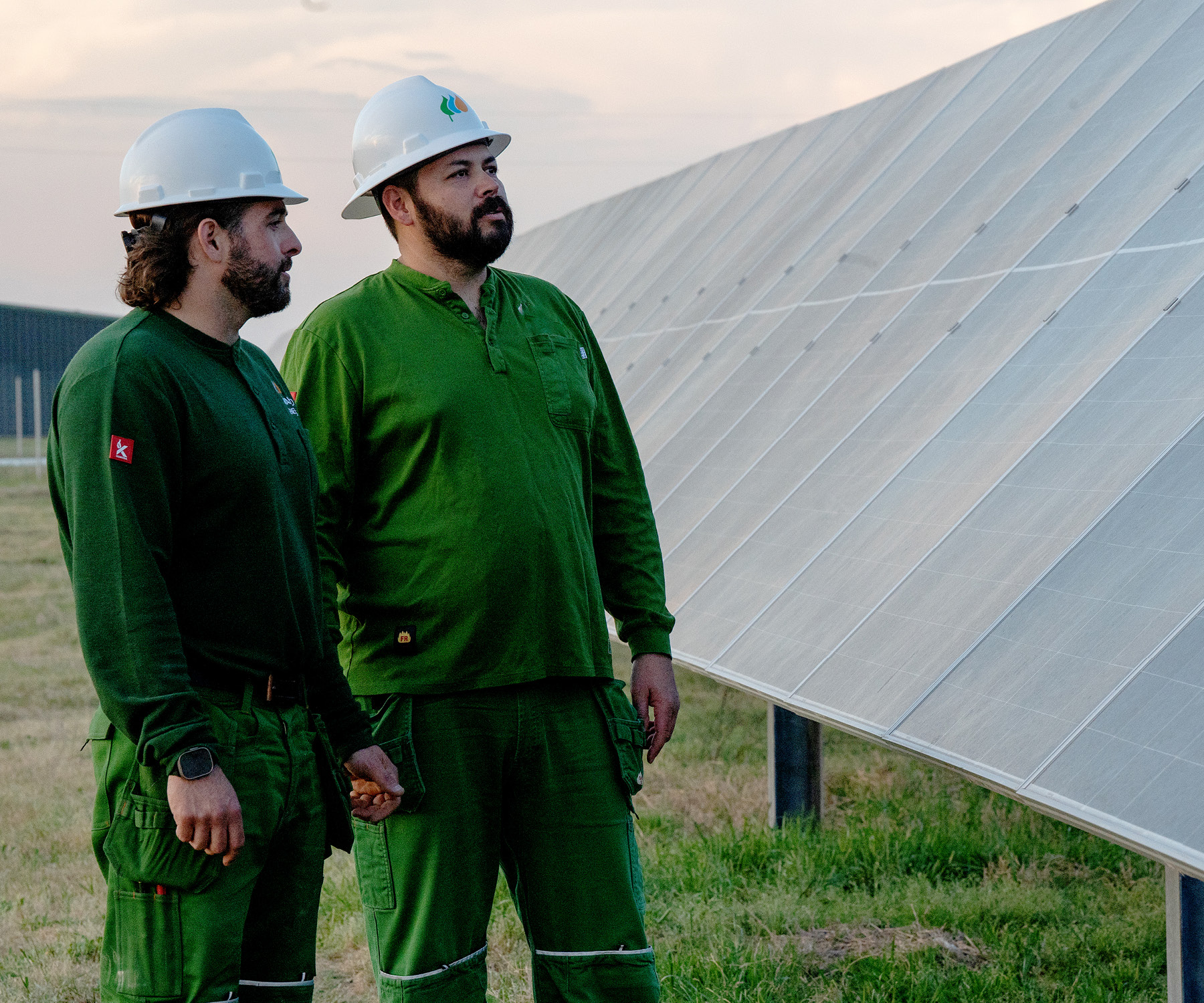

As the largest utility in Europe by market capitalization and among the leading in the United States, Iberdrola has been on the leading edge of this shift for decades.
“Providing electricity is embedded across our entire business, nonstop and at scale,” he says.
The publicly-listed company has built a business anchored in regulated power grids and renewable generation, supported by a very disciplined and forward-looking financial strategy. It’s a model that has worked for over 25 years – and Azagra, who became CEO in 2025 after heading up its United States subsidiary Avangrid – has no intention of shaking up a winning recipe.
“Last year alone, we invested nearly €15 billion [US$17.5 billion], with almost €6.3 billion [US$7.4 billion] in net income,” he notes confidently.
Big electricity projects include the New England Clean Energy Connect, a hydropower transmission line in the United States that is delivering affordable, reliable and clean power to Massachusetts, a state with limited in-state energy resources.
“We also have a beautiful cable, our Eastern Green Link, connecting Scotland and England,” Azagra says.
Its two-gigawatt capacity is enough to power millions of homes.
Iberdrola is also building photovoltaic plants in Spain and battery storage facilities in Australia as it expands its global footprint. Under Executive Chairman Ignacio Galán’s two-decade leadership, the company has followed a disciplined and highly selective strategy, targeting countries with strong economic ratings.
“The better the rating, the lower the risk from a macro and regulatory point of view, and the more competitive the financing conditions for large-scale projects,” Azagra explains.
That’s why, for example, Iberdrola’s investment in the state of New York has grown from US$351 million per year to nearly US$2.3 billion per year. Alongside the United States, the United Kingdom, Spain and Brazil are priority markets for the company, as are strategic projects in France, Germany and Australia.
“Every major project we undertake now costs a couple of billion dollars,” he notes. “The only way to continue improving and maintaining the growth that we have from an earnings point of view, therefore, is to have sustainable growth in large, stable countries.”
Another way to forge ahead as the energy transition accelerates? Integrated infrastructure bringing grid, generation and storage capabilities Iberdrola owns into a single resilient, efficient and high-performing system.
“The common denominator is the grid,” Azagra says. “There’s a lot of talk about AI, data centers, electrification, renewables, nuclear and gas, all of which are needed. But if you don’t have the grid in the middle, the energy transition can’t happen.”
Iberdrola adopts a region-by-region approach to the formula, depending on local energy sources and needs. Even so, there are always hurdles to navigate, particularly inconsistent regulation and permitting. That’s why collaboration is crucial, whether with technology providers like Siemens, Gamesa, Hitachi, GE, ABB and Mitsubishi, or financial partners that provide access to capital.
“We’re always very healthy from a financial point of view but, at the same time, when we have significant opportunities to scale, we look to involve partners,” Azagra explains.
Large-scale investments require substantial capital. Some of Iberdrola’s long-term partners include South American fund Pravi, Australia’s Macquarie Group and its largest shareholder, Qatar Investment Authority.
“Our partners deploy billions with us. These are long-term strategic commitments, not one-and-done projects,” he says.

These partners back Iberdrola for its visionary strategy which – after trailblazing in the renewables space – is now focused on repeating similar success with AI.
“Decades ago, we pioneered renewable energy and we need to do the same with AI,” Azagra states with conviction. “It’s a must.”
More than 300 AI projects are currently being rolled out – some centrally from an AI center of excellence, others on a local geographical basis. Some are in partnership with companies like Amazon and Microsoft.
“We’re embracing AI proactively, as opposed to reacting,” he adds.
Among the uses are robot dogs that are inspecting stations and cables, while AI-enhanced data analytics are anticipating production and optimizing power plants. On the retail side of the business, AI is now improving service, alongside reducing costs.
“It’s full speed ahead right now, and it’s going to be a nonstop dynamic for the company in years to come,” Azagra states.
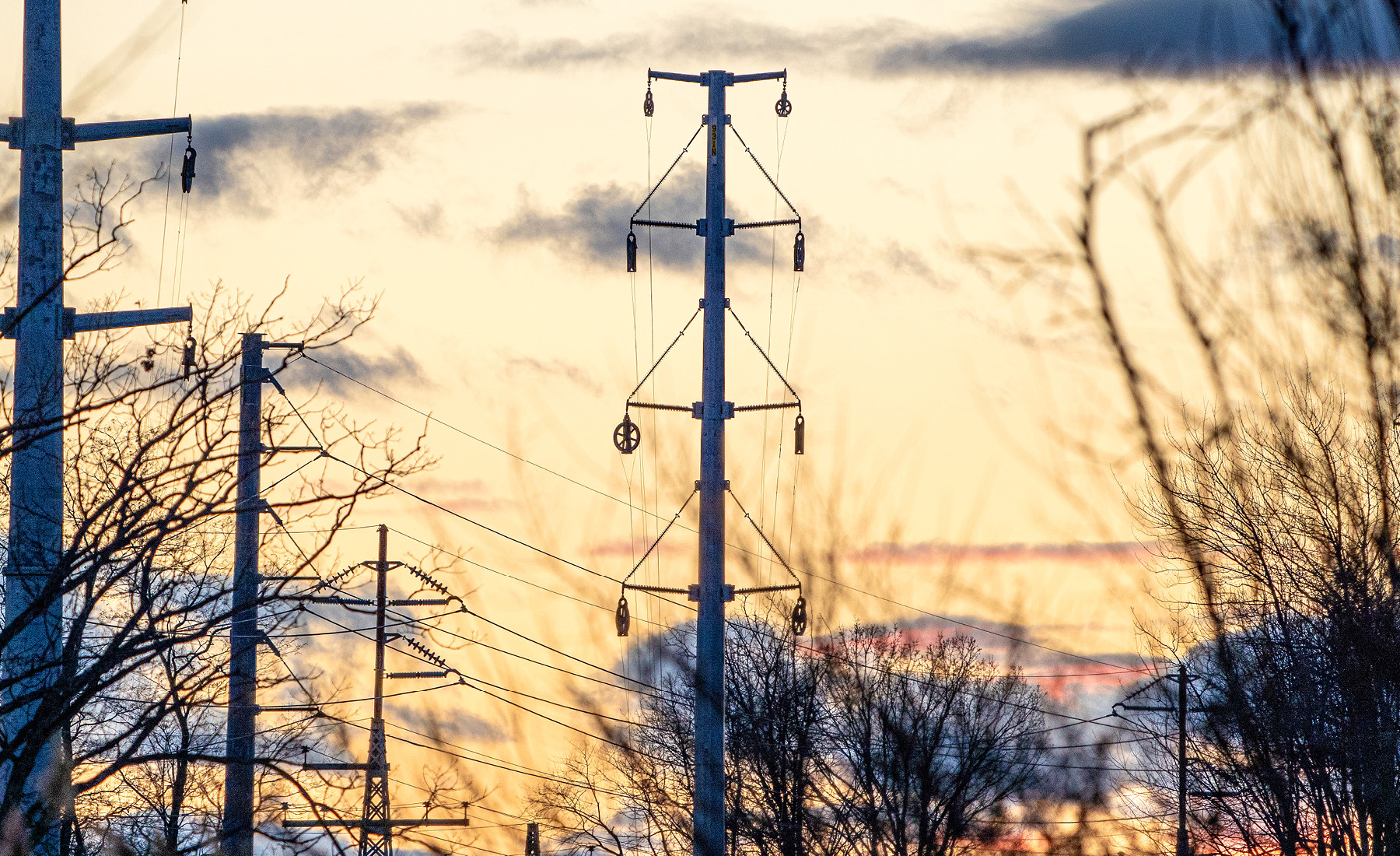
Twenty years ago, Iberdrola had zero assets in the United States.
“Right now, we have almost US$50 billion in assets. We are a US$1 billion net income company. We are producing electricity in 25 states and have both electricity and gas utilities in four states,” Azagra says.
“When you consider those facts, it demonstrates how we have been able to position ourselves in the right place for long-term success. It provides an example of decisive leadership and execution in the right way to the right country.”
Democratizing AI and innovation across Iberdrola’s global workforce of 50,000, however, presents cultural and operational challenges. Azagra makes innovation a regular topic in leadership meetings and ensures that its employees are being retrained for necessary AI skills.
Yet it’s far from a one-way street.
“A few years ago, it was the company incentivizing employees to adopt new technologies,” he says, adding that employees are now taking the lead.
“They’re coming to us and telling us what we could and should be doing, and they’re putting projects on the table.”
It’s hardly a surprise that Iberdrola is recognized globally for attracting and developing top talent – and Azagra explains that succession is a topic that’s always on the table.
“If you don’t have the next generation of leaders, you’ve got a problem,” he says. “It has to be about creating a culture that develops and promotes talent.”
The company fosters a culture of continuous learning and internal coaching is critical.
“We create leaders by coaching and delegating to make sure they have challenging responsibilities,” he reveals.
Supporting underrepresented groups is another priority, including supporting women-led companies as suppliers. Nearly a quarter of its workforce is female – above the industry average of 20 percent.
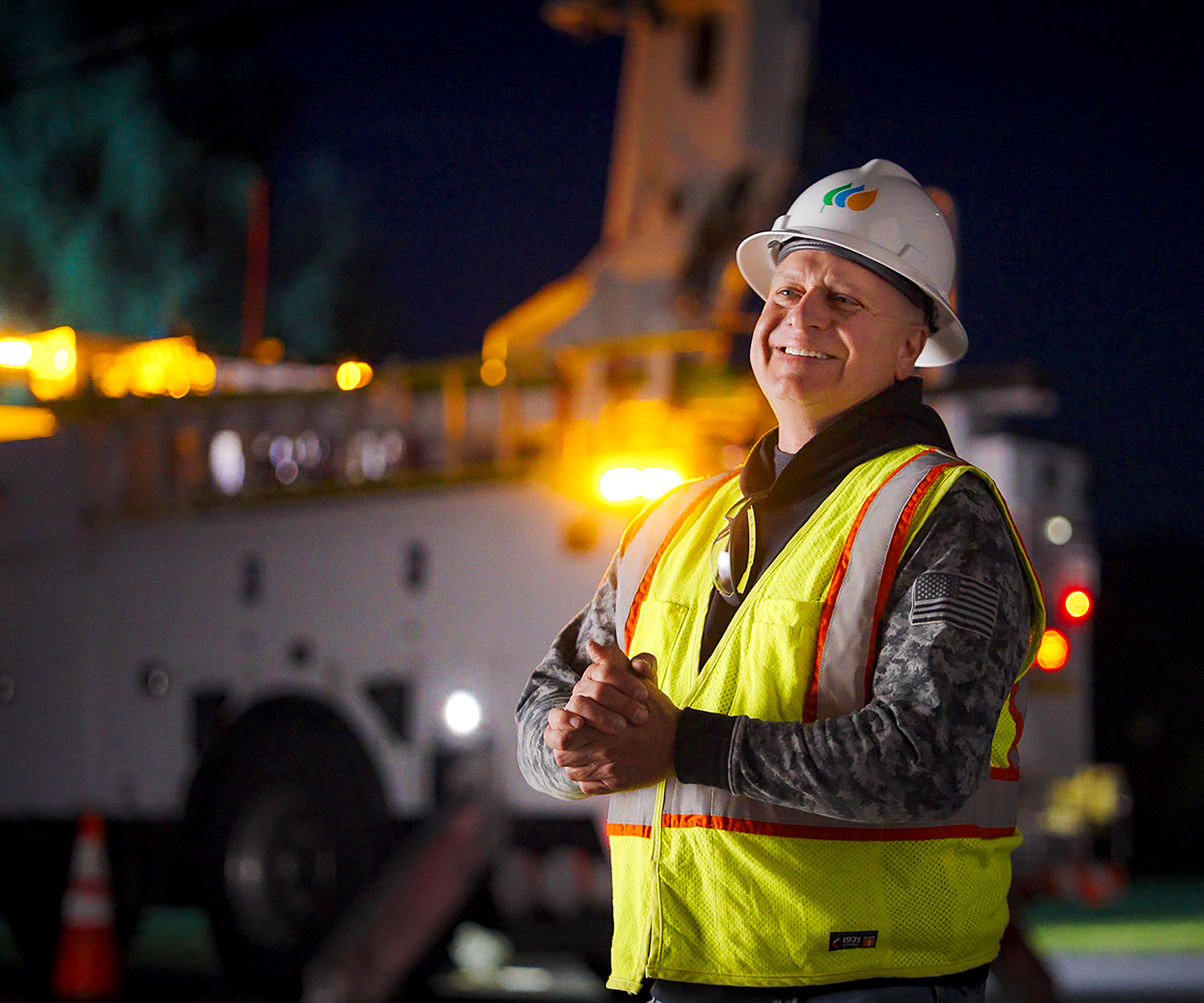

As it celebrates 125 years since its origins as Hidroeléctrica Ibérica, Iberdrola is ensuring it not only honors this legacy but also continues to reinvent itself.
“This company started with hydropower – one of the earliest and still one of the best forms of renewable energy,” Azagra says. “We are now moving to pumped-storage hydropower, the largest battery you can find in the world.”
There’s no doubt that Iberdrola will continue to remain the pioneering name in the utility space, as it focuses on new technologies and long-term sustainability and growth.
“We’re here to stay,” he emphasizes. “We’re making sure we serve our customers well, that we work with regulators, legislatures and administration, that we have access to suppliers to ensure a supply of what we need and that we nurture the best talent that we can find in the industry.”
 RELATED ARTICLES


 Home
Home
 Podcasts
 Covers
 Be Featured
 Community