Language
You can read the magazine in one of the following languages
5-min read

 Bookmark now

 Copy Link
For Niko Safavi, CEO of Mowilex Indonesia, an eco-responsible manufacturer of premium wall paints, it’s essential that he continue the 56-year-old company’s legacy of quality, discipline, brand management and environmental responsibility. It is now in its seventh year of certification for being carbon neutral, covering Scope 1 and 2 emissions, and many elements of Scope 3.
Mowilex has also named a ‘Best Managed Company’ by Deloitte for four consecutive years and achieving its Gold certification is one of the proudest things the company has accomplished, according to Safavi. In fact, it is the only private non-publicly listed company in Indonesia to achieve this, with Deloitte evaluating companies based on strategy, capabilities and innovation, culture and commitment, and governance and financials.
In terms of innovation, Safavi explains technological advancements like AI are streamlining some of the company’s operations.
“We can’t overlook how AI is impacting every business; it’s allowed us to improve efficiency and process support,” he says.

“We can’t overlook how AI is impacting every business; it’s allowed us to improve efficiency and process support.”
Thanks to a long-standing digitalization drive, the laboratory information management system effectively digitizes everything that goes on in the R&D lab at Mowilex. This vast archive of data, containing countless experiments and test results, is even more valuable due to AI tools.
“It’s now on the verge of being married to an AI engine that can look at our private data. I jokingly call it our small language model versus a large language model, which looks at our own data, our own experience, our own test results and then helps narrow the number of experiments we have to run to become more efficient,” he explains.
Back in 2022, Safavi and his team implemented an enterprise resource planning (ERP) system that captures deep insights on the company’s internal metrics including sales, channel, territory, supply chain, financial results and more.
“So much of what used to be done in Excel is now done in a streamlined process with push notifications so people can take actions a lot quicker,” he adds.
Staff are rewarded more fairly and the business better understands how locations, channels and products are performing.
Unlike other firms that seek to optimize supply chain costs to the greatest extent possible, Mowilex is focused on building a long-term supplier ecosystem based on trust and shared responsibility.
“We don’t run auctions, we build relationships,” Safavi says. “And when supply chains break, those relationships determine who stays operational.”
During some of the most challenging economic cycles in Indonesia, like the 2008 global financial crisis and the COVID-19 pandemic, these relationships have been put to the test.
“Suppliers stand behind us, support us and allocate goods to us when goods are scarce. We reciprocate with loyalty and growth, and safeguarding shared know-how,” he adds.
It’s thanks to this earned trust that Mowilex genuinely listens to suppliers, even when they are critical, because it’s essential that the strategic objectives can be fulfilled by their offerings, products and services.
It can be easy for emotions and hierarchy to muddy even the most crucial decision-making processes. But Safavi believes that ensuring data remains at the heart of all decisions gives the business the competitive edge it needs to thrive in an often challenging industry.
“We make decisions with data not hierarchy,” he says. “Nothing is sacred at Mowilex. If a policy or a method stops working, we change it. That’s how we stay fact-based instead of slipping into honorific decision-making.”

Safavi himself is the first to admit that he makes mistakes and recognizes when things need to change.
“That flexibility and the mindset that things are not carved in stone – they don’t have to be a certain way forever – differentiates us quite a bit,” he reflects.
Fully embracing a data-centric approach is only possible because Mowilex invests heavily in systems that bring almost real-time insights to leaders within the business.
“Everything we look at is on Microsoft Power BI with the ability to drill down to an incredibly granular level to see what’s going on,” he says.
“With data and ERP, we have been able to formalize decision-making, which makes a flatter organization, relying less on hierarchy and creating more consistency.”
There’s no question that putting that data at the fingertips of managers allows them to make better decisions faster.
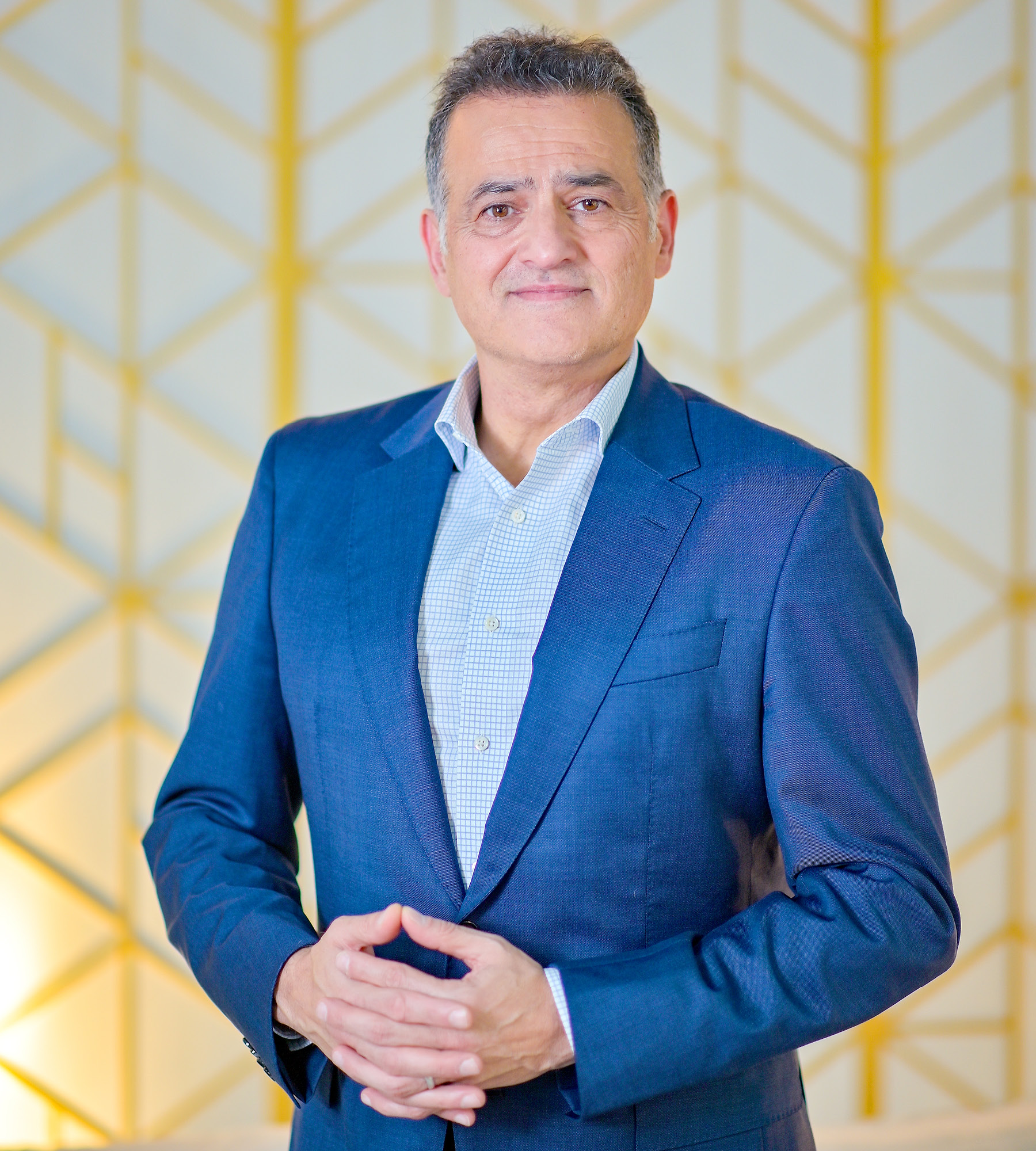
“Business formalities speed us up – studies show the most successful companies in the long run are those that are process formal and fast.”
Of course, being data-driven is only one part of the successful structure of Mowilex. According to Safavi, the open culture is the true differentiator, with meetings often being loud as people question each other and share their viewpoints. Passion, not conflict, leads the conversations as all staff know a common goal is shared.
“No-one’s policies or ideas are sacred,” he insists. “We don’t have some of the cultural norms that a policy is sacred because someone senior or high ranking advocated for it.
“When you’re playing in a competitive environment, social formalities or indirectness slow you down and they create ambiguity. Business formalities speed us up – studies show the most successful companies in the long run are those that are process formal and fast.”
Safavi never wants to create distance between himself and his staff, aiming to be a leader who is more than just a figurehead.
“I really do have an open-door policy. My direct reports can see every one of my calendar entries. They know exactly who I’m meeting inside or outside the company. I don’t keep secrets from them,” he reveals.
For Safavi, leadership is less about imprinting identity and more about institutional durability – building a company that functions clearly regardless of who occupies the top seat.
“Markets change, regulations shift, people move on,” he says. “If clarity depends on one individual, it’s already fragile. Our job is to leave behind a system that keeps working when we’re no longer here.”
 RELATED ARTICLES


 Home
Home
 Podcasts
 Covers
 Be Featured
 Community