Language
You can read the magazine in one of the following languages

10-min read

 Bookmark now

 Copy Link
The prospect of travel brings with it a world of possibilities: exciting new destinations, interesting people and a swathe of happy memories. Before all that can happen, however, there’s that part that almost no one looks forward to.
This is, of course, the fine art of packing. Choosing precisely what you’ll need and how much of it has become a necessary evil for those absconding from the four walls of home. Yes, it’s a chore, but modern conveniences have made it less so.
“The power of our brands is much greater than any other luggage label.”
In fact, some luggage manufacturers have made it their mission to make packing almost as pleasurable as the journey itself. Gone are the days of stodgy, bulky luggage, musty suitcases and broken zippers. Thanks to companies such as VIP Industries, one of the world’s leading luggage manufacturers and retailers, packing is now part of the fun.
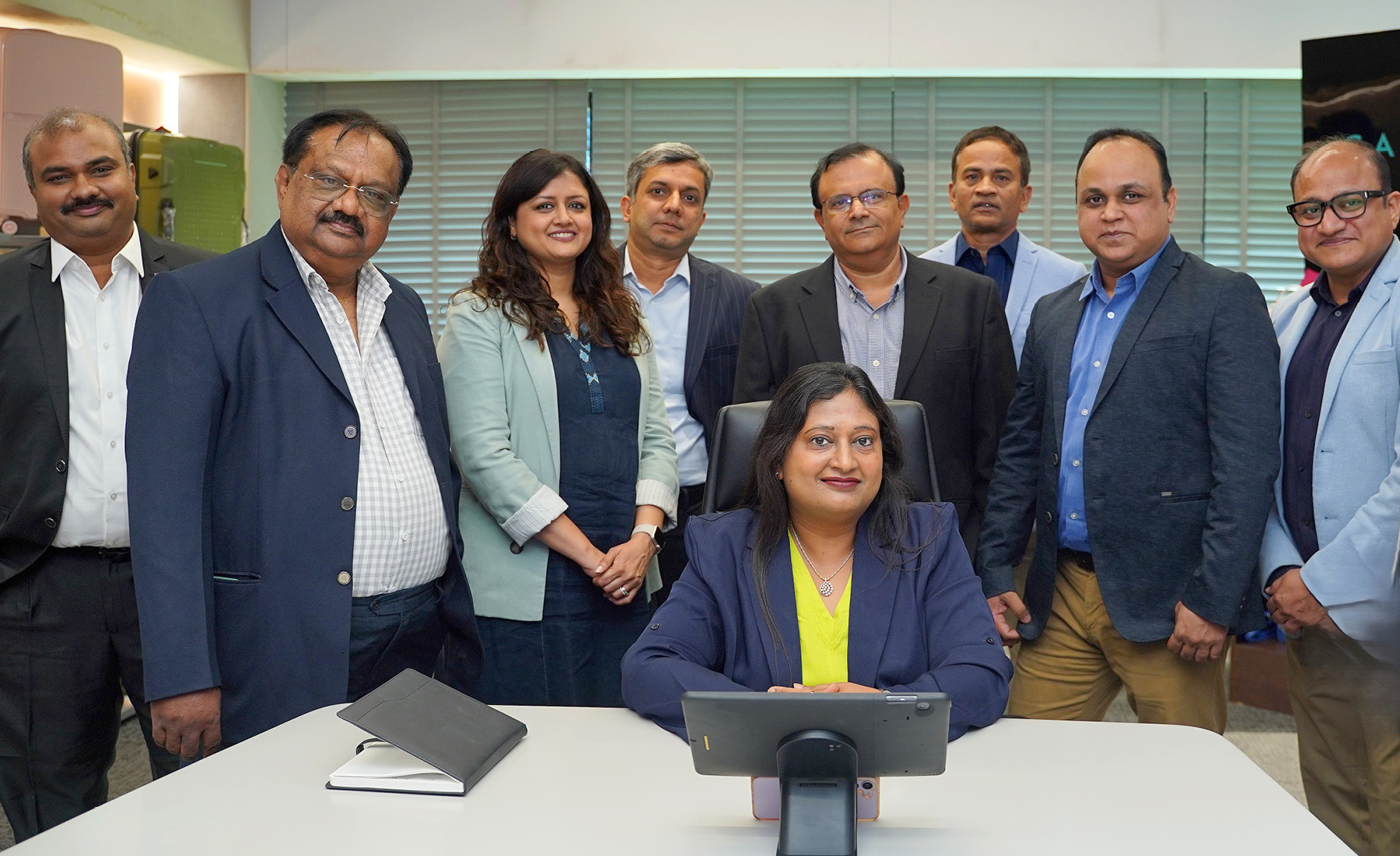
“For more than 50 years, VIP has stood for durability and family, and consumers have a lot of confidence in the VIP name,” Neetu Kashiramka, Managing Director of VIP Industries, tells The CEO Magazine.
“We’re the market leader in India, and the power of our brands, particularly Skybags, is much greater than any other luggage label.”
Skybags is just one of the six VIP brands available in over 35 countries around the world. Founded in India in 1968, VIP Industries has grown its international footprint ever since 2004, when it acquired premium luggage brand Carlton and established an office in Hong Kong.
Kashiramka began her journey with VIP Industries in 2020, just before the travel industry was beached on a shore of chaos and uncertainty.
“We all know when the COVID-19 pandemic started,” she says. “I called our Vice Chair and asked her whether I should accept the job or not; the travel industry was about to be not doing great and I would be a costly resource. She said they needed me badly and there was plenty for me to do.”
With the confidence of senior management, Kashiramka began her tenure with a virtual meeting with her new colleagues.
“For the first 90 days, we had a lot to do,” she says. “Revenue was zero. And when I say zero, I mean zero.
“There were a lot of questions: When will travel return? Will anybody be purchasing anything for travel? How can people make any such purchases when everything is shut? On top of that, we had INR400 million [US$4.8 million] of fixed cost on a monthly basis.”
Kashiramka’s first task was to raise more than US$36.1 million to cover at least the next six months of operation. Her second was to reduce the monthly expenditure.
“Within 45 days I had the term sheet ready to cover the situation. In fact, during my interview I’d said I had the expertise to raise money in any form, so it was just as well,” she recalls.
In Kashiramka’s first 90 days, the fixed cost had been reduced to US$3 million. As time went on, her skills, resilience and strategic foresight became VIP Industries’ saving grace.
“The situation was tough. We’d lost market share, even though we were still the leaders, but in the end we had a loss of only INR1 billion [US$11.4 million].”
Despite the market share challenges weighing on VIP Industries’ shoulders, for Kashiramka it was a matter of getting the company back on track, a task that continues today.
“My duties at VIP have largely revolved around transformation,” she says. “Yes, there are problems, but I know them and I’m confident we can solve them. And that confidence comes from the power of our brands.”
Along with Carlton, the youth-oriented Skybags and the company’s namesake flagship brand, VIP Industries’ portfolio includes its women’s label Caprese, high-durability and value-for-money Aristocrat, one of the top luggage names in India. Combined, VIP Industries produces over 10 million pieces of luggage annually, making it the second-largest luggage brand worldwide.
It’s a solid foundation by anyone’s standards, but Kashiramka admits consumer behavior has changed post-pandemic.
“In the past, luggage was all about convenience. Now it’s become a fashion product, and what we’re seeing in the younger generation is that they’re trying to match bags with clothes when they attend events. That’s a big change,” she says.
The other drastic change is the severe shortening of the luggage replacement cycle. In years past, it was typical to see consumers change their bags every five-to-seven years. Today, that’s closer to every two-to-three.
“We’ve had to up our capacities to cater to this,” she says. “We’ve also seen a change in the style of luggage people want post-pandemic.”

“You can do more with colors, designs and prints with hard luggage, and therefore it’s growing.”
Prior to the pandemic, soft luggage was a perennial favorite among light travelers. No longer, says Kashiramka.
“It used to be 30 percent hard and 70 percent soft, but now it’s reversed,” she says. “First of all, soft luggage wasn’t as easy to sanitize with a wet cloth as a hard case. Then it became fashion-oriented. You can do more with colors, designs and prints with hard luggage, and therefore it’s growing.”
The growth has meant VIP Industries has had to increase its manufacturing capabilities as well as diversify them.
“We used to depend a lot on China,” Kashiramka says. “Around 40 percent of our production was done there. Now it’s only five percent.”
Instead, VIP Industries focuses on in-house manufacturing, allowing the company to ensure its reputation for high quality and durability is maintained.
“Our products have a five-to-seven-year warranty,” she says. “But now that the replacement cycles are coming down, we also offer luggage at the lower end of the sales spectrum.”
Hard luggage was, for many years, primarily made from polycarbonate.
“We’ve moved to polypropylene, which allows us to offer luggage at a much lower price,” she says.
This also allows for greater customization and personalization of VIP Industries’ products.
“A lot of work is going on to enhance that aspect of the portfolio,” Kashiramka says. “Whether it’s having your name on the luggage or something else.”
The idea of coordination has also taken root at VIP Industries.
“People want to have coordinated sets across their luggage,” she says. “You can have a duffel bag, a backpack, a handbag or whatever, but they’ll all match. It’s a trend that’s coming up and we’re ready for it.”
VIP Industries’ success is a coordinated effort between the company, its partners and stakeholders and the supply chain that binds them. The latter, which was severely rocked by the pandemic, is the company’s primary pain point, says Kashiramka.
“We have to make the products available at the right place, at the right time,” she says. “We have two prolonged strategies underway to meet this goal.”
One of these is an end-to-end software solution that covers demand forecasting to fulfillment, thanks to a company-wide digitization effort. The other is an overhaul of VIP Industries’ warehouse strategy.
“Wherever we can save time and money to make the fulfillment happen, we’ll look at the options,” she says. “But it’s one of our biggest challenges, along with maintaining our margins.”
Meanwhile, VIP Industries’ portfolio includes a variety of brands across different categories, all of which are subject to changing trends and tastes.
“For some time post-pandemic, our brands at the lower end have been growing faster than our premium brands,” she says. “That reduces our margin. I believe India is moving towards premiumization, so we’re working on making VIP’s portfolio more premium and therefore have better margins.”
It’s an effort that will require heavy spending, and Kashiramka admits it’s a gamble. “You’re catering to a different kind of audience so there’s a lot to consider, but we do premium well,” she says. “I think it’s on the cards.”
One of the new avenues these strategies will open up for VIP Industries is a line of lightweight luggage options.
“We want to continue to create innovative and luxurious products at that upper end of the portfolio,” Kashiramka says. “Some of the products we’re working on are really outstanding, and a first of their kind.”
With so much on the drawing board and in production, Kashiramka could be forgiven for forging beyond the brands that built VIP Industries. Fortunately, this is not the case, as VIP Industries and Skybags continue to be the company’s pillars.
“You’ve got VIP that’s all about family and durability. It’s a rock, and we’re known for that. Skybags is a Gen Z brand, it’s more colorful and jazzy,” she says. “But it’s Carlton, the premium brand, that we have the biggest plans for.”
Currently, Carlton is worth around US$15.7 million. Over the next four years, Kashiramka wants to grow this to more than US$60 million.
“We want to focus on a business clientele,” she says. “The new style of business needs a professional range of bags, backpacks and luggage, and that’s exactly what Carlton will provide.”
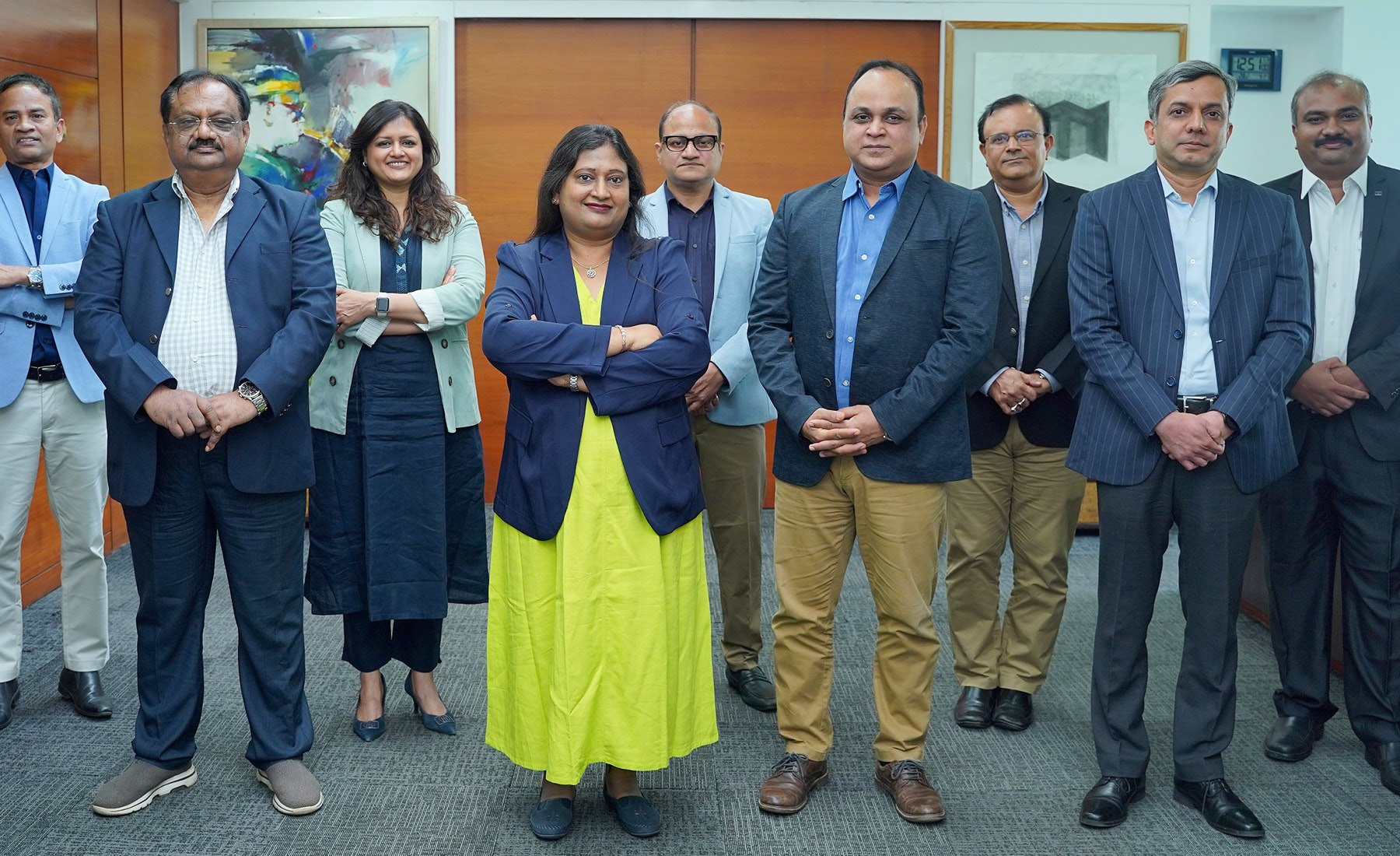
None of this would be possible, however, without VIP Industries’ team of partners and suppliers. The company’s 50 years of history means many of its relationships go a long way back. “Some of our partners are third generation,” Kashiramka says.
“The pandemic shook things up because we couldn’t have the kind of regular meetings we enjoyed before, but we’re getting back to that. I believe relationships are everything.”
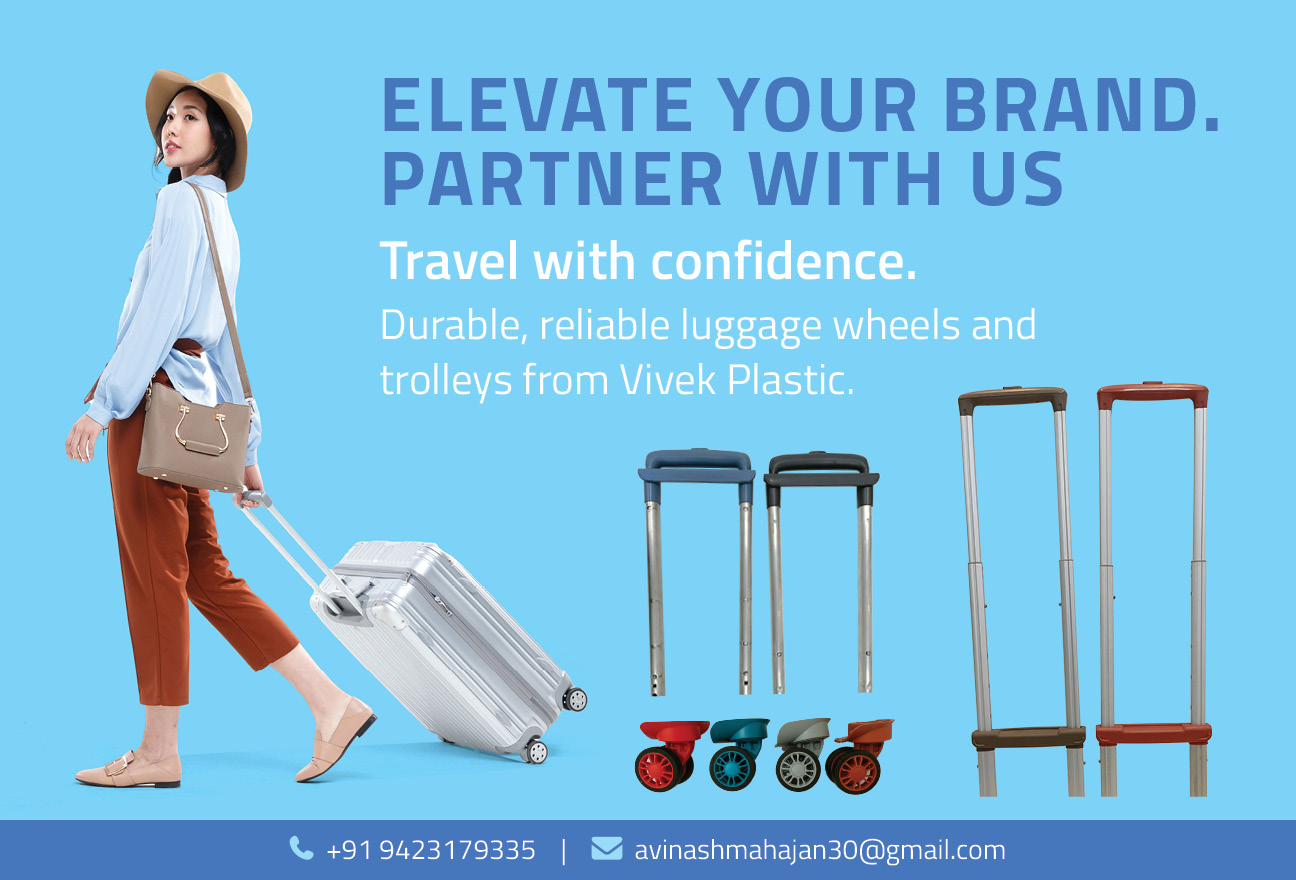
From industry peers such as Roam Industries to suppliers such as Vivek Plastic and dye producer Hitkari Multiproducts, Kashiramka has re-established relationships and expanded the company’s networks as the pandemic’s worst effects began to wane.
“The first step was meeting these people, some of whom have worked with VIP exclusively for 45 years,” she says. “It was an amazing experience, and it was all because of the strength of the VIP brand.”
“I believe relationships are everything.”
Meetings with suppliers are an opportunity for Kashiramka to hear about any problems and come up with ways to solve them.
“When we moved the bulk of our manufacturing to Bangladesh, some people felt bad for those we’d left behind in China,” she says. “We had no choice but to make the move, but in doing so we created an entire ecosystem of manufacturing and assembly full of people working exclusively for us.”
In fact, some of the partnerships with vendors are so strong, VIP Industries is more akin to a family member than a business partner.
“I believe they’re closer to brand ambassadors than anything else,” Kashiramka says. “Some of them swear by VIP. They tell me VIP is in their DNA. When I hear those kinds of things, I’m very proud to be a part of this organization.”
VIP Industries, she believes, has given these partners a strong opportunity. “When we grow, our partners grow,” she says. “We also run a variety of programs to help our suppliers, because their success is ours.”
In the ever-evolving travel landscape, VIP Industries’ resilience, innovation and firm adherence to its high standards of excellence make it a strong beacon not just to partners, but customers.
Kashiramka believes that listening, understanding and responding are the key ways to maintain success.
“As a leader in this space, it’s on us to make luggage more and more premium as the market swings that way,” she says. “That’s going to be my endeavor as Managing Director, to offer unique, high-end products to the consumer straight from the house of VIP.”
As an Indian company, VIP Industries’ commitment to the Make in India policy is another priority.
“Given how much we manufacture here in India, it’s a concept I’m always preaching,” she says. “It’s on us to offer something unique to our customers, and that’s what we’re focused on doing.”
 RELATED ARTICLES


 Home
Home
 Podcasts
 Covers
 Be Featured
 Community