Language
You can read the magazine in one of the following languages
5-min read

 Bookmark now

 Copy Link
For many, Fujifilm begins and ends with cameras, film and the unmistakable charm of Instax. But what many don’t realize is how deeply the company is interwoven into Australian life and how far its business has evolved beyond the products that made it famous.
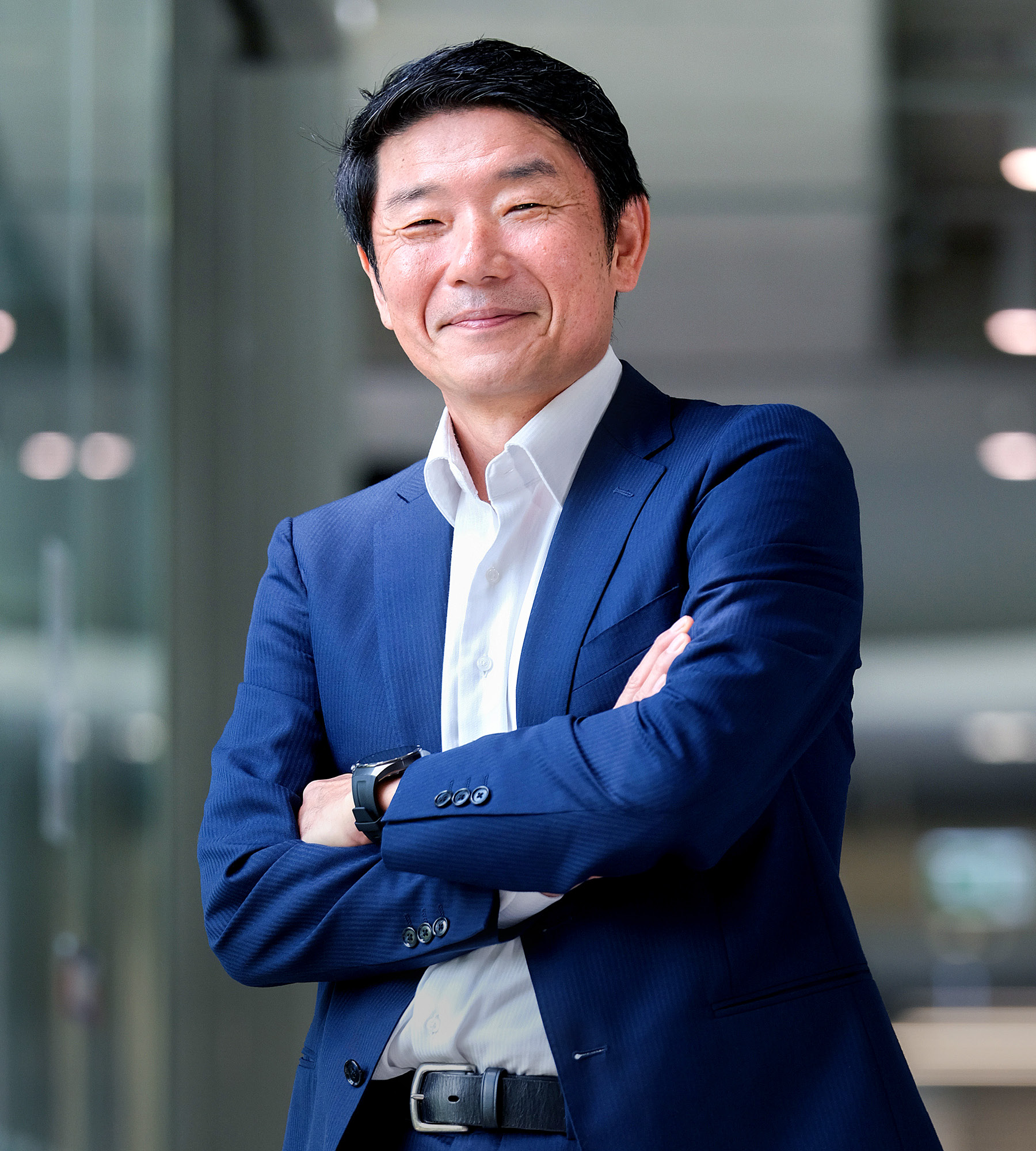
For Michio ‘Mich’ Kondo, who stepped into the CEO role in August 2025, leading Fujifilm Australia means balancing that legacy with a business that now spans healthcare, advanced imaging, AI and preventative diagnostics – while remaining human at its core.
“Fujifilm has been a part of Australian culture for more than 70 years,” Kondo tells The CEO Magazine.

“As we continue to grow and diversify, we want to be present and support every part of Australian life.”
“As we continue to grow and diversify, we want to be present and support every part of Australian life.
“Our Group purpose, ‘Giving our world more smiles’, is about more than just taking photos; it’s about capturing moments and celebrating what makes life worth living.”
Fujifilm’s roots in Australia stretch back more than seven decades, long before the company formally established Fujifilm Australia in 2004 through the acquisition of Hanimex, its exclusive distributor for more than 50 years. Kondo joined the company in 1991 and built a career spanning Japan, North America, the Middle East, Africa and Oceania.
“Looking back at our history in the region, we have many customers and partners across our medical, graphics and photography businesses who have been working with us for many years,” he says.
“When I first joined the company, the photographic film business accounted for over 50 percent of sales.”
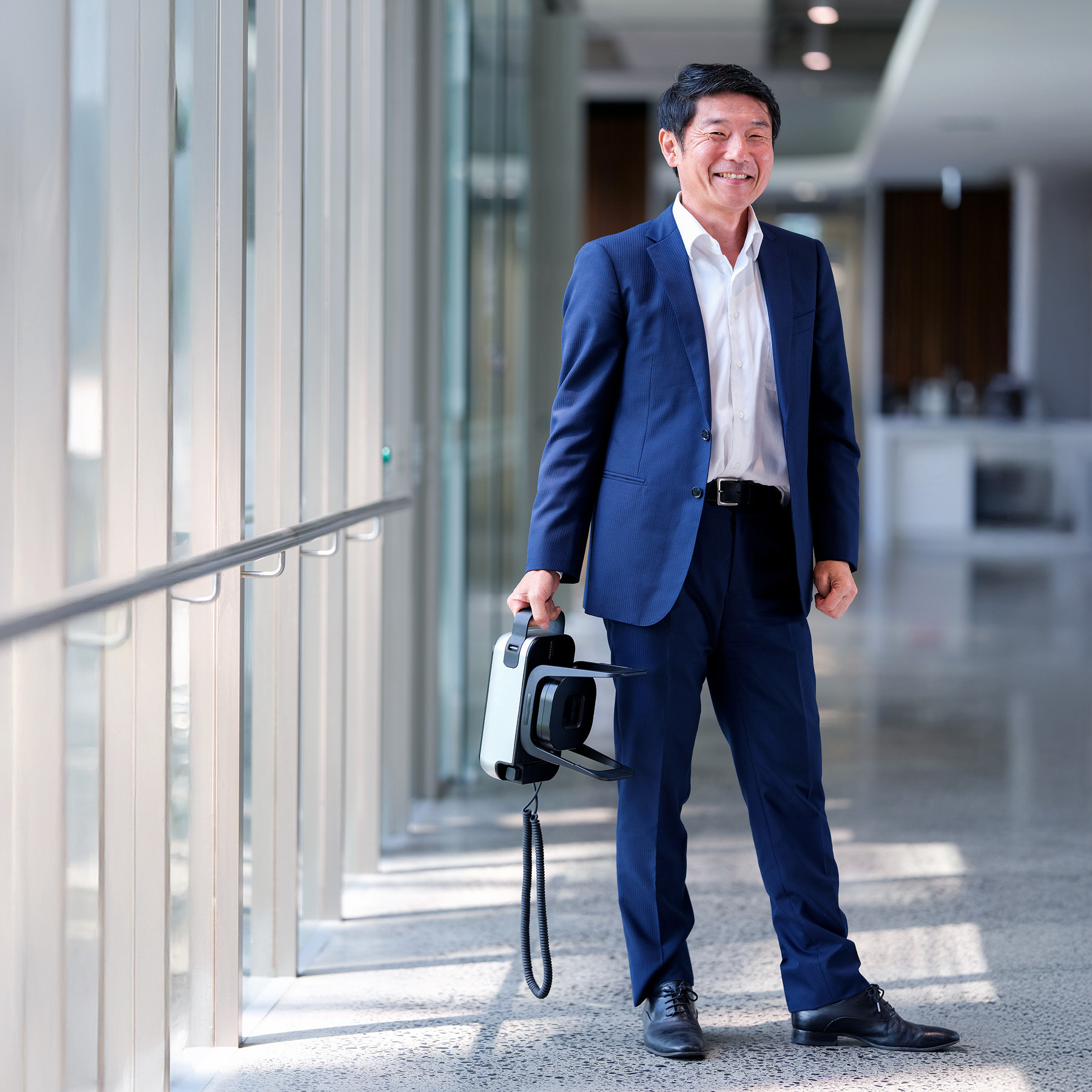
Product held is the Fujifilm Portable X-ray Unit FDR Xair
“While our photo business remains strong today, we have successfully transformed into a comprehensive imaging company.”
But that reality didn’t last.
“We were facing a corporate crisis in which sales of analog camera film, our main product, were declining at an annual rate exceeding 10 percent every year,” Kondo says.
Rather than retreat, Fujifilm chose reinvention.
“Famously, the transition from analog to digital cameras in the early 2000s helped Fujifilm succeed where competitors failed,” he recalls.
“While our photo business remains strong today, we have successfully transformed into a comprehensive imaging company, with products utilizing advanced technologies in healthcare and semiconductor materials.”
Fujifilm’s transformation is undoubtedly owed to the innovation that’s long been embedded in its DNA.
“Fujifilm Australia is built on innovation,” Kondo points out. “Globally, we have a culture of innovation. It’s even our slogan: ‘Value from innovation.’”
In Australia, that mindset is applied through a strong local lens. Over decades, Fujifilm has expanded through acquisitions across photo software and printing chemical factories.
“Our teams are always looking at local technology trends and considering how we can bring the right technology to Australia,” he explains.
Across photography, healthcare and printing, Kondo says the entire business is built on continuity.
“For all products, we provide end-to-end services encompassing after-sales support, building strong trust relationships with customers,” he confirms.

“Fujifilm’s active use of AI to speed up diagnostics and provide more precise data to clinicians is something we are very proud of.”
Nowhere is Fujifilm’s reinvention more visible than in healthcare where the company has steadily built global leadership. In fact, Kondo points out that Fujifilm was the first company in the world to successfully digitize X-ray images in the 1980s.
In Australia, it now holds the top market share for both medical image storage software and X-ray equipment.
“We recently installed the first Open MRI machine in Australia at Altus Medical Imaging in Gladesville, New South Wales,” Kondo says.
Designed to support patients who are claustrophobic, unable to use traditional MRI machines or children requiring gentler environments, the Open MRI is scheduled to be available in Queensland in 2026.
“We’ve also been working closely with centers such as Women & Breast Imaging in Western Australia to develop diagnostic tools that provide more accurate data while prioritizing patient comfort and support,” he adds.
“Fujifilm’s active use of AI to speed up diagnostics and provide more precise data to clinicians is something we are very proud of.”
Globally, the acquisition of Hitachi’s imaging division in 2021 further strengthened Fujifilm’s position as a comprehensive medical equipment manufacturer, with a portfolio spanning imaging systems, endoscopes and in vitro diagnostics.
Kondo admits introducing advanced technology into the Australian market requires more than innovation alone.
“In Australia, there is a strong demand for products with a solid technological foundation and high technical and performance standards,” he says.
To meet those expectations, Fujifilm has invested heavily in reference sites, training programs and infrastructure that allow customers to see, touch and understand new technologies before adopting them.
“Building a proven track record to earn customer trust is paramount,” he insists.
According to Kondo, this trust is reinforced by its people on the ground – from distribution networks delivering products nationwide to field service teams maintaining installed equipment, and sales and marketing teams focused on education and long-term value creation.
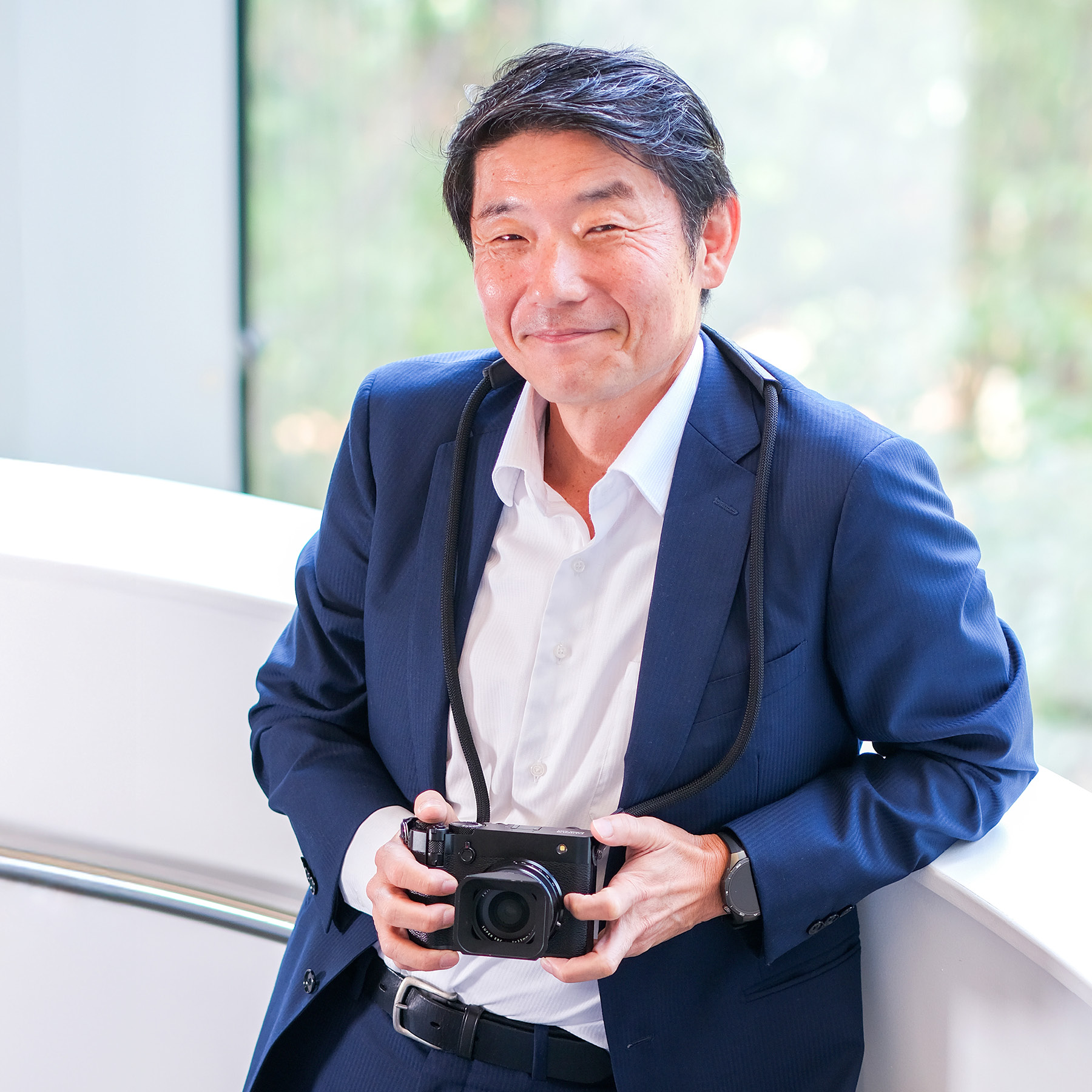
Camera held is the Fujifilm GFX100RF
“Building a proven track record to earn customer trust is paramount.”
That focus on trust also reflects Kondo’s broader leadership philosophy, shaped by Fujifilm’s 91-year history of reinvention.
“The business began with the launch of domestic motion picture film, expanded globally into consumer photographic film and X-ray film and, starting in the 2000s, we advanced our business model in response to the film market contraction,” he says.
The lesson has been consistent: accurately assess market potential, act decisively and invest in the company’s unique strengths while addressing what must be built next.
In Australia, that approach is increasingly directed toward digital and preventative healthcare. With a population spread across vast urban and regional areas, Fujifilm is investing in technologies that support earlier diagnosis and improved access to care. Central to that effort is the global expansion of Nura, its advanced AI-enabled screening centers, with plans to open 20 centers this fiscal year and 100 by 2030.
But for Kondo, progress is measured by more than expansion targets or technological capability.
“We aspire to realize our purpose, to enhance our customers’ environments and bring smiles to their faces through the cutting-edge products and services developed by Fujifilm,” he concludes.
 RELATED ARTICLES


 Home
Home
 Podcasts
 Covers
 Be Featured
 Community