Language
You can read the magazine in one of the following languages

4-min read

 Bookmark now

 Copy Link
Kevin Ward knows that in his role as General Manager of the Trinity River Authority of Texas (TRA), he and his team are running a race – as fast as they can.
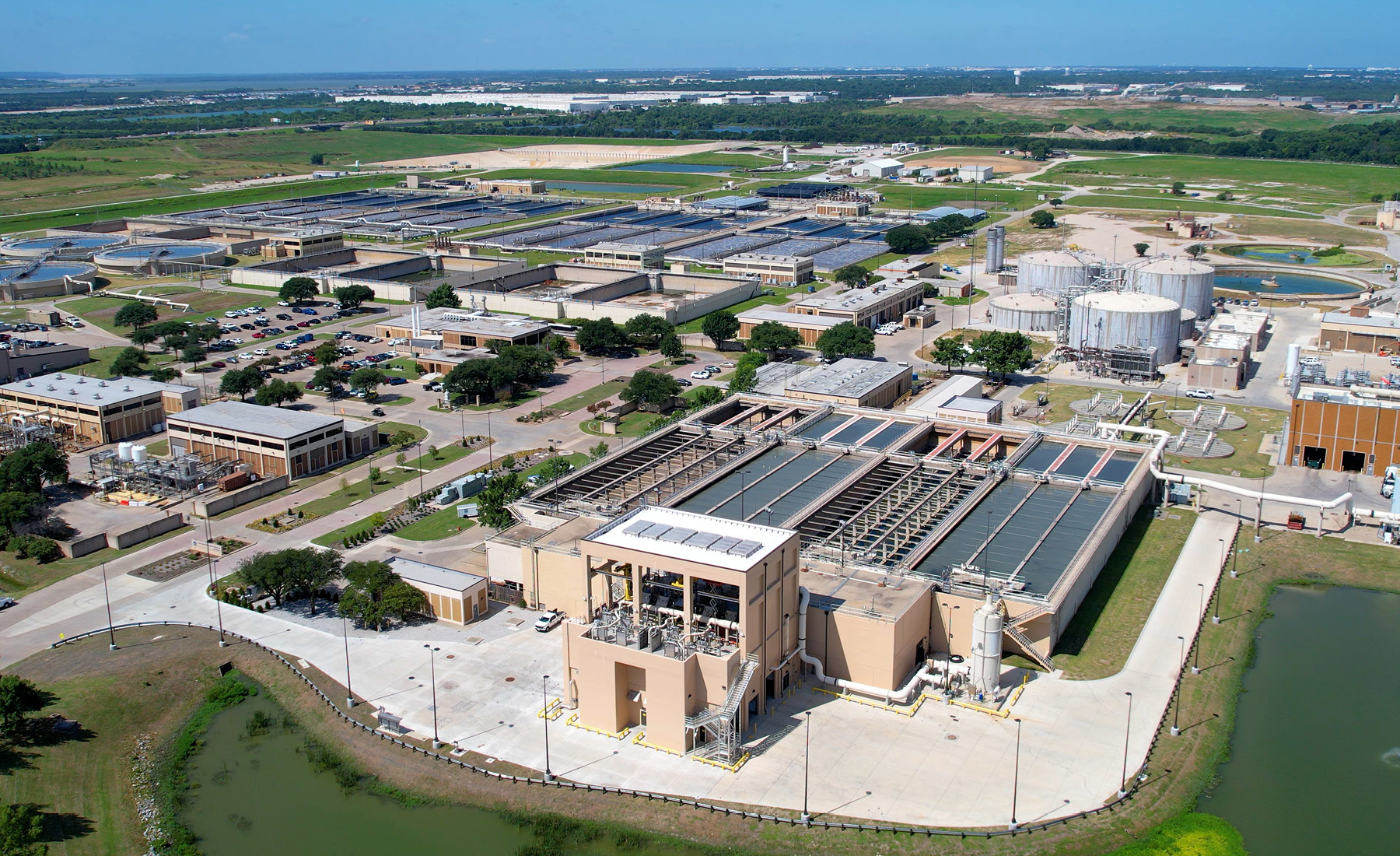
Headquartered in Arlington, Texas and with a heavy focus on the Dallas-Fort Worth metroplex, the organization is the largest river authority in Texas, overseeing four water treatment and five wastewater facilities, as well as serving an extensive wholesale customer base across 46,620 square kilometers.
The good news is that they’re fully prepared.
“We’re in good shape,” Ward tells The CEO Magazine. “We are an organization that’s light on our feet, and we are quick to respond to change whenever it occurs.”
For instance, when it comes to ensuring infrastructure keeps pace with population growth, he closely tracks capacity, knowing that certain thresholds are markers that guide expansion.
“At 75 percent, we’ve got to be in planning and design mode for our plants,” he explains. “When you hit 90 percent, we need to be under construction.”
“I don’t think people have any idea how hard we work to keep the environment clean.”
Those incremental upgrades, as he describes them, mean that the TRA is able to meet current demand and prepare for the future without taking on unnecessary risk.
“It’s done in a way that we can move things around if we need to,” he says.
Already the country’s second most populous state, Texas’ population growth is driving this urgency: projections estimate it will swell from 31.2 million in 2024 to 42.6 million by 2060. With it, new systems and services need to connect to water and wastewater.
“Right now, I could share 30 scenarios with you,” Ward reveals, from schools to residential districts and even whole cities looking to connect to TRA’s systems.
There’s more than population growth demanding agility within the TRA, however, and it’s keeping Ward busy.
“My door is always open and believe me, people file in here all the time,” he says with a smile.
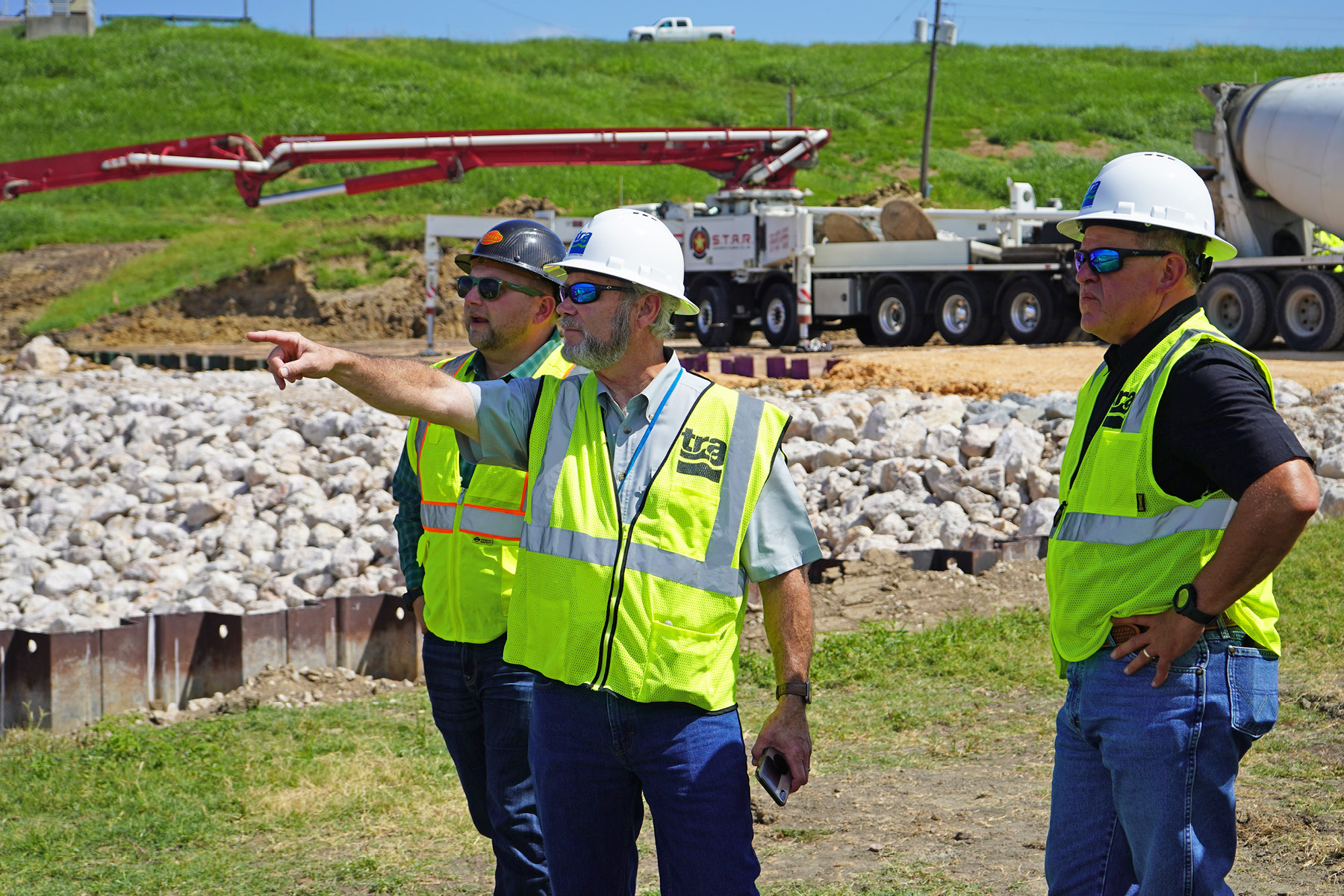
“My emails are active. I work on nights and weekends; it doesn’t matter. Whatever it takes, when we have a flare-up, and I have to go and meet with city managers, I jump in my truck, and we are as dynamic as any quick-growing corporation could ever be.”
Aging infrastructure is one challenge Ward is facing. For instance, the TRA is currently combing through its extensive wastewater pipeline network and either fixing them or fitting new lines parallel to it.
Then there’s also ensuring that its assets are fit for current regulatory requirements.
“We have Lake Livingston in the south of our area that provides the city of Houston with about 70 percent of their water for the petrochemical industry, among others, down there,” he says.
“Currently we’re having to upgrade the dam to meet new requirements for flooding.”

Ward can turn to the state of Texas for grants but also key private sector partners who oversee programs, such as biosolids processing and distributing company Renda Environmental, Inc (REI).
“Last year, REI negotiated a contract with TRA, where they’ve invested in a new process to compost the biosolids,” he explains. “TRA provided capital for some of the equipment and a site on our property for the operation.”
He appreciates the nuances of the private–public relationship – and how often public sentiment swirls with notions of profit at the taxpayer’s expense. Beyond the boost to the local economy that such relationships offer, however, there’s also the fact that so much of the model of the TRA mirrors that of industry.
“I could be the CEO of a manufacturing firm and it wouldn’t be much different,” he says.
For Ward, running a wastewater utility has many parallels with manufacturing. Wastewater comes in, the plants treat and triage it, with both clean water and biosolids ultimately sold for beneficial use.
“I’m essentially a manufacturer – I manufacture by-products from your poop,” he says with a laugh.
However, Ward is the first to admit that his industry is one that the public knows little about but also demands utmost accuracy from.
“I don’t think people have any idea how hard we work to keep the environment clean,” he says. “The water we put back in is very clear.”
The biggest challenges facing the industry right now, on both the water and wastewater side, are perfluoroalkyl and polyfluoroalkyl substances (PFAS), otherwise known as forever chemicals, which do not break down naturally in the environment.
As it currently stands, the TRA has six parts per trillion of PFAS coming into his largest water treatment plant and, in line with Environmental Protection Agency regulations, this needs to be reduced to below four. To reach those targets by 2031 or 2032, the organization is looking at installing carbon filters up to five meters deep, at a cost of US$260 million.
“We see that we can meet the needs for our region, which is one of the most important in the state, for the next 50 years.”
The TRA is one of the 40 percent of water systems across the country facing a similar situation. Ward is frustrated with how the burden of removing PFAS from the environment has fallen on utilities like it, rather than the companies that originally manufactured them.
“We just transport it; we’re not creating it,” he says.
Before burdening taxpayers with significant expense, he hopes that the issue is addressed at its origin.
“I do believe that we’re going to have to look at this more practically,” he says. “If we get rid of the source, hopefully they will eventually go away.”
It’s an ongoing conversation set to a backdrop of other public concerns: drought – and speculation that there’s not enough water for central Texas – and energy.
“Those are big issues,” he says. “People are worried about the power supply in Texas because of the influx of data centers and other demands on the grid.”
Yet Ward is confident about the future.
“We see that we can meet the needs for our region, which is one of the most important in the state, for the next 50 years.”
 RELATED ARTICLES


 Home
Home
 Podcasts
 Covers
 Be Featured
 Community