Language
You can read the magazine in one of the following languages

5-min read

 Bookmark now

 Copy Link
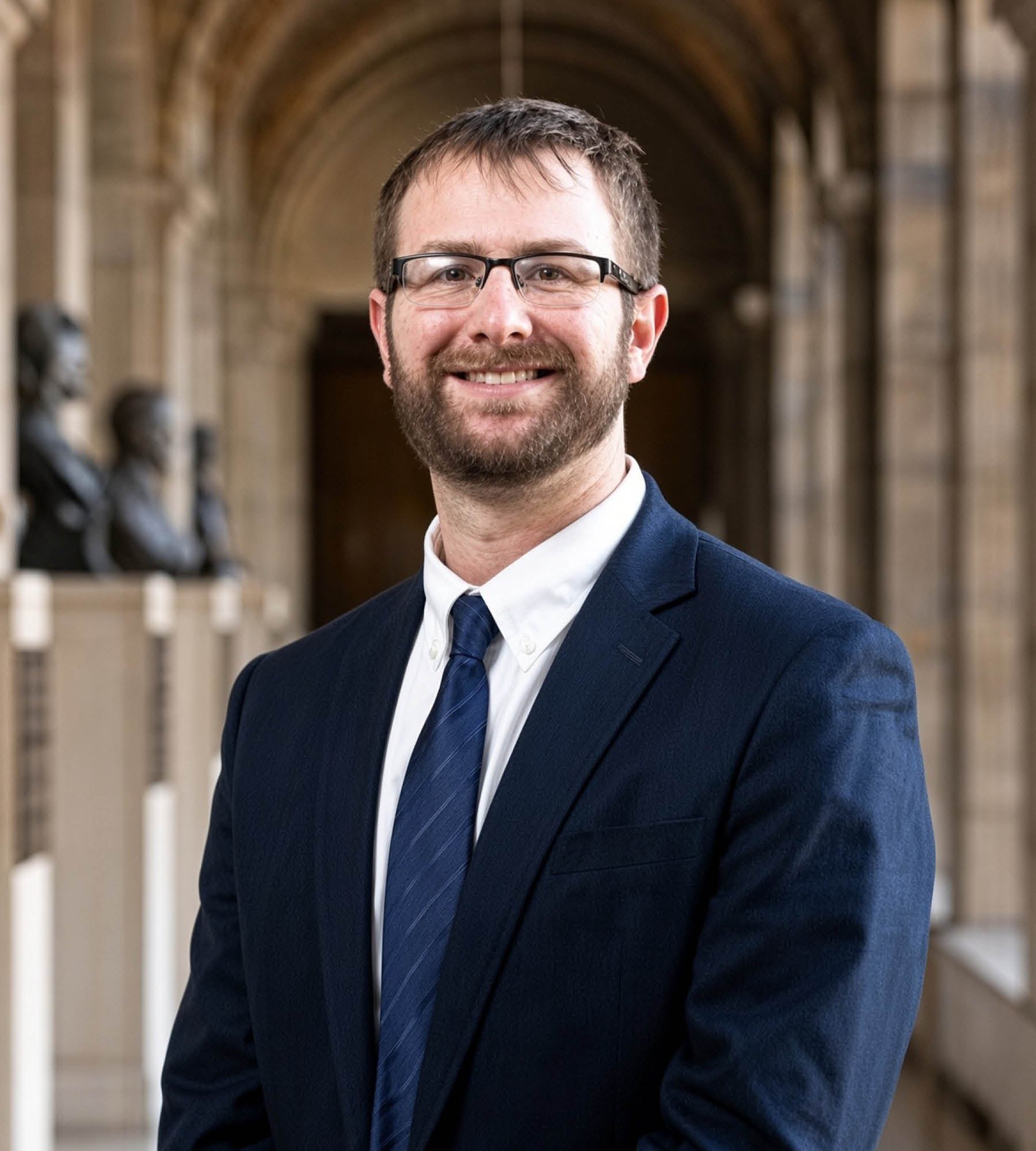
Working in government has always brought both rewards and challenges for Lee Will, Director of Nebraska Department of Administrative Services (DAS). But as he reflects on two years in his current role, he says the most satisfying element is the opportunity to have a positive impact on people’s lives.
“You’re really part of change when it comes to state government,” he tells The CEO Magazine.
“There are so many lives that you touch or you’re a part of. They’re never going to see your face or know your name specifically, but there’s just been so many great things that I’ve been able to work on throughout the years.”

“We’ve always got to be willing to get better and transform ourselves and ask questions about the status quo.”
For Will, seeing coverage of Nebraska DAS’ achievements in the media is always a ‘pinch me’ moment, acting as tangible proof that the work done by his team is providing value for the citizens of the state of Nebraska.
“There’s a multitude of things that come with state service that don’t come within private industry,” he points out, urging the next generation of workers to consider a career within government. “You’re part of the change.”
Modernization will be central to that mission, with technology becoming an increasingly important part of Nebraska DAS’ transformation. AI is already being used for data processing, communications, document routing and frequently asked questions, but Will is not content to stop there.
“We need to come out of the stone age when it comes to some of our software and hardware, and we need to find the light and become transformational,” he insists.
He shares an innovative application currently being implemented by Nebraska DAS as a project that combines vehicle GPS information with Google AI application programming interface data to identify potential misuse of state vehicles in real time. Partnerships with companies such as Tyler Technologies are also key.
“Tyler Technologies is a software company that provides our portal. So when you go in to pay your motor vehicle registrations or you go in to pay your state permit at game and parks, it’s all done through Tyler Technologies,” Will notes.
Nebraska DAS is also consolidating HR, time tracking and recruitment within Workday, while considering the next step for its enterprise resource planning system. But embracing new technology brings challenges, from cybersecurity and data privacy to ensuring AI-generated information is accurate.
“It’s very much trust but verify at this point,” he says.
The biggest obstacle, however, is cultural.
“We’ve always got to be willing to get better and transform ourselves and ask questions about the status quo,” he says. “I’d definitely say culture is the thing that’s the most impeding.”
Indeed, as Nebraska DAS embraces AI and technological advances, attracting people with the right skills is becoming increasingly important, particularly from the younger generations.
“We’re going to need those folks,” Will says. “The average age of a state government employee in the state of Nebraska is 45 years old. So we’ve got to make sure that we’re innovating at the same time as taking care of the folks that have provided great state service.”

“We want to give people a reason to come to work.”
To build that pipeline, the department is turning to internships, mentorships and closer relationships with educational institutions.
“We’ve really been partnering with the universities and community colleges to make sure we have that pipeline to state government,” he explains, adding that outreach could eventually extend to K–12 students.
Retention is equally important when it comes to talent.
“We want to give people a reason to come to work,” he says. “They’re actually making an impact for the state of Nebraska.”
For Nebraska DAS, this process starts with understanding exactly who government services are designed to help and measuring performance accordingly.
“We have got to meet the citizens where they are, and we have got to fit their needs,” Will says.
One of the clearest examples is Nebraska’s developmental disability (DD) wait-list, which had deteriorated over a 15-year period meaning that families could wait as long as seven years to access the necessary services. But now, a hefty investment of US$12 million has transformed the situation.
“Today we have zero wait-lists and every DD child that needs services in the state of Nebraska is receiving them from day one,” he says with pride.
“That’s the stuff in state government that gives you goosebumps – because you’re actually able to deliver that change.”

“We have got to meet the citizens where they are, and we have got to fit their needs.”
Purpose may underpin Nebraska DAS’ work, but financial discipline remains essential to delivering on it. Budget, after all, is near and dear to his heart.
“I like to say I’m a recovering finance professional,” he says with a laugh.
With Nebraska’s state government tightening its belt, every investment must demonstrate genuine value.
“We’ve got to be really keen on where we’re making our investments because we don’t have a lot of money to spare at this point,” he says. “We’re going to get leaner, we’re going to get better, we’re going to provide better services to the citizens of Nebraska.”
That doesn’t mean simply cutting costs. Investing more in the right people can actually generate significant savings. After increasing hourly pay for registered nurses from US$48 to US$53, the state was able to eliminate its reliance on external nursing contracts, saving US$10.5 million.
“Money isn’t everything, but it’s a big part of it,” Will says. “We’ve got to find what’s our highest talent and invest there.”
The same scrutiny now extends to contractors, with Nebraska DAS shifting from activity-based to outcome-based contracts.
Looking ahead, Will hopes to make an important mark on the state, highlighting his ambition to leave Nebraska DAS more efficient, modern and focused on delivering greater value to Nebraskans.
“I hope that we’re delivering high value and driving down costs at the same time,” he says. “We want to find ways that actually deliver to our customer, which is ultimately the taxpayer in Nebraska, while reducing costs.”
But his ultimate measure of success is not personal recognition.
“I hope folks don’t remember me. I hope they remember the positive change that they’ve seen in the organization,” he says. “I hope that they find that their life is easier and we’re providing some great value to them.”



 Home
Home
 Podcasts
 Covers
 Be Featured
 Community