Language
You can read the magazine in one of the following languages

5-min read

 Bookmark now

 Copy Link
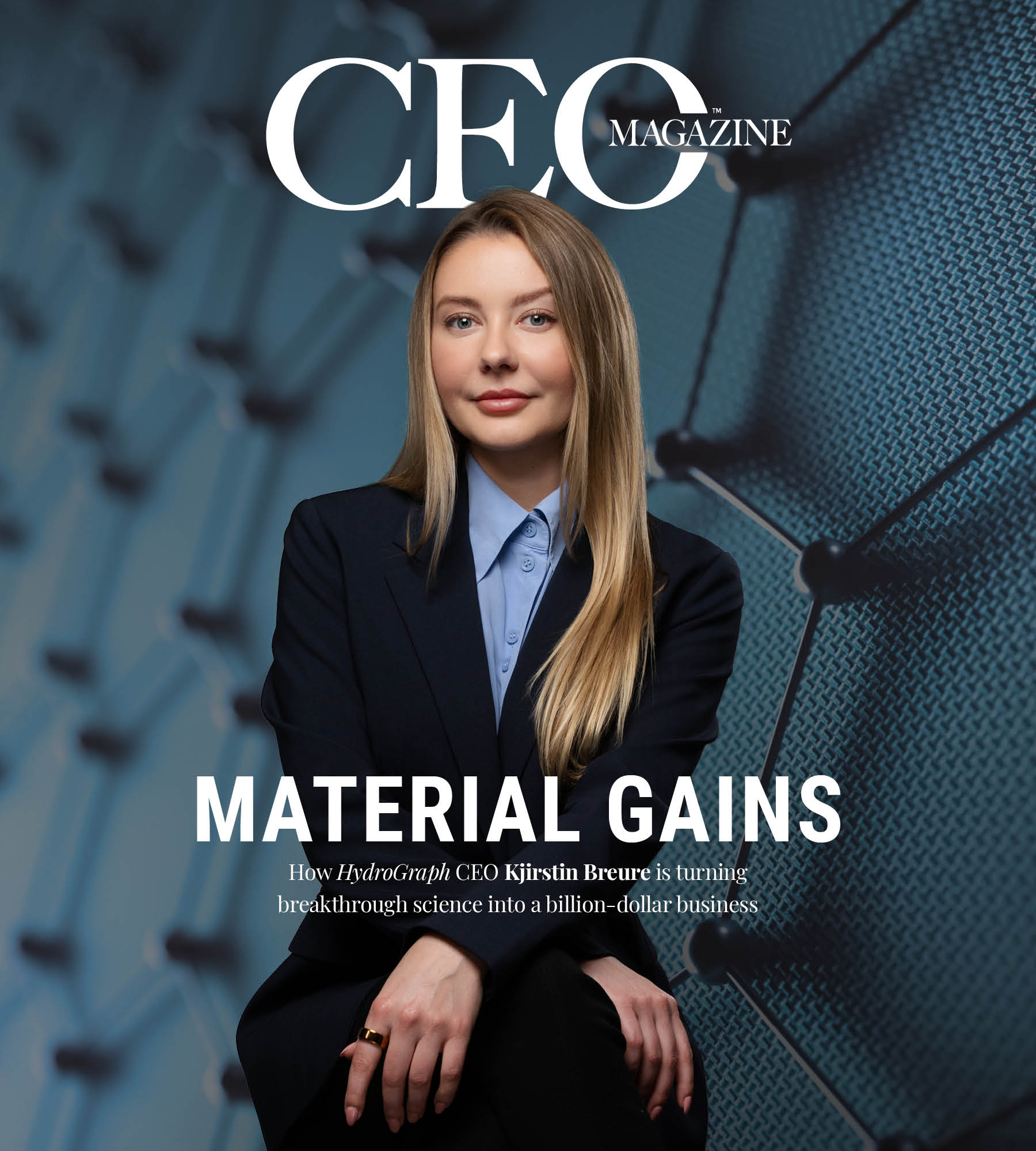
Most deep-tech companies spend years trying to convince the market their breakthrough matters. Kjirstin Breure had a different challenge. She had to convince people it could actually scale.
When she stepped into the CEO role at HydroGraph in March 2024, the company was still largely viewed as an emerging materials business built around an intriguing but complex technology. Graphene had long been described as revolutionary, but translating that promise into a functioning commercial model remained one of the industry’s biggest hurdles.
“I made pretty significant changes to our business model, to our go-to-market strategy,” Breure, who is also President, tells The CEO Magazine. “Once I took over in March, it took about six months to really make all of the changes that I wanted to make.
“Around a year after that, we went from being worth about US$20 million to roughly $US1 billion.”
Breure’s relationship with HydroGraph began long before valuation headlines, though.
“When I started with the company, I was the first employee,” she recalls. “So I always felt confident that I knew the company deeply.”


That deep understanding proved critical once she began implementing strategic changes. Initially, not everyone agreed with those decisions. As a young CEO leading a deep-tech company in a traditionally male-dominated field, Breure faced skepticism.
“It was hard,” she admits. “It was an early-stage company and as a young woman, there were certain people who thought I might not have enough experience to make those choices.”
But conviction came from the science itself.
“When decisions are made through science, it makes it easier to have confidence in those decisions,” she says.
In fact, the science and technology were what convinced Breure to stay on board with the company in the beginning. When she joined, HydroGraph existed mostly as an idea.
“There wasn’t a real company. There wasn’t even a real team,” she explains.
What there was, however, was a patented method for producing graphene – a ‘super material’ with near limitless applications known for its extraordinary strength and conductivity – through a detonation synthesis process using hydrocarbon gases.
She understood the logic behind the process.
“As a student of science, it made a lot of sense to me,” she reveals. “It was clear that graphene could have an enormous impact.”
One of the most unexpected challenges Breure encountered early on had little to do with manufacturing. Most people simply weren’t clear on the material.
“The biggest misunderstanding with the company was really just what graphene is,” she points out.
Graphene is often confused with graphite because graphite is made up of many stacked layers of graphene. That association leads many people to assume graphene is just another carbon commodity.
“It’s really a technology, and because it’s a technology, it is harder to sell. There’s a longer development cycle. You have to prove to customers why it’s going to work,” Breure adds.
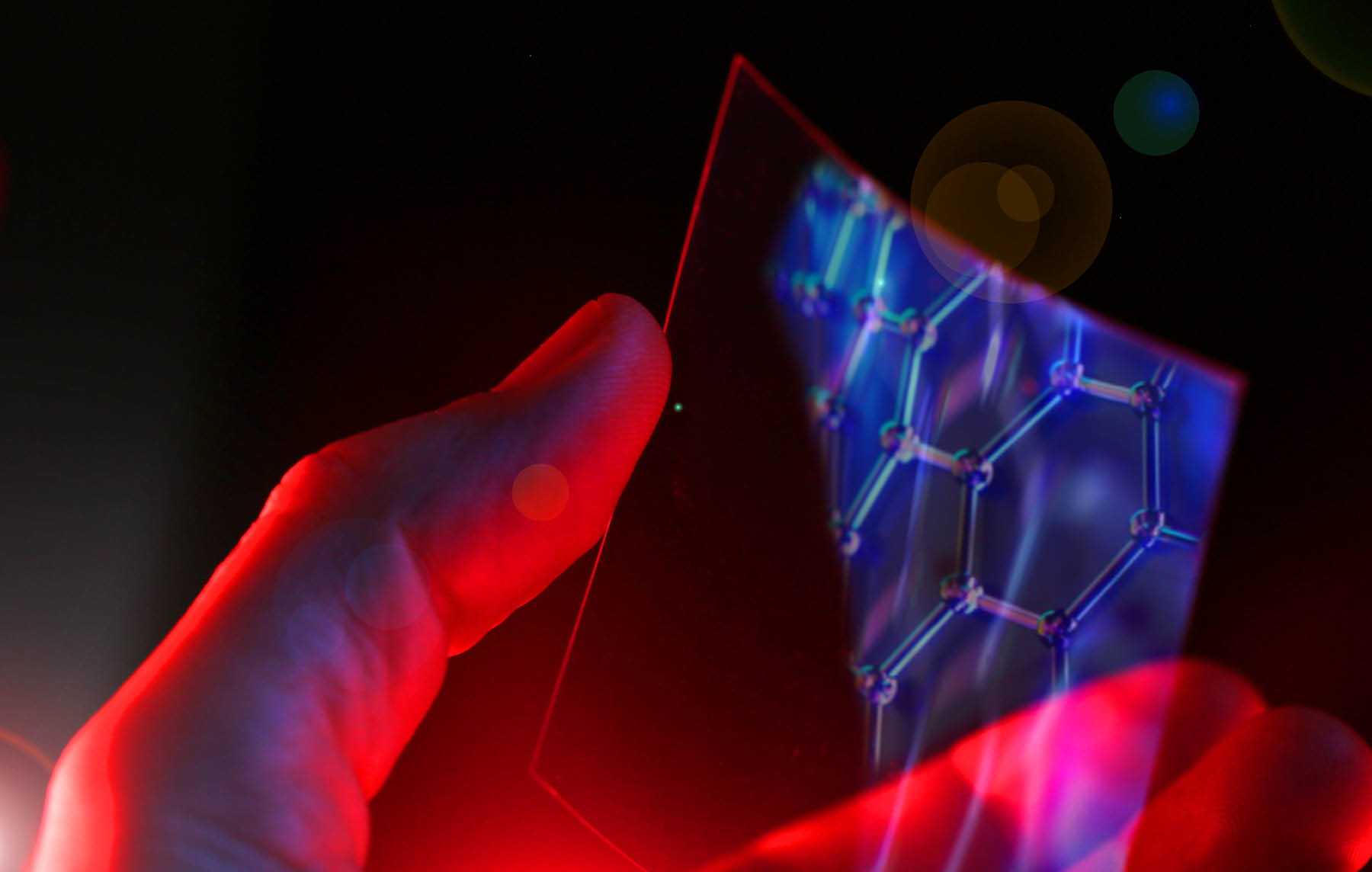

That insight shaped HydroGraph’s strategy under her leadership. Instead of trying to sell graphene as a raw material, the company focused on demonstrating how it improves existing products. And concrete, carbon fiber, plastics and coatings all became testing grounds for the company’s material.
“The biggest thing I wanted to do was generate abundant application development data,” Breure says. “Then go to the market and really showcase those results. Without that data, it would’ve been very hard to land a deal.”
The transition from laboratory science to industrial production is where many advanced materials companies stall. And Breure knew the shift would require more than scientific expertise.
“It’s one thing to be very creative. It’s another thing to scale,” she says.
Scaling meant refining both the company’s operations and its team. Early research environments thrive on experimentation while commercial companies require structure, planning and capital discipline.
“It’s often not the same people who will grow and scale,” Breure points out. “So that transition from the lab to full commercialization is always challenging.”
Overcoming that hurdle has meant maintaining HydroGraph’s scientific foundation – research remains central to the company’s identity – but it now operates with a far clearer commercial strategy.


According to Breure, the production process reflects that balance between science and practical engineering.
“We pump hydrocarbon gases into a steel chamber, we ignite that with a spark from an electrode, and we’re able to, in that one step, produce graphene,” she explains.
The challenge wasn’t just producing graphene but producing it at a scale large enough to support industrial demand. And one of the most critical operational breakthroughs involved access to acetylene gas – a key input in the company’s process.
Initially, HydroGraph relied on cylinder packs, which limited how much could safely be stored on site, so Breure negotiated pipeline access instead, enabling significantly larger production volumes.
“That really was the biggest differentiator,” she says.
HydroGraph has come a long way since its inception in 2014. Twelve years later, it’s officially entering its next chapter. The company is relocating its headquarters to Austin, Texas – a global tech hub – and targeting a NASDAQ listing as part of its expansion into the United States market.
“Being fully United States-based not only allows us access to federal funding but also secures a much closer relationship with the Department of Defense,” Breure says. “It allows us to be in the right ecosystem.”


Indeed, Austin’s proximity to hydrocarbon resources makes it an attractive base for scaling production.
HydroGraph will still maintain its research lab in Manchester, United Kingdom, ensuring that scientific development continues alongside commercial growth. But for Breure, she’s most excited about having most of the team together under one roof.
“We have team members in Canada, Manhattan, Kansas and the United Kingdom,” she says. “Very soon, most of our team is going to be in Austin.”
As for the coming years, Breure believes they will reveal just how far the technology can go.
“I’m very curious to see what the company is going to look like with all of these ongoing projects that are coming into full commercial form,” she reflects.
If the past year is any indication, the journey from breakthrough science to a billion-dollar company may only be the beginning.

 RELATED ARTICLES
 5-min read
8-min read



 Home
Home
 Podcasts
 Covers
 Be Featured
 Community