Language
You can read the magazine in one of the following languages

6-min read

 Bookmark now

 Copy Link
As a graduate healthcare-only institution, Midwestern University (MWU) wants to create world-class clinicians. To achieve that, delivering world-class care has to be ingrained into the curriculum, so students can see what it looks like in practice.
That’s why the Midwestern University Clinics are so technically advanced, and only a handful of institutions in the United States offer such an extensive breadth of services under one roof.
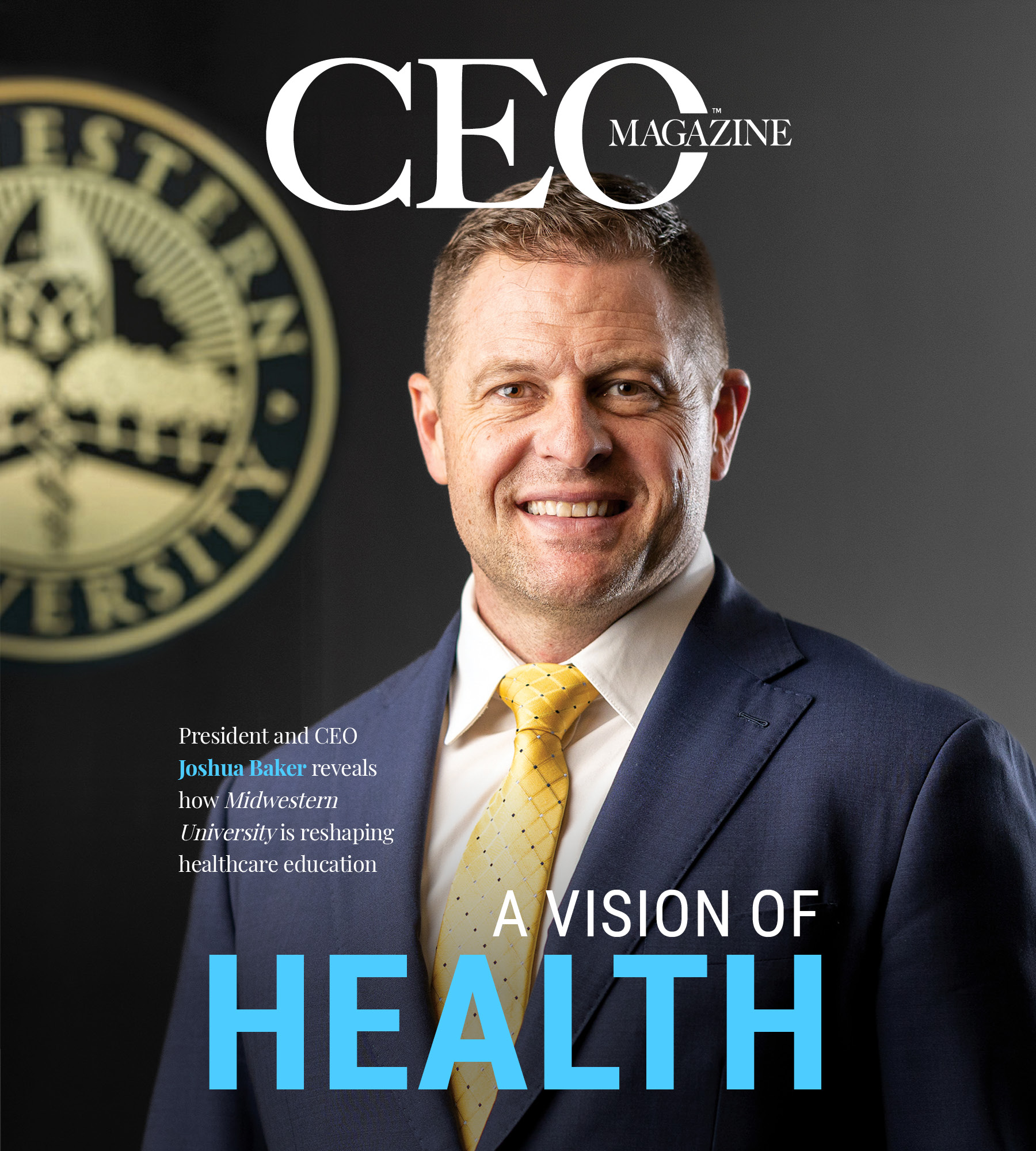
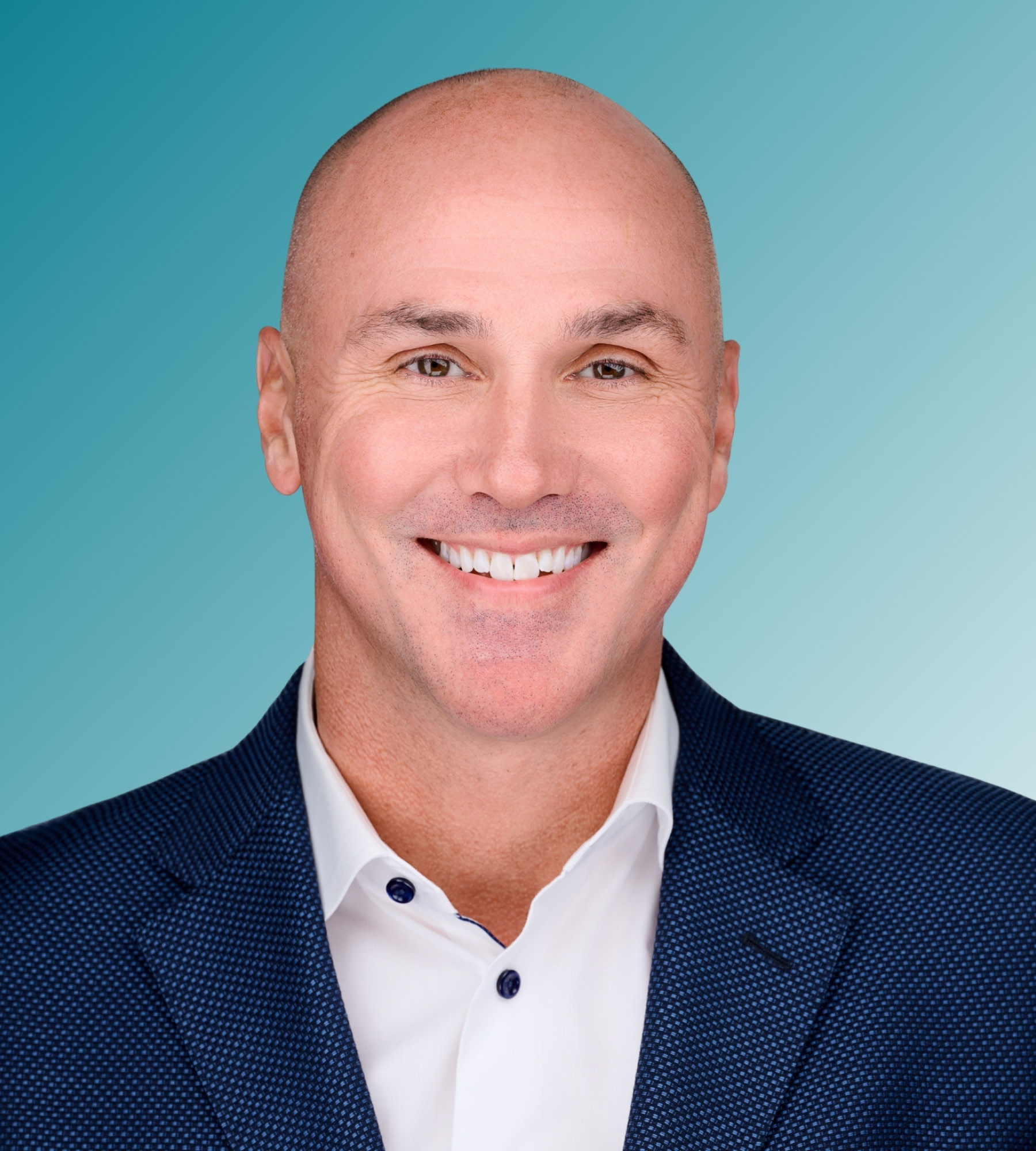
“One of the best ways you can prepare world-class clinicians is by running world-class healthcare facilities that they can be part of, that they can learn in,” President and CEO Dr Joshua Baker explains to The CEO Magazine.
Baker, an optometric physician, military veteran, educator and first-generation college student, brings a wealth of experience to the role. He earned a Master of Science from Syracuse University, a Doctor of Optometry from the Illinois College of Optometry and completed a primary eye care residency at Brooke Army Medical Center.
“Students can see our faculty delivering world-class care to patients in real time and know what that looks and feels like,” he explains.
With roots dating back to 1900 and the founding of the American College of Osteopathic Medicine and Surgery in Chicago, MWU has been training the next generation of healthcare professionals for over 125 years. The University relocated to the Chicago suburb of Downers Grove in 1986 and expanded to the Phoenix suburb of Glendale in 1995.

The University has 15 colleges in total. What makes MWU unique, Baker says, is its adoption of the global One Health initiative as its guiding star. The initiative, established in 2015, recognizes the interconnection between the health of humans, animals and the environment.
“Our approach to patient care is holistic,” Baker says. “We’re looking at the whole patient, but we’re also starting to look at the impact of the environment, of animal health and welfare and of food supplies. We are leaning into public health and examining the global impact healthcare providers can have.”
MWU has launched a long-term plan to adopt and embed One Health principles across its programs. As part of this effort, the University continues to update its existing courses to reflect One Health concepts.
Rooted in osteopathic principles that emphasize caring for the full scope of a patient’s health, the University has extended this approach across all of its doctoral and master’s programs – including pharmacy, dental medicine, optometry, veterinary medicine, podiatry and other health professions.
“These programs embrace the osteopathic philosophy of treating the whole person – the mind, body and soul – by looking beyond medications to consider factors such as lifestyle changes and nutrition, an approach that aligns closely with the principles of One Health,” Baker notes.
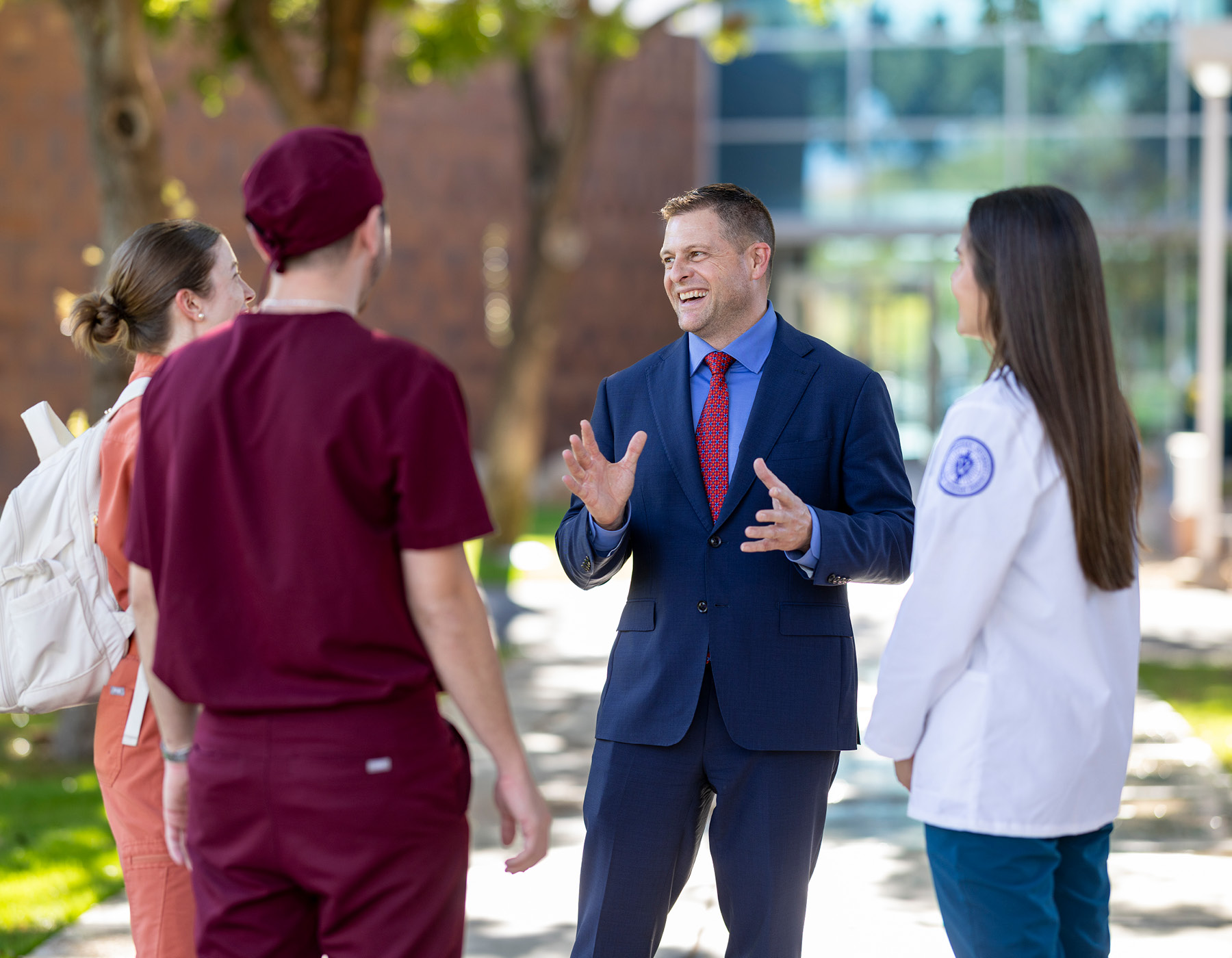

Baker says the launch of MWU’s veterinary program over a decade ago made for a natural orientation toward the One Health Initiative. The University, he adds, is constantly evaluating for new programs – and among those upcoming is a Doctor of Veterinary Medicine in Illinois, the first time MWU will offer the program in the state.
“The vet program alone is a very significant undertaking, with intense capital investment,” he says.
Both a small and a large animal hospital need to be in place before the first students arrive. But Baker knows that the formula, refined in Arizona, will find success in Illinois too.
“We’re very excited,” he continues. “We have the opportunity to offer something that’s very unique and special.”
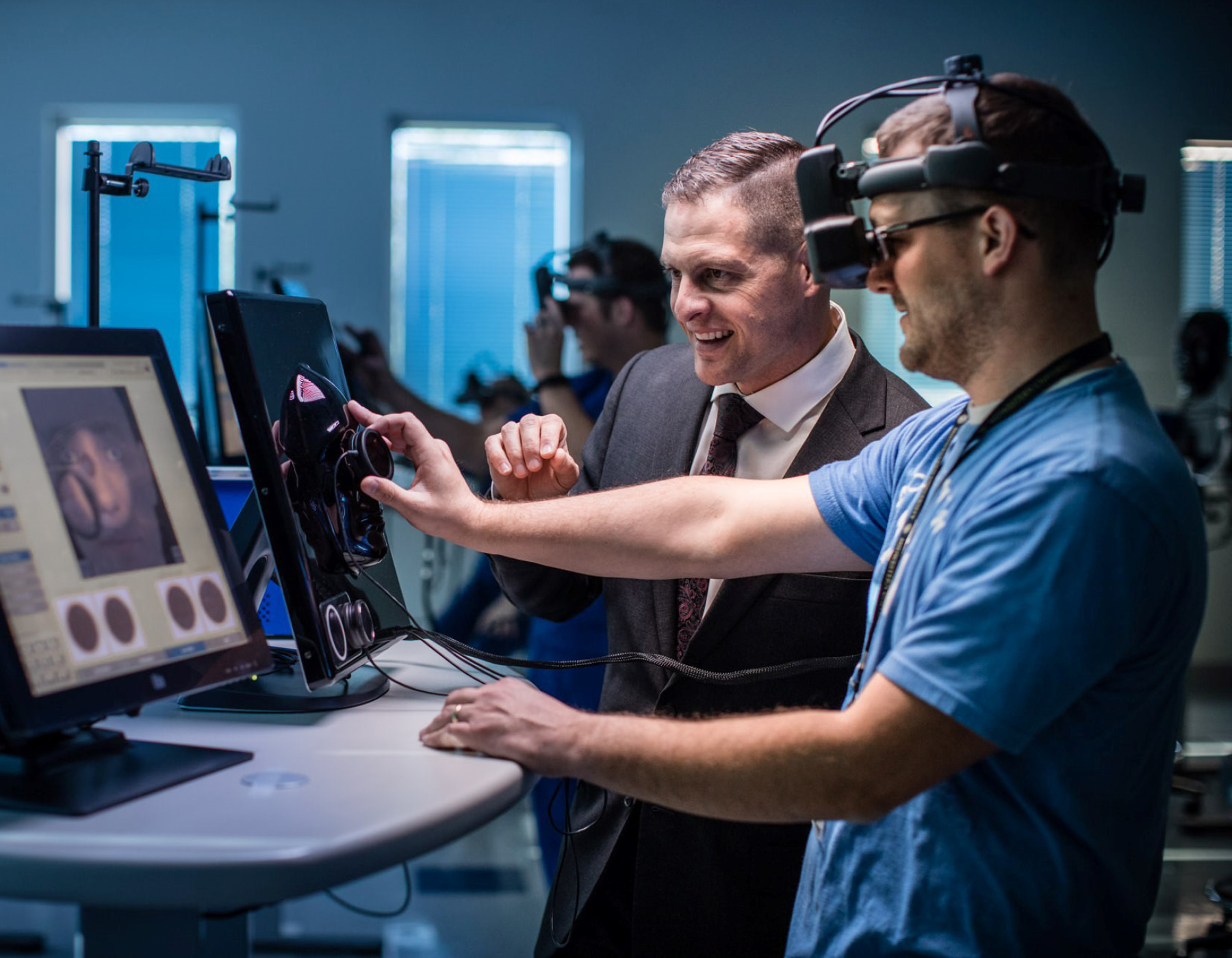
What’s also firing up Baker and his team is the impact technology can make in MWU’s classrooms. Among the smart and studied investments currently being made in cutting-edge innovations are virtual reality simulators.
“Simulation is going to play a huge role in medical education moving forward, and we want to make sure that we’re identifying the technology that’s going to be impactful and going to make a difference,” he says.
The University has implemented various simulation models that have AI-integrated programs to act like a real patient.
“It teaches our students the art of patient communication, of patient education, of asking questions in a way that gets you to the root cause of what’s going on with the patient,” he explains.
The student response has been remarkable.
“They love the experience, and we’re already starting to see better outcomes in terms of communication in our clinics once they get there,” he says.
“The one conversation we always have is how if Glendale and Downers Grove knew what a gem of a healthcare resource they have in their communities, they would be very impressed. All of our clinics provide exceptional healthcare, so it’s a wonderful service to our communities as well,” he says.
The University’s commitment to technology integration ensures its students are well-versed in the latest advancements. The state-of-the-art simulation center gives students the ability to hone their clinical skills with simulated patients, guided by expert faculty, ensuring mastery in complex patient scenarios.
“For our optometry students, for example, when they’re doing fundus retinal evaluations on each other, they’re effectively looking at healthy eyes over and over again,” Baker explains.
“That gives them a great sense of what healthy looks like. But when they get in the clinic, they’ll be seeing a variety of eye conditions every day.”
Thanks to virtual reality headsets, students can see what conditions like retinal detachment, diabetic retinopathy, a retinal tear and macular degeneration look like in a patient long before they arrive in the clinic.
“We don’t want them to have to wait until they’re in a clinical setting with real patients,” he says.
“By the time they are, this will feel more natural, more routine – so their focus can be on the patient, not on figuring out what they’re seeing.
“That has been profoundly impactful, and we’re looking for more ways to leverage this for all of our programs.”
Not even a year into the role and it’s clear Baker has a big vision for MWU. Baker has wasted no time launching a University-wide strategic planning process.
“We want to set a really significant goal on the horizon and then do everything we can over the next 10 years to achieve it,” he says.
That goal? To be the premier graduate healthcare organization in the United States.
“To get there, we have to have great outcomes,” Baker adds.


He appreciates that the goal is audacious and aspirational. He also knows it’s within reach.
“We are elevating our academic and research standards through advanced technology, strategic growth and stronger partnerships, positioning MWU as a sought-after institution known for measurable impact,” he says.
“With a disciplined financial strategy and focused investments in scholarships and priorities, we ensure accessibility while aligning growth with our capacity for excellence – allowing us to expand our reach without compromising the exceptional value we deliver to students and the healthcare community.”
 RELATED ARTICLES


 Home
Home
 Podcasts
 Covers
 Be Featured
 Community