Language
You can read the magazine in one of the following languages

4-min read

 Bookmark now

 Copy Link
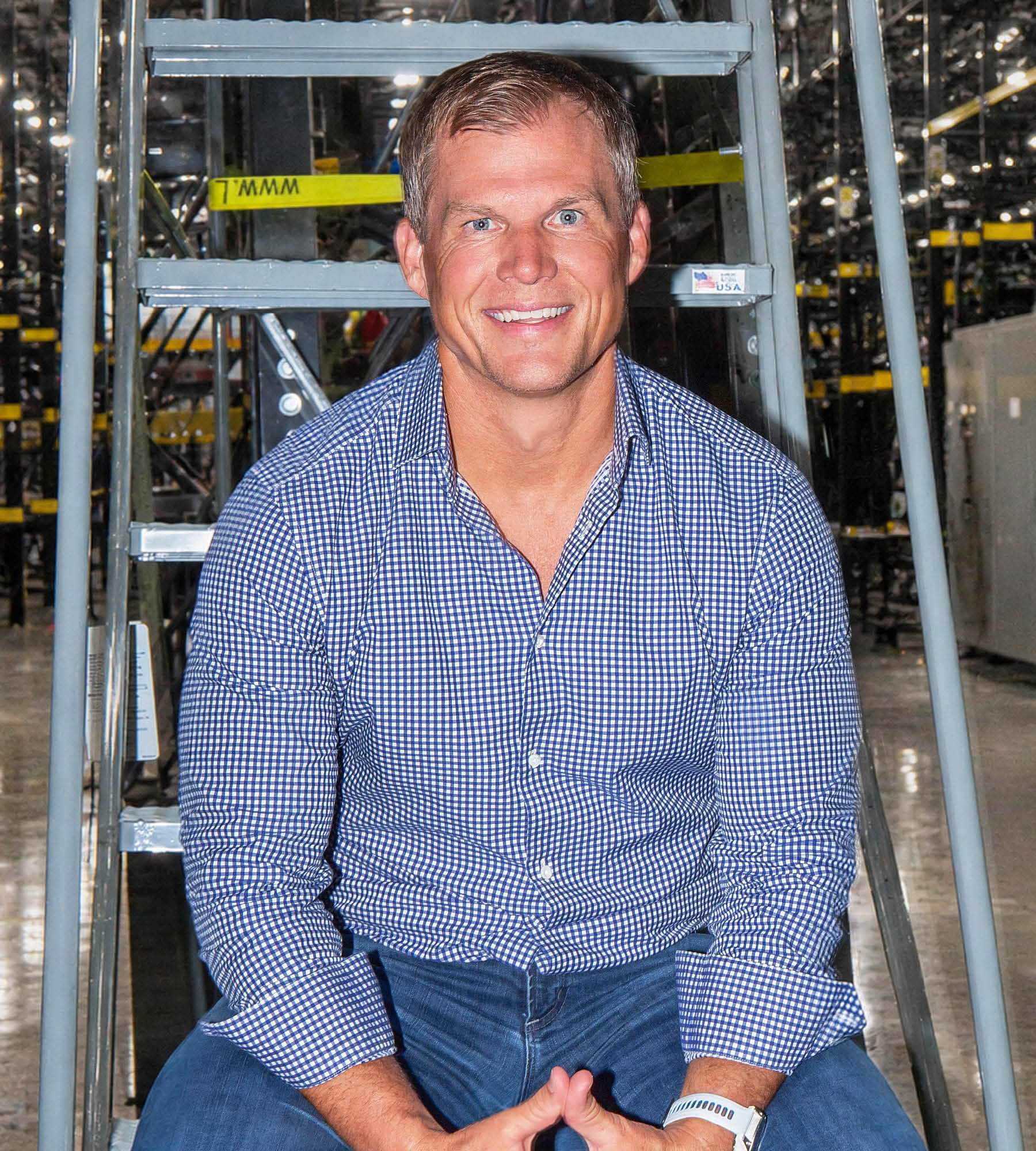
James Lancaster didn’t set out to create a global force for good. The Renew IT Founder and CEO insists the company was created simply as a pathway to a better life for his family.
“I had just moved to Australia with my wife and Co-Founder Rosie and four young children, with another on the way,” he tells The CEO Magazine.
“We had very few friends and no family we could lean on to help raise our children. I wanted to start my own business as a way to provide for them financially, but also my time and presence by working from home.”
Beginnings don’t come much humbler. Today, Renew IT exists across nine countries and has inspired tangible change around the world through innovations that are helping realize Lancaster’s vision of the plastic-free workplace where e-waste is thoughtfully disposed of.
“I honestly didn’t have any burning desire to create a big business and certainly didn’t think about becoming the global company we are today.”

“People know us for being creative.”
But the foundations for Renew IT’s success were there from day one. Aaron Blacklock and Ethan Lancaster – the company’s first and second employees – are testament to that. Eleven years later, both are still with the business.
“Hiring the right people, winning customers and acquisitions have certainly been part of our success, but without the right values and integrity in our DNA, it wouldn’t have been sustainable,” he acknowledges.
And sustainability is what it’s all about. Renew IT manages IT asset life cycles for clients, ensuring environmentally sound disposal of the very large, very modern problem IT e-waste presents.
“The technology we’ve commercialized and launched to divert e-waste and create manufacturing feedstock gave us the opportunity to build out a global footprint via multinational clients,” Lancaster says.
“Stuff like photocopiers, large format printers and old monitors were, for the most part, being smelted and used for landfill. That didn’t sit right with me and I was determined to find a better way.”
In 2018, after reading an article that showcased Professor Veena Sahajwalla’s breakthrough method of breaking down e-waste to raw materials able to be circulated back into the supply chain, Lancaster says he had his first ‘wow’ moment.
“The second came after I contacted Veena and visited her team at the University of New South Wales,” he says. “Finally, there was a clear and transparent process that had, until that point, been covered up by the waste industry. I was determined to use Renew IT to take the technology to market and change the world.”
The result was a 3D printer filament made from e-waste plastic.
“Of the 60 million metric tons of e-waste disposed of each year, 20 million metric tons is ABS plastic that’s able to be reused in 3D printing,” he says. “Imagine having an office chair made from your old keyboards or mice. That’s what we’ve been doing.”
The level of impact gets Lancaster out of bed every morning, but he says it’s the Renew IT team he’s most proud of.
“People know us for being creative,” he says. “Creating ‘wow’ moments of our own is my biggest motivation, whether through our microfactories or our robotics and AI solutions.
“My latest one came when I was asked to be a Professor of Practice in Industry and Innovation at the University of New South Wales. I wasn’t particularly academic when I was younger, so the acknowledgement was extremely satisfying.”

“If we’re serious about sustainability, we need to look at our supply chains and make sure we’re sourcing remanufactured materials.”
While finding a silver bullet solution to the problem he set out to tackle would seem like the end of the story to most, Lancaster says it’s just the beginning for Renew IT.
“There are significant opportunities for us in a market that continues to grow, not just in the end-user computer space but in the data center space,” he says.
“As more and more data centers are built, the demand for our services will increase. And then the quality of the plastics we produce from e-waste keeps getting better and better, especially now that we’re able to plate the plastics in rare earths we’ve removed from printed circuit boards.”
The rapid evolution of the e-waste industry is, he adds, a challenge to the business world.
“If we’re serious about sustainability, we need to look at our supply chains and make sure we’re sourcing remanufactured materials,” he affirms.
Whether Renew IT could go the distance was never in question. Even from the very first steps of the journey, it was clear which way the wind would blow.
“Very early on, I was offered an opportunity to work with a competitor,” Lancaster recalls. “Rosie convinced me to back myself and keep going. In 2021, we bought that competitor.”
As the saying goes, waste not, want not.
 RELATED ARTICLES
  SPOTLIGHTS ON LEADERS


 Home
Home
 Podcasts
 Covers
 Be Featured
 Community