Language
You can read the magazine in one of the following languages
5-min read

 Bookmark now

 Copy Link
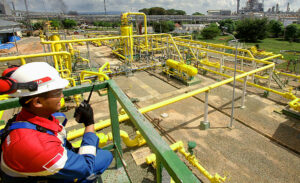
The natural gas reserves of Indonesia were put on notice in 2007, when oil and gas company Pertamina Gas was established to manage state-owned Pertamina corporation’s midstream assets. With the advent of the Arun gas terminal in 2013, the company ramped things up and embarked on a series of large-scale infrastructure projects.
Several pipelines followed. The first, a pipeline from Arun to Belawan in Medan, stretched around 300 kilometers. The next, the Muara Karang-Muara Tawar pipeline project, began in 2016. Two years later came the Gresik-Pusri pipeline in South Sumatra and the Duri-Dumai pipeline.
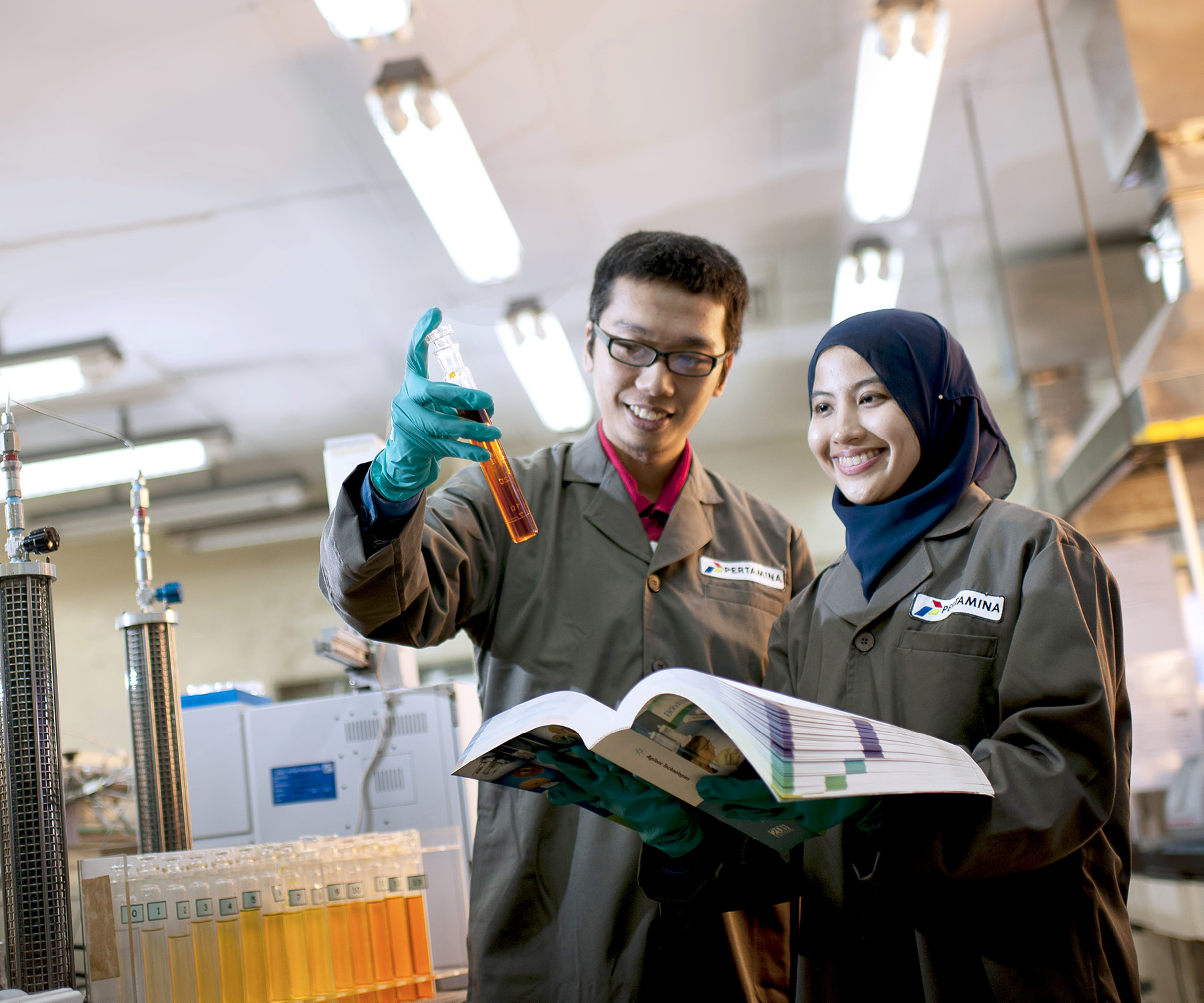
“We’re the backbone of Indonesia.”
Many projects later, Pertamina Gas hasn’t lost a modicum of steam as it races to drive its 2025 oil and gas output to an estimated 1.03 million barrels of oil equivalent per day. It has evolved into a key player in the country’s energy infrastructure network, but Pertamina Gas President Director Indra Sembiring puts it another way.
“We’re the backbone of Indonesia,” he tells The CEO Magazine. “We’re across the entire sector, from oil and gas transportation, gas processing, gas sales and liquefied natural gas (LNG) regasification.”
Pertamina Gas also operates in oil transportation, making it the multi-faceted and versatile enterprise its founders envisioned.
“We were established to focus solely on the transportation, processing and distribution of gas and oil,” Sembiring says. “After that, we grew.”
Pertamina Gas hasn’t rested on its laurels at any point in its relatively short history. Even now, a pipeline from Cikampek to Plumpang in Jakarta is underway and renewable projects, including a hydrogen plant and an ammonia plant, are on the cards in the future.
But no matter what it’s focused on, Sembiring says the company-wide priority is always the combination of safety and maintaining operational excellence.
“We must excel so we can ensure asset reliability and enhance operational efficiency, security and integrity of the vast pipeline network we manage,” he says.
“Beyond our operational achievements, we’re committed to health, safety, security and environment, and we believe our efforts in this space drive a positive company image and operation.”
With Indonesian production of LNG up by 1.5 percent in 2024, driven by Pertamina Gas’ own drilling efforts, the work being done has never been more vital to the country’s bottom line.
“That’s why we keep expanding the core business and our existing operations,” says Sembiring, who has headed up Pertamina Gas since 2013. “And in the near future, we’ll be partnering with Pertamina Patra Niaga to construct more oil pipelines.”
This, coupled with the Indonesian government’s own pipeline projects, will mean that a pipeline that stretches from Sumatra to Java is entirely possible in the years to come. The company’s role will be to manage operations from north to south.
“That’s one part of our future,” he explains. “Another critical growth strategy is our aggressive expansion into new green energy sectors.”
Already, Pertamina Gas is conducting feasibility studies at Kuala Tanjung, Lampung, Semayangkay and sites in West Java for possible hydrogen plants.
Elsewhere, together with partners such as Pertamina Drilling and engineering consultants Dinamika Teknik Persada, the company is preparing to collaborate on carbon pipelines to transport captured carbon dioxide away from emissions sources to storage or utilization sites.
“We have many opportunities available to us,” Sembiring says. “We choose the right partners and providers, we source the right data and we collaborate on projects that will help us grow while maintaining our reputation for reliability, integrity and excellence.”
Sembiring is aware that the global shift toward sustainability means an inevitable downturn in fortunes for any gas and oil concern, which is why he’s worked hard to find viable renewable opportunities.
“So when we work with Pertamina Geothermal on a new green hydrogen plant, it will provide electricity during construction,” he points out.
Meanwhile, dwindling gas sources remain the company’s greatest challenge.
“The gas business is very dependent on government regulation,” he says. “That’s why I’m driving the company in such an aggressive way.
“These are the challenges we face, but by working hard, we can overcome and maybe even expand abroad, which is my dream.”
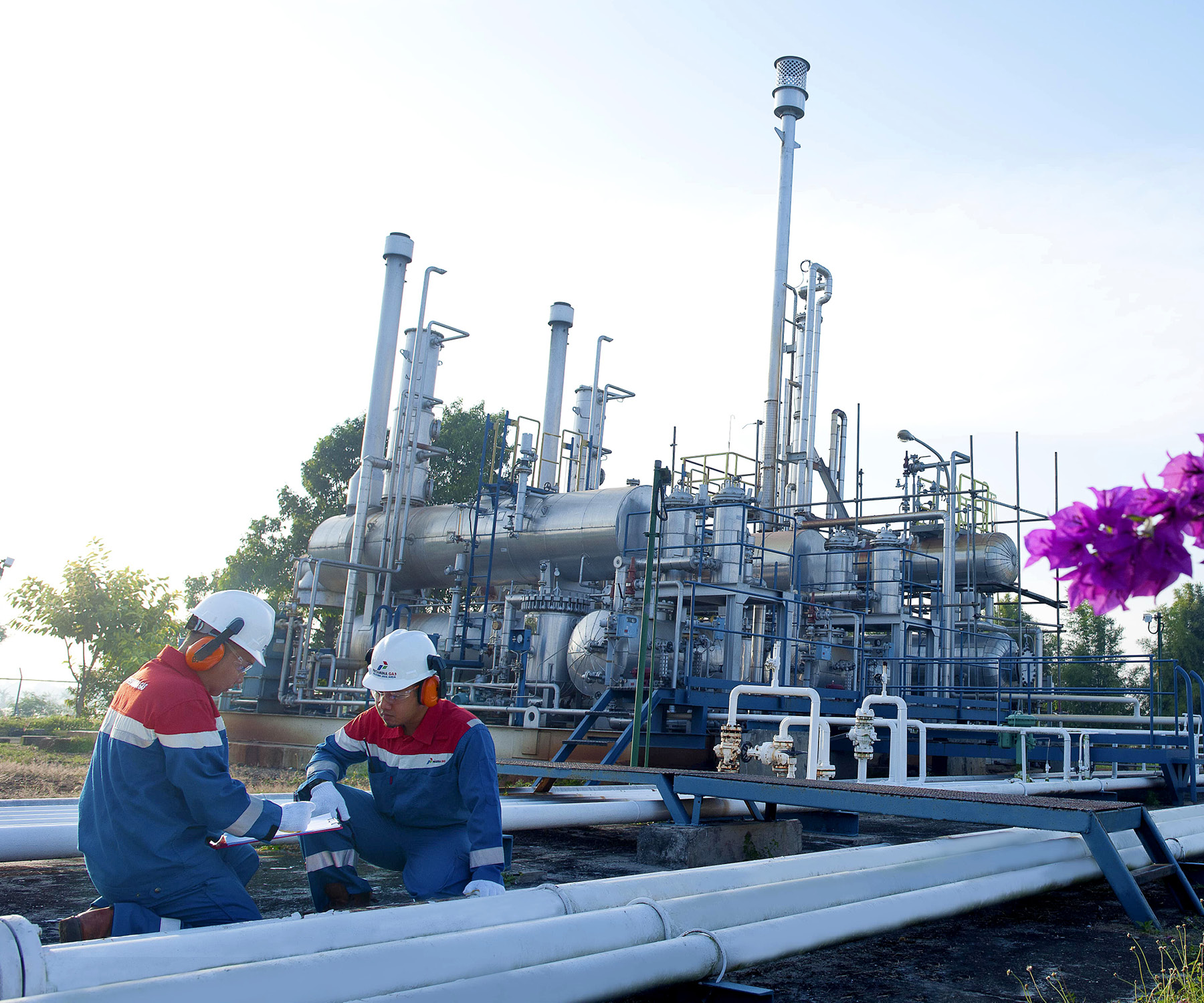
“We do everything we can to maintain the trust between Pertamina Gas and the companies we work with.”
While Sembiring’s desired destinations of the Middle East and Europe remain a dream for now, he says he’s already in talks with companies there to establish a support network.
“The way we go global is by making sure we’re the biggest in Indonesia,” he notes. “Right now, we already operate gas transportation here, but we have to focus on developing more infrastructure as well as human capital. If we’re growing, we need human resources to support that growth.”
Sembiring understands the uphill battle any oil and gas company has to reach across the void into the realm of renewables. This is why he’s working hard to keep so many elements in play for the company.
“Our focus is on infrastructure for oil and gas transportation, yes. But we’re also working tirelessly with other companies to develop a renewable portfolio. If such opportunities come up, we’re going to take them,” he confirms.
“Many companies come to Pertamina Gas to introduce their wares or services. We welcome them all and then enter into discussions to determine how they can best support our operations.”
What has helped that process, he adds, is his constant commitment to establishing trust in every direction.
“We do everything we can to maintain the trust between Pertamina Gas and the companies we work with, that’s number one,” he adds. “Number two is we work hard and follow through on what we say we’ll do, so the public will trust us as well.”
 RELATED ARTICLES


 Home
Home
 Podcasts
 Covers
 Be Featured
 Community