Language
You can read the magazine in one of the following languages

6-min read

 Bookmark now

 Copy Link
Sometimes it takes a different way of thinking to excel in an established sector. The fragrance business, for instance, has come a long way from its original purpose of disguising the stench of tanning back when gloves were made from hides. Back then, French perfumier Antoine Chiris tapped into the nascent technology of the industrial revolution to turn his business into a hallmark of luxury and elegance – a far cry from the abattoirs.
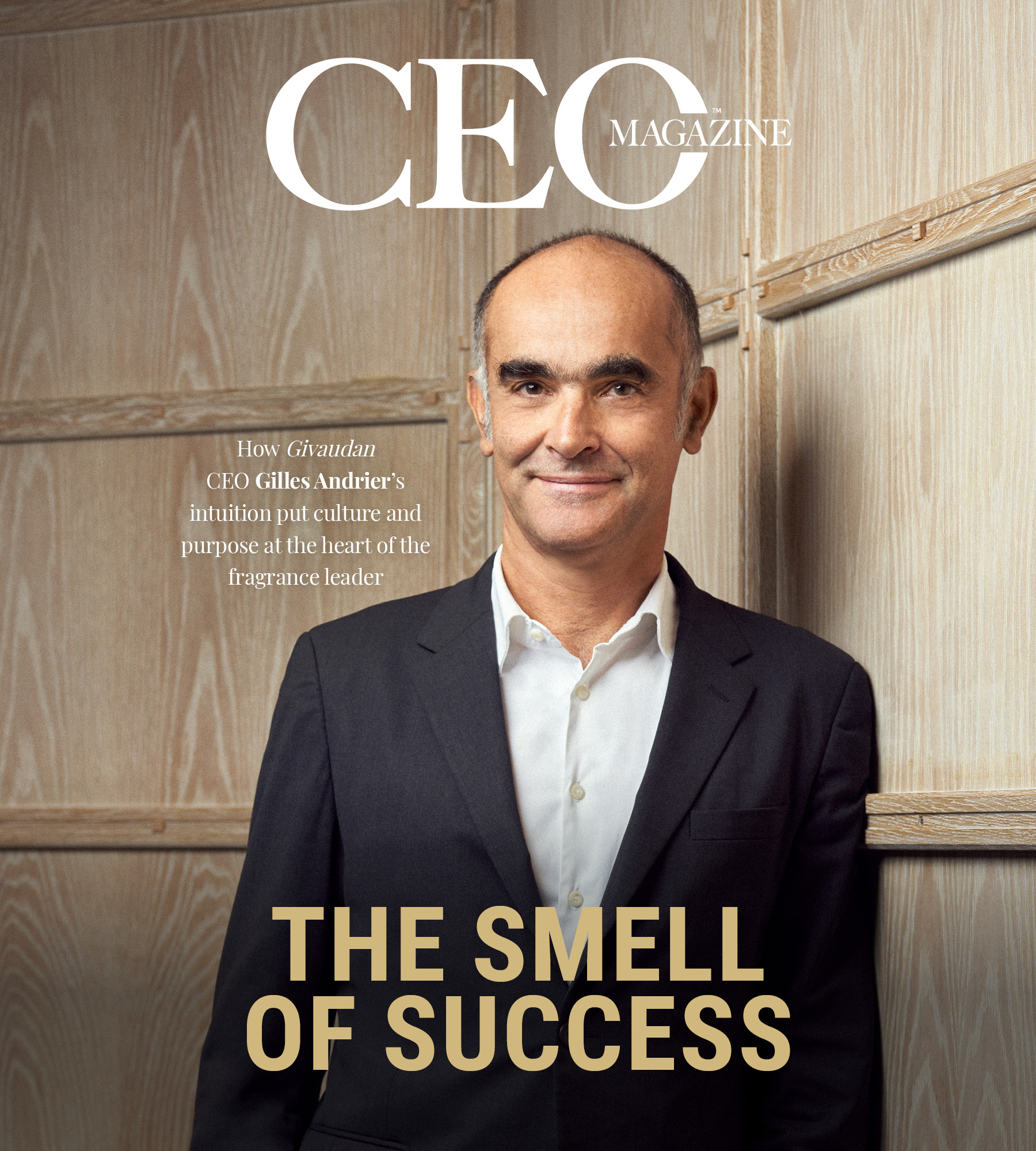
Today, that business persists as Givaudan, a Swiss-based global leader in fragrance and beauty, as well as taste and wellbeing. The company’s current success – an industry-leading performance of more than US$9.7 billion in sales by the end of 2025 – is down to another visionary thinker, CEO Gilles Andrier, who tells The CEO Magazine he fell into the role by chance.
“My background is in engineering and mathematics. I like to understand things without taking them for granted,” he says. “I think that defined the starting point of my career, as well as putting a color on my leadership style.”
After getting his start with professional services firm Accenture, Andrier joined Givaudan as Assistant to the CEO in 1993. It might not have seemed like a logical move, but those were different times, he says.
“I wasn’t actually doing any career planning,” he says. “I just went by my intuition, which told me that being a strict engineer was maybe not the future I wanted for myself. I wanted to understand the business side of things – what a company looks like and how it’s run.”
Working closely with CEO Jean Amic so early on was a masterclass for the young Andrier.
“He taught me the essentials and the magic of the business before we even went into the ‘hows,’” he says. “I learned a lot about the mindset behind such a business.”
At the time, Givaudan was merging with Roure; both had been owned by pharmaceutical giant Hoffmann-La Roche since the 1960s.
“In the early 1990s, it was time to merge them and create this fragrance and flavors division, which was unique to Roche,” Andrier says.

“Everybody took for granted that scents and tastes existed, but few people were asking who actually created them. I wanted to know, and so I fell into it purely by chance.”
Working with such an icon as Amic gave Andrier a better head start than he could have hoped for.
“It was an education,” he says. “And since I’d already been exposed to so many facets during my early career, I could really make an impact.”
Originally, there were no plans for Andrier to become Givaudan’s CEO, but in time, an appetite developed. After a decade or so with the company, the opportunity arose.
“Givaudan had just been through an initial public offering, so we were essentially a newly autonomous company with 4,000 people and CHF2.8 billion [US$3.53 billion],” he says. “I did a few things that I feel good and proud about, and going by the figures, we quadrupled the number of employees.”
Again, Andrier credits his instincts and intuition for the explosive growth, rather than any particular plan.
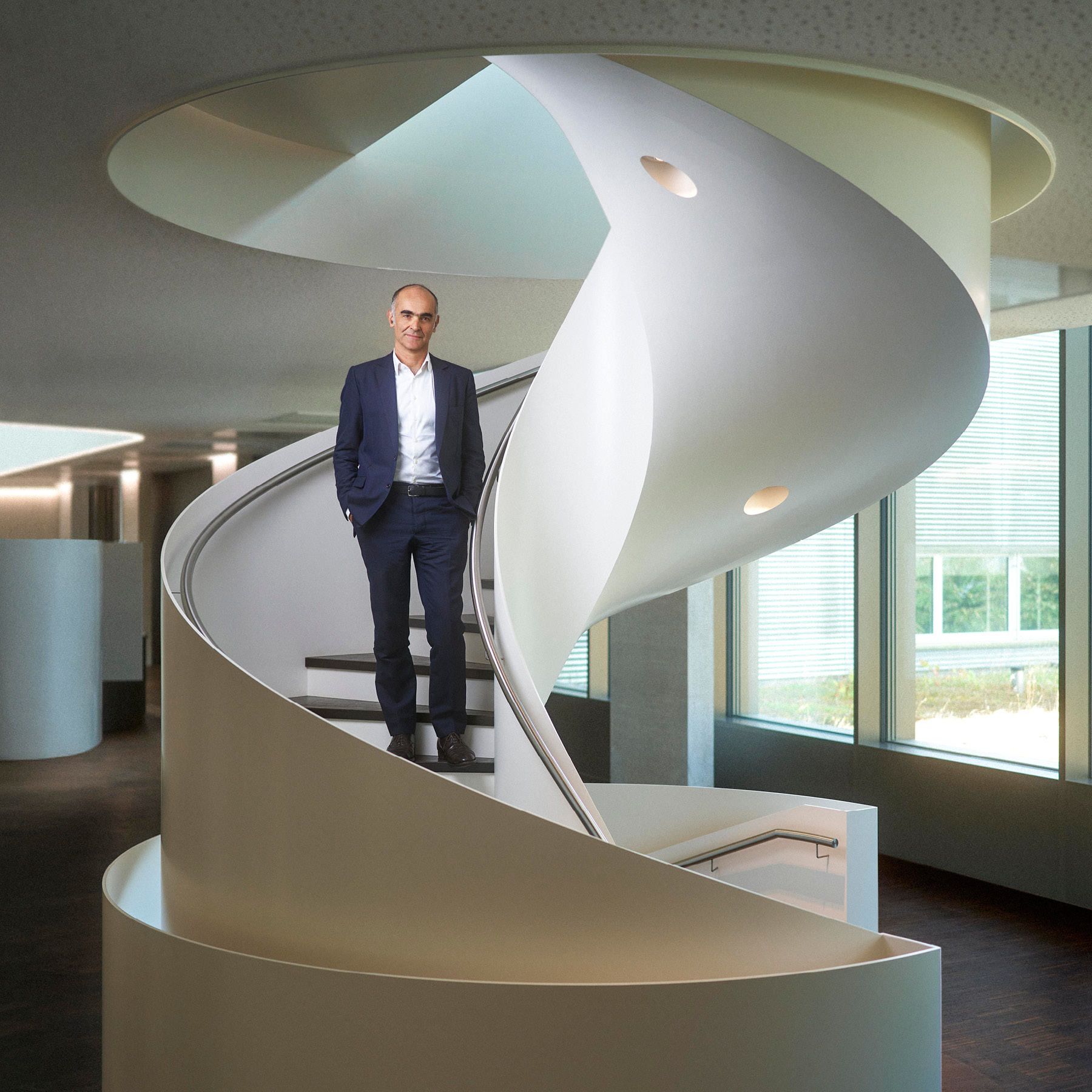

“There’s obviously a lot of planning in what you do, but it’s like a game,” he explains. “It’s playful. You enjoy it. You’re building up as a community, and that’s really what we’ve done. We’ve created an industry leader while staying true to our soul and the business model we inherited.”
Maintaining Givaudan’s soul is a testament to the culture Andrier has helped build for the business.
“Even though I’m a rational, analytical engineer, I realized I could make a bigger impact leveraging Givaudan’s culture by working on my leadership skills,” he says.
“Rather than just telling people what to do, we always talk about the ‘what’ versus the ‘how’ by focusing more on how you do things, how you lead, motivate, guide and make decisions. We shifted the balance to the ‘how,’ and that’s very much the culture I found here when I arrived 30 years ago; we just enriched it through acquisitions and such.”
The company’s fascination with ‘how’ makes it very easy for Andrier to answer the question: How does Givaudan stand out in the market?
“Our culture is ‘how,’” he says. “It’s all about humanity, high performance and challenge. I love setting high, demanding targets because that’s the only way you have a chance to achieve them.”
And making that possible is the company’s strong sense of purpose.
“We are a purpose-driven company because we’re not just there to grow in a profitable way,” he says.


“Having an impact goes beyond that. You have to contribute to topics such as social responsibility and the resources of the planet. We’re trying to reduce our carbon footprint, for instance. Our purpose boils down to asking why we do what we do, and the answer to that I’m very proud of: We make things to make consumers happier and healthier.”
And sure enough, Givaudan’s range of fragrances and beauty products, as well as foods and beverages, makes for an uplifting portfolio by anyone’s estimation.
“I never met anyone who hates fragrances and flavors,” he says. “But despite our abilities, we always have to ask: If we go into another space, would it make people happy and healthier? If it doesn’t, we won’t go there. And if you look at where some of our competitors have gone in the recent past, it’s something that’s really helped us decide what not to do.”
But just as luck led Andrier to Givaudan 30 years ago, it is still playing an important role today.
“We’re doing something that matters enormously to end consumers. You can’t sell products that don’t have a compelling taste or smell,” Givaudan says.
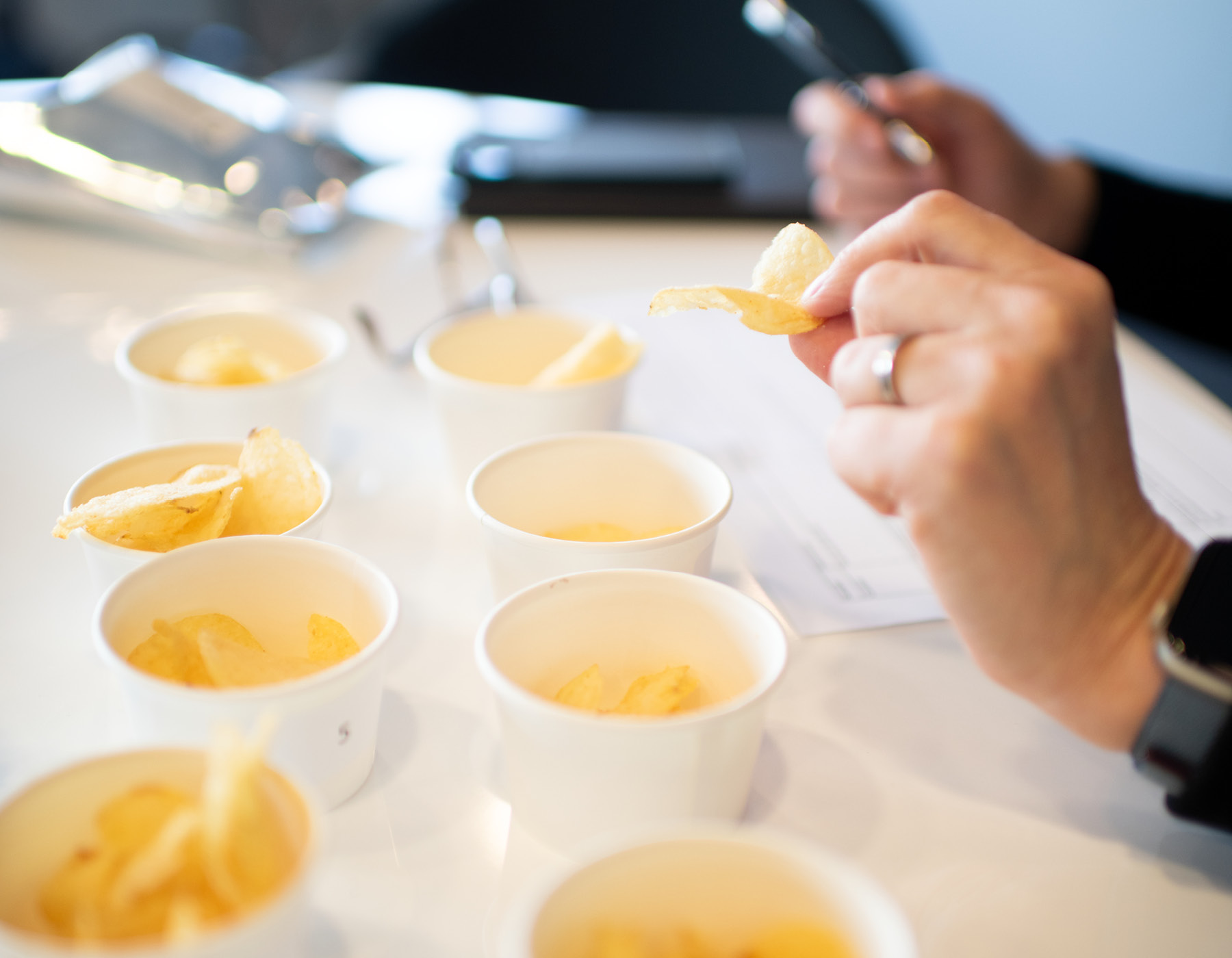
“The trick is making those scents and flavors bespoke. Every time you develop a new ingredient, it has to be specific to whatever the end product is, otherwise the consumer can’t differentiate. That’s why everything we develop is new, and innovation is Givaudan’s total engine.”
Whether or not those new products will connect is, much of the time, down to luck. That’s why Givaudan has almost 7,000 of its people working constantly on new projects and innovations.
“The most important driver for us is whether consumers like our end product. Every time we work on a brief, you either win 100 percent or lose 100 percent. If you’re in second place, you have no business. So execution is key.”


It’s a tale as old as time, and it will continue to be told long after Andrier steps off the merry-go-round. In late 2025, the CEO announced his retirement after 20 years in the top job.
“I actually never thought about whether I wanted to be CEO, I just enjoyed the journey,” he says. “The only thing I ever cared about along the way was, will I learn something? Am I going to feel richer because I’ve learned something and enjoyed it? That was the driver for me. I couldn’t have cared less about where I was on the organizational chart.”
While the company has a robust leadership path of progression in place, Andrier says he wouldn’t adopt someone else’s method.
“I promote building your own suit. You need to be authentic, but you can’t just be yourself forever,” he notes.
“You have to evolve, and that’s when you discover it’s not the destination but the journey that matters.”
 RELATED ARTICLES


 Home
Home
 Podcasts
 Covers
 Be Featured
 Community