Language
You can read the magazine in one of the following languages
5-min read

 Bookmark now

 Copy Link
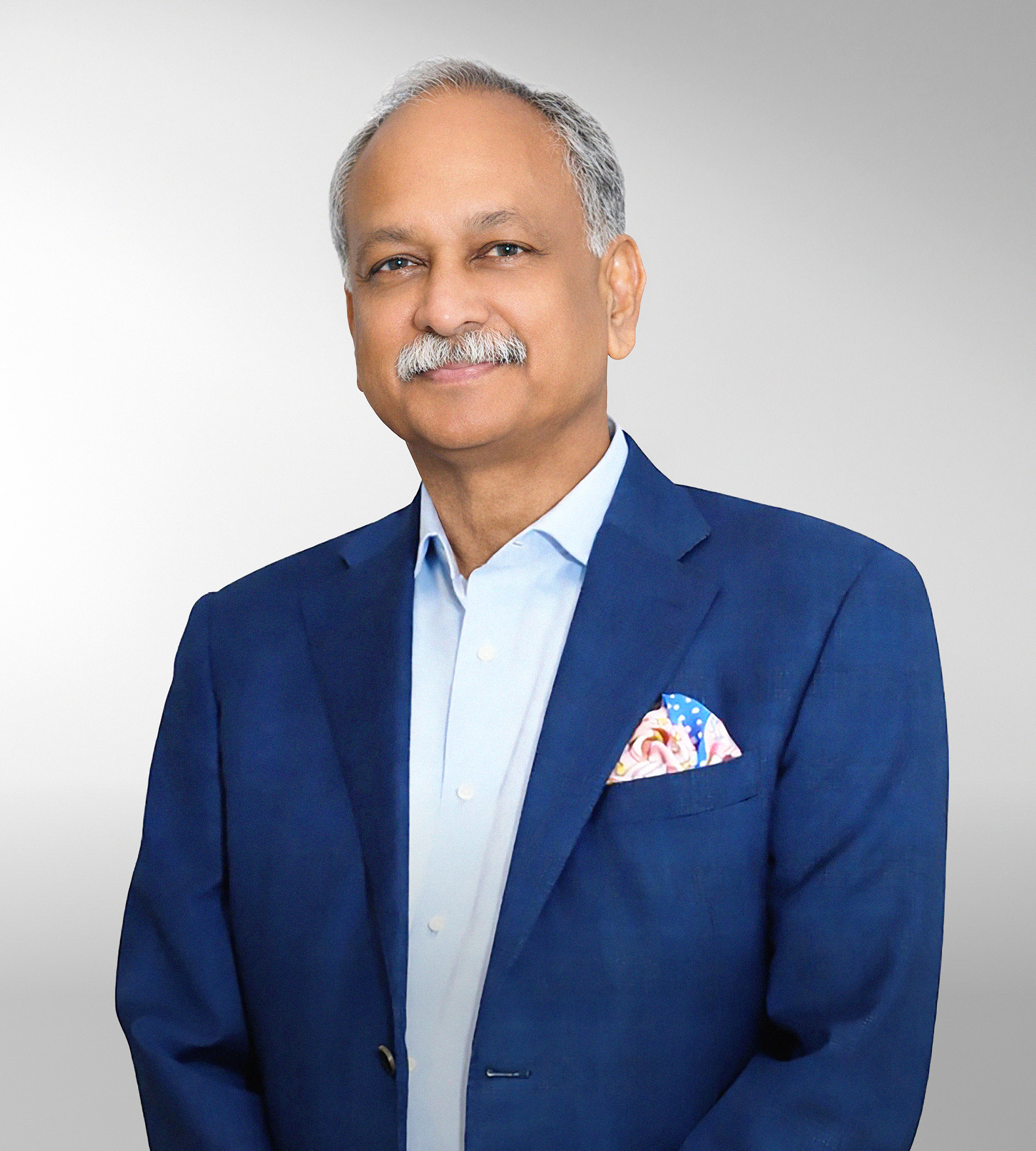
When Gautam Chand Jain first shared his plans to launch a stone export company, many regarded the idea as unrealistic.
“I started this company in 1991, though I came from a textile background,” Pokarna’s Founder and Chief Promoter tells The CEO Magazine.
“I wanted to get into an export-related business, and my textile business was purely domestic. Many of my friends questioned the decision, asking, ‘Gautam, how can you even consider entering this business?’ However, having already invested in a quarry, I felt there was no turning back and resolved to move forward and see how it unfolded.’”
In 2025, Pokarna generated more than US$100 million in revenue exporting its engineered quartz and premium granite countertops across North America, Europe and Asia. It’s fair to say his friends need not have worried.
However, what today shines as a model of success for budding entrepreneurs has not emerged from the ether.
“We only started producing granite from the quarry, and my initial focus was on traveling across the globe to identify the markets. I realized that if I put in my best efforts, there would be a demand,” he reflects.
“I also realized that the United States was the biggest market. And fortunately, granite was very novel.”
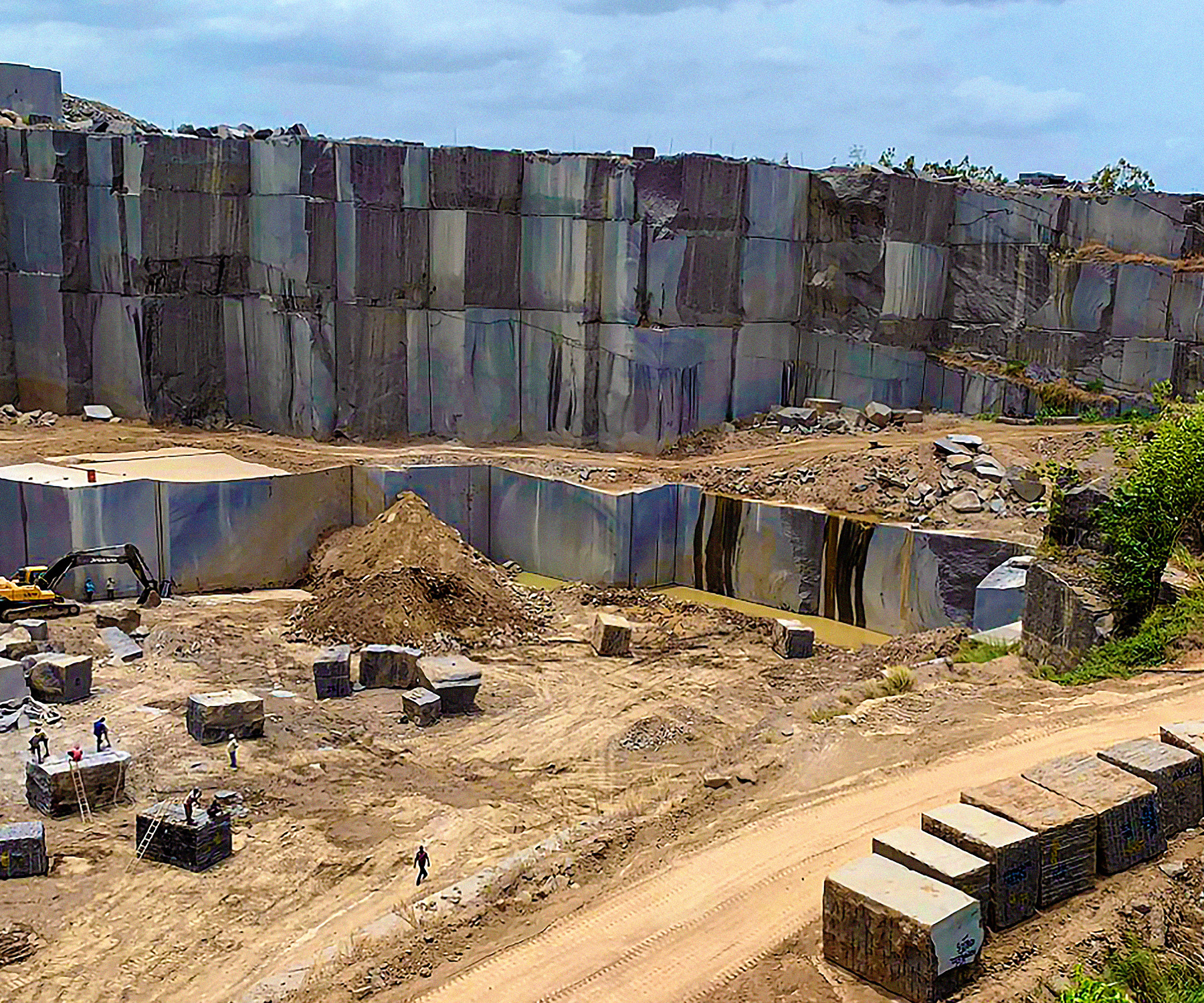
“We always look to be the best in the world, but not the biggest.”
Jain recalls embarking on a mammoth journey across the United States, speaking to anyone who would listen.
“I traveled extensively – there is almost no town in America I have not been to,” he says. “And when I went with the samples, nobody wanted to meet me because we were from Hyderabad, India.”
But his tenacity and the merit of his product offering shone through.
“Nobody knew about using granite in those days. I was the first mover. I had that great advantage to get in touch with the best of the distributors in the United States,” he explains.
“It was a win–win situation for me as well as for them, as it was a new product coming from India at a better, competitive price, which was ideal for kitchen countertops.”
Pokarna’s granite achieved significant success in the American market, with Jain noting that it was effectively sold under near-monopoly conditions. It was a surprise conversation with a customer, however, that inspired the company’s most significant pivot to date.
“They suggested to me, ‘Why don’t you look at making quartz?’ It was a very new thing for me,” he admits.
“I asked what quartz was, because I used to see watches with quartz. But they told me that it could become a countertop.”
With the support of its long-standing technology partner Breton, which had developed a specialist machine to transform raw quartz into countertops, Pokarna decided to make the strategic shift and sent a team out to be trained on Breton’s machines.
“We located five bright youngsters, and we sent them to Italy for training for this new product line, and we succeeded in making the best-of-the-best product,” he says.

Despite challenging initial conditions, with the global financial crisis erupting as Pokarna brought quartz to market, it has been a groundbreaking success.
“The moment the market started moving again in a year’s time, we had enough demand to run the plant 24 hours, 365 days a year, and we have kept on adding capacity gradually,” Jain reveals.
“We opened a new plant in 2020, which quickly exceeded sales expectations. As a result, we are now evaluating a similar expansion to meet ongoing demand.
“After this expansion is completed, we should have about 2.23 million square meters across three plants, which will be one of the biggest quartz production facilities in the world.”
Jain has carried various maxims with him through his career, which continue to guide his decision-making as Chief Promoter.
“We always look to be the best in the world, but not the biggest,” he says. “We always strive to bring in the best technology in production, and we go to the extent of sending our team to Italy for training. There is no technology that we don’t use yet in our industry.”
He also admits to having a perfectionist streak.
“I am passionate about whatever I do, but I do it in my own way. Either I do it and it has to be the best or I don’t do it – there is nothing in between,” he notes.
“But the most important principle is ethical business practices and customer confidence. And a simple example of this is that my first customer in the stone business is my best customer, even today.
“My first vendor is my best vendor. My banker is the only banker I’ve been banking with for the past 51 years. My first employees are still my employees today.”
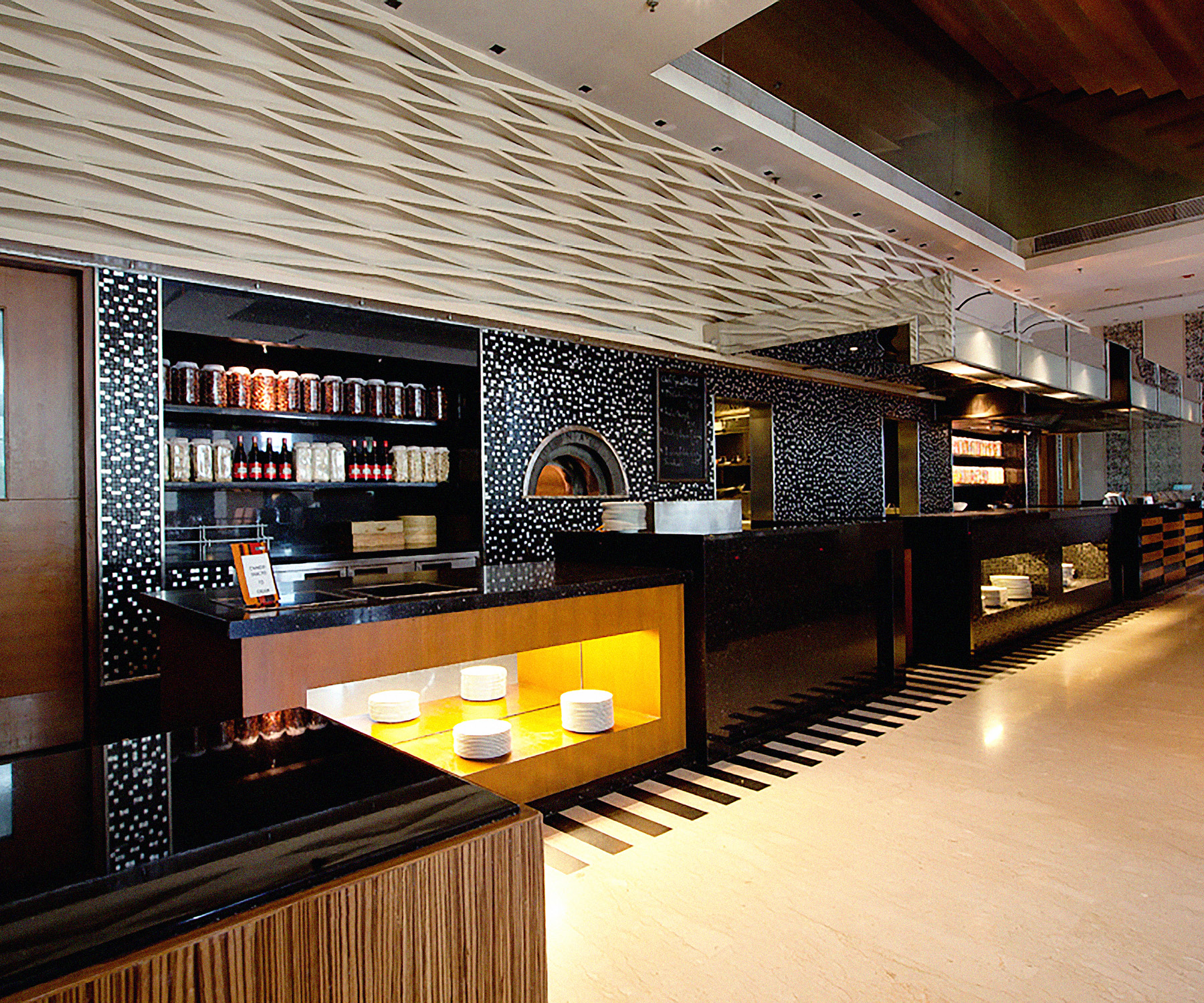
“We always think differently, combining our creativity and experience to create something better than the original.”
Jain prides himself on his long-term relationships, which he says are built on the foundations of mutual benefit, loyalty and unwavering trust.
“As long as you are fair and you look at the win–win situation, the relationships will continue,” he points out. “If you look only at your advantage, it will never last long. They may be forced to change suppliers or I may be forced to change vendors.
“But when we have this comfort factor that is long-term relationships and we spend time, not just for business but to understand each other, that is so important to the business.”
This allows Jain to continue to lead Pokarna forward, unabashedly embracing innovation, luxury and originality.
“I always believe in being ahead of everyone else, but I don’t believe in copying,” he says.
“We always think differently, combining our creativity and experience to create something better than the original.”
Jain’s journey proves that conviction, curiosity and uncompromising standards can transform even the most unlikely beginnings into enduring industry leadership.
 RELATED ARTICLES


 Home
Home
 Podcasts
 Covers
 Be Featured
 Community