Language
You can read the magazine in one of the following languages

 Bookmark now

 Copy Link
Indra Group (Indra), a global leader in defense, air traffic and space, is shaping the future of aviation with innovative air traffic management (ATM) solutions for safer, more efficient and sustainable skies. Its technology operates in more than 60 flight information regions across over 50 countries, managing more than 30 percent of the world’s airspace through a network of more than 11,000 deployed systems.
Indra is also one of the central industrial forces behind the Digital European Sky. It plays an active role in the Single European Sky ATM Research (SESAR) innovation program and it is the technological partner of the iTEC Collaboration in the development of the iTEC SkyNex Air Traffic Control system, which will handle 12 million flights annually across 26 million square kilometers of controlled airspace. The interoperability Through European Collaboration (iTEC) is enabling a more efficient, sustainable and harmonized air traffic environment across Europe and Canada.
The company’s global footprint continues to expand, including in highly competitive markets such as the United States, where Indra serves the Air Force, Navy and Federal Aviation Administration (FAA) – where it has recently been awarded the program to replace the FAA’s radios – as well as through major radar programs in the United Kingdom, Germany and Colombia.
iTEC SkyNex is set to become one of the most important advances in modern air traffic management. Developed by iTEC together with Indra, it brings together eight European and the Canadian air navigation service providers to build a shared, next-generation ATM system. Its design follows SESAR’s Open Digital Architecture, meaning it is cloud-ready, modular, and open to third-party innovations. The aim is clear: make air traffic operations safer, more efficient and more environmentally sustainable.
A key element of this transformation is the MetroStop concept, a new development model that organizes progress into annual cycles. Each cycle contains coordinated planning and development and allows every country to decide when to deploy the new version. This makes the system flexible: improvements are shared globally, yet each aviation network security program can adopt them at the pace that best fits its operational needs, minimizing disruptions.

iTEC SkyNex also builds on more than 15 years of research and innovation, integrating experience from SESAR projects and digital demonstrators across Europe. Advanced tools, such as conflict-detection systems that test different scenarios in real time, are already in operation in some of the control centers. By optimizing flight trajectories and reducing delays, the system significantly cuts fuel consumption and CO2 emissions, supporting aviation’s environmental goals.
Behind the technology lies a strong collaborative structure. iTEC works through joint governance bodies and a central management team that aligns technical roadmaps across all members. The recent entry of NAV CANADA expands the system’s reach to 27 control centers in eight countries. With SkyNex now in its development phase, iTEC is well positioned to shape the future Digital European Sky and set new standards for global air traffic management.
This drive to modernize global air traffic management reaches a new dimension through Startical, the joint venture between Indra and ENAIRE created to provide communications, navigation and surveillance services from space using a constellation of low-Earth orbit satellites.
In 2025, Startical achieved a historic milestone for aviation. Following the launch of two demonstration satellites, the company completed several world firsts that are redefining the future of global ATM. For the first time ever, real-time data communications between an aircraft and an air traffic controller were transmitted via VHF signals from space. This achievement builds on the breakthrough reached previously, when Startical successfully carried out the world’s first real-time VHF voice communication between pilot and controller via satellite.
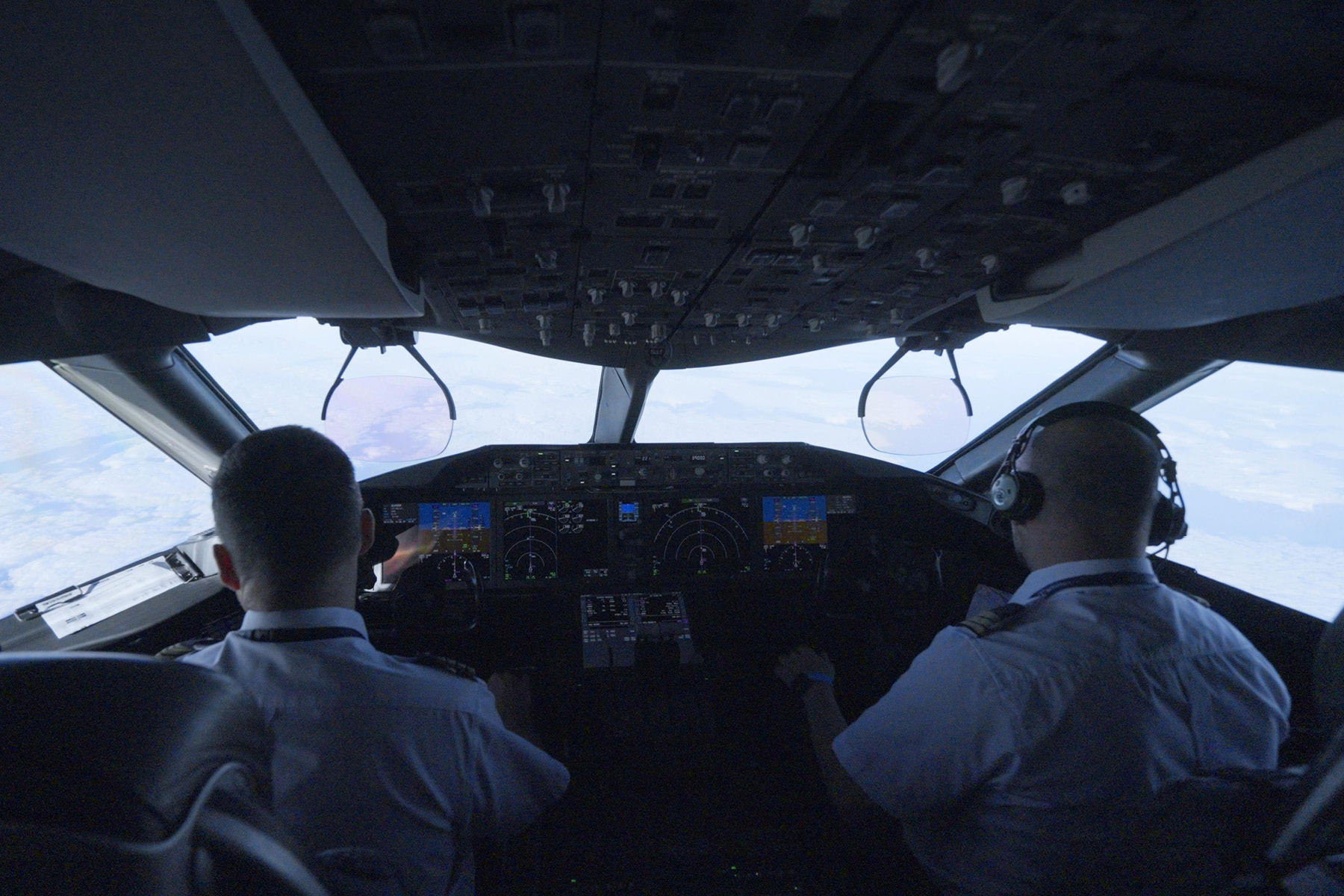
With these accomplishments, Startical opens the door to continuous, high-quality communications over oceanic and remote areas where coverage is currently limited or nonexistent.
The benefits are transformative. Satellite-enabled data communications support predefined messages that reduce controller workload, enhance clarity, and improve overall safety. They also allow airlines to exchange operational messages in flight using a more efficient and cost-effective alternative to traditional systems. For air navigation service providers, Startical adds a new global coverage layer without the need to deploy or maintain ground-based infrastructure.

 RELATED ARTICLES


 Home
Home
 Podcasts
 Covers
 Be Featured
 Community