Language
You can read the magazine in one of the following languages
5-min read

 Bookmark now

 Copy Link
A central priority of India’s rise on the global stage, as it prepares to banish the specters of colonial oppression once and for all, is to achieve growth on its own terms. Its campaign of Atmanirbhar Bharat, Hindi for ‘self-reliant India’, is an entrenched commitment to creating a nation that is self-sufficient.
Given the essential role that wireless communication now plays across every sphere of modern life, it follows that developing an indigenous wireless data capability has been earmarked in the upper echelons of government as a national priority.
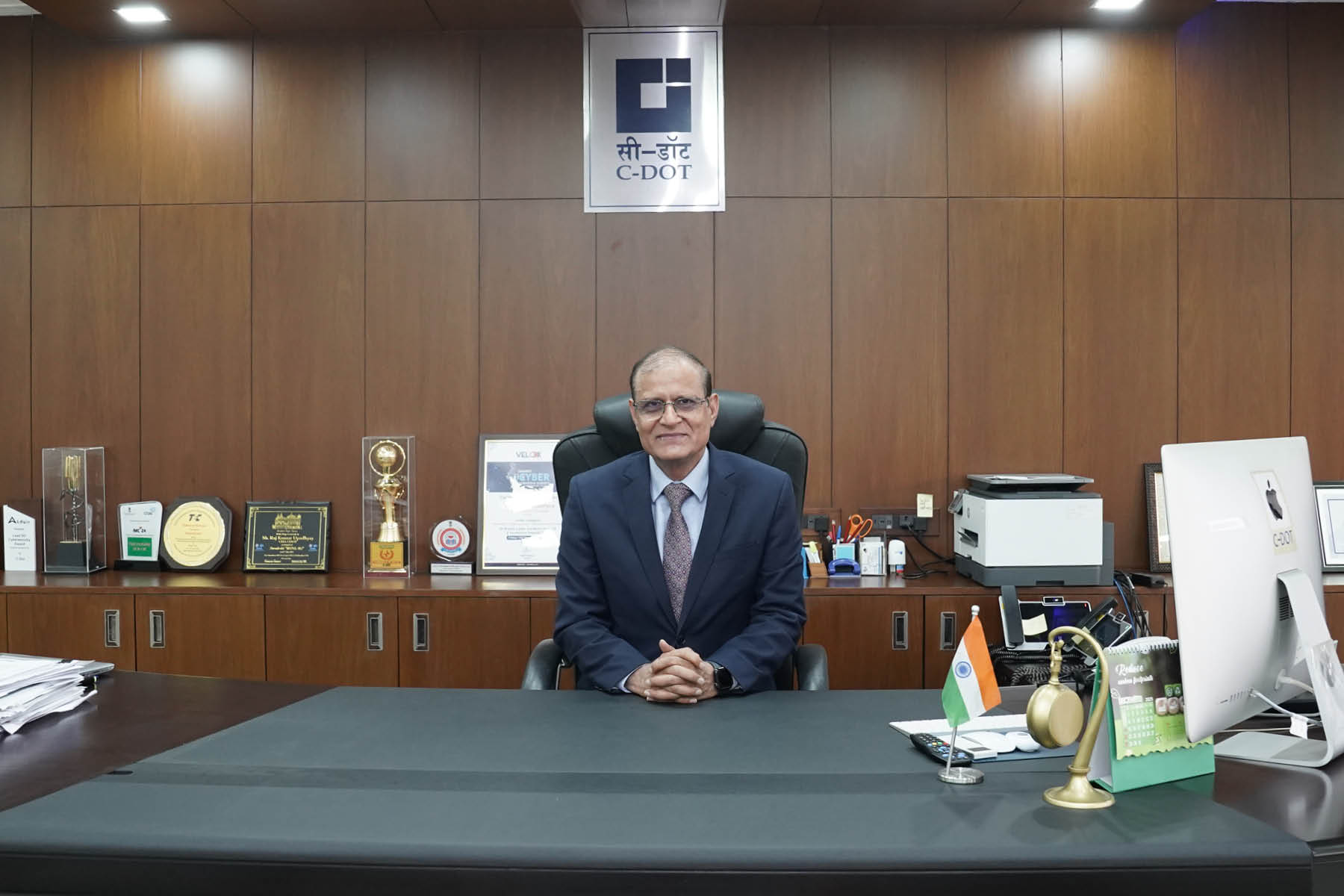
“We have the technology to provide information about threats and malicious attacks coming to our networks.”
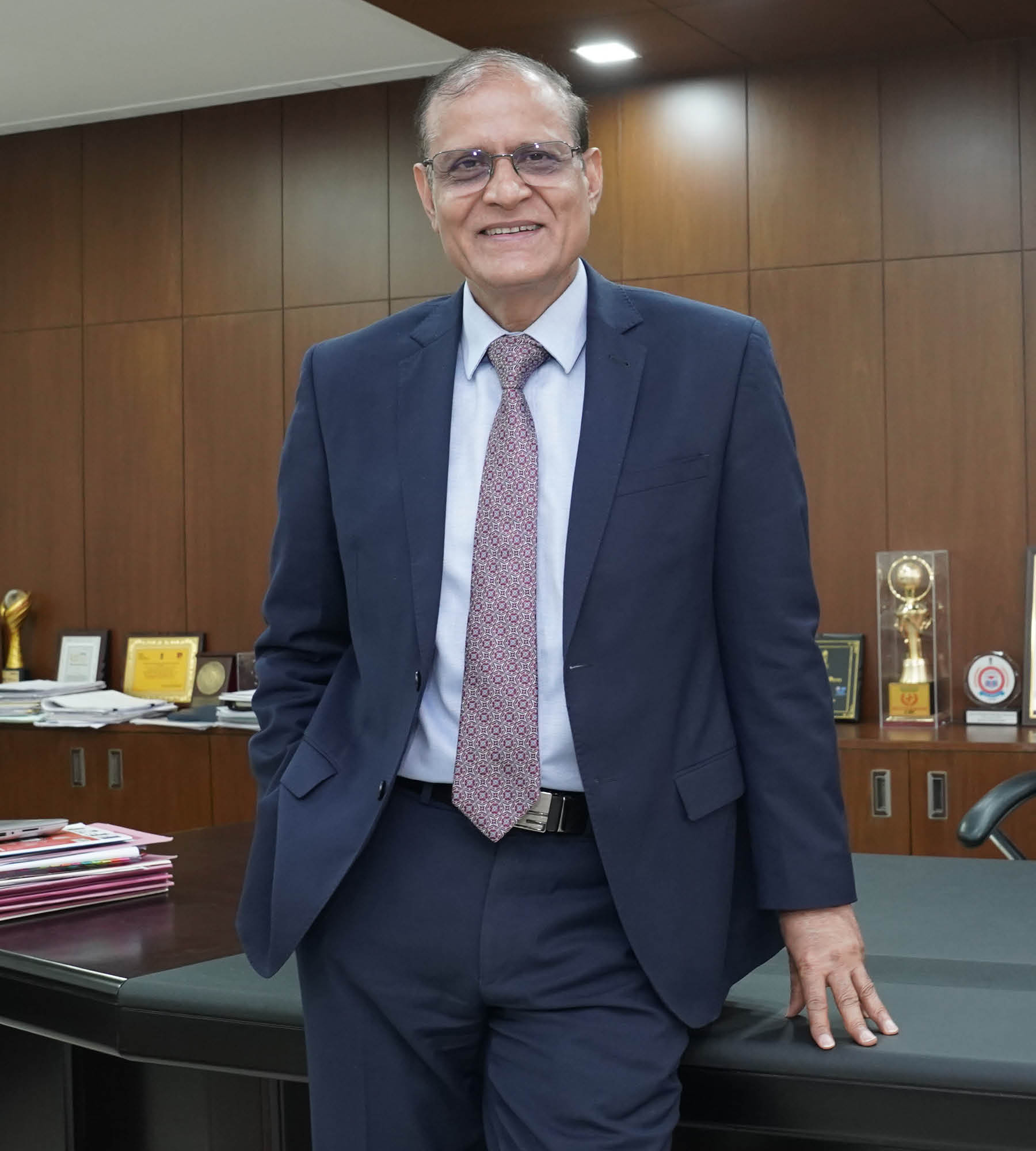
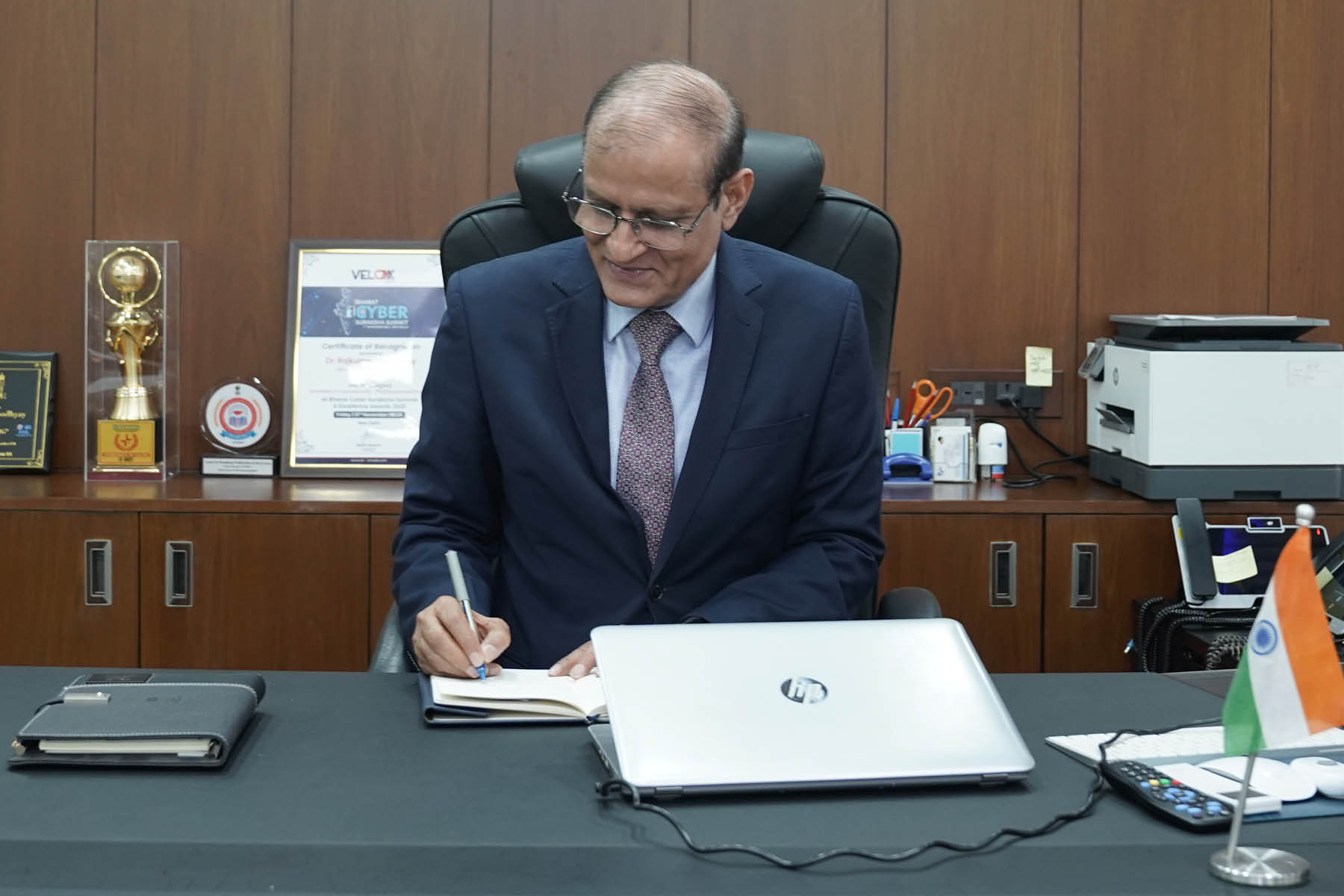
As the CEO of the Centre for Development of Telematics (C-DoT), an autonomous offshoot of the Indian government’s Department of Telecommunications, Dr Rajkumar Upadhyay is proud of the role his organization has played in achieving this capability.
“I came here at the right time, when the government was saying we should be self-reliant and we should focus on innovation; that messaging was very good for me,” Upadhyay tells The CEO Magazine.
“The most exciting job of my career has been with C-DoT, because it is full of challenges and I’ve got a wonderful team to work with.”
On 27 September 2025, India’s ‘Swadeshi’ 4G (5G-ready) stack was rolled out by India’s state-owned telecom provider, Bharat Sanchar Nigam Limited, across India. It was officially launched by Prime Minister Narendra Modi, who lauded it as a breakthrough moment for India’s self-sufficiency and economic growth.
“The rollout of 4G and 5G has been one of our biggest achievements in the last few years,” Upadhyay says. “The complete 4G/5G core, which is called the exchange – the heart and the mind of the system – is designed and developed fully by C-DoT.
“Today, it serves 25 million customers with approximately 100,000 radiating towers, generating a traffic of four and a half petabytes, and it will continue to grow. Twenty-five million customers will become 30 million, and 30 million will become 40 million, and so on.”

This capability is cloud-based and future-ready, with a timeline in place to upgrade to full 5G once indigenous 5G radios complete ongoing tests.
“In six months, it should be able to provide 5G services to the customers using the same system,” he says. “The first requirement was that we deploy 4G. The next target for us is 5G, and then it will go abroad.”
Mobile communications isn’t the only string to C-DoT’s bow. Another major area of focus is cybersecurity, with its early warning system a key success.
“We have the capability to provide information about threats and malicious attacks coming to our networks, or whatever adversaries are touching our telecom system or the IT space,” he says.
This helps protect government departments that cannot afford to be compromised.
“We are able to warn the respective stakeholders about what is happening in their networks and inform them to take necessary action,” Upadhyay explains.
Not simply satisfied with reactivity, C-DoT has extended its cybersecurity focus to prevention in the direction of the government.
“We have developed an enterprise cybersecurity solution called Trinetra, our product that can mitigate these problems,” he says.
“Some of the installations we have done of Trinetra include BSNL, the police department, the Steel Authority of India, banks and other businesses, who realized the benefits it offers. Many installations are underway in different organizations, as the attack surface is increasing day by day.”
“We are moving with the world in terms of developing technology.”
The national security function of C-DoT doesn’t end here.
“Another important product we delivered is disaster management,” Upadhyay continues. “If you’ve ever received an SMS that rain is likely to come or heavy wind, a cyclone or a flood – that system is developed by us for the National Disaster Management Authority. Today, it is operational in all 36 states and union territories.”
He explains that a second phase has been delivered and implemented across the country now, which is an advanced version of the disaster management plan.
“We are the third vendor in the world to have developed a cell broadcast solution (CBS). Unlike SMS, which is a sequential system of message delivery, CBS can alert a large population in the affected area in near real time,” he says. “Any customer in a designated area will receive a message within a few seconds.”
Not only is C-DoT preparing to further expand 4G and 5G across India, but it is also looking at the next generation of wireless communication.
“We have to prepare ourselves for 6G, because 6G is coming up,” Upadhyay says. “It’s a very open field as of now; a lot of work is happening at the International Telecommunication Union level, which sets the functional requirements and 3GPP, which sets specifications of the system – because nobody knows what 6G will finally look like.”
He says now that it has an indigenous 4G and 5G capability, India is in a position to be a pioneer in 6G.
“India has taken the lead. In fact, the honorable prime minister launched Bharat 6G Vision, in which we have set what we’ll do and how we’ll do it,” he says. “We are moving with the world in terms of developing 6G technology.
“When we were saying that we were developing 4G, people used to make fun of us. There were only four countries that had their own 4G and 5G – China, Sweden, Finland and South Korea. We are the fifth country.”
Although the impact that C-Dot is making is undeniably impressive, Upadhyay admits that its relationships with key suppliers and stakeholders, such as with Intel, Capgemini, Mobileum India, various chip suppliers and others, are fundamental to success.
“In this industry, without suppliers, we can’t survive. If they don’t support us, we cannot do much,” he says. “On the supply side, we have to maintain good relationships. We have a vendor development group, which maintains very good relations with all these vendors, so that whenever we need a component, we can reach out and get it very quickly.”
This ability to forge and retain strategic relationships is just one element that Upadhyay believes makes C-DoT a partner of choice for clients – be they from the Indian governmental ecosystem or beyond.
“What we will give you are highly efficient, highly feature-rich products at a very affordable cost. Our 4G will go at a very low cost, but it’ll be completely international standard-compliant,” he says.
“We are here, and we are coming up. Take us on par with the private sector and try out our products, which will be as good as or better than the competition.”
 RELATED ARTICLES
 4-min read
6-min read



 Home
Home
 Podcasts
 Covers
 Be Featured
 Community