Language
You can read the magazine in one of the following languages

6-min read

 Bookmark now

 Copy Link
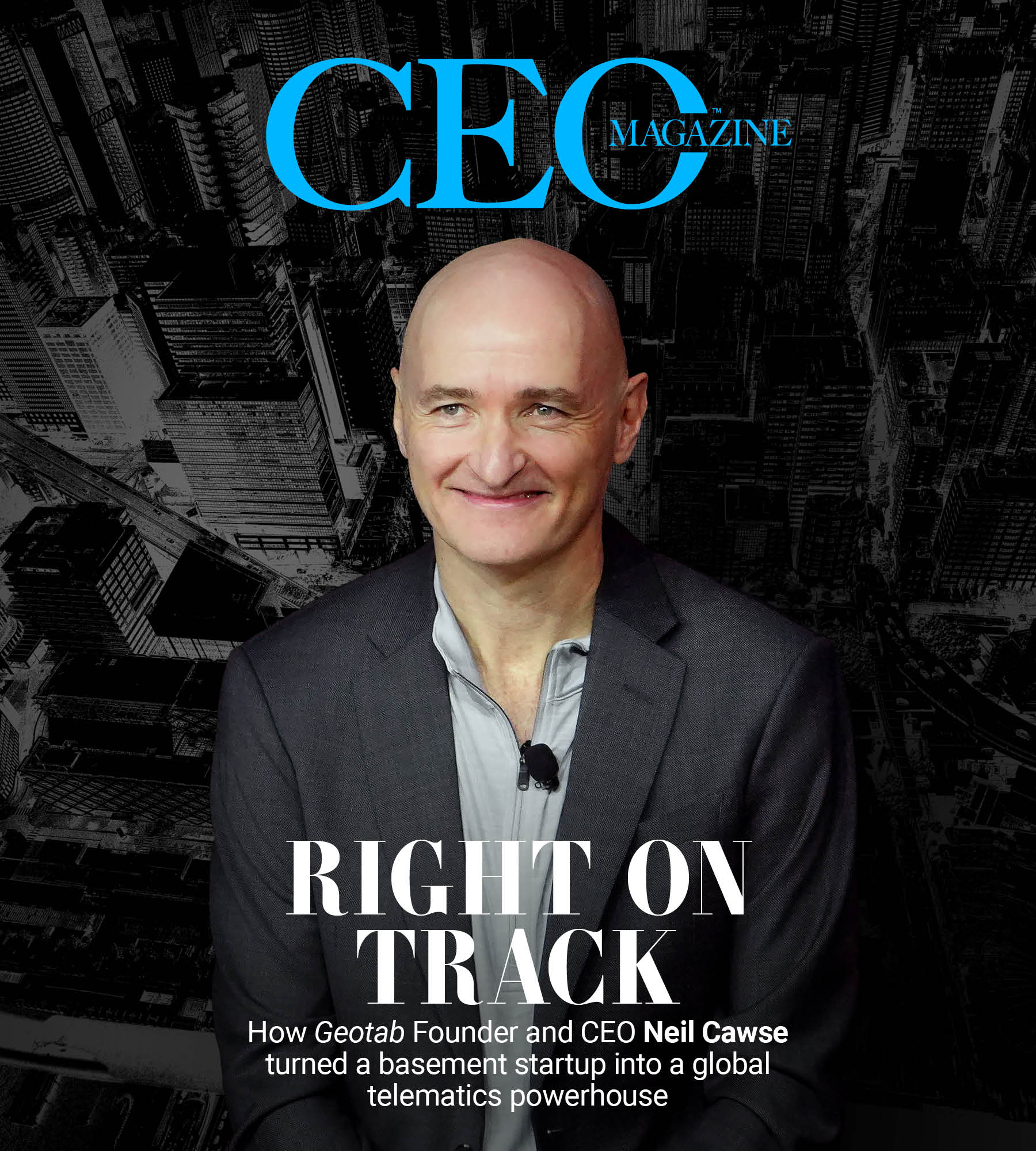
Neil Cawse has never chased the C-suite. In fact, it was quite the opposite, the self-described reluctant CEO tells The CEO Magazine.
“I’m that nerdy engineer who never wanted to get up on stage or be in the spotlight, so it’s always been a bit of an uphill struggle if I’m honest,” he admits.
Having spent the past 25 years in the role of Founder and CEO of telematics provider Geotab, he says he’s learned to accept that it’s his fate to be a leader – as well as reflect on the sibling rivalry that led him there.
“I come from a family of four kids, including three boys born in three years, and of course, everything in our house was a competition to see who was the fastest,” he says.
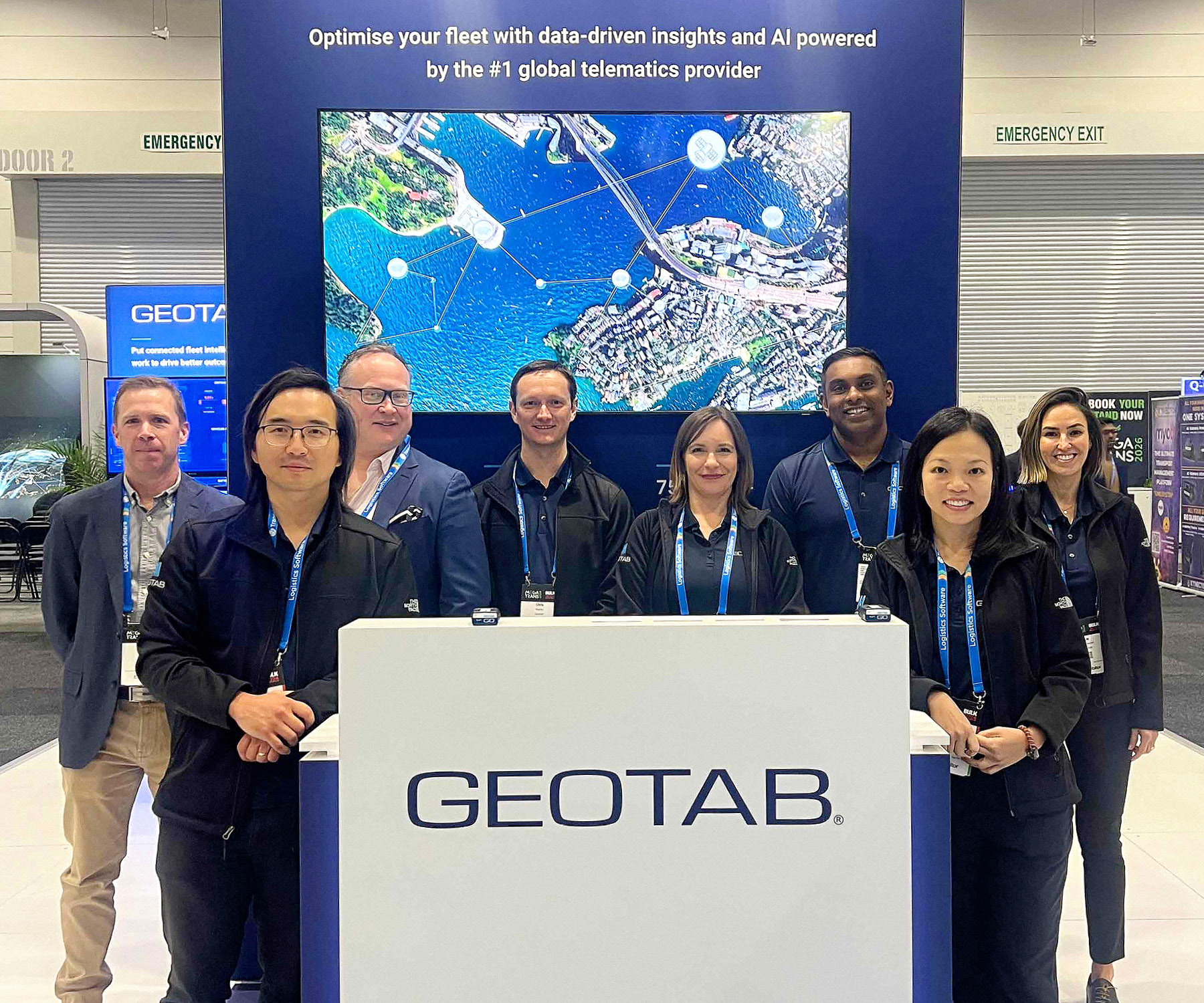

The eldest child growing up in the family home in South Africa, Cawse was the quiet, studious type.
“I remember my mom saying to me that I might be the smarter one, but that my middle brother would always make more money than me,” he recalls.
It was a comment that burned in his brain.
“One day, I decided no matter what happens, when I got out of university, I was going to open my own business,” he adds.
True to his word, not long after he graduated from the University of the Witwatersrand in Johannesburg with a degree in electrical engineering, he co-founded an IT software company.
However, when it came time to start a family, Cawse and his wife knew that they wanted to raise their children somewhere other than South Africa. The couple settled on Canada and, to make their dream possible, he founded a new company in 2000 from his basement.
With a passion for AI and spotting an opportunity for telematics and data analytics in fleet management, Cawse created Geotab, growing the company from two employees to over 2,700 globally.
August 2025 will see Geotab celebrating its 25th anniversary, a remarkable feat when statistics show the chances of this while still remaining a private company are less than five percent.
“Right from the beginning, we had this weird measure of success,” Cawse explains.
Rather than looking at how big the company was and how much revenue it was making, he measured success by total revenue divided by the number of people on the team. That meant if more people came on board but the revenue didn’t increase proportionately, he could immediately see the impact on growth.
“The reason we did that was because I didn’t want it to be too large,” he explains. “I didn’t know what I wanted to do, so I said, ‘Let’s keep the company small.’”
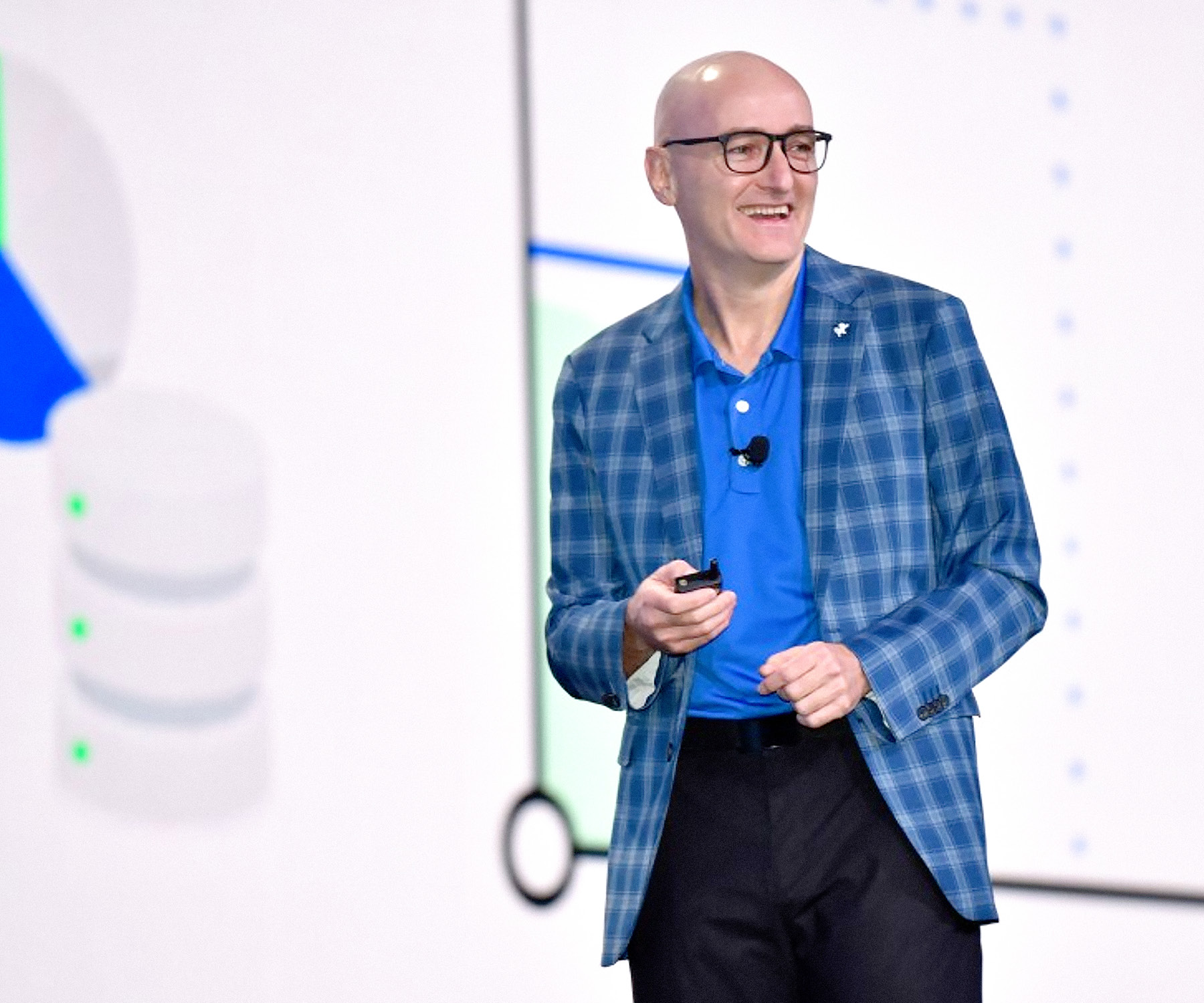

It ended up being a masterstroke, since everything was initially outsourced, from administrative services to sales, marketing, hardware and manufacturing.
“All we did was work on the most strategic piece, which was the software that drove everything,” he reveals.
By doing so, Cawse was able to build an open platform as part of Geotab’s telematics solution, which allows for extensive customization and collaboration by third parties.
One of the major benefits is that complementary technology solutions can be built on the platform, so Geotab has a large ecosystem of partners who build on the platform; for example, real-time tire pressure monitoring, driver coaching, mobile apps for dispatch and more. That means customers have a wide choice of applications and integrations with their GO devices.
“We’ve got this philosophy that rising tides lift all boats, and the fact that there are so many companies invested in our success has helped us enormously,” he says.

Goods, foods, medicine and even toys are handled with logistics, which makes telematics an area of strategic importance. Here are the main reasons why businesses and organizations turn to telematics, according to Cawse.
Safety: “How do we make sure that the person driving the vehicle is safe, and how do we keep the pedestrians around them safe? That’s one key element.”
Productivity: “How do we keep everybody productive and efficient? How do we optimize where the vehicles are and their usage? You can save an enormous amount of money by efficiently routing vehicles.”
Sustainability: “We help fleets migrate to EVs and identify which vehicles can switch to EVs based on the range, the load they carry and their time to charge.”
Today, Cawse is still active in all aspects of the business, from client and partner communications to remaining involved in product development, ensuring the values he had when creating Geotab remain firmly seated in its DNA.
“It’s one of the things that’s really helped the company,” he says.
There are no outside shareholders, and when an employee leaves the company, they can’t keep their shares.
“It means that we don’t have any politics,” he points out. “Instead, we have a strong sense of purpose and long-term thinking and mentality.”
This combined team passion for the company has driven its stellar growth. With headquarters in Oakville, Canada and Atlanta, Georgia, Geotab has a presence in 13 international locations.
Clients range from Fortune 500 firms to government entities. It is the sole source provider of telematics to the United States Federal Government, including the United States Postal Service, one of the largest fleets in the world.
Its reach has extended beyond North America as well – Swiss Rail and Go-Ahead Group (which operates London’s famous red buses) are among its international clients.
Cawse has embraced AI since day one at Geotab, when AI was more about being able to look for signals, for example, to predict that a battery is going to fail.
“The pace of AI evolution has shown me that this isn’t something that’s just going to be important to Geotab,” he notes. “This is something that is going to be important and fundamental to the world. It’s going to change forever how businesses are run.”
And we don’t need to wait, he continues.
“The biggest issue we are facing is a human-machine problem,” he says. “We, as humans, don’t have enough imagination for how we are going to deploy this and how we are going to integrate ourselves into this new world of working.”
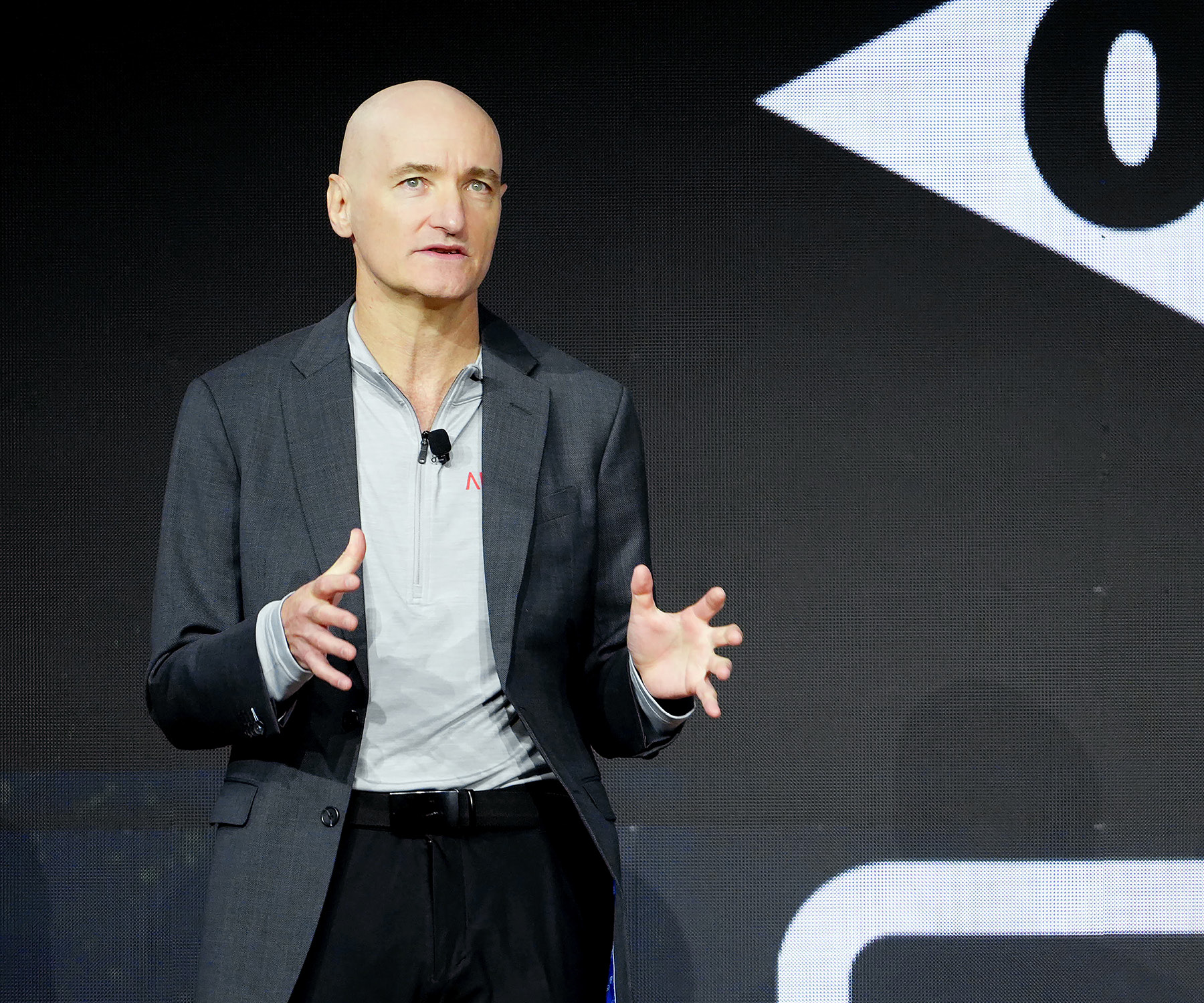

Yet Cawse believes decades of working with AI have given Geotab a leading edge.
“I feel like we’re at the forefront of what other companies are going to have to go through over the next months and years as they transition to AI,” he reflects.
AI might fundamentally shape the future, but Cawse is in no doubt who will ensure the company’s success for the next 25 years and beyond: people.
“Companies are only a product of the people who work in the company,” he says. “At the end of the day, it’s not your building, it’s not your little piece of technology sitting on a desk somewhere, it’s what is in the hearts and minds of the people who work there and drive what the company is.
“I’m very thankful to the people who work with Geotab, the enormously brilliant people who have helped us to get where we are.”
 RELATED ARTICLES


 Home
Home
 Podcasts
 Covers
 Be Featured
 Community