Language
You can read the magazine in one of the following languages
4-min read

 Bookmark now

 Copy Link
Most marketing budgets aren’t underperforming. They’re fundamentally misallocated because they ignore the basic laws of how brands actually grow.
In my work, I see the same recurring pattern: CEOs chasing ‘loyalty’ and ‘hyper-targeting’ while their market share remains stubbornly flat. They’ve been sold the seductive lie that it’s cheaper to keep a customer than acquire a new one. But the evidence – popularized by Byron Sharp and the Ehrenberg-Bass Institute – tells a different story.
Brands grow through penetration or getting more people to buy from you once, more than those that do from frequency – or persuading the same people to buy from you more. If your budget is skewed toward talking to your ‘best’ customers, you aren’t growing. You’re just preaching to the choir while the church quietly empties.
Modern marketing has become obsessed with the ‘sniper’ approach. We’re told to identify the ‘perfect’ customer profile and follow them around the internet until they surrender. But this precision is a growth inhibitor. When brands overinvest in narrow attribution models and hyper-targeted paid media, they ignore the ‘light buyers’ – the people who only buy from their category once or twice a year. According to the law of double jeopardy, light buyers represent the overwhelming majority of your growth potential.
The reality check: if you only spend where you can see immediate last-click ROI, you aren’t building a brand; you’re just harvesting existing demand. That may work for a while, but eventually there’s nothing left to harvest.

According to the law of double jeopardy, light buyers represent the overwhelming majority of your growth potential.
The ‘rent’ we pay to platforms like Meta and Google (pending the objective) isn’t for growth; it’s for physical availability – showing up at the exact moment a customer is ready to buy. But the real battle is mental availability, which means ensuring your brand comes to mind instinctively when a need arises. Most budgets are backwards because they spend 80 percent of their capital at the very bottom of the funnel, fighting for the five percent of people in-market today. This creates a performance treadmill.
To maintain your sales, you have to keep running, and the faster you run, the more the platforms charge you for the privilege. Your owned channels – customer relationship management (CRM), data and automation – shouldn’t just be retention tools. They’re your infrastructure for mental availability. They’re the owned real estate that helps your brand remain memorable when that light buyer eventually enters the market.
CEOs love the word loyalty. It sounds stable. It sounds profitable. It’s also largely a myth. Data shows that all brands in a category share their customers in line with their market share. Your loyal customers are often just heavy category buyers who also purchase from your competitors. You can’t fix loyalty to grow a brand; the ceiling is simply too low.
If your marketing infrastructure is designed to deepen relationships with a tiny segment of your database while your competitors are out there reaching the entire category, you’re structurally underinvesting in your future. You’re trying to squeeze more juice out of a lemon that’s already been squeezed dry, instead of buying more lemons.
The reason most marketing feels like a black hole for capital is fragmentation.
The reason most marketing feels like a black hole for capital is fragmentation. Data is siloed. You’re paying to acquire someone you already have in your CRM because your systems don’t communicate. Messaging becomes inconsistent and instead of building distinctive brand assets, you’re just running offers. Automation is ignored and you’re relying on manual processes to do what a system should do for pennies.
The result? You’re paying premium prices for rented attention because you haven’t built the owned machinery to process that attention into long-term value.
The solution isn’t to slash your acquisition spend; it’s to stop being its slave. High-performing businesses use their tech stack to create a frictionless path to purchase for the entire market, not just the VIPs.
To align with the laws of growth, rebalance your infrastructure to focus on:
1. Broadening the reach: Moving away from niche targeting and using data to find all category buyers.
2. Distinctive asset reinforcement: Using every touchpoint (email, SMS, web) to reinforce the brand triggers that make you easy to remember.
3. Predictable availability: Ensuring that the moment a customer feels a category entry point (the reason they need to buy), your brand is the one that appears, effortlessly.
The businesses that succeed over the next decade will be the ones that understood the math of the market. Sustainable growth comes from owning the mental and physical availability of your category.
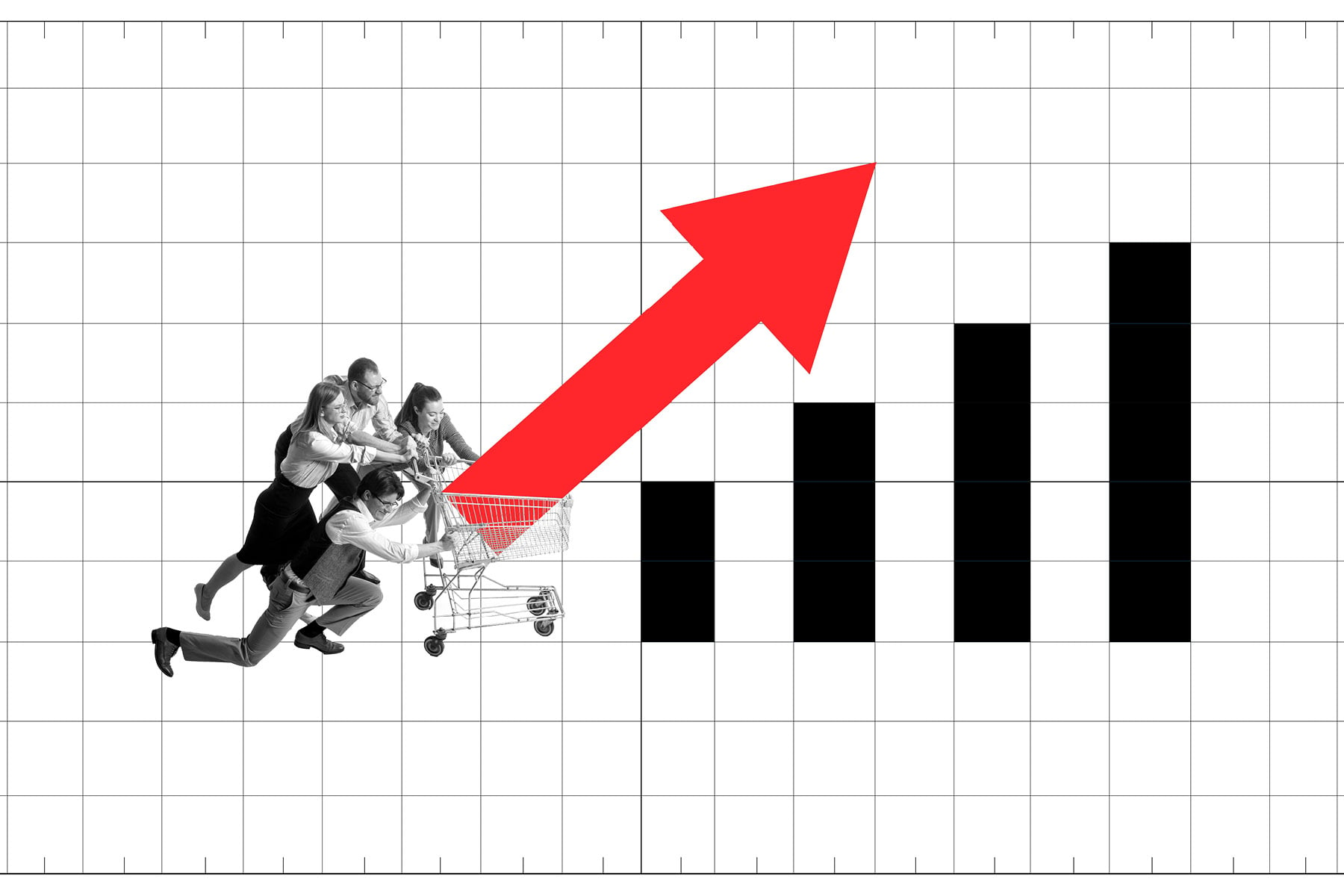
High-performing businesses use their tech stack to create a frictionless path to purchase for the entire market, not just the VIPs.
If your budget is 90 percent bottom-of-funnel performance spend, you aren’t building a brand; you’re just an arbitrageur of digital ads – and in that game, the house (the platforms) always wins.
It’s time to stop building budgets backwards. Start investing in the systems that make your brand the easiest, most obvious choice for the many, not just the few.

Zoe Goodhardt
Contributor Collective Member
Zoe Goodhardt is a Partner at TAG, a digital growth consultancy combining strategy, people, marketing and technology to unlock growth across the full customer journey. Find out more at https://www.wearetag.co/team/zoe-goodhardt
 RELATED ARTICLES
  SPOTLIGHTS ON LEADERS


 Home
Home
 Podcasts
 Covers
 Be Featured
 Community