Language
You can read the magazine in one of the following languages
3-min read

 Bookmark now

 Copy Link
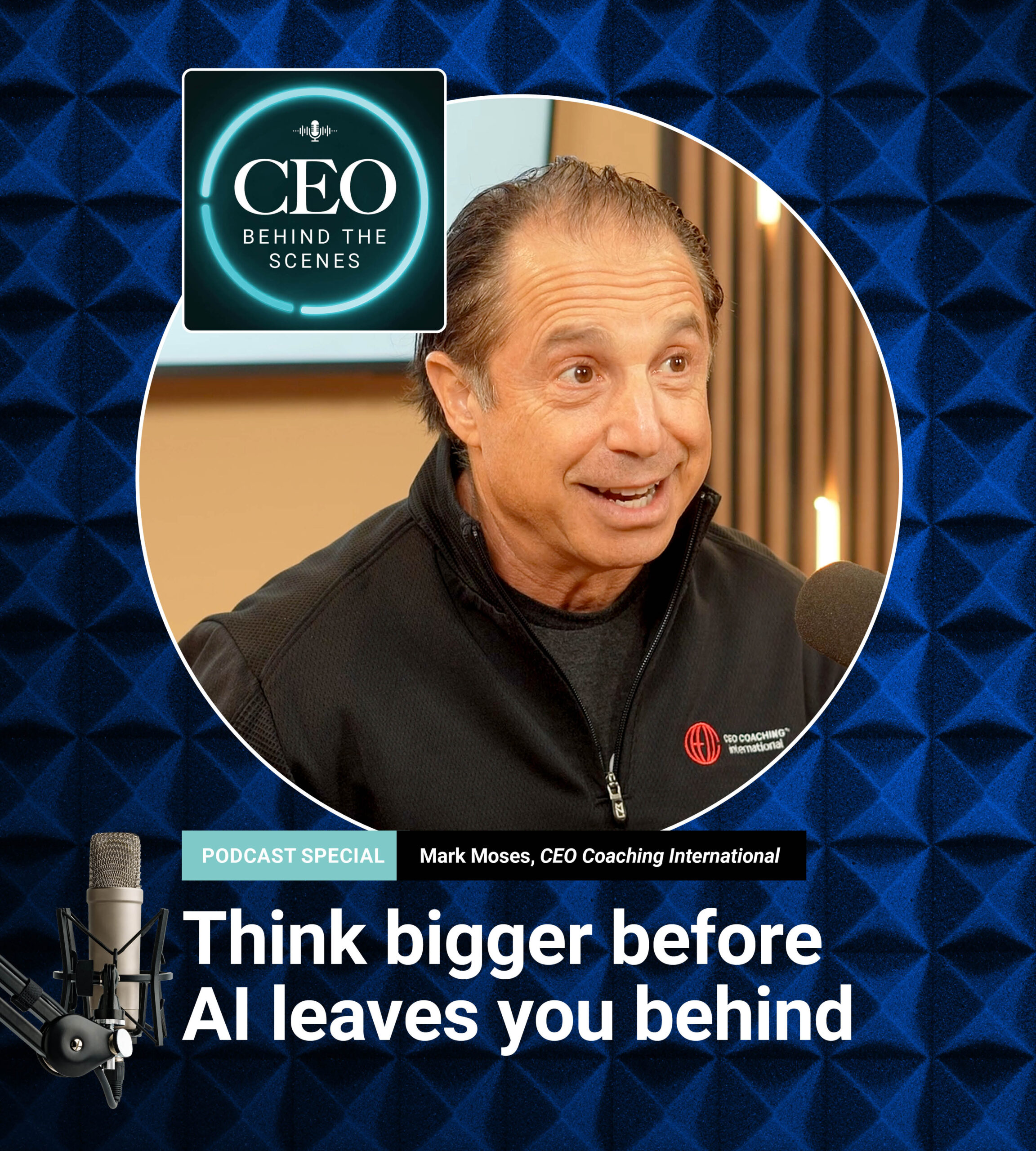
When Mark Moses rode an elephant into his company’s annual meeting, his team thought he had finally lost it.
The business had just been gutted. A trusted partner had walked out, taking 80 percent of a division and leaving Moses with a cavernous new office built for 300 people – and just 12 employees to fill it. Morale was shaky. The future was uncertain.
Speaking on CEO: Behind the Scenes, Moses recalls the moment with a smile.
“I said to my assistant, ‘I’d like to do something crazy – I’d like you to find me an elephant,’” he says. “I rode the elephant into the annual meeting, and the message was, ‘If you think big and act big, you will be big. Let’s do a billion dollars.’”
It took eight years. But they did it – and more. The company eventually reached US$1.6 billion in annual revenue before Moses sold it in 2006.
Yet the elephant wasn’t a stunt. It was a declaration of philosophy – one that would later anchor his bestselling books Make BIG Happen and Making BIG Happen.
“I truly believe in thinking big,” he says.
That belief was forged through adversity. In 1998, his business went from generating US$1 million a month in profit to losing US$1 million a month almost overnight when Wall Street pulled out of the industry.
He laid off 240 of 275 employees in a single weekend. Two years later, days before filing for bankruptcy, a last-minute US$1 million investment saved the company.
The lesson? Never give up – and never think small.
Today, Moses channels that mindset into coaching some of the world’s fastest-growing CEOs. And increasingly, his message centers on one unavoidable reality: AI.
“There’ll be two kinds of companies by the end of the decade: those that have fully embraced AI and those that are out of business,” he warns.
For Moses, AI readiness is leadership readiness. It’s not about dabbling in tools or reacting to the latest trend. It’s about defining a clear AI vision, aligning it with strategic goals and resourcing it properly.
To that end, three years ago, he hired a Chief AI Officer inside his own firm. His reasoning was simple: a busy CEO allocating two percent of their time to AI cannot compete with someone thinking about it 100 percent of the time.

“There’ll be two kinds of companies by the end of the decade: those that have fully embraced AI and those that are out of business.”
But technology alone isn’t the differentiator. Leadership is.
When asked what separates high-performing CEOs from those who stall, Moses doesn’t hesitate.
“Four things,” he says. “Number one, they think big.”
He challenges leaders to add a zero to their revenue and ask what would have to change to achieve it. The exercise forces clarity – not just about strategy, but about personal growth.
Second, they identify the specific, measurable activities that drive results – not vague outcomes like “grow sales,” but the precise levers that move the business forward.
Third, they hire A-players – and have the courage to make changes when necessary.
“The longest time in your life will be the time you lose confidence in somebody and the time you decide to do something about it,” he says.
And finally, they implement proven accountability systems to execute consistently – and underpinning it all is belief.
“If you think you can or you can’t, you’re right,” Moses says, echoing Henry Ford.
In a world being reshaped by AI, geopolitical uncertainty and relentless disruption, that belief may be the ultimate competitive advantage.
The leaders who thrive won’t be the ones cautiously observing from the sidelines. They’ll be the ones willing to ride the elephant down the street, declare a bold vision and align their teams around it.
Tune into the full episode of CEO: Behind the Scenes to discover how thinking bigger, building A-player teams and embracing AI can position your business to win.

Listen to the latest episode of our CEO: Behind the Scenes podcast with Mark Moses on Amazon, Apple or Spotify.
 RELATED ARTICLES
 6-min read
4-min read



 Home
Home
 Podcasts
 Covers
 Be Featured
 Community