Language
You can read the magazine in one of the following languages

5-min read

 Bookmark now

 Copy Link
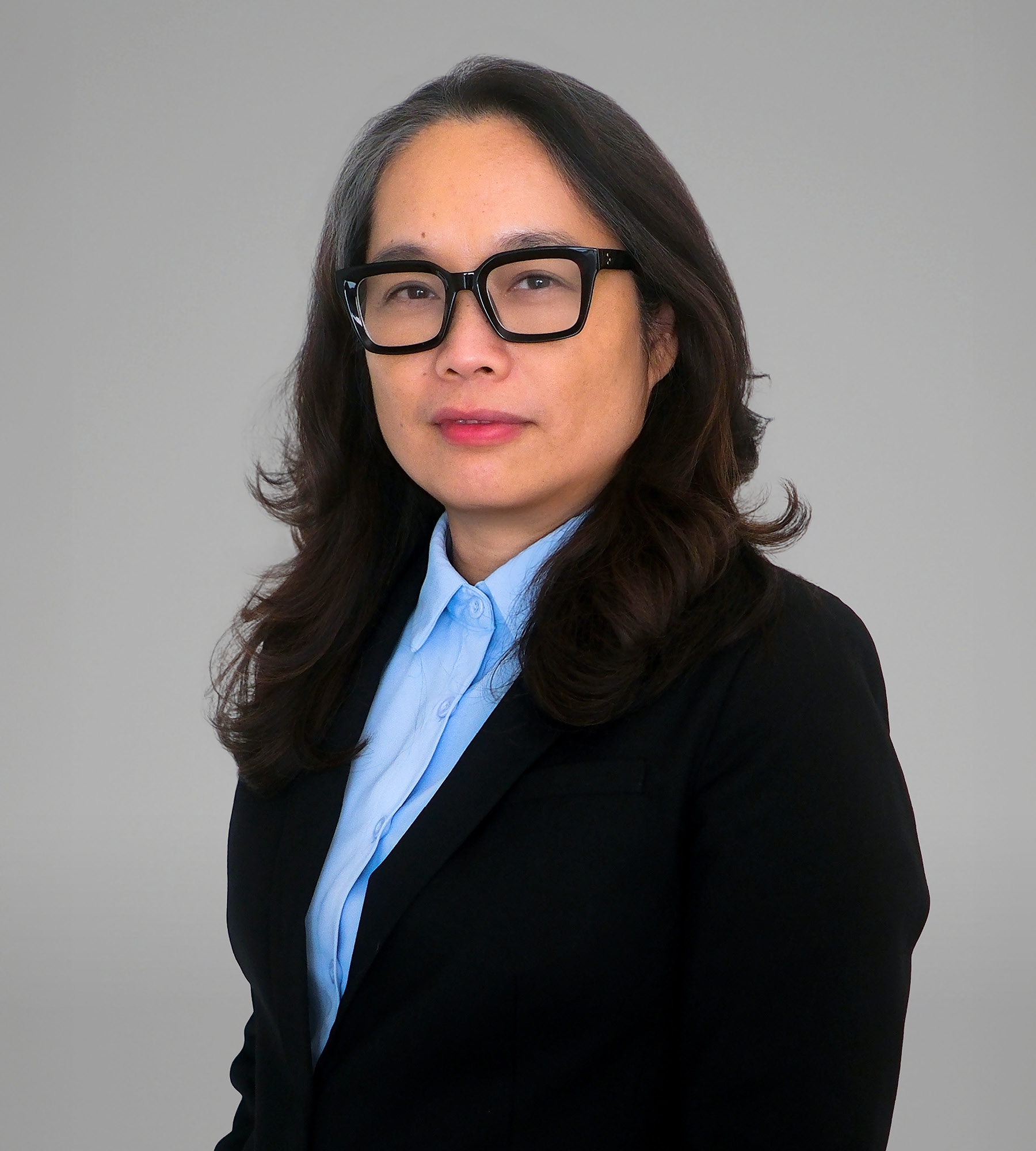
Justine Tran may have been the CIO of Dallas County for less than a year, but she’s already making huge waves at the organization.
“Transformation doesn’t start with technology,” she tells The CEO Magazine. “It starts with trust and collaboration, as well as a relentless focus on outcomes. Outcomes are something that most people don’t talk about.
“So the question is, ‘What is the outcome we’re looking for when we put in this technology?’ It’s also about approaching operational excellence like a product, where it’s iterative, it’s measurable and we’re always improving on it.
“Sometimes people look at operational excellence as an end state. But it’s a continuous thing that you have to focus on.”

“Sometimes people look at operational excellence as an end state. But it’s a continuous thing that you have to focus on.”
When Tran stepped into the position in November 2024, she brought with her an impressive resume of roles at companies including City of Dallas, Frontier Communications, Toyota Financial Services Corporation, Gainwell Technologies and Harley-Davidson Motor Company, as well as a demonstrated history of technology leadership with the ability to drive innovation across diverse industries.
Having spent six-and-a-half years with the City of Dallas between 2009 and 2015 as Deputy CIO, which Tran says was “very enriching in a lot of ways, but also very challenging,” she already had valuable experience working in a role similar to this.
“Some things that led me back to government were that I felt like a lot of my work was reflected in my daily life. I can see how it impacts the residents and the county,” she explains.
“What really brought me back was that it looked like another transformation opportunity. In the past six months, I’ve met with everybody – all my key stakeholders, my directs and everyone in the entire IT department as well.”
Dallas County had been without a CIO for almost two years when Tran was hired, so she immediately set to work implementing some key strategies.
“There was a lot of talent in the organization, just a lack of really good communication,” she recalls. “So what I really did was put together my vision of the organization, and it started with laying the foundation.
“I looked at all my experiences and put together some best practices, determining what a planning model would look like, what an operating model would look like, and what a communication model would look like.”
Understandably, innovation is a major driving force for Tran, ensuring that Dallas County stays abreast of technological developments so that the organization is continually moving forward. Given the current global level of interest and dialogue surrounding AI, it makes sense that Tran’s ongoing goals include its incorporation.
“My vision is to have an AI companion for every role that is possible,” she says. “I know that’s a pie-in-the-sky vision, but I believe AI will streamline efficiency and help bring us to a level of productivity that hasn’t existed previously.”
Tran is also working to transfer knowledge from individuals to a cohesive, comprehensive system that can be accessed by all employees.
“We talk about employees having institutional knowledge, but we should be packaging that up into an AI engine, so all of your documentation becomes shareable,” she says.
“We’re looking at how to manage our data from a system of record to a system of reference, creating a library of all the data within Dallas County.
“Imagine you walk into a beautiful library and you look up and down and you see 10 stories of Dallas County data all cataloged and organized and clean, and you get to go in and check out what you need, then use it and kind of put it back – that’s my aim.”
Partnerships with key suppliers, such as IT service integrator and workforce solution company 22nd Century Technologies, are truly essential for Dallas County’s ongoing success.
“One of the things that I impressed upon my team here is that our vendors are not our competitors,” Tran stresses. “I’ve set the expectation that vendors are our strategic partners.
“We have our monthly cadence with vendors on a tactical level, making sure we’re reviewing the relationship, reviewing the road maps and looking at where those opportunities are and where they can bring in some proofs of concept for us or new technologies.”
As for what the next chapter for Dallas County may hold, Tran’s strategic plan involves three phases to lay the groundwork for a solid foundation of tech and innovation.
“I’ve talked about ensuring we have our enterprise architecture, tech stack, standards, IT strategies, policies, procedures and all of those things in place,” she explains.
“We’re assessing our infrastructure and our network and closing the gap on that. We’ve done that already on our cybersecurity and security. The next phase is expanding, accelerating and then, of course, the third phase is optimizing and innovating.”

“What’s really important in my role and what I’m doing is being very conscientious about transparency.”
In addition to digital adoption, automation and ways of improving efficiency and productivity, Tran is exploring the ways in which tech can promote growth and increase revenue across the organization as a whole.
As for her overall approach to leadership?
“What’s really important in my role and what I’m doing is being very conscientious about transparency,” she concludes.
“We develop a cloud strategy; I’m out there saying, ‘This is our cloud strategy.’ We develop our operating model, I’m saying, ‘This is our operating model.’ It’s asking, ‘Where we are going?’
“And then getting the feedback – making the rounds, having frequent meetings, hearing about what the team’s thoughts are and where their pain points are. Again, it’s all about communication.”
 RELATED ARTICLES


 Home
Home
 Podcasts
 Covers
 Be Featured
 Community