Language
You can read the magazine in one of the following languages

6-min read

 Bookmark now

 Copy Link
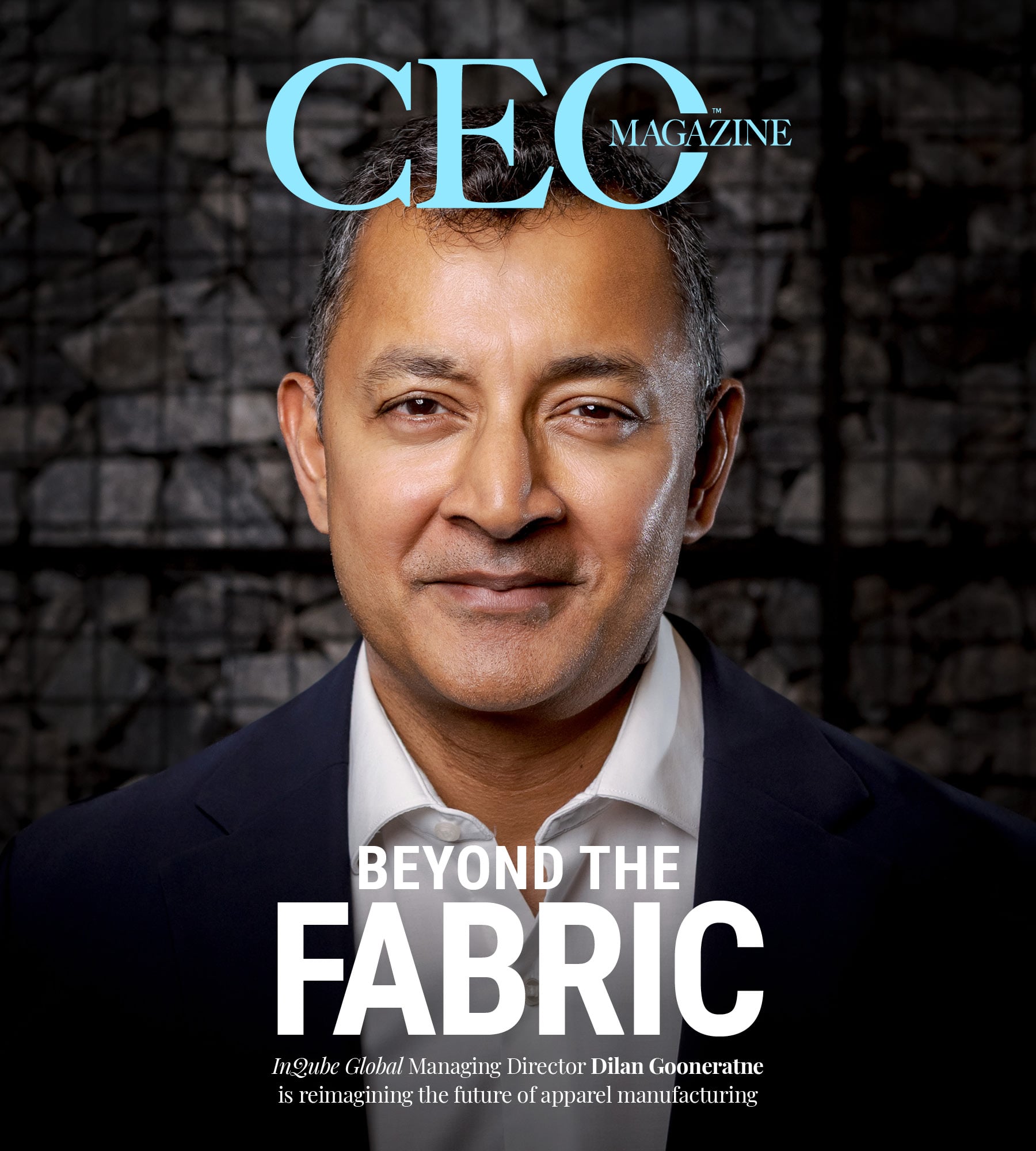
Disruption is a course of action seemingly reserved for the cutting edge. Technology and modern conveniences are constantly being disrupted; not so the more established ways of life.
That wasn’t good enough for Dilan Gooneratne, whose vision for the apparel industry involved a radical reimagining of clothing – particularly activewear and intimates – for the 21st century. In 2017, he established InQube Global as a joint venture with Brandix Asia Holdings as a way to realize what he saw as the future of apparel manufacturing.
Today, with Gooneratne as Managing Director, the company employs more than 13,000 people worldwide, with a manufacturing footprint in Sri Lanka, Cambodia, Hong Kong, China, the United Kingdom and the United States. InQube’s revenue started at zero and reached a quarter of a billion dollars in just 10 years.
“It’s clear to me the traditional linear model of manufacturing is already dead,” he tells The CEO Magazine.
“The real engine is a technology pipeline most don’t have. When I broke away from a traditional mega-corporation to launch InQube, I wasn’t interested in building just another contract apparel manufacturer to marginally trim costs. I saw an industry ripe for total, seismic disruption.”
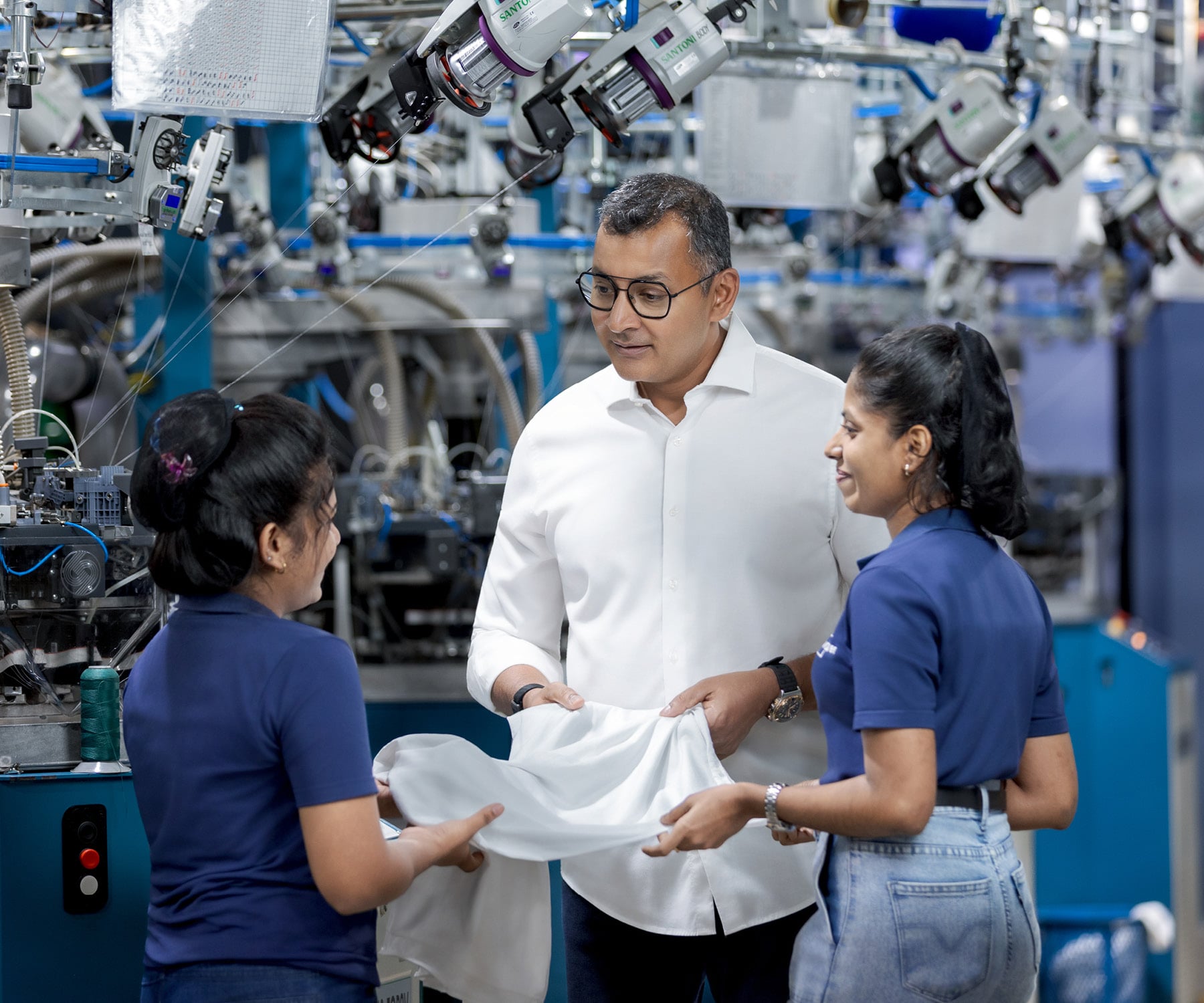

Gooneratne began his career as a cadet officer in the Sri Lanka Air Force, where he developed a deep sense of respect, discipline and resilience. He has a childlike enthusiasm for anything technology related. Above all, he believes leadership at this level requires a firm focus on reimagining what’s possible.
“I believe in attacking the future before it attacks you,” he says.
“You don’t wait for market consensus. By the time the market agrees on an answer, the exponential value has already been captured by whoever had the conviction to move first.”
InQube utilizes its considerable supply chain and manufacturing muscle for innovative results, from sustainable textiles to groundbreaking interfaces between digital platforms and physical products.
Gooneratne says staying on the bleeding edge requires an almost instinctual understanding of unmet consumer needs coupled with early reads on commercial viability.
“In any innovative organization, there’s a direct line between consumer insight, investment in technology and taking new ideas to market. That signal is lost in our industry,” he says.
But getting a genuinely new idea through the chain of brands, suppliers and capital approvals was painfully slow.
“By the time you actually get an idea to market, you’re probably 60 years old,” he says. “I look constantly at adjacent domains and map out where those trajectories arise. When you possess that kind of clarity, you see the tells long before they show up in traditional market reports.”
Add in powerful storytelling and an organizational mindset and the associated risk suddenly seems a lot less confronting.
“What looks to the untrained eye like wild uncertainty is to us an unmatched strategic advantage,” he adds.
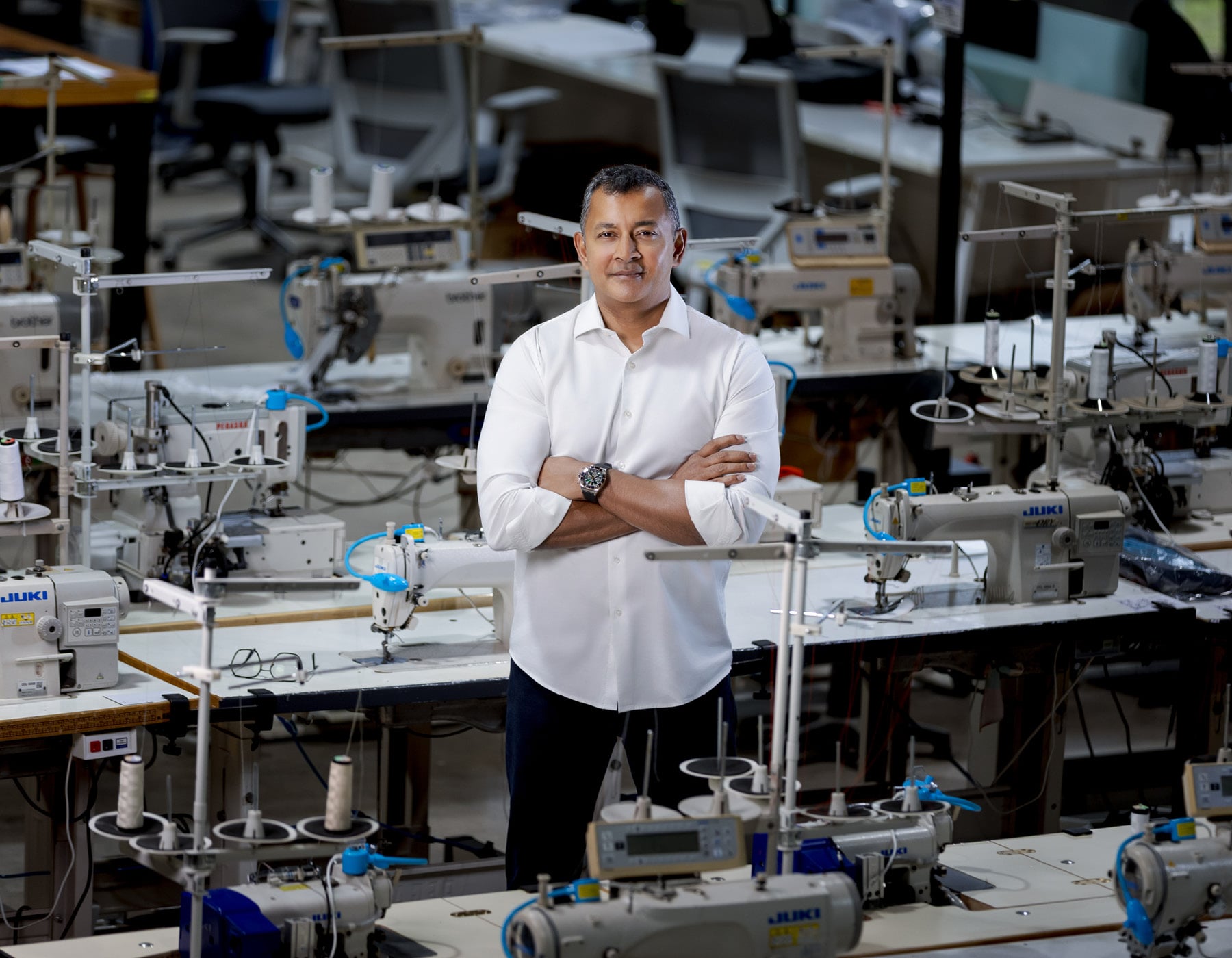

It’s this conviction that has allowed InQube to grow so rapidly, built as it is upon an aggressive acquisition agenda. Early on, Gooneratne and his team made a pivotal decision to acquire rather than build organically.
“It was a bold choice to go on the offensive, to relentlessly pursue acquisitions that gave us instant access to world-class talent, proprietary technology and immediate scale,” he acknowledges.
Over the past decade, InQube has reaped the rewards, as evidenced by its rapid ascent from high-potential player to elite global innovation engine.
With so many moving parts, it’s easy to imagine that the system could collapse when under any significant load. Not so, says Gooneratne, thanks to razor-sharp focus on end-consumer value at an accessible price point.
“Innovation that remains trapped in a lab is just an expensive science project,” he says. “Real innovation is groundbreaking medical science or complex assembly technologies engineered at scale. It’s out there on shelves, embraced by the public.”
InQube’s timing could not have been better, coming into its own just as the worldwide fitness boom arrived. Its high-performance sports bras, activewear, intimates and engineered knits helped the company surge in value despite global economic turbulence, with key customers including lululemon, Fabletics, SKIMS and Victoria’s Secret.
“Survival just means you’re still in the room,” Gooneratne notes. “Real resilience is building a business so well-structured that when the environment gets volatile and everyone else retreats, your organization naturally moves forward and attacks.”

The COVID-19 pandemic was a drastic test for the young InQube. It passed with flying colors after recognizing opportunity signals among the chaos.
“We mobilized a network of small and medium enterprises and executed the largest volume order of personal protective equipment out of Sri Lanka at record speed,” Gooneratne recalls.
“Even now, in calm-ish waters, we’re relentlessly pushing resource discipline. We pull ahead when disruption hits. We’re too busy to brace for impact.”
At the heart of Gooneratne’s construct is a lot of heart and soul, both of which he sees as non-negotiable.
“You can adjust strategies, reallocate capital and pivot business models, but the moment you compromise your cultural foundation, you’ve got nothing,” he adds.
These qualities have allowed InQube to take risks other companies would shy away from.
“Where I’m most comfortable is placing huge strategic capital behind unproven product categories and entering markets before a validated playbook exists,” he says. “Safe bets create average companies; it’s risk that creates category leaders.”
The world is InQube’s factory floor. Every region in the company’s ecosystem serves a unique, high-value purpose.
The United Kingdom provides frontline European design intelligence, trends foresight and deep customer intimacy; China adds advanced technological integration, speed-to-market and high-tier productivity systems; Cambodia is where high-velocity supply chain execution and optimized, scalable manufacturing takes place; and Gooneratne’s native Sri Lanka is where InQube sources world-class technical engineering strength, operational mastery and premium duty advantages.
“When you’ve got all of these in your hand, you’re holding a value proposition that no single-country manufacturer on Earth can match,” Gooneratne says.
But the kind of manufacturing required by an innovative category leader like InQube makes some hefty demands of its workforce. Gooneratne says the company is uncompromising when it comes to expectations.
“You need hyper-rigorous discipline and consistency to do what we do, and you have to be able to challenge convention, so we demand both without apology. Our ‘Performance First’ culture has a simple mandate: win the Olympics first, then have fun,” he explains.
“We expect our people to challenge the status quo, run bold experiments and be completely open about failures, but once a direction is decided, the execution must be flawless, disciplined and relentless.”
Inside and out, apparel is changing faster than many can keep up, and those setting the pace are doing so at a record-breaking level. As one of those in the upper echelon, InQube knows there are always many nipping at its heels, waiting for a chance to strike.
Gooneratne says that chance will never come.
“Even when we were operating out of a small apartment at the beginning, we had the right mindset: intense personal ownership, humility and hands-on leadership,” he says. “Performance is discussed openly, failures are dissected transparently and top performers are rewarded extraordinarily.”
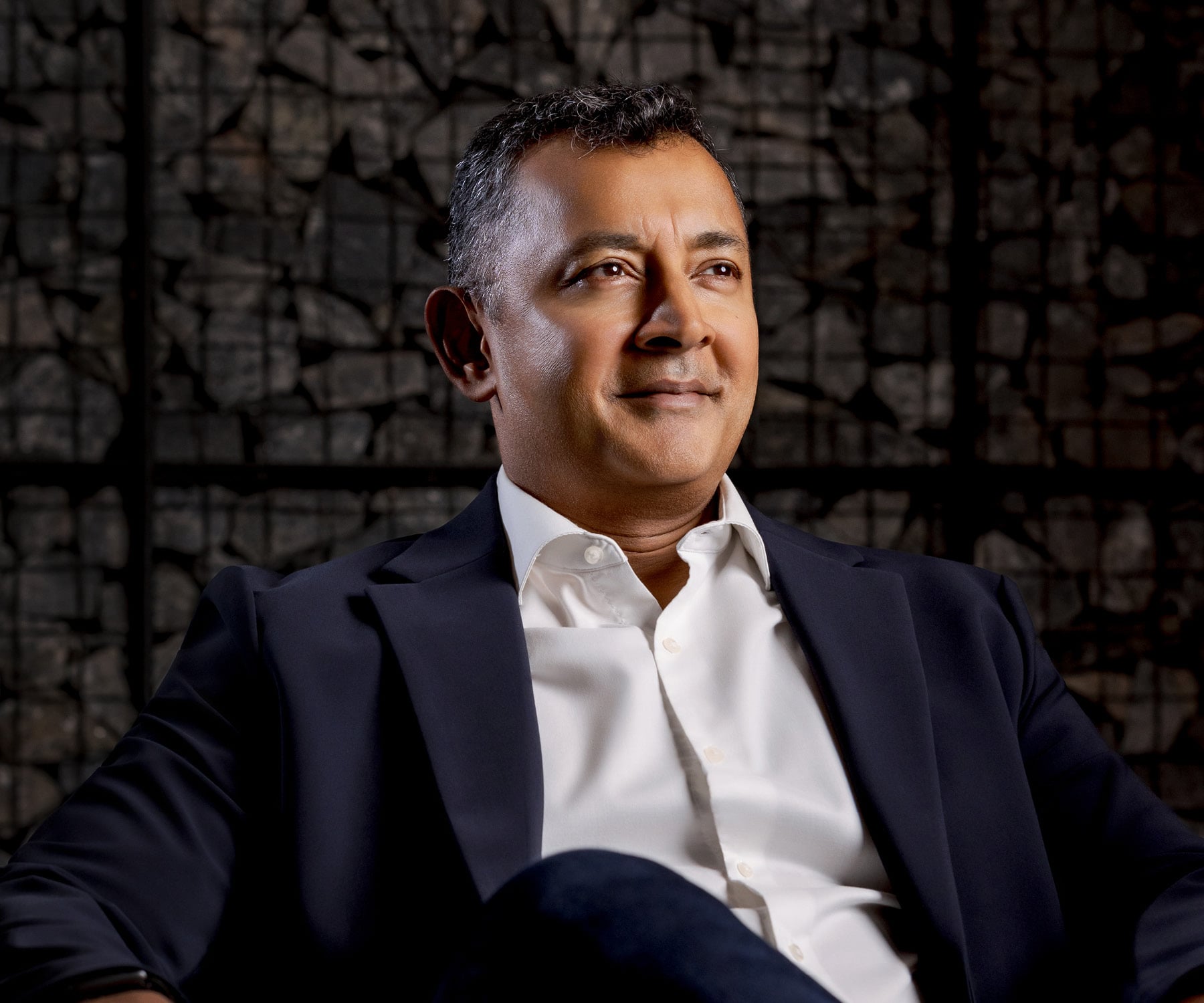

That approach has understandably attracted the kind of workers who thrive in such an environment, and they have allowed InQube to reach new heights. Gooneratne says it’s only the beginning.
“If you’re deeply passionate about your craft, possess an insatiable desire to get better every single day and aren’t afraid to break traditional rules to create value, chances are you work at InQube,” he says.
“Zero to a quarter of a billion proved the model – a billion will prove the industry was ready for it. We’re building the future of global innovation and we’re just getting started.”
 RELATED ARTICLES
 SPOTLIGHTS ON LEADERS


 Home

 Podcasts

 Covers
 Be Featured

 Community