Language
You can read the magazine in one of the following languages


11-min read

 Bookmark now

 Copy Link
On any given day, a commuter will scan a phone at a plane gate, a nurse will badge into a ward and a security guard at the Melbourne Cricket Ground (MCG) will watch 100,000 fans clear the turnstiles in under 90 minutes – and none of them will think twice about how it happened.
This invisibility is by design. As one of the world’s leading access-solutions companies, dormakaba sits behind the scenes at the threshold of everyday life for millions of people across Australia and New Zealand and billions more in Asia.
“Dormakaba is in the background everywhere and people don’t realize it,” Chris Goodall tells The CEO Magazine. “But they would if it stopped working.”
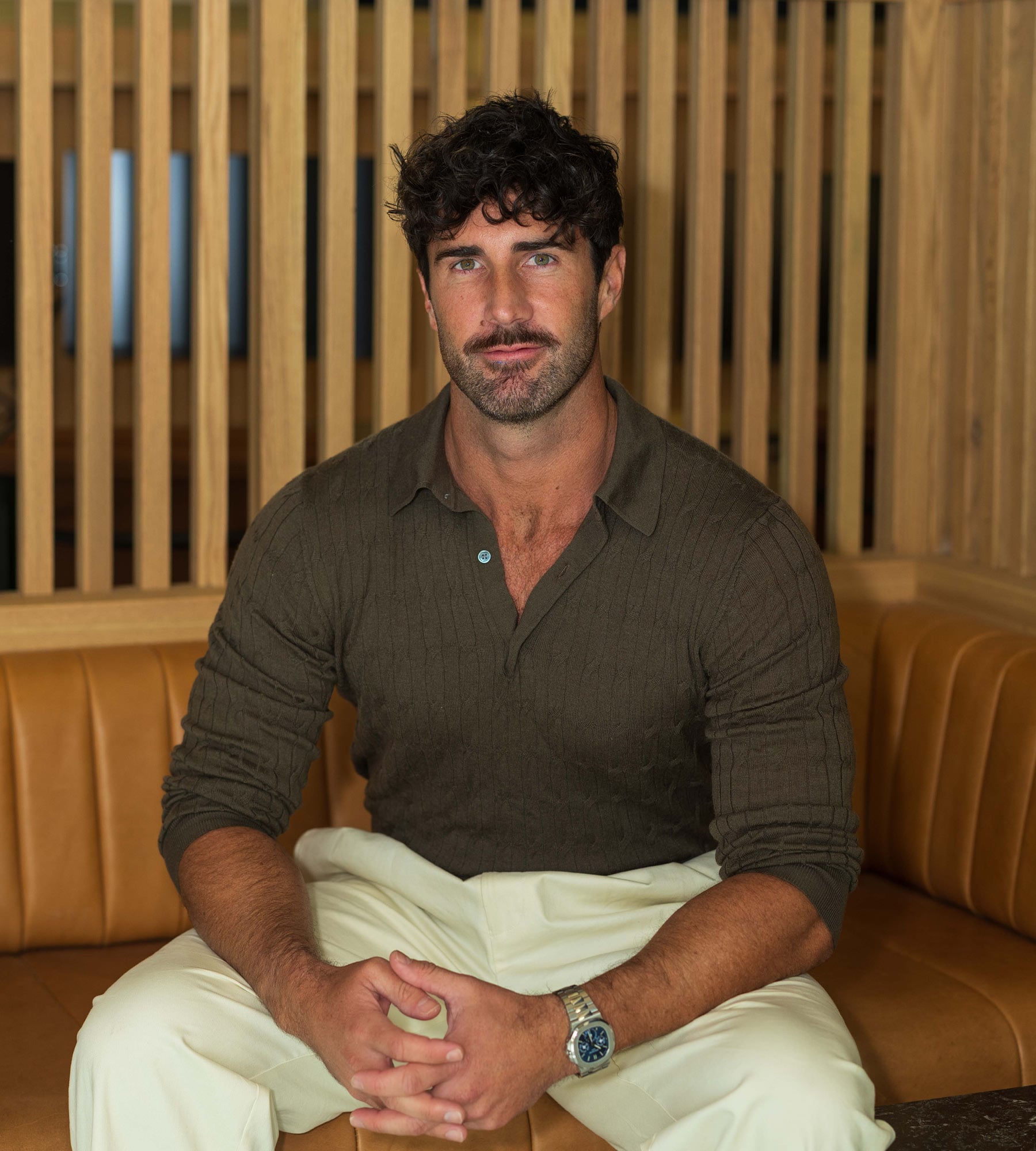
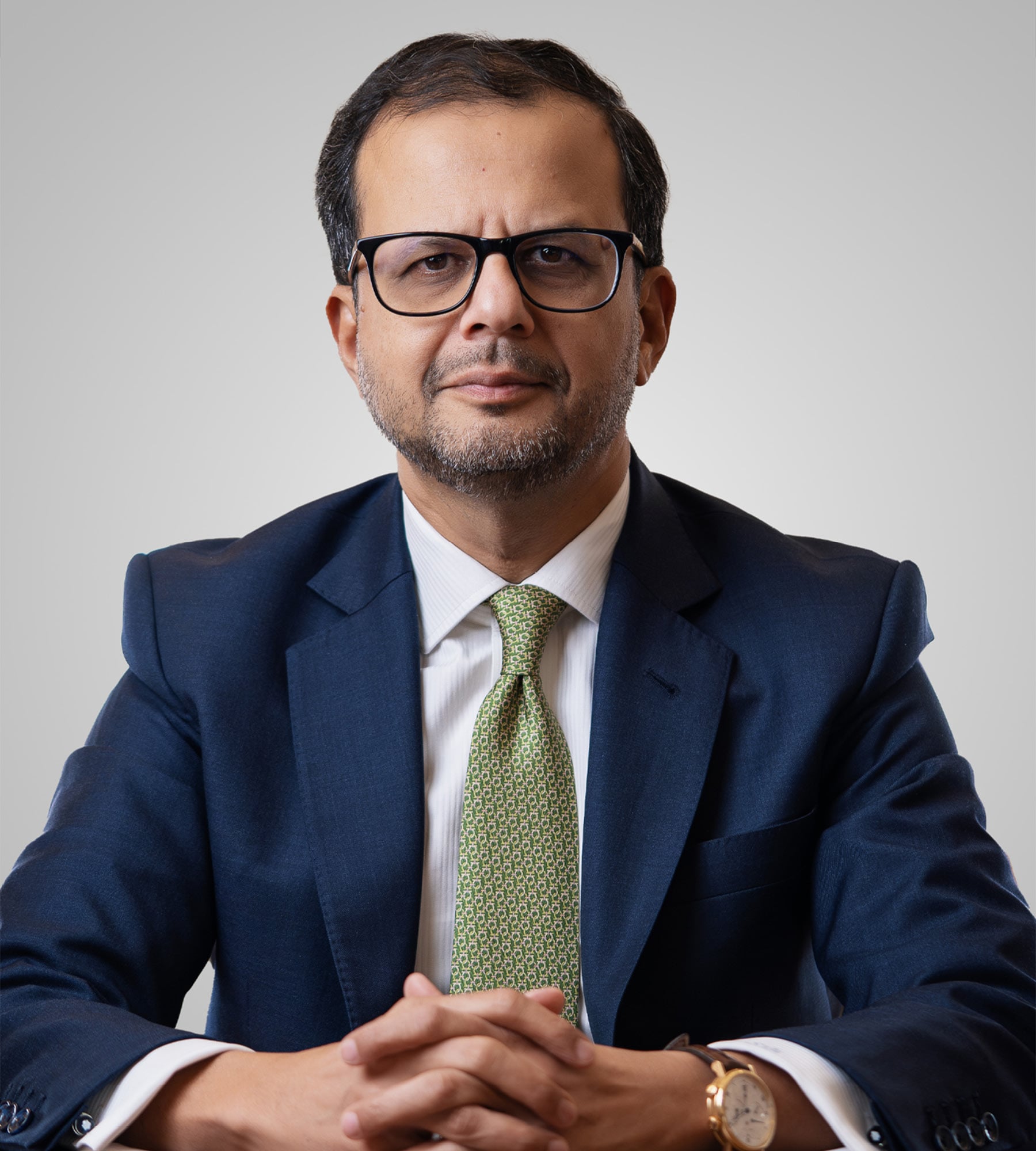
Goodall has spent the past four years making sure it doesn’t. As Senior Vice President and Managing Director for Australia and New Zealand – and, since January, for Asia, including North Asia as well – he oversees a region that spans some of the world’s most mature security markets alongside some of its fastest-growing ones.

“It’s not just about entering the door; it’s about providing data the customer wants.”
Despite the geographic and cultural differences, Goodall insists customers from airports to data centers and hotels to commercial towers are essentially after the same thing.
“They want data in real time,” he says. “It’s not just about entering the door; it’s about providing data the customer wants. And in some instances, letting them know how it will impact their customers.”
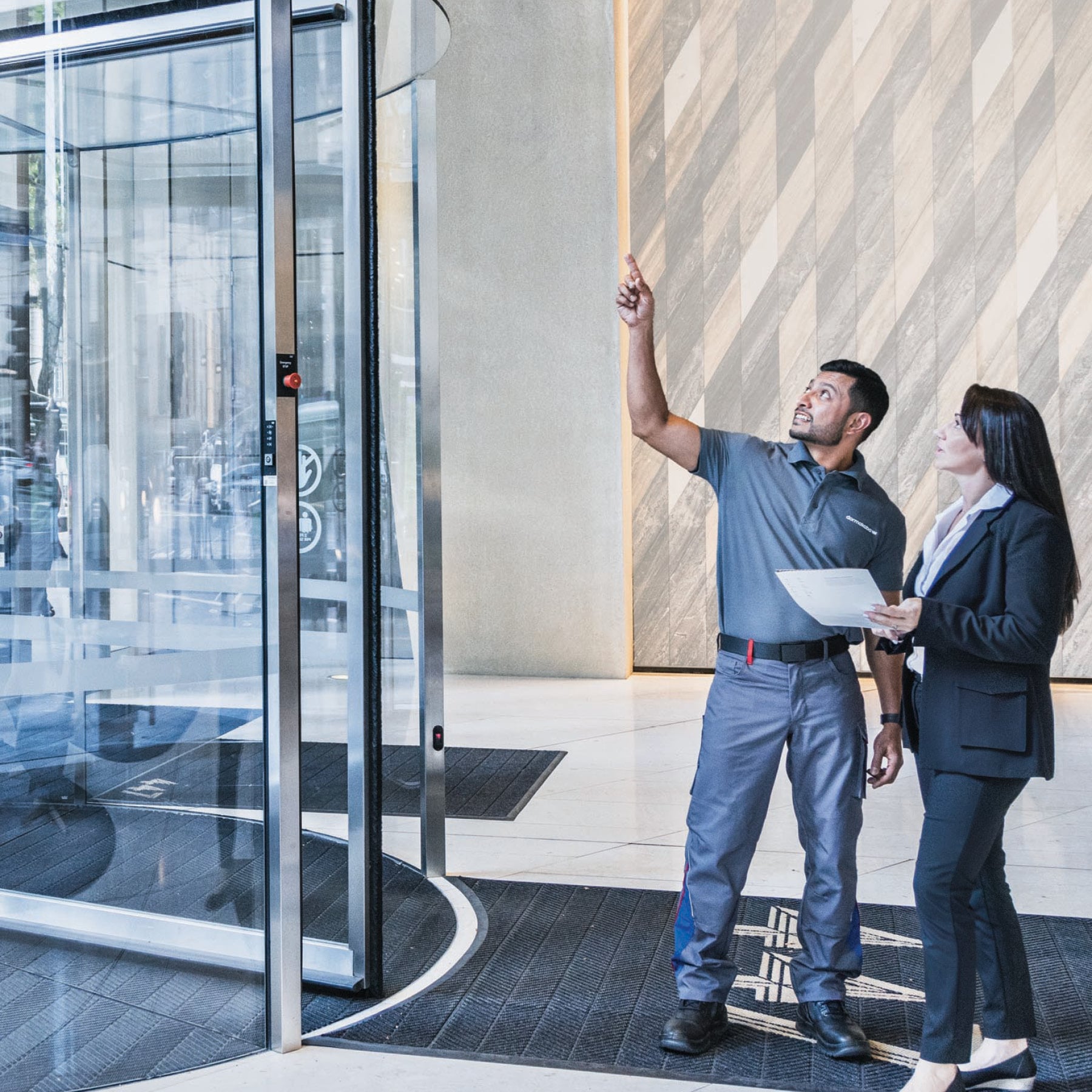
One organization, for example, may want to understand the busiest periods of pedestrian traffic through its building so it can adjust staffing or open additional gates. Another may need to check if an automatic door has been left open.
“Some may want to see if a door is working properly because most of a building’s heat exchange leads through the door, impacting their power and sustainability objectives,” Goodall points out.
Then there’s maintenance. If dormakaba can identify that an asset isn’t performing as it should, there’s an opportunity to address the problem before it becomes a failure.
“Most of our customers simply want to know that everything is working at an optimum level,” he says.
However, the measure of success isn’t always whether a system works. Sometimes it’s whether it gets in the way.
“People want security, but people don’t want to line up for security,” Goodall explains.
Anyone who has shuffled through a painfully slow airport line or stood outside a stadium waiting for a ticket scanner to cooperate knows exactly what he means.
Take the MCG. On a major game night, close to 100,000 people can descend on the venue. They need to get inside securely, but they also want to get inside quickly. After all, nobody buys a ticket to spend the opening minutes staring at the back of somebody else’s head in a security line.
“The security guards don’t want to be sitting there having lines miles back either – that just causes frustration,” he says. “So for us, it’s really about enabling that seamless flow as people move through security.”
The same thinking is shaping how dormakaba shows up at airports. At the new Western Sydney International Airport, Goodall describes a future passenger journey where identity follows the traveler through different stages of the terminal, reducing the need to repeatedly stop, present documents or scan devices.
“As you walk into that airport, you’ll give your passport over, it’ll say your name and take your details,” he says.
“Then you walk up to the bag drop, your face will pop up. It’ll say, ‘drop your bag’. You drop your bag. And then as you walk through the ticketing to go into the boarding area, you’ll just head straight through.”
Behind that simplicity sits a considerable amount of technology. For the passenger, however, that’s not really the point.
“That’s what really good design and security solutions do – they make security feel like it’s not even there,” he insists.
“That’s what really good design and security solutions do – they make security feel like it’s not even there.”
Before joining dormakaba, Goodall worked at Wilson Security, where managing physical keys across large numbers of customer sites was simply part of the job.
“We used to have hundreds and hundreds of keys,” he recalls. “And if someone lost those keys, you’d have to go and recut all the locks, which costs hundreds of thousands of dollars.”
Fortunately, times are changing fast.
“We’re launching a single, rechargeable digital key that could open a thousand doors,” he reveals. “We’ll be able to provide access to those doors and know exactly when they were opened.”
In a remote or highly secure environment especially, Goodall believes this capability will be a game-changer.
A technician might need temporary access to infrastructure hundreds of kilometers from the person authorizing it. Rather than handing over a physical key, access could be granted for a particular location or a group of locations over a certain period of time.
“You could grant someone access to one site, 10 sites or a hundred sites for one minute, 10 minutes or two hours,” he says.
In a data center, permissions can become more granular again, directing an authorized person only to the areas or racks they’re permitted to access.
“For one door, you might have to sync every two hours to confirm you still have access,” he explains. “For another, getting through one door might give you access to 10 more.
“In a data center, you can’t take your phone in, but you can access specific racks from the wall. Six racks might light up, showing you exactly what you’re authorized to access.”
The ability to tailor access so precisely points to a broader shift in how dormakaba works with its customers. While the company still makes the physical products on which its reputation was built, Goodall doesn’t see its role as simply arriving at the customer’s site with a catalog of locks, readers and doors.
The conversation often begins much earlier these days. On a new development, dormakaba can work alongside architects and security consultants while the building is still being designed. Existing properties are more complicated, with owners, facility managers and tenants all having different priorities. So the starting point is the problem, not the product.
“Determining what they want or what their risks or their problems are then allows us to sit down and say, ‘Hey, well, we’ve got this solution over here,’” he says.

“We’re launching a single, rechargeable digital key that could open a thousand doors.”
Sometimes those problems sit outside the conventional image of access control. Goodall recalls a conversation with a major property developer concerned about ‘rooftoppers’ – people illegally accessing high-rise rooftops to film themselves or take photographs in dangerous positions.
The discussion turned to whether access technology could help identify suspicious people and provide useful information to security teams. It could, and the property developer was impressed.
As technology continues to evolve, part of dormakaba’s value is helping customers understand what’s possible – then combining physical access and digital security to make it useful.
Goodall is now looking at how to take that breadth of capability across his remit, stretching from Melbourne to Jakarta.
“They all have similar challenges from a security perspective or a building-design perspective,” he says. “So one of the biggest things we’ve been trying to do is move away from countries operating independently and focusing only on their own market, and instead get them more connected and collaborative across the region.”
Data centers are a good example of this, as a single facility can require multiple layers of security. Yet historically, one country may have concentrated primarily on hardware while another developed expertise in other parts of the security ecosystem. Goodall wants to see those capabilities connected.
“Now it’s saying, ‘Hey, we’ve got all these products across these different layers of security. Do you know about them?How do you know about them?'” he says.
“And then how do we bundle that up and sell solutions?’”
Asia also offers something Goodall relishes – pace. He points to countries like Indonesia and Vietnam, where rapid development is lifting expectations around building, infrastructure and technology.
“What we’re seeing now is people wanting – they’re not there yet – to get the same as what we’re providing in Australia, Singapore, the United States, Germany and Switzerland,” he says.
“Customers will ask us how they can use AI or connected security solutions or access solutions to make people feel more comfortable, make them flow faster through their buildings and really just have a better experience.”
For someone responsible for such a technology-driven business, Goodall spends a lot of time talking about people. Perhaps that’s because his own route to the top wasn’t mapped out neatly.
He started as an engineer, initially expecting his career might remain in operations. A quality engineering role brought him closer to customers before a commercial manager spotted something in him and encouraged him to pursue account management. From there came sales, marketing, strategy and eventually general management.

“If you want to go somewhere and do something, you have to take the risk.”
Along the way, Goodall took roles that stretched him, made some big jumps and, inevitably, got some things wrong.
“If you want to go somewhere and do something, you have to take the risk,” he says. “Sometimes it’s a calculated risk, but what my own career progression has taught me is sometimes you’ll take a risk and fail. But if you fail, fail fast.
“At the end of the day, you learn more from your failures than you do from your success.”
Goodall describes dormakaba as a “team of teams” – people connected around a broader purpose, but clear about what they individually own and what success looks like. And he is wary of treating every employee the same.
“Not everybody has the same drive, not everybody has the same ambition. Not everybody wants to progress their career,” he says. “Some people just love their job and want to be great at the job they do.”
While everybody comes to work for a different reason, Goodall sees a common thread.
“Ninety-eight percent of people come to work to do a good job and go home to their family and have a good work–life balance,” he notes. “And sometimes we lose sight of that as leaders.”
“Our biggest challenge is making sure we have great people to deliver results.”
This understanding is especially significant, considering the biggest constraint on dormakaba’s growth isn’t technology at all.
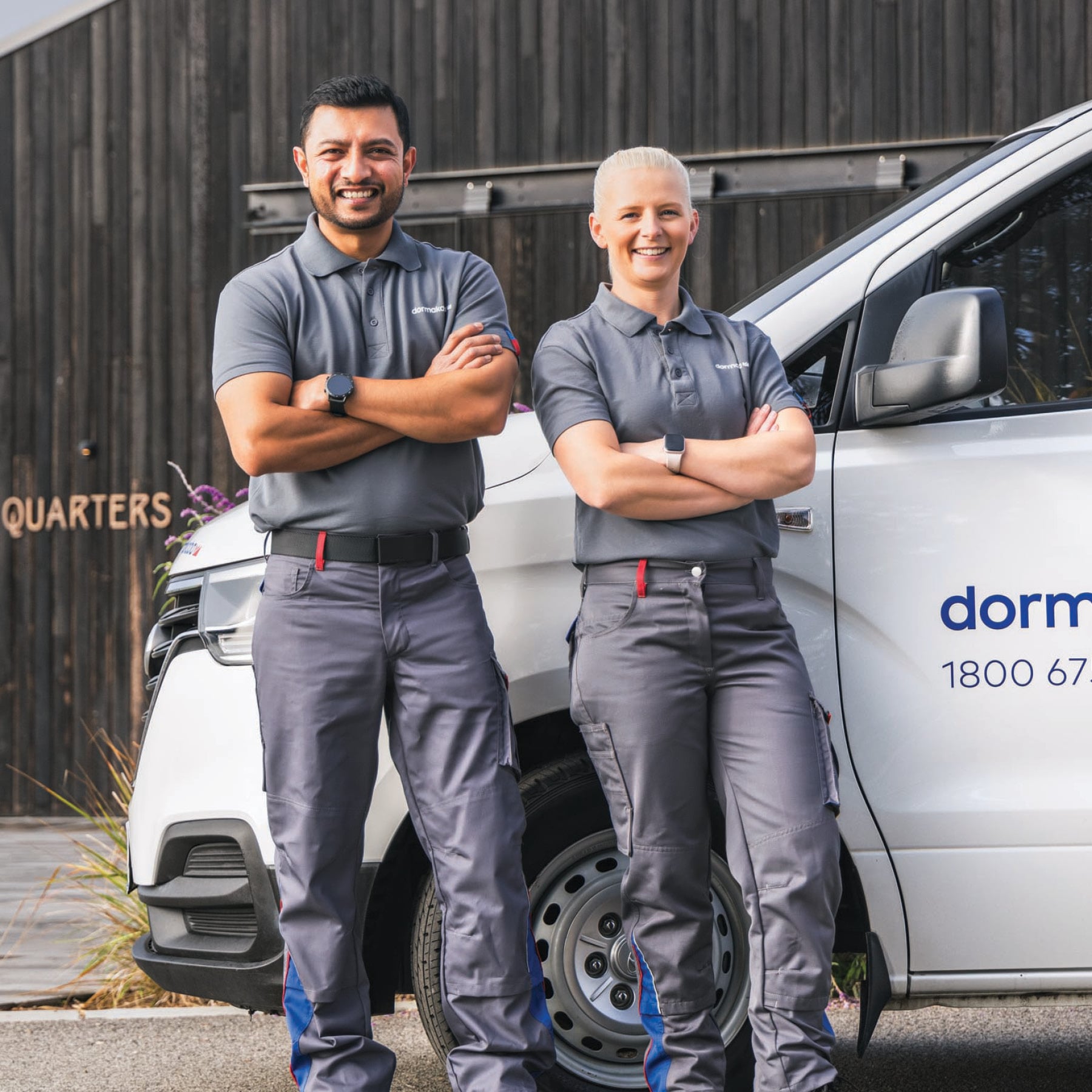
“Innovation and coming up with new products isn’t a challenge for us – we spend over A$120 million [US$86 million] a year on innovation alone,” he says. “Our biggest challenge is making sure we have great people to deliver results.”
In Australia, a tight labor market makes attracting and developing capability particularly important.
Goodall is looking both within the industry and beyond it, while considering how graduate programs can build the next generation of talent and give people room to create long-term careers with dormakaba.
Finding talent is one thing and making sure they remain connected is another. Goodall’s region operates a hybrid three-days-in-the-office, two-days-at-home approach for applicable roles, with Monday typically serving as a shared office day. He says he uses it to do something decidedly low-tech.
“I walk the floor, I go and talk to people, ask how their weekend was, what they are up to and what’s happening,” he says. “To me, those water cooler conversations are just as important as the formal meetings that you have.”
He still relies on connection outside the business, too. Despite more than two decades of senior leadership experience, Goodall has worked with the same external mentor for around seven or eight years.
“Good managing directors or senior managers need to have somebody else that they can just bounce things off because you don’t know everything, and often you know less than the people who are actually doing the job,” he says.
Technology may be transforming what dormakaba can offer customers, but Goodall insists its value is measured by whether it makes people’s lives simpler.
The idea is captured well in dormakaba’s overarching purpose: “For every place that matters”.

“As we continue to invest in our people and our products, the world is our oyster.”
A place matters because somebody is trying to get to work. Because someone needs to move through a hospital without wondering whether the next door will open. Because tens of thousands of fans are trying to get into a stadium. And because a traveler has already spent hours on a plane and simply wants to get through the airport and to their destination.
“We’re proud that we can make someone’s day easier just by eliminating the hassle,” he says.
Eleven years on from the merger of Dorma and Kaba, Goodall sees the business stepping fully into its international identity, with serious growth ambitions in the United States and across Asia–Pacific.
“We have a massive opportunity across multiple regions. We’re continuing to make acquisitions. We’re continuing to invest in technology. We have more than 1,800 patents globally,” he says.
“As we continue to invest in our people and our products, the world is our oyster.”
 RELATED ARTICLES


 Home

 Podcasts

 Covers
 Be Featured

 Community