Language
You can read the magazine in one of the following languages
5-min read

 Bookmark now

 Copy Link
As a maritime nation, Malaysia depends on its navy for the defense of its national interests. Formed in 1934 as a safeguard against growing geopolitical threats in the Asia–Pacific region, the Royal Malaysian Navy underwent a trial by fire during World War II when it aided the battle against Japanese forces.
Providing a comprehensive range of maritime services in addition to its naval commitments, Lumut Naval Shipyard (LUNAS) has become Malaysia’s leader in shipbuilding and maintenance, repair and overhaul, a company under Minister of Finance (Incorporated) after a takeover in 2024.
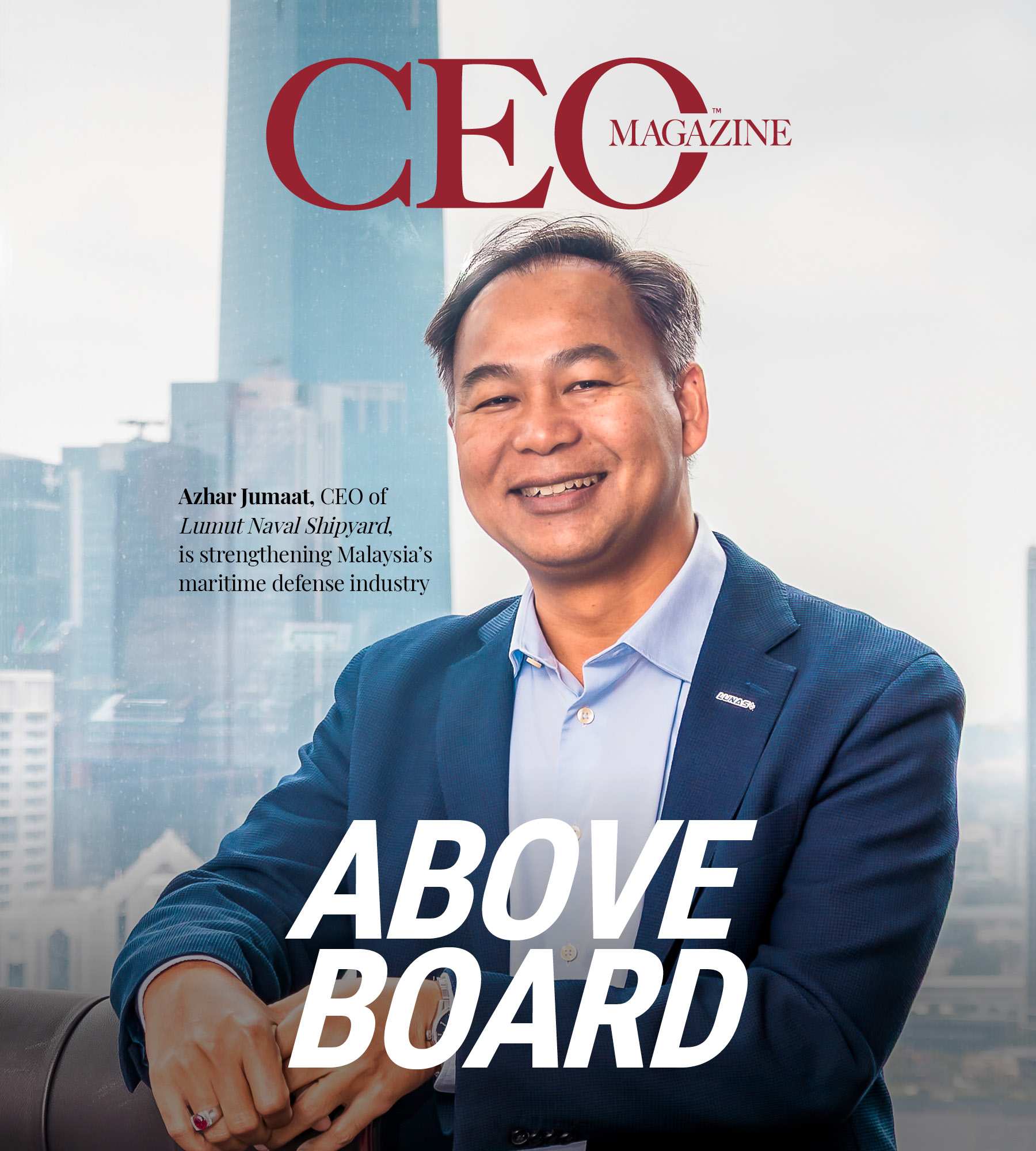
“Our mission remains clear: that is to deliver the Littoral Combat Ship (LCS) Program,” CEO Ir Azhar Jumaat tells The CEO Magazine.
In 2023, a shift in governance structure meant a new strategy was required, and Jumaat, a former Royal Malaysian Navy officer, was tasked with overseeing the LCS Program.
“There were certain strategy imperatives I had to be aware of and some very difficult legacy issues to turn around,” he recalls. “But for the past two years, we’ve managed to hit several milestones: the downslip of LCS1 in May 2024 and May 2025 for LCS2.
“The third will follow in early 2026, so while it’s not for me to say whether I’m successful in what I’m doing, I think those deliverables and developments are a testament to what we’ve achieved so far.”
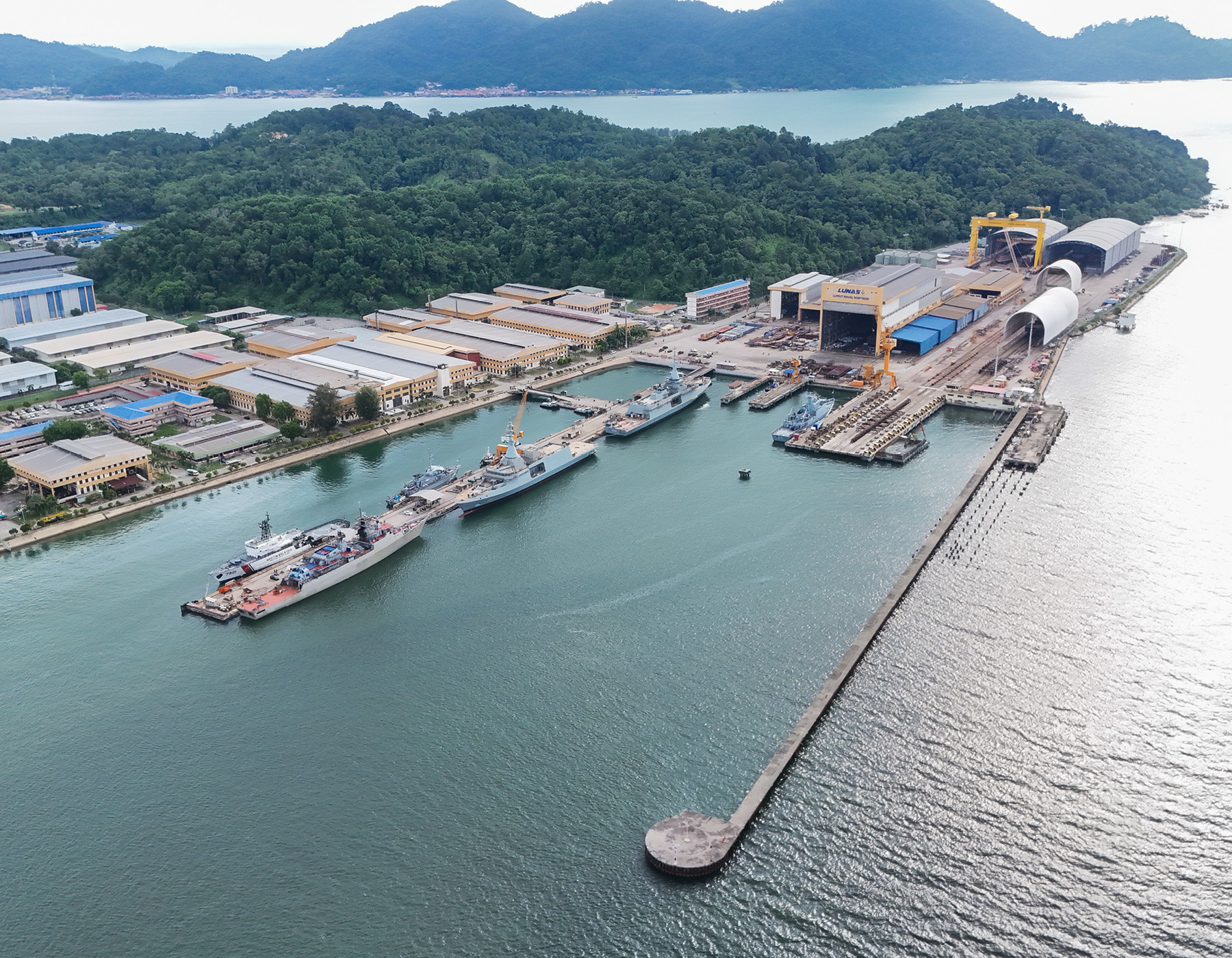

While technological advancements have radically changed the face of ground-based combat, naval warfare remains in many ways very similar to how it’s always been – only much more expensive. The Royal Malaysian Navy has prioritized a class of five Littoral Combat Ships, stealth frigates that are the most modern in the fleet. For Jumaat, the LCS Program is the company’s main focus.
As the only Malaysian shipyard with the capability to design and build full-fledged warships, LUNAS is a preferred strategic partner of the government in strengthening the country’s maritime defense industry.
“Being a government-owned naval shipyard means we’re a strategic asset, so to truly succeed, we need to expand and provide the necessary support to the Royal Malaysian Navy,” Jumaat explains.
“Ultimately, we’re looking to establish ourselves as a regional player in Asia–Pacific, and for that we have the full backing of the Malaysian government.”
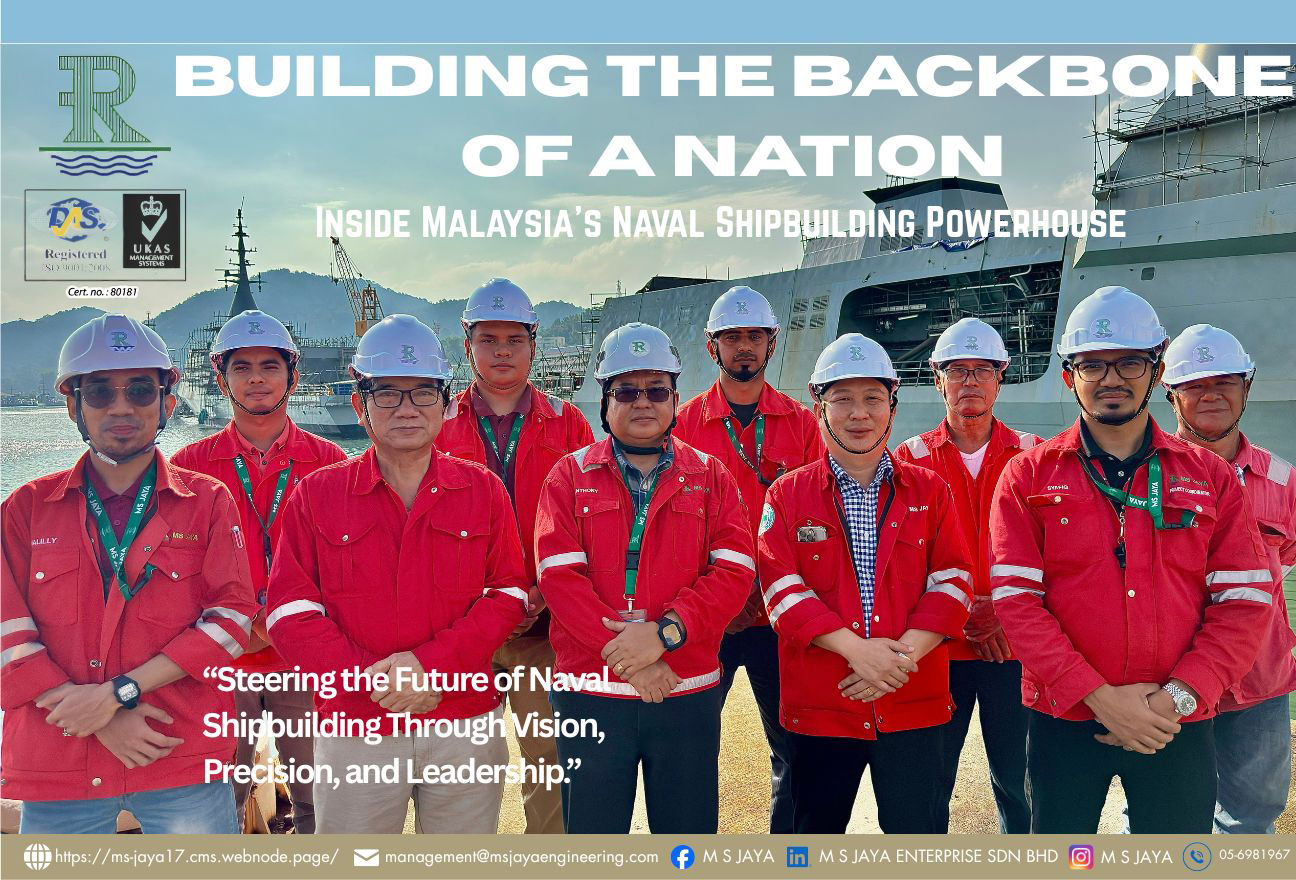
LUNAS also has the backing of a variety of key partners, in particular the French-based Naval Group. While most partners are European, local companies such as steel and piping fabricator MS JAYA are equally integral.
“The global supply chain is very sensitive to issues around the world, so we’re looking beyond Europe and the United States for partners,” Jumaat says. “We don’t want to be in a situation where we’re caught short due to a certain development.”

To fully realize its potential, LUNAS has poured resources into optimizing its business process, digitalization and technology goals. Jumaat believes the LCS Program is a great example of what a local-based company is able to produce.
“The quality of our work speaks for itself,” he says. “This is the latest generation of frigates fully equipped for four-dimensional warfare, and we’re able to go all the way from design to construction to trial and conditioning, all to the world-class standard of the Bureau Veritas Classification Society in France. So the result is there.”


LUNAS employs a specific shore integration facility – the only one of its kind in Malaysia.
“That’s a major investment, a reference system that can handle monitoring and troubleshooting online to de-risk the integration aspect,” he says.
While Jumaat admits aging infrastructure is an issue for LUNAS, he says that’s being addressed in a series of cutting-edge upgrades.
“It’s critical for us to adopt new technology and digitalize wherever possible,” he points out.
Sustainability, for instance, wasn’t a consideration 40 years ago the way it is today. Jumaat reveals the shipyard has been retrofitted with solar technology and a more modern electrical distribution network to reduce downtime and help LUNAS fall in line with a greener approach to the environment.
“Sustainability isn’t about technology alone; it’s about the values and the culture of the company, and that’s where sustainability objectives are very much on the center stage for us,” he explains.
Personally, Jumaat believes integrity is the hinge on which his leadership and management philosophies depend.
“If you’re going to develop further toward excellence and then sustain that reputation in the long run, integrity is crucial. It’s a key value in terms of how we operate LUNAS,” he insists.
With so much growth already undertaken and even more on the horizon, Jumaat has taken steps to make the company an employer of choice in Malaysia.
“We want our workforce to be very happy and content working here,” he says.


He adds that it is very lucky to be in such a strategic location, with access to the Strait of Malacca and the South China Sea’s shipping lanes and trade routes. More than a shipyard, Jumaat believes LUNAS is a catalyst for nation-building.
“We are a strategic investment. Being here means our capabilities, world-class infrastructures and highly qualified workforce can do their best work,” he says.
“And then being government-owned, it’s an impetus to keep ourselves always above and beyond expectations.”
 RELATED ARTICLES


 Home
Home
 Podcasts
 Covers
 Be Featured
 Community