Language
You can read the magazine in one of the following languages

4-min read

 Bookmark now

 Copy Link
It posed broodingly on the forecourt of Monaco’s Maybourne Riviera hotel, an automotive love letter written in sensuous aero lines, its sporty-green body paint reflecting flashes of morning sun like a thousand paparazzi camera bursts.
At first glance, the press corps gathered on that warm June morning in 2023 assumed they had flocked to the South of France for the launch of a new DB12 supercar. In fact, what they were witnessing was something deeper, something more profound: the rebirth of Aston Martin as a global powerhouse.
“If we reflect over the past few years in terms of growth, especially in Europe, the key thing was our product and the new lineup.”
It would be naive to suggest that one product, one idea or one car in isolation has the juice to transform a company’s fortunes; instead, the DB12 – a continuation of arguably Aston Martin’s most revered nameplate thanks to a certain fictional British spy – served as a metaphor for a new dawn at the storied marque, signaling a shift from ‘top premium’ to ‘ultra-luxury’ in terms of perception and real-world sensations.
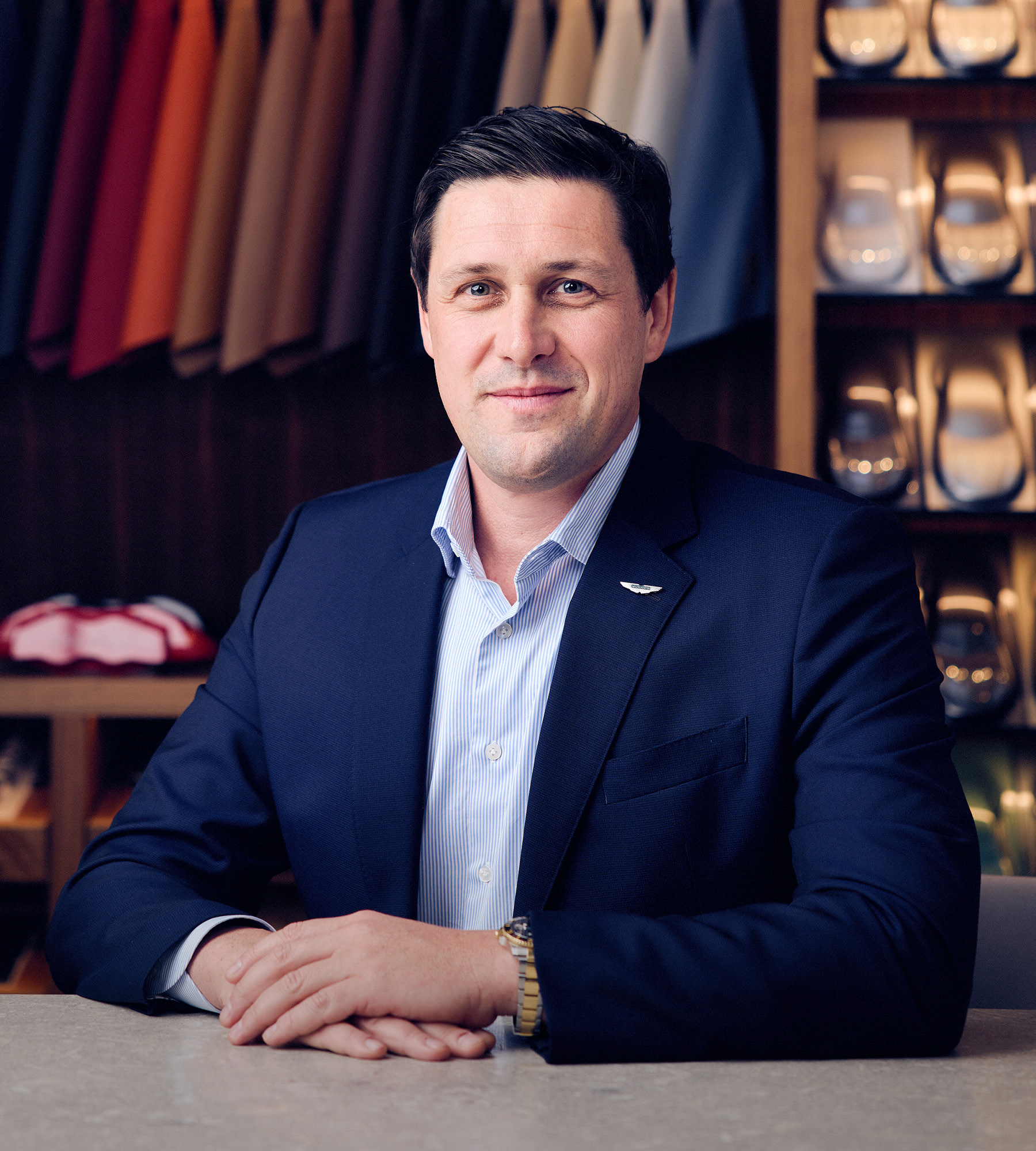
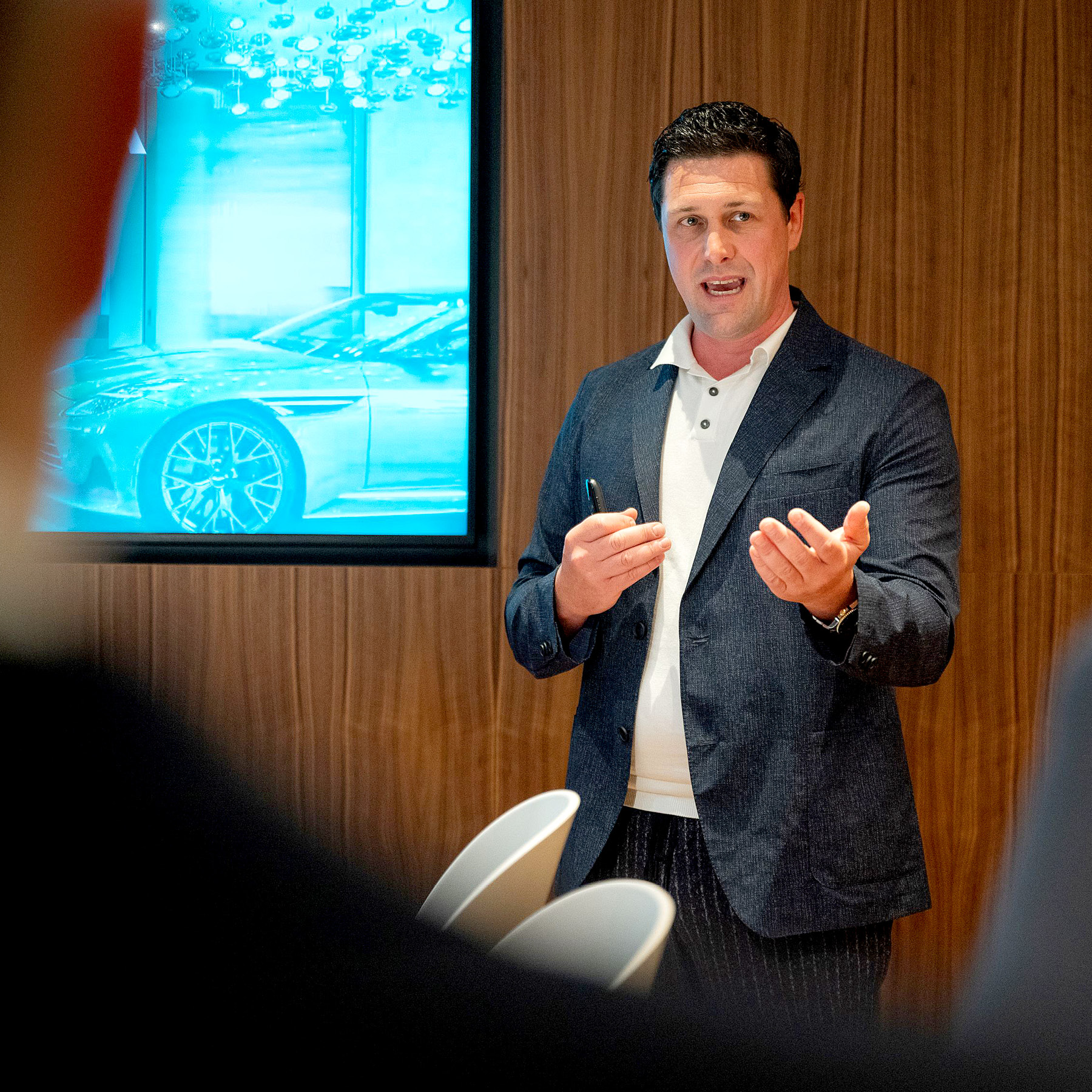
“If we reflect over the past few years in terms of growth, especially in Europe, the key thing was our product and the new lineup,” says Andreas Bareis, Aston Martin’s President for the United Kingdom, Europe, Middle East and Africa.
“When we launched the DB12, that was really going into our new era. We worked on the quality, the touch, the feel and the smell. When we now look inside our cars, they’re completely refreshed compared to before. And we went fully in on the performance side. We now focus more on value rather than just a big volume push.”
The German native, whose resume includes extended stints at two of Aston Martin’s closest adversaries, McLaren and Lotus, also points to changes in the brand’s C-suite as the trigger for its invigoration.
“Last year we had Adrian Hallmark joining us as our CEO – he’s a world-class leader. That was a fantastic thing for us. He brought a customer-first mentality,” he says.
“We also see now the quality of the people that we have: great engineers and designers. This has had a massive impact in terms of the people side.”
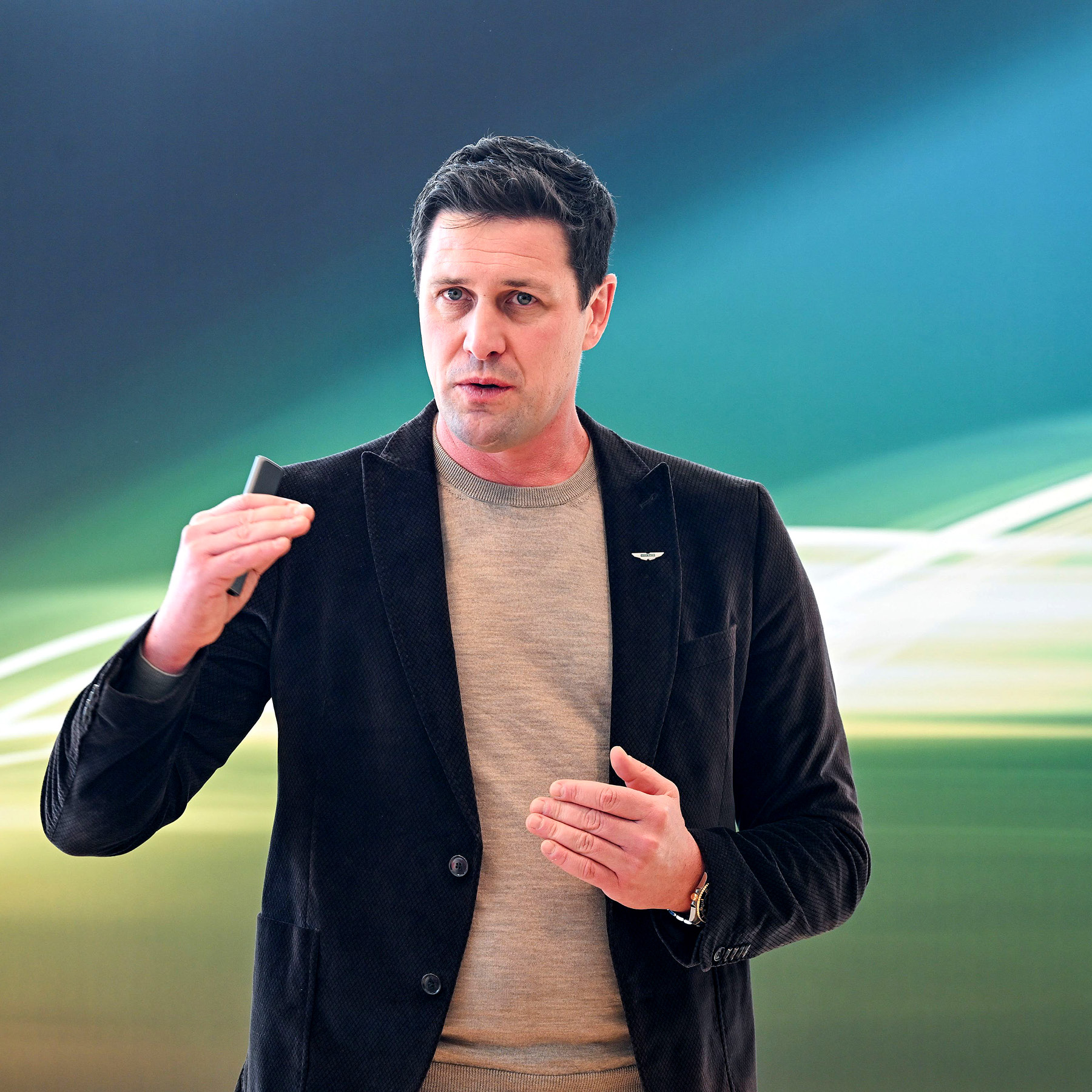
“We now focus more on value rather than just a big volume push.”
In a challenging period for the worldwide automotive industry as a whole, during which household names from Toyota to Ford have been dialing back on electrification commitments and streamlining business models, Aston Martin has bucked the trend by injecting US$2 billion into its product portfolio.
This includes various iterations on Vantage, Vanquish and Valhalla models, as well as a focus on luxurious inner-city showrooms, part of a new dealer-facing marketing strategy designed to encourage closer integration.
The brand has also refined a distinct data-driven approach, using precise metrics to point customers toward live events (adrenaline-packed track days, regional driving escapes and the like) and other exclusive client privileges associated with ownership of a winged Aston Martin badge.
Bareis, who declares himself as “a real car guy,” is aware of the cultural magnetism that being a historic fixture on the Formula One calendar since 1959 affords Aston Martin, and how the company can successfully leverage it.
“We now have 20 races on a global stage. The attraction of Formula One is going up year by year, and we can offer our customers worldwide a link to that luxury experience – the things you can’t buy,” he says.
“One out of four cars ordered by a customer is actually in Aston Martin’s Racing Green color, so a lot of people associate us with Formula One.
“We now have access to the latest and greatest technology. We can see that in the carbon fiber technology that we bring to the Valhalla, for example, and we can see it in our electrical components.
“Our Formula One colleagues at Silverstone are now really part of the car programs, where they develop technology from a racetrack to a road application.”
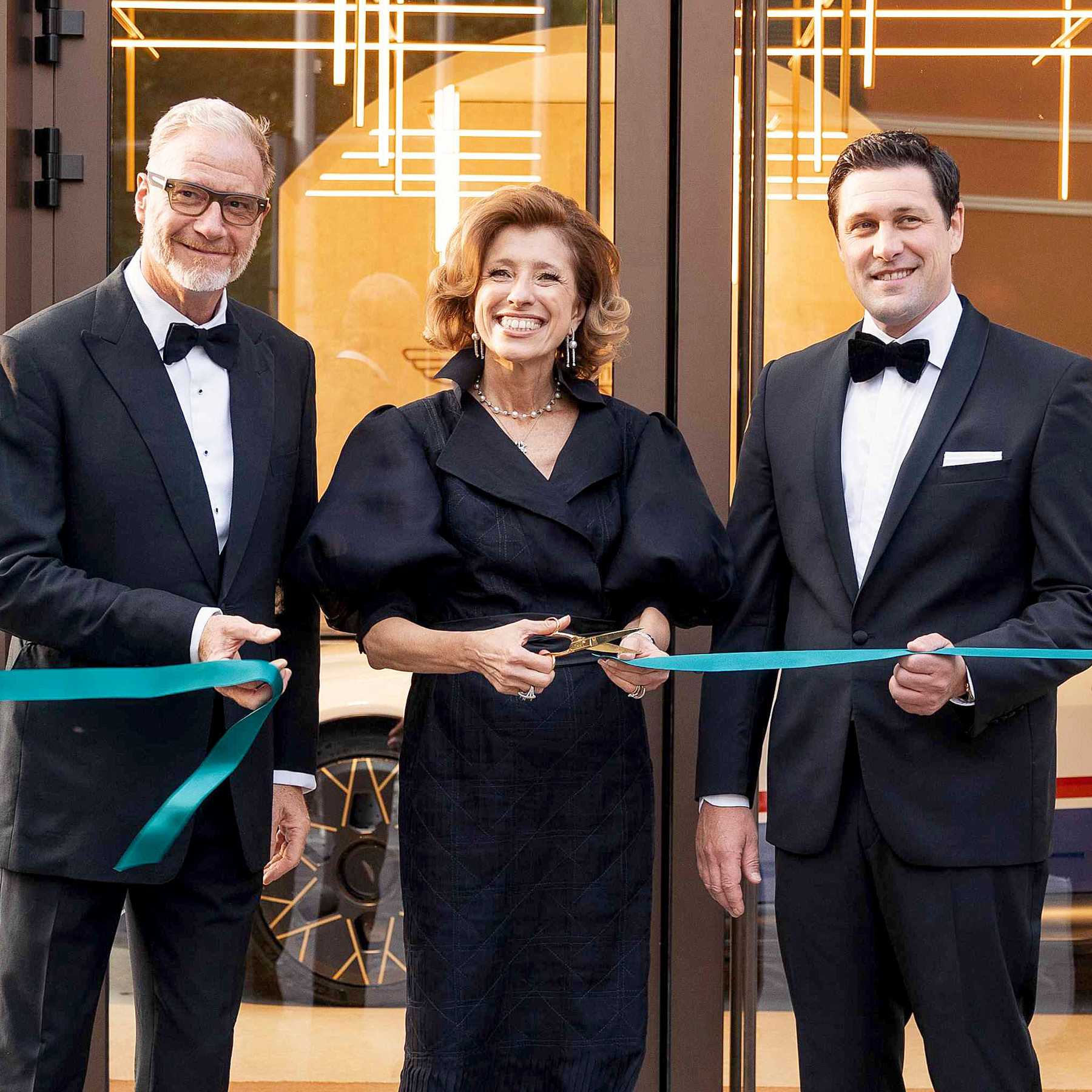
“Our Formula One colleagues at Silverstone are now really part of the car programs, where they develop technology from a racetrack to a road application.”
Aston Martin’s enduring romance with motorsport also strengthens bonds with existing vendor partnerships.
“We already touched upon Formula One’s attractiveness,” Bareis says. “With Formula One, you can engage suppliers and all the people you do business with. You can bring them into this world. Then they are proud to be in this environment.”
If the DB12’s theatrical Riviera debut was the initial pull-off on a thrilling new journey, then the Valhalla plug-in hybrid electric vehicle, a limited-edition, mid-engined V8 supercar, is poised to propel the company further toward new horizons – at speeds of up to 350 kilometers per hour, for those who have the stomach.
For Bareis, the launch of the US$1.17 million slice of exotica, expected imminently, will resonate with customers who identify with electrification as a positive force for the world, but are not yet prepared to fully embrace expensive all-electric machines. This credo aligns with Aston Martin’s incremental stance on the nascent power source (the company’s first battery electric vehicle is slated for 2030).
“This is the challenge,” Bareis admits. “But the opportunity we have is we can actually start our electrification, which provides something that the customer needs – which is keeping the performance and the excitement.”
As anyone who was in Monaco on that blissful summer’s morning in 2023 will attest, that’s something that’s never been in short supply at Aston Martin.
 RELATED ARTICLES


 Home
Home
 Podcasts
 Covers
 Be Featured
 Community