Language
You can read the magazine in one of the following languages


4-min read

 Bookmark now

 Copy Link

An agricultural powerhouse known to many as the ‘Cornhusker state’, Nebraska’s identity has been shaped by generations of farming communities and a deep connection to the land. But that’s not to say the state is locked in the past. On the contrary, it is modernizing at a rate of knots thanks to a partnership with tech platform Workday, setting the pace for digital adoption across the country.
By working closely with the state government, Workday is helping to secure the place of AI in major policy and political conversations, explains Vice President for State and Local Government Aaron Erickson.
“Nebraska continues to be a leader in modernization – an early adopter of SaaS and now one of 14 other states and over 300 United States governments leveraging the Workday platform,” he tells The CEO Magazine.
“What truly stands out about Nebraska – and it’s a common thread among our most successful customers – is leadership that treats this as a business transformation, not a software upgrade.”
The challenge for state leaders, according to Erickson, is identifying the right high-impact use cases while also navigating strict budget realities and governance requirements.
“That’s where a strong IT partner can help by prioritizing the right opportunities, unlocking funding and delivering secure, modern capabilities without interrupting daily operations,” he says.

“A common thread among our most successful customers is leadership that treats this as a business transformation, not a software upgrade.”
Indeed, while concerns around whether implementing such a systems modernization could negatively impact citizens and the services they can access in the short-term are valid, Erickson points out that careful planning and strong partnerships make this unlikely. And the subsequent benefits make any minor disruptions worthwhile in the longer-term.
“If you look at a lot of the operational efficiencies that our customers gain, they’re producing financial statements faster, their payroll is more accurate, reimbursing employees for travel is easier,” he continues.
“Another really cool benefit we’re starting to see now is faster recruiting and onboarding with an improved job candidate experience.”
Erickson identifies the biggest lesson from Nebraska’s adoption of Workday as the power of culture – something he believes other states could also benefit from as it delivers the greatest return on investment.
“Nebraska’s leadership built an environment that encouraged teams to embrace change, adopt new capabilities and rethink legacy processes rather than just paving over the past,” he says.
“Not everything’s going to work, but you have got to have a culture that encourages change, that embraces risk-taking.”

“The opportunity cost of doing nothing is higher than ever before.”
While many states are still grappling with aging systems and years of accumulated complexity, modernizing has never been more important.
“The opportunity cost of doing nothing is higher than ever before,” Erickson stresses. “Historically, agencies could compensate for aging platforms through manual workarounds or layering on extra tools. With the rapid rise of AI, that strategy no longer works.”
An AI-ready technology foundation is now a business essential – even for traditionally slow-to-adapt government agencies.
“Without modernizing their core platforms and aligning with mission-focused partners, governments won’t just lag behind – they’ll find it technically impossible to keep pace,” Erickson warns.
“By modernizing now, states gain faster service delivery, lower long-term maintenance costs and the flexibility to safely adopt AI as it evolves.”
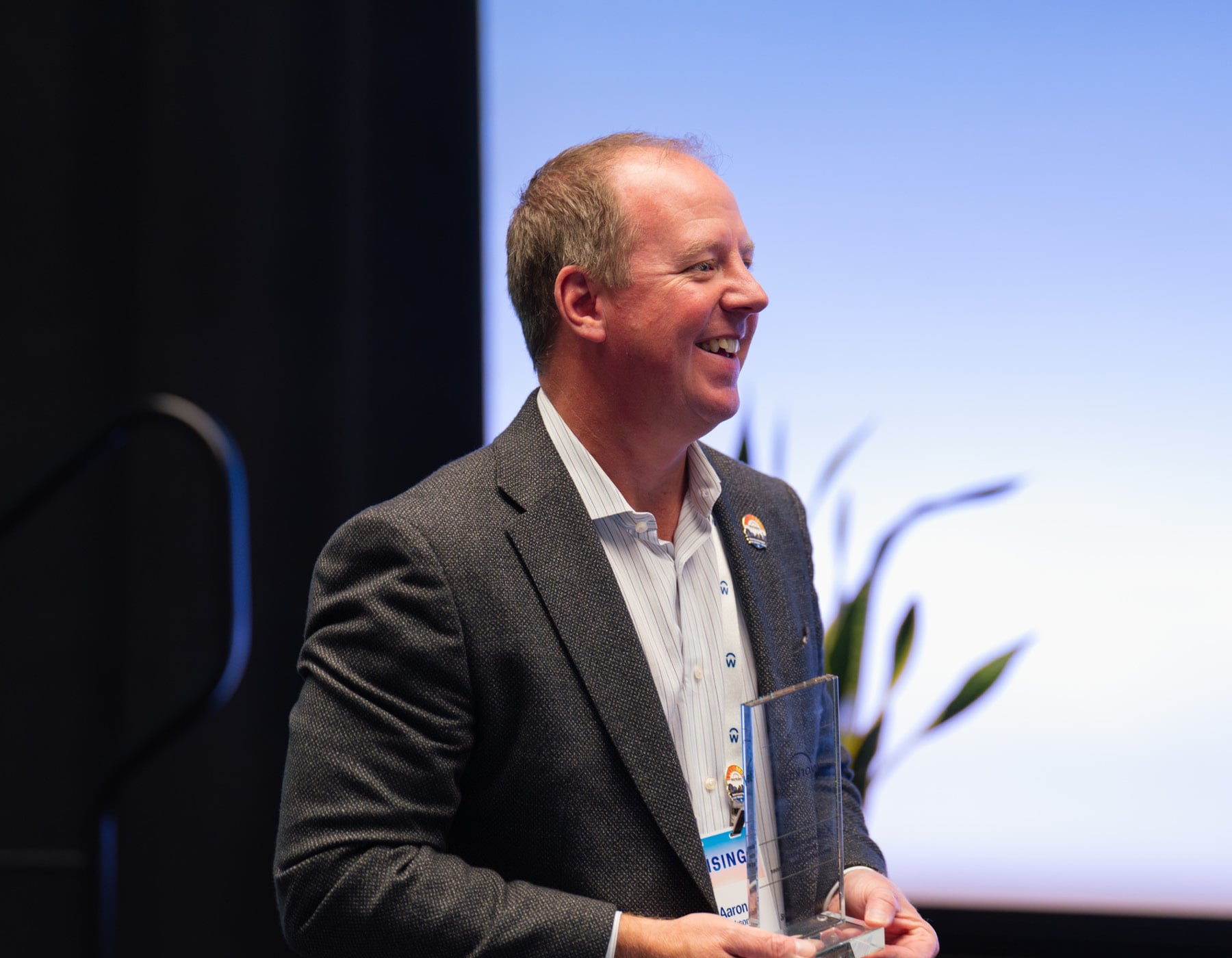
“When we empower frontline public servants to succeed, we directly make life better for the communities they serve.”
With the power to swiftly convert time to value, AI offers a significant opportunity by shortening deployment cycles and lowering implementation costs. Erickson says this has brought about a complete mindset shift around state technology projects.
“As for where we see the most immediate interest from leaders today, it’s in low-risk, high-efficiency quick wins – specifically automating routine back-office workflows, improving constituent service tools like chatbots and accelerating document-heavy processing,” he reveals.
It may sound efficient in a next-gen way, but the reality is that such projects are immensely personal for Erickson, who used to work for the State of Ohio, and was part of a family whose members had all dedicated their careers to government.
“What shapes my perspective most is the sheer resilience, thoughtfulness and mission focus of public servants,” he reveals.
“For the past 30 years, the constant mandate has been to ‘do more with less’. But change for the sake of change doesn’t help them. We need technology partnerships focused on giving government employees modern, intuitive and trustworthy tools so they can carry out their mission.
“When we empower frontline public servants to succeed, we directly make life better for the communities they serve.”

 RELATED ARTICLES
 SPOTLIGHTS ON LEADERS


 Home

 Podcasts

 Covers
 Be Featured

 Community