Language
You can read the magazine in one of the following languages


4-min read

 Bookmark now

 Copy Link
The most persuasive among us know that it’s often not what you say, but how you say it. That wisdom certainly applies to the world of events, where top-notch production values and presentation can make all the difference.
But what dazzled audiences yesterday isn’t a sure bet tomorrow or even an hour from now. The rise of AI has taken the art of presentation to a new level and CEOs seeking to showcase their organizations on a big platform need to factor it in.
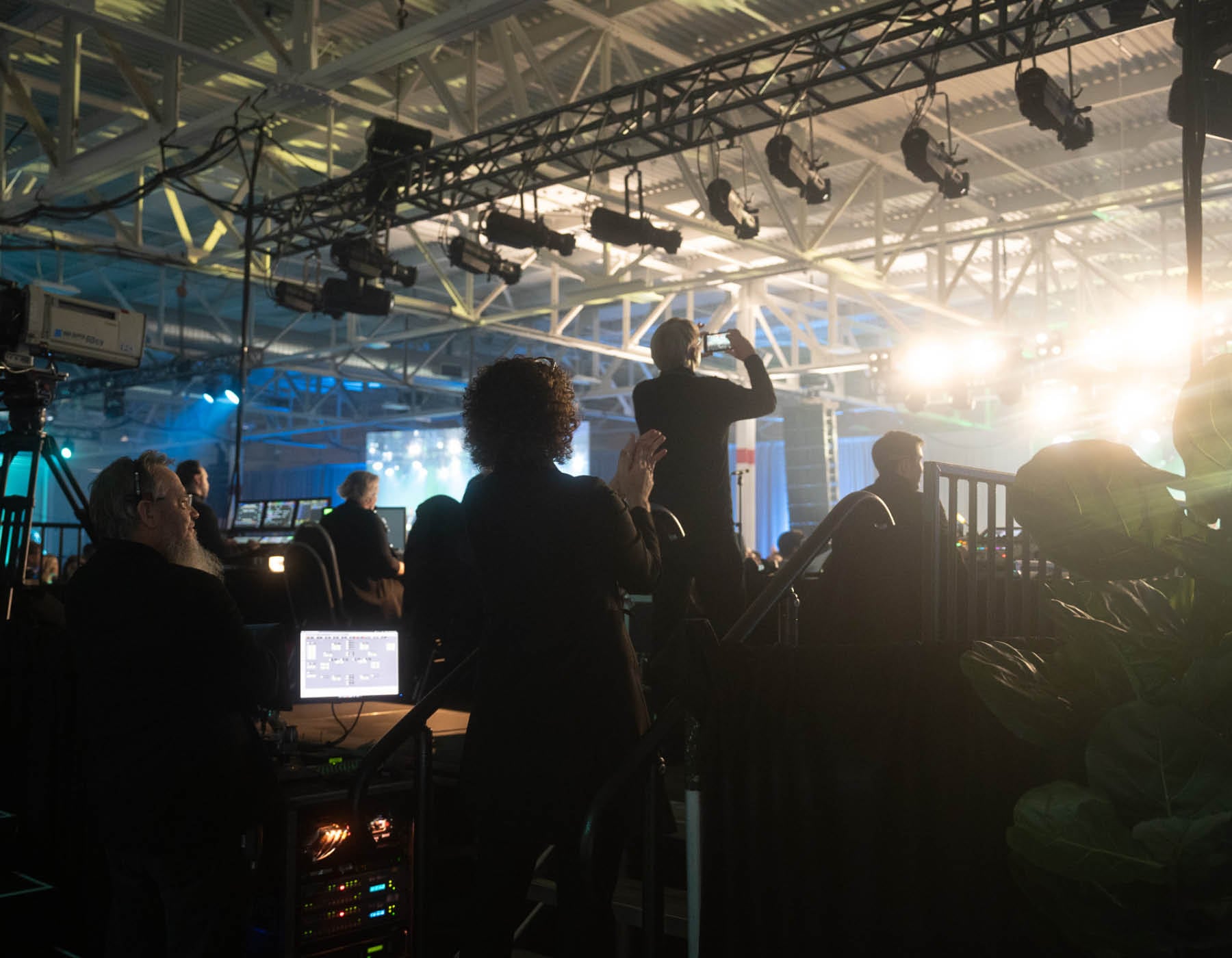
“Logistics are very important in choreographing the attendee experience.”
Even more, executives should harness “connective intelligence” to drive connection, culture and strategic change through events, says Eugenia Lista-Zaharchuk, CEO of leading event agency E.L. Productions.
“Logistics are very important in choreographing the attendee experience as this creates both the first and last impression,” she tells The CEO Magazine. “What sticks is the connection created within, which takes strategic thinking around creating the moments that make the difference.
“We work with CEOs to define the event as part of their highest priority communications and engineer connective intelligence to make it lasting for the audience.”
The events landscape was very different when Lista-Zaharchuk founded E.L. Productions in 1991. Since that time, she’s stayed on the cutting edge of the industry, building experiences that make connections, shift thinking, deepen understanding and inspire action on behalf of industry leaders and Fortune 500 companies.
While AI is a powerful tool that has become an essential part of business today, Lista-Zaharchuk believes there’s a human-shaped gap in its capabilities.
“Culture alignment is created through trust, meaning, belonging and a shared sense of responsibility,” she explains.
She says intelligence should be the connective tissue.
“It’s the intelligence that lives between people rather than inside a piece of software,” she explains. “Human connection has become more important as AI is embedded in how organizations work.
“The more intelligent our technology becomes, the more intentional we need to be about human connection.”
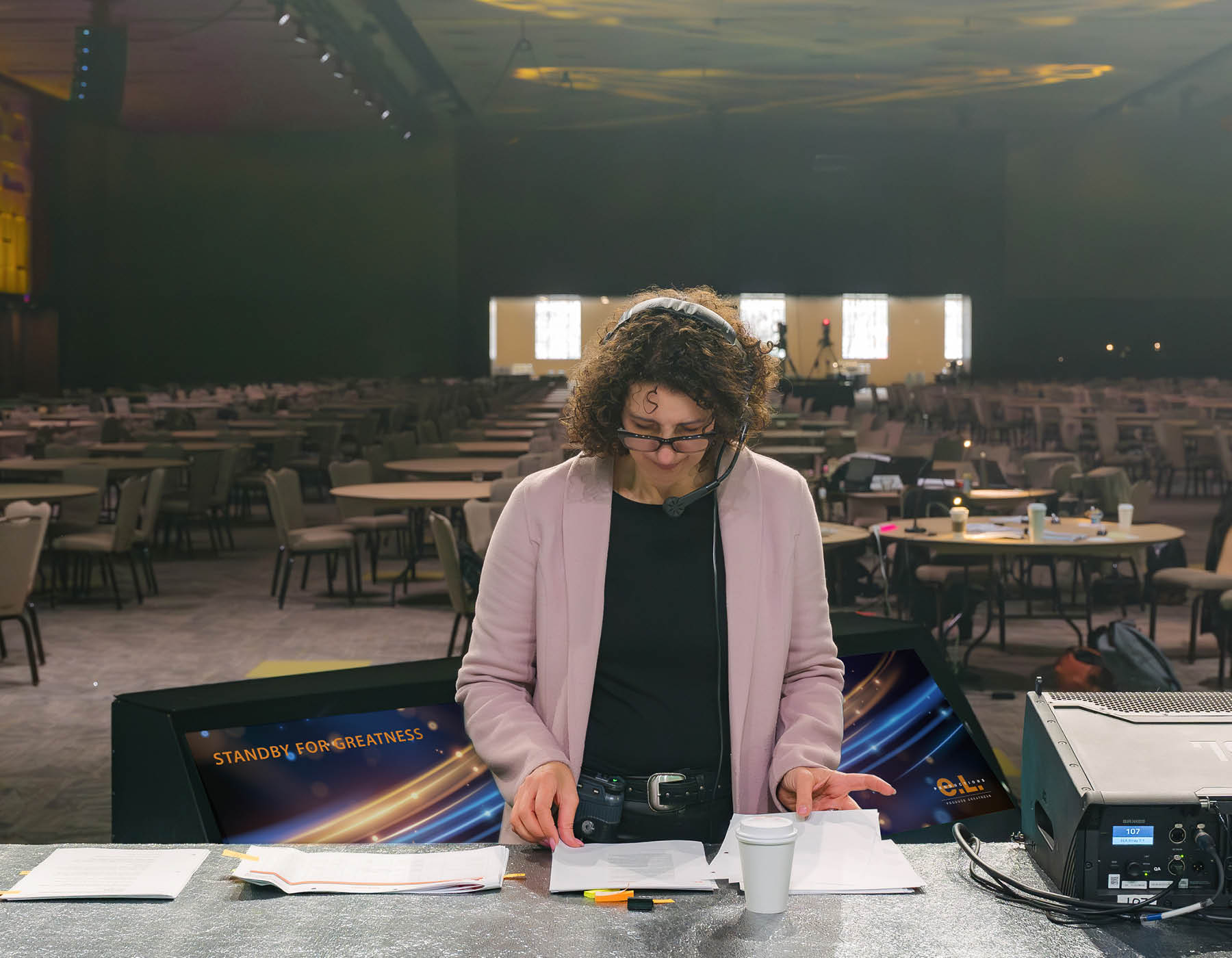
“The more intelligent our technology becomes, the more intentional we need to be about human connection.”
And because strategy ultimately has to move through people, Lista-Zaharchuk says this is a point CEOs can’t afford to miss.
“People need to understand a strategy, believe in it, see their role in it and act on it together,” she insists. “AI can help us communicate a strategy; connective intelligence helps us turn that strategy into something people feel responsible for making real.”
Lista-Zaharchuk says she encourages her CEO clients to see events as connection architecture.
“Instead of asking, ‘What do we need to present?’, ask, ‘Who needs to connect with whom, and what conversations need to happen for this strategy to land?’” she says.
“Once you know the change you’re trying to create, the event becomes a strategic tool rather than an isolated experience. Then our job is to design around that.”
The E.L. Productions design approach is a collaborative one. Lista-Zaharchuk says an event’s direction is as much shaped by the CEO as it is by her team.
“There has to be a clear business objective and not simply a theme. And the CEO is involved as a shaper, not simply a speaker,” she points out. “I want the CEO asking, ‘What do I need people to walk out believing, saying and doing?’”
That matters more than the event’s format, she adds.
“The format changes the logistics, but it doesn’t change the fundamental human needs,” she says.
“One principle we use at E.L. Productions is ‘smallness inside bigness’. Even in a room of thousands, meaningful connections happen in smaller pockets, whether at a table, in breakouts, in peer groups or through curated conversations. Scale makes designing for intimacy even more important.”
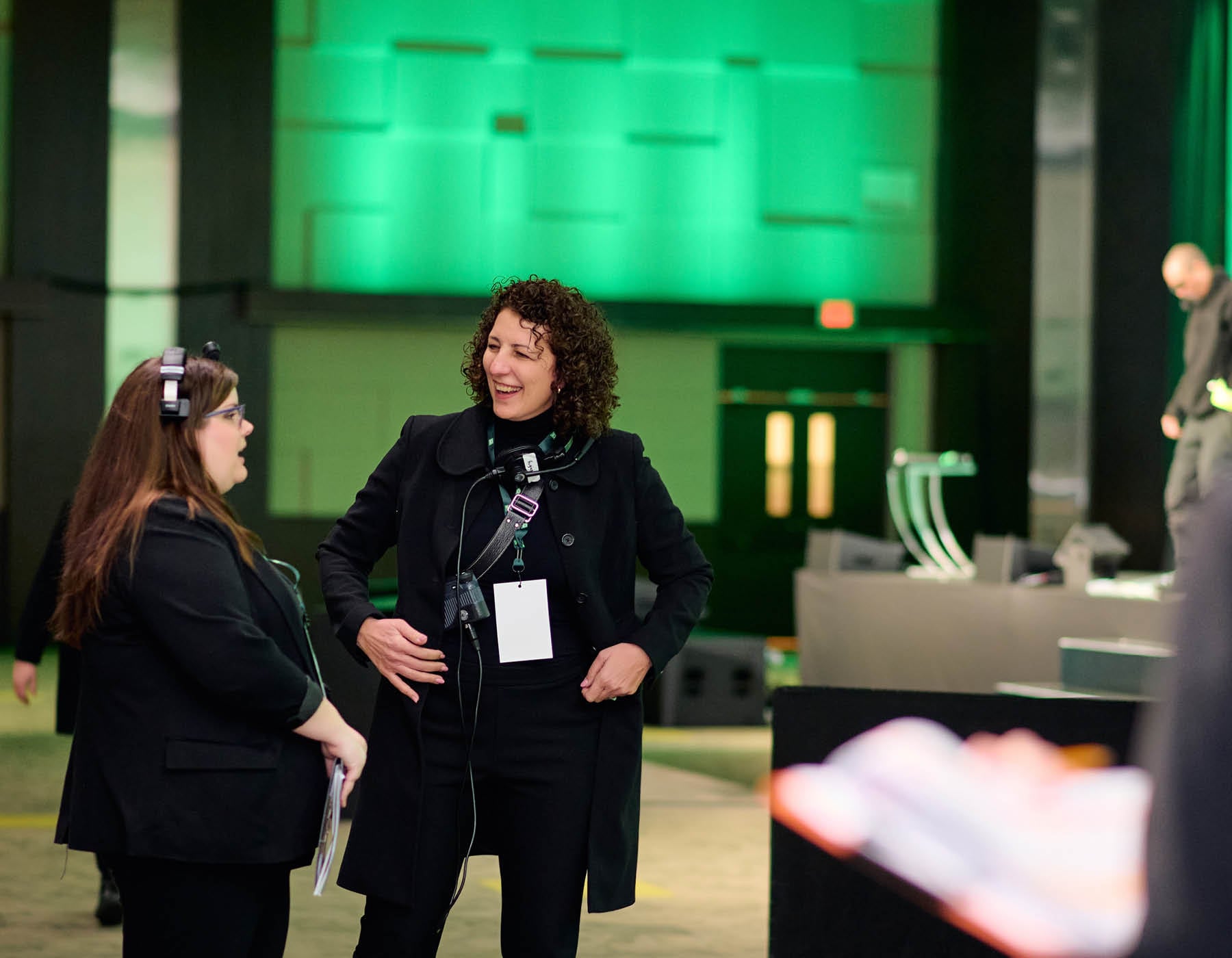
“Do people leave feeling closer to someone and clearer about something?”
And whether an event is live, digital, broadcast or hybrid, for example, the choices CEOs need to make keep coming.
“When you’re live, you can use the physical room, including seating, movement and informal encounters. In hybrid environments, you need to design for two audiences rather than treating the virtual audience as an afterthought. Digital gatherings should put interaction ahead of long stretches of passive content,” she says.
“The essential test is consistent regardless of format: do people leave feeling closer to someone and clearer about something?”
The greatest takeaway a company can give to an audience is a shared narrative, according to Lista-Zaharchuk.
“This is who we are now. This is where we’re going. And this is my role in it. You want them walking away with those realizations,” she says. “Your event won’t solve every organizational challenge overnight, but it can concentrate attention, conversation and alignment in a way that’s tough to achieve through everyday work.”
Even in the face of AI, an event that prioritizes human connection holds a lot of power. Lista-Zaharchuk says it all starts with a question.
“The quality of the question asked before the event determines the quality of the impact,” she explains. “Before you approve the budget, ask yourself: after this event, what do I want people to do differently together that they’re not doing today?”
 RELATED ARTICLES
 SPOTLIGHTS ON LEADERS


 Home

 Podcasts

 Covers
 Be Featured

 Community