Language
You can read the magazine in one of the following languages
6-min read

 Bookmark now

 Copy Link
For a long time, leadership has been formulaic – an equation that usually starts with the seven highly effective traits of this or the 21 irrefutable laws of that. Leadership, then, has become a laundry list of things you must do to be great. And even though our planet has more than eight billion wonderfully different and unique individuals, our leadership scholars have fashioned their rubrics on a far smaller scale.
This leadership algebra has resulted in students striving for 5.0s, even when a perfect score maxes out at 4. It creates anxiety in applicants who have been accepted into 13 schools, but not to the one their parents wanted. It creates organizations that are forced to use culture to remind employees they are teammates, not competitors.
If you follow the rules, the system eventually rewards you with the promotion they were obligated to give. After all, all the boxes were checked.
In theory, the way most of us look at leadership seems to be logical – a process designed to identify the best, the brightest and the most capable of leading organizations.
But anyone who has spent any real time in leadership knows something slightly different. The leaders who ultimately transform industries rarely follow the most predictable path. Many of them started outside the traditional pipeline. Some were overlooked early. Others failed and failed again.
Yet those same experiences often become the very things that shape extraordinary leadership. Great leaders are outliers. Wouldn’t we expect their paths to also fall outside the lines?
One of the central ideas behind my Less Than One Percent platform is that greatness often begins where expectations end. In sports, business and life, we routinely underestimate people whose early trajectory doesn’t look that impressive on paper – at least to the majority.
History is filled with examples of individuals who were dismissed, doubted or underestimated before they ultimately changed the game forever. That same pattern appears in executive leadership.
Organizations naturally gravitate toward what feels familiar. Boards and hiring committees often look for candidates who resemble successful leaders of the past – people whose credentials and experiences mirror the model that worked before. It feels logical. Familiarity reduces perceived risk.
But it absolutely limits the possibilities.
When organizations rely too heavily on conventional signals of success, they can miss the very qualities that define transformative leaders. Pattern recognition becomes a trap. We look for those seven habits that served us well in the past and miss out on habits we never dreamed of.
If every leader in the industry has the same habits, the organizations in that industry will compete incrementally, trying to get better faster than others, so they don’t get worse.

When organizations rely too heavily on conventional signals of success, they can miss the very qualities that define transformative leaders.
Outliers, on the other hand, aren’t trying to be the best in the game. They’re trying to change the game. That innovative mindset is fundamentally different. Their existence doesn’t mean the rubric is wrong. It proves there shouldn’t be a rubric at all.
Some of the most effective leaders I have encountered did not follow a straight line to the executive suite. Their paths moved across disciplines, industries and experiences. They developed perspective through adversity, unexpected detours and a focus on the job at hand and not the job in the office two doors down.
Those experiences often produce leaders who see problems differently and challenge assumptions that others never dared to.
In my own journey, some of the most defining lessons came from experiences far outside traditional leadership training.
Working as an emergency physician means confronting uncertainty every day. Decisions must be made quickly, and the stakes couldn’t be higher. Things often happen so fast that there’s inadequate time to get all the information to make the right decision, but you still have to make one. That sobering environment forces clarity and accountability.
It also reshapes how you think about leadership.
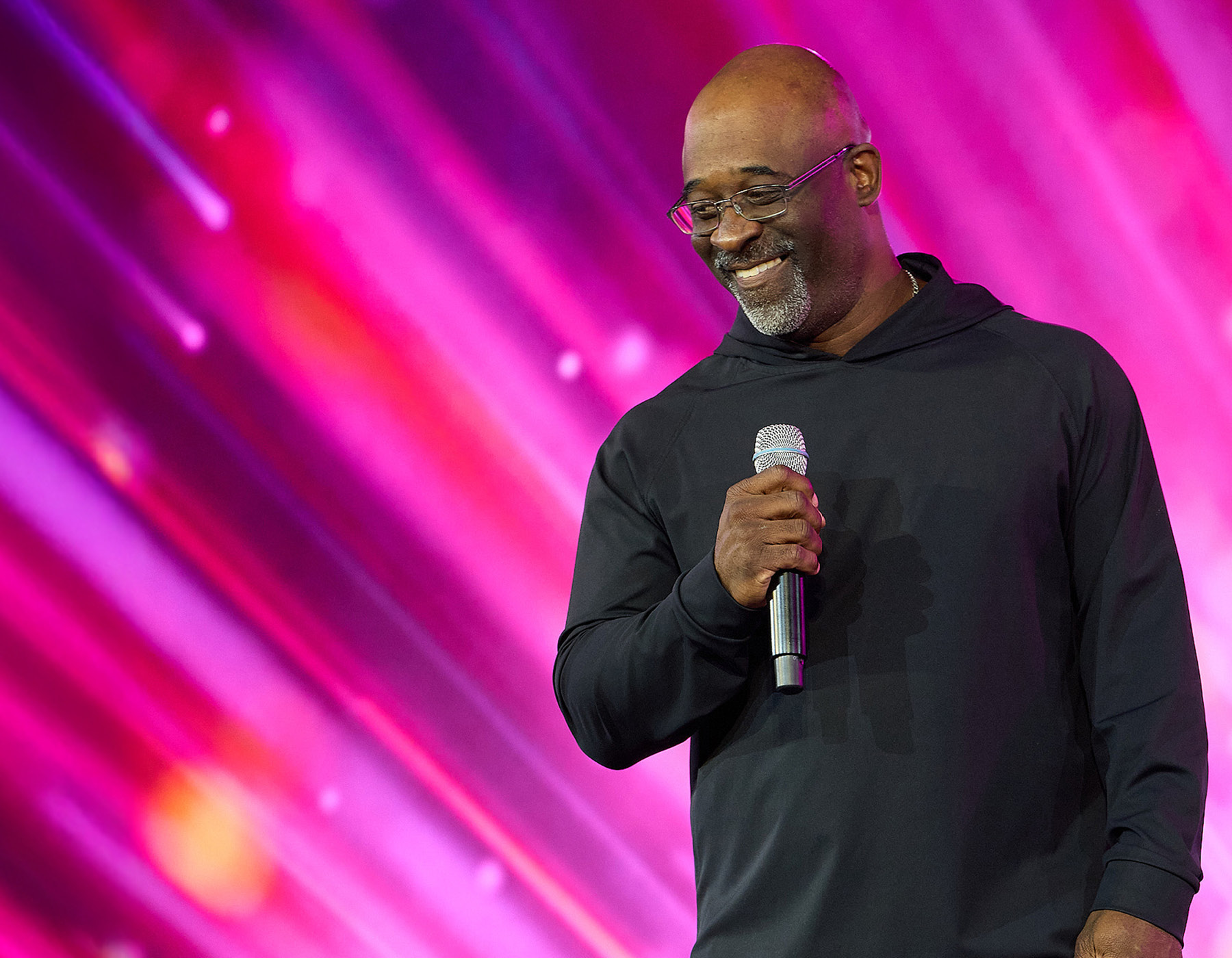
Leadership isn’t just about strategy or authority. It’s about composure when pressure rises.
Leadership isn’t just about strategy or authority. It’s about composure when pressure rises. It’s about making decisions that affect real people, even when there isn’t enough information to make the right one. And it’s about building teams that trust one another when the outcome matters most.
Adversity plays a similar role. During medical school, I survived a house fire that left me with burns across a quarter of my body. That experience could have ended my career before it even began. Instead, it inspired a different perspective. When you face moments that challenge everything you thought was certain, you begin to understand how much of leadership is embracing the uncertainty that outliers are uniquely suited to do.
This is why I believe organizations need to rethink how they identify leadership potential. The traditional signals we rely on – pedigree, predictable career progression and perfectly curated resumes – often tell only part of the tale.
The better question isn’t simply where someone has been. It is how they think.

Leadership outliers bring perspectives shaped by experiences that fall outside the traditional executive mold.
When it comes to great leadership, there are a few things that could be overlooked. Do potential leaders look at the world with wonder and optimism? Are they disagreeable? Do they ache to challenge the status quo? Do they thrive under pressure? Can they take and make that game-winning shot? Do they doubt themselves – and use that doubt to focus on continuous self-improvement? Can they make decisions, even when they don’t have all the information?
Perhaps most importantly, leadership outliers bring perspectives shaped by experiences that fall outside the traditional executive mold. Those experiences allow them to see opportunities others miss. It allows them to see wins in others’ losses.
For CEOs and boards, this presents both a challenge and an opportunity.
If leadership pipelines remain narrow, organizations will continue producing leaders who think the same way as their predecessors. That may feel comfortable, but it rarely changes the game.
Expanding how we recognize leadership potential requires a willingness to look beyond conventional markers of success. It means recognizing that resilience, adaptability and unconventional perspectives may matter more than having the seven habits.
The problems we face today demand leaders capable of navigating complexity and uncertainty. Those leaders won’t always come from predictable places.
In fact, the people most capable of transforming industries may be the ones who were never supposed to be there in the first place.
Extraordinary outcomes rarely come from the ordinary. The leaders who change the world are rarely the ones everyone predicted. They’re the ones who refuse to accept the limits placed on them, whose optimism allows them to see solutions in problems and for whom stopping is as devastating as losing.
That is the essence of the Less Than One Percent mindset.

 RELATED ARTICLES


 Home
Home
 Podcasts
 Covers
 Be Featured
 Community