00:00
Making money is like having an orgasm. If you focus on it, you're never going to get it. You just have to enjoy the process. And that's really the thing is, in life, people who focus on making money never make money. When you look forward to the future, what do you believe would be the biggest shift in how people understand and begin to manage their health. Everything around us is now actually collecting the data for us. All this data is now being integrated together, not because to overwhelm you. It is your health AI agent. It will only alert you when it says, He something needs to be done about it.
00:49
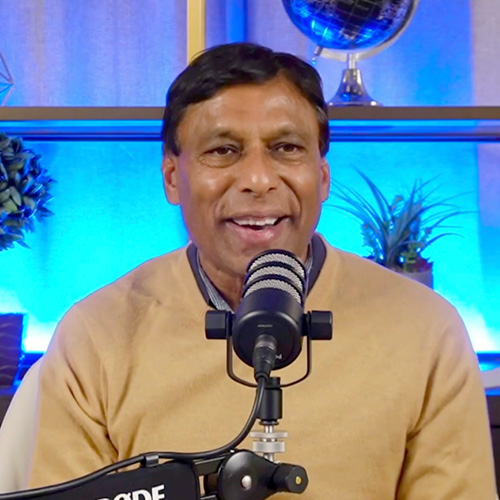
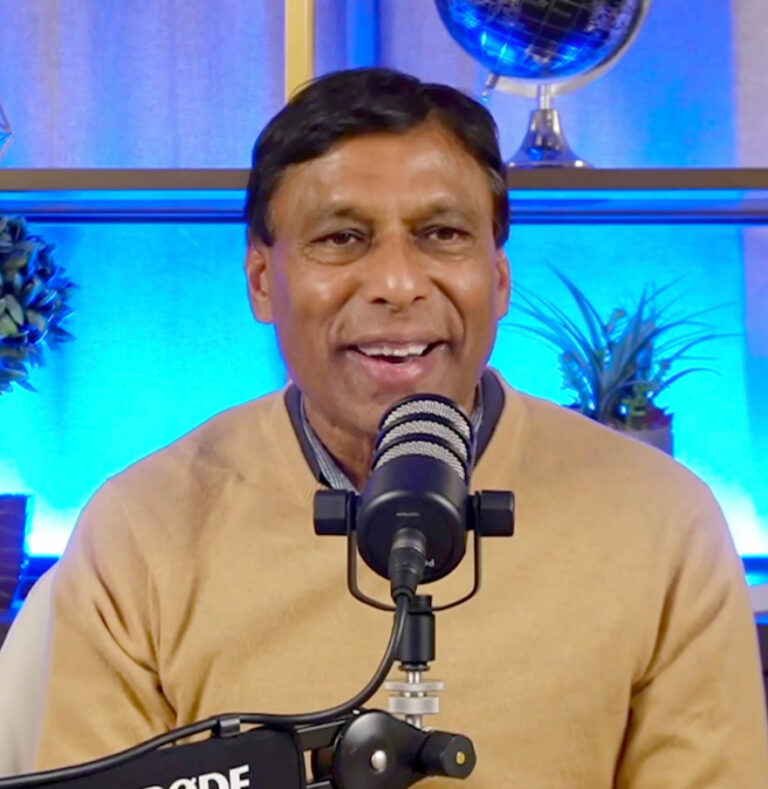
What if the future of medicine isn't in hospitals, but in your own home? I'm Lara necession, and this is CEO behind the scenes Today we're exploring how artificial intelligence is reshaping human health, from decoding our biology to turning everyday food into insight. My guest is Naveen Jain, founder and CEO of VIOME, a company using AI and molecular data to help people understand what's really happening inside their bodies and what to do about it. This is a conversation about the consumerization of health, the idea of food as medicine, and where the industry is headed next. Please enjoy what if the future of medicine isn't in hospitals, but in your own home. I'm Lara necessian, and this is CEO behind the scenes Today we're exploring how artificial intelligence is reshaping human health, from decoding our biology to turning everyday food into insight. My guest is Naveen Jain, founder and CEO of VIOME, a company using AI and molecular data to help people understand what's really happening inside their bodies and what to do about it. This is a conversation about the consumerization of health, the idea of food as medicine and where the industry is headed next. Naveen, welcome to the show.
02:29
Well, Laura, what a pleasure and honor to be here, and I'm really looking forward to our conversation. Likewise, Naveen, I'm so excited for this conversation, because there are so many different directions. I feel like we're going to move in, but where I really wanted to start is around a very big conversation that a lot of leaders are having right now, which is about AI. AI is transforming just about every industry. But what is it about healthcare that makes it particularly ripe for disruption right now?
03:05
Well, first of all, you know, the AI can only be used when we have a plenty of data about the human biology. And that's really the trick. Is that multiple things have to converge together for the healthcare to actually be meaningful for humans, fellow humans. So for example, you have to digitize the human body. That means our analog body. You have to be able to convert them into digits. Then you have to take this massive amount of data to be able to process it. That means now you have to have, not only a technology that is price sense on a price performance curve that is possible to do it for 10s of millions and billions of people, to be able to digitize the human body and take this massive amount of quadrillions of data and process it and then use AI to make sense of it, And that's really, for the first time in the human history, we are seeing that all three of these things are converging together that's allowing us to understand our body at a molecular level. And that is really the biggest disruption is going to happen is use of AI in healthcare. And if you look at just in the last one week, you know, open AI launched the open AI health. Gemini launched the Gemini health. Anthropic launched the cloud health. And in fact, just this morning, Amazon launched the Amazon health AI. And the point is, this is all happening because of this massive convergence. And what's really going to change the trajectory of how humans are going to live, how our fellow human beings are going to be live, to be able to live healthier and longer, and how all of this is going to come into play, and how I.
05:00
Think we are just at the cusp of understanding the human body that will allow us to make chronic diseases simply matter of choices we make every day, not a matter of bad luck. That means the illness can finally be optional. And something that you've said is that the future of healthcare won't live primarily in hospitals, but in people's homes. What does that look like in reality? I mean, if you think about it, what's starting to happen is that, you know, 90% of our healthcare dollars are being spent on chronic diseases, and these are not the acute or infectious diseases. So it is about 90% of the visits are someone is actually have diabetes or have heart disease, or they have some type of depression, they have an anxiety, they have a high blood pressure, or they have Parkinson's, they have Alzheimer, they have cancer, these are all of the diseases which are age related diseases. And what if? What if we can actually understand what causes this disease to happen? Now, fortunately for us as humans, none of these diseases happen overnight. So it's not like you you go home one day and say, You know what, sweetie, I was out with the boys last night. I think I might have caught diabetes, right? It takes 810 years to develop diabetes. That means there are fundamental biochemical changes, the biochemically your body is changing for the eight to 10 years before you become diabetic. Similarly, you don't develop a high blood pressure because you had one bad diet. You don't develop a heart disease because you had a one bad day. You don't develop cancer because you had one bad diet. It is literally every single day when we are assaulting the body with the kind of thing that causes the chronic inflammation. That means, if we know these things are taking 810, years to develop, there is no reason we couldn't actually come up with a way to measure those biochemical reactions, understand exactly where you are in in terms of path to developing these diseases. And if we can actually understand the fundamentally, what causes us to gain weight, what causes us to gain become diabetic, what causes us to develop heart disease, we should be able to diagnose them early, prevent them from happening, and, God forbid, outright, reverse them. And that's that is the fundamental principle or hypothesis, why we started viral for one simple reason, that if we can actually understand what changes in the Human Biology at the onset and during the progression of these chronic diseases, we can help
8 billion people live a better life. If we could do that, you can not only do a tremendous good for humanity, you can create a massive enterprise, and that's fundamentally as we get into it, about why businesses are really the vehicle for doing good. So when people say businesses are evil, they don't understand the fundamentally why entrepreneurs start these companies and what drives them, and maybe we'll focus on that for a second absolutely well, what I'm really hearing from you is that what VIOME is doing differently is that it's also not just thinking about bandage solutions and handing out temporary solutions to problems, but actually going to the root cause of why this is happening in the first place. So what was it about your insight or your mission that you decided that you wanted to focus on this through VIOME? What was it that actually brought this upon you and your mission. First of all, thank you for asking that. Because, you know, having done multiple companies in my life now that I'm turning six, you know, I turned 66 this is my seventh venture, and having done all ventures in many, all different industries, you know, early days of computing and the Internet, starting a.com company, and the previous company really mining the moon for helium three to create fusion reactors, right? You know, really been completely different industries in between. And what got me to start this was really, you know, couple of things that really happened all simultaneously. So anytime, when I start a project. You know, I asked myself three questions, why this? Why now? Why me? Now? In this particular case, it actually, you know, was also another reason that, as I was running a Moon Express, and here we were, we became the first company ever to get permission.
10:00
To leave Earth orbit. We got President Obama to change the law that anything we bring back from the moon, we are going to own it as a company, not the country, and we became one of the six companies to get $2.6 billion NASA contract. And I was feeling on top of the moon. And then here I have it. My dad was diagnosed with stage four pancreatic cancer. And you know, it just was such a shock, because I didn't even know he was sick, let alone having a stage four cancer. And he was given only a few months to live, and unfortunately, that's all he got. But it got me thinking that here we are. Think we can colonize the moon and the Mars and we can create a multi Planetary Society, and we don't even basically understand what causes us, our fellow humans on planet Earth, to actually suffer every day and die from these diseases that are completely preventable. The second thing that really to me, came as a surprise to me was why, just I took it for granted that as he was aging, of course, he has diabetes. He's got to take his Metformin. Of course, he's got a high blood pressure. He's taking his blood pressure and medicine. Of course, he has a heart, you know, high cholesterol, he's taking his statins, right? And he's just taking all these drugs. And I just assumed that he's part of aging. That's how it happens. And coming back from the things I start to think about, there is nothing in the human body that sees there is a clock that you turn 40, now you're going to start gaining weight. Now you turn 50, you become diabetic. You turn 60, you're going to start to have heart disease. You turn 70, you're going to start losing your memory. There's nothing in the human body. That means it is, really, is something that is changing in our human body that's causing us to develop these diseases. And what if we can actually change that? And then I started to think about, is this the right thing to do? So coming back to my framework, I asked myself, is this worth it? Why this? So why this is a very simple question you ask yourself. You see, God forbid, I'm actually successful in solving this problem, or whatever the problem you want to solve in your life, if you're successful in solving that problem, would it help a billion people live a better life? And the reason for that is not because you're a philanthropic person. Yes, we all want to do good in the world. But the fact is, as a capitalist, if you can build any product, any service, that
can help a billion people live a better life, you can create $100 billion company. Making money is simply a by product of doing things that improve people's life. You never want to wake up in the morning and say, What should I do to create 100 billion, 100 billion dollar company? It is never the goal. It's a byproduct. In other words, making money is like having an orgasm. If you focus on it, you're never going to get it. You just have to enjoy the process. And that's really the thing is, in life, people who focus on making money never make money. It's so interesting because when you're focusing on just making money, that in itself is not enough, because there's inevitable challenges that you are going to be met with in business. And if you don't have a powerful mission, a powerful why, it becomes very difficult to sustain those inevitable challenges and roadblock blocks that you are met with. And so I'm wondering, now that we're speaking about this leadership piece, how do you approach those types of challenges when you are met with them? Because I could imagine there's a lot of people looking at you, thinking, Naveen is just this serial successful entrepreneur. It comes easy for him. He's obviously highly intelligent. But how have you approached those types of problems in business and then in environment, the work that you do as well? So first of all, remember, it is not about being intelligent. It's not even about being knowledgeable. It's not even having an experience in the field, having done no two companies, having done seven companies, and no two companies have ever been in the same industry. Because I believe the day you become an expert in any field, you actually become useless. You become incrementalist. Maybe you can be 10% better than anybody else, any expert, but you will never be 10 times better. To be 10 times better, to actually disrupt the industry, you have to challenge the foundation of everything that the experts have taken it for granted. That means most the reason you become an expert because you have this foundational knowledge you can never challenge it, because that's what makes you an expert, and it is that someone who's coming from outside the field looks at this thing and saying, why do we even do this? And you say, Oh.
15:00
This is how it is done. Well, when you someone challenges you, why do you have to read this way? Maybe there is a fundamental problem. Maybe you're looking your perspective is very, very different, and that's where the disruption happens. And that actually coming back to the framework that I was talking about it. Because I really think this is really the things that anyone who's listening to it to know when you see, how can I go out and do something in this industry I know nothing about it? Well, guess what? That's not a liability. That's your asset. So turning your what you call liability, into your asset, saying, hey, the fact I know nothing about it is what makes me the most dangerous person in this field, because no one really is able to look at the problem from a completely different perspective. So we talked about why this, and the why now, and why me, and the reason I'm saying it, because why me is really the things that leadership or entrepreneurship is all about. So why me is about what questions are you asking that are different from what everyone else in the industry is asking? And that's a key, is that. So if you think about it like, for example, we say, look, there are 8 billion people on planet earth. What if by 2050, we have 20 billion people on planet Earth. How are we going to ever solve the hunger, the human hunger, the world hunger, because there's going to be so many people that we have to feed. And every expert will tell you that means we have to grow more food. We have to be, you know, because we have to increase the yield of the crop. There's so much food that's wasted during transportation, we have to change the mechanism how we transport food so it's not wasted. Maybe we have to grow the food very close to where people are, and all of those things. But nobody will ever ask a question, why do we eat food? Because when you ask the question, why we eat food, you realize, well, we need energy and you need
nutrition. What are the different ways can you get energy? And he said, Look, plants get energy from photosynthesis. There are bacteria who are that are growing in the radioactive nuclear waste. Not only they figured out how to protect their genetic material from radiation, they use radiation as a source of energy. What if we can take the bacterial genes, use a CRISPR in vivo to modify ourselves, and now we are completely resistant to radiation, and you say, Honey, do you want to go out and get some radiation, as opposed to honey? Do you want to go out and get some pizza? And that fundamentally changes the problem, the solutions you have available for a problem that you would have never thought when we were simply about talking about how to grow more food. So by simply asking a different question, it opens up the solutions that you would have never been available to you. And that's where the disruption happens. So by change, by by asking different questions right now, coming back to Wyoming, so as here, I was now looking at this problem of chronic diseases, and I noticed that every single company in our industry, in the healthcare industry, they thought the only way to understand the human biology is to know about your Genes and your DNA, and they were absolutely convinced that if you know about your DNA, that's a human that's a software of the human biology. And once we know your genetic stuff, your genes, we'll be able to solve all these problems. And coming from outside the industry, not being a scientist or a doctor, you get to ask really, really dumb questions, and that's where the magic starts. So my first question was video said, Does your DNA change when I gain 200 pounds? So if I do my DNA test today, and now I gain 200 pounds, has my DNA changed? The answer is no. Well, it must certainly change when I become diabetic, no, no, it does not. Well, how about when you have a heart disease, no. And what now I die, and you look at my DNA 100 years after I die, we look at DNA of dinosaurs, DNA of mummies, right? And if DNA, and it's identical, by the way, so DNA can't even tell you whether you're dead or alive, let alone are you healthier or sicker. So my first reaction was, wait a sec. Why are we wasting all this time and energy looking at DNA when it doesn't even tell you you're dead, right? So there has to be something else that's changing. Well, it turns out your genes never change, but your gene expression, or DNA makes RNA, so your RNA, or your gene expression, is always changing as your body is constantly changing. So my first reaction was, why not just measure RNA? And people start laughing, thinking, this guy must not know anything, because you can't just measure RNA. And as an aunt.
20:00
Entrepreneur, you simply focus on what is it that you want to solve, not how you want to solve. Because this is a biggest problem I see when someone is a leader in of a CEO of a company, or someone is an entrepreneur who is starting their first reaction always is. I know about this problem. I don't know how to solve it. This problem must not be solvable, right? Whereas you, when you come from outside the industry, the thing is, you say, Look, I know nothing. So to me, all I need to focus on what is the problem I need to solve, and we'll find a way to solve that problem, because I am no longer I'm not the guy who knows how to do it, but we'll find someone who knows how to do it, and that allows you to stay focused on what needs to be done, not how it needs to be done. The second part that was really interesting to me also was, as I was looking at creating Wyoming, was that 99% of all the genes in our body don't come from our mom and dad. They come from these 100 trillion microbes that live in our gut, in our mouth and all over us. These 100 trillion microbes produce somewhere between 2 million to 20 million genes, compared to 22,000 protein coding genes that we get from my mom and dad. So imagine this. These microbes are living all over us, inside us. They are not parasite. In fact, we co evolved with them. We outsource most of our functions to these microbes to actually work with us in a symbiotic relationship. So if you look at the human body, we are a essentially a
super organism. We are a walking, talking ecosystem within us, and this ecosystem, when it is working well, in symbiotic then everything is wonderful. When the things are no longer symbiotic, they become dysbiotic. Then your body is no longer at ease. It becomes dis ease, which is a disease. So disease is really the body actually using, losing the symbiotic relationship that it has with amongst all the things that are happening inside the body. Now, just to show you how important these organ or micro organisms are. First thing is, what I did was, when you don't know the answer, you always go in the early days, you go to Dr Google. Today, you just go to chat GPT, or one of those chat thing and you ask questions. So my first thing, as soon as I learned about this idea of these microbiome or micro organisms in your body. My first thing was, why do I care? These probably guys just sit there and don't do anything anyway. So why do I bother about them? So I started researching. So my first thing was, let's look at some of the, you know, really complicated diseases like Parkinson's. So I type Parkinson's and microbiome? Well, here is 100 papers that says, Actually Parkinson's starts in your gut 15 years before you see the first symptom. And I'm thinking, whatever it must be something unique about Parkinson's. So I type Alzheimer type diabetes, I type heart disease, I type cancer. And they say, My God, this microbiome thing is involved in all of them, not only the disease, but even the intervention. So whether the cancer therapy works or does not work depends on these microbes. So they did the research. You know, they had about 20 people who had skin cancer, and they actually give them immunotherapy, and it worked for 1/3 of the people, and 230 did not work. And they simply took the fecal matter from the people where it worked, gave it to the people where it did not work, and suddenly that immunotherapy started working. So just changing the microbiome, it started the drugs to start working. So now I'm thinking, wait a sec, if microbiome is so important, if everyone believes it is so important, and there are 10s of companies doing microbiome testing, then why is this problem not solved? And that, to me, was the first thing, what am I missing here? If everybody thinks it's important, and there are so many companies doing microbiome testing, why is this problem not being solved? Then go back to the first principle. What is it these microbiome companies doing? And it turns out they're doing exactly the same thing that the DNA companies were doing. They were doing the DNA analysis of your microbiome, and that tells you what organisms by name are in your gut. And I'm like, my head is like exploding. What do you mean? Why do I care this ekermancy? A thing is there? Why do I care this C diff is there? Because my immune system and my body doesn't have ears and eyes looking at these organism, they must be producing something. And if these things are like tiny, tiny humans, in my mind, then putting a same person in a good environment will behave, have a different good behavior, and same organism or human in a bad environment will have a bad behavior. So if we focus on.
25:00
What they are producing, what they are expressing, and how it is interacting with the human body. That is the core of the problem. Not not focusing on what organisms are there, but focusing on what they are doing. And going back to my Eastern things that says, hey, looking back at what Gandhi said, which is, you know, punish the sin, not the sinner. That means, when they have a bad behavior, then that's where their bad people are. But until they do the bad behavior, they're good people, right? And that's my thinking. Was, look, every organism can be good or bad depending on its behavior. So we're going to measure what these organisms are doing, how it is interacting with the human body, and that is where the crux of the problem would be. And that was my hypothesis of why me. All I had to do was find a way to solve this problem. And I thought it'd be, honestly, really easy, you know, you go, you know, I'm thinking, look, NASA is sending these amazing rover to Mars looking for these organism they must have to have figured it out. And my relationship with NASA was good, that they're through Moon Express. So I end up at the NASA JPL, and I'm sitting at the director's office, and I say, what kind of technology you guys are using to actually go out and look for these organisms and stuff? They say, Look, we don't, we know there is nothing live there. So we're just simply looking for any sign of life that used to be there a billion years ago. We have no idea how to do this stuff you're talking about, and I'm thinking, what a bunch of morons I really need to go to the NASA headquarter at the Houston you end up in Houston, and you use the same corner line Houston, Houston, we have a problem.
26:40
And we told them what I'm trying to do. You and I both, we have no idea what to do. So I'm thinking, wait a sec, maybe I'm just going down the wrong path. Maybe I just need to go to the really Stanford and Stanford and MIT and, you know, Duke and all these top colleges. They have to have all these amazing, brilliant scientists. They must have figured this thing out. No luck, and I'm not going to Lawrence Berkeley, Lawrence Livermore and all these national labs. And I found myself at Los Alamos National Lab, which is famous for building atomic bomb. Imagine what they could possibly be working on next. They were working on a project which I have no idea, to be honest with you, because the scientist that was working on it, would they would not discuss with me, because they don't think I have high enough security clearance about what project they are working on, but the problem they were trying to solve was actually interesting. They said, Look, if there was a biological terror in our great country, how would we protect our citizens? We need to know not what was in the biological bomb. We need to know what is it they are doing inside the human body? What are they expressing how it is interacting our immune system, so they can create antidote for it? So they built all this stuff, and I'm thinking in my mind, that's the identical problem I'm trying to solve. In their mind, it's a biological problem. I'm thinking, this is actually the human disease problem. And it took me six months of my life, but I managed to get an exclusive perpetual license to the technology, and then I started VIOME, and the guy who actually invented that tech is actually my chief science officer. And 10 years ago, then I hired the head of IBM Watson Research to do all the AI for me. So we didn't become AI company because AI became fed. Today, we had to be AI company because we realized the amount of data we were going to be collecting is going to be so massive, no humans can actually do that, right? So to, just to give you an idea today, you know, at home, you were asking me, how does the at home healthcare works? So today you can actually go to wyoming.com that's V as in Victor, i, o, M, e.com
28:52
and you can order a test called Full Body intelligence. And all you do at home is give us a spit of your saliva, touch of your stool, and if four drops of your fingerprint blood. So as our body is like a donut, there is a tube that goes through us. We're looking at the top of the digestive tube, the
bottom of the digestive tube, and everything around the digestive tube, which is your blood. And then we analyze, we look for 100 million biomarkers. So we're looking for 100 million biomarkers, and now we have done 1.5 million tests already. We have collected over 400
29:31
quadrillion, 400 quadrillion biological data point and based on all this information, Lara, when you do a test, what we give you is everything. First of all, what's happening in your body. So we say, Lara, this is your biological age. This is your cognitive health, this is your heart health, this is your oral health, this is your immune health, this is your gut health. And if you want to be very, very nerdy, i.
30:00
At all the nerdy stuff for you, I'll give you your homocysteine production to your LPS production to your you know, anything you want to know that's happening in your body. But we go further and say, Look, you know, Lara, looking at all of your data, you should not be eating avocado right now because your uric acid production is very high, and avocado being high in uric acid is actually your risk of developing the Gout has gone up significantly, and you're going to start feeling the pain in your joints. Or don't eat broccoli or cabbage right now because your sulfide production is very high, and this is going to turn into more inflammation. So you shouldn't be eating broccoli or cabbage right now, or despite Popeye telling you that spinach is good for everyone, the spinach is actually harming you because your oxalates are not being degraded, you're going to end up getting a kidney stone. So we literally walk through every food why you should eat it. So here is a food, should you eat it or not? Why it is which score it is going to impact, and a science paper to learn more about that, right, what food you should be eating, what food you should not be eating, every reason. We give you why, and then we give you a science paper for it. And then we walk through all the other nutrients your body needs. So we go tell you, hey, you need 22 milligram of lycopene every day. Take 79 milligram of amylase every day. Take 72 milligrams of elderberry every day. And we literally walk you through every vitamin, mineral, herbs, digestive enzyme, amino acids, food extracts, and we custom formulate that formula for each individual every single month. That means we only put the ingredients that you need individually, only in the doses you need. And we actually custom formulate every month. And as your body changing in between the tests, we actually look at your variables. So if you are not sleeping well, we adjust your diet. We adjust your supplements. When you're having a lot of, you know, strength training. We adjust your supplement we adjust your diet. You're doing a lot of aerobics, and we look at all the stuff, what's happening in your body, and we literally are changing everything that's happening. We make the personalized probiotics and prebiotics. We make the personalized oral lozenges to adjust your oral microbiome. And we even make the personalized toothpaste for morning and evening separately, so that we can adjust your oral microbiome. And you're wondering, why does it matter? Does it actually work? We did double, blinded, placebo controlled studies, and we showed that in 90 days, not nine years. In 90 days, if you follow our personalized supplement and personalized foods. If you are diabetic, even pre diabetic, your HBA 1c came down by point four, two, and you became healthy. If you had IBS, which is 15% of the people who suffer from constipation, diarrhea, the stomach bloating, 64% of the people became healthy in 90 days, compared to 10% people on placebo, 57% of the people who had depression or anxiety became healthy, compared to 28% on placebo. So think about it. So as we were talking about the future of healthcare is being delivered at home, and the medicines of the future will not come from a pharmacy. They will come from a farm. So that means food is indeed the medicine that Hippocrates talked about 2500 years ago, when he sees all diseases begin in the gut. Let food be thy medicine. Let thy medicine be the food. And one man's food is another man's poison, and that's the key. So we didn't invent these concepts. We just simply made them scientific. There's so much wisdom in what you just shared. And what I'm really getting is the degree of customization is really unlike anything that has been seen before. And what I'm curious to know, and you may have slightly touched on this, but I would love to delve into how these recommendations evolve over time, as say, someone's biology lifestyle, or perhaps even their health goals change. You know, first of all is,
34:19
you know your underlying biology changes every six months. So we actually published the paper where we analyze the people every day, every week, every month, and we saw a substantial changes happen in six months. That is, we tell people that, hey, once you do a test, you should retest every six months. In between the retest, we actually look at everything else. So if you know we're looking at your variable data, we have to actually monitor to see how things are working. Or if you tell us, hey, I've been actually, I've been feeling bloating. You know what? We adjust the things for the next month, because we are constantly our AI is constantly learning from you and constantly adapting and changing. So.
35:00
The next person who comes along, we say, oh, you know, this person had exactly the same biomarkers, and when they took the thing, they had bloating. Well, we know exactly what to do now, right? So point is having done 1.5 million tests, having collected so much of the data, we are now able to actually get better better every single day, because now we have longitudinal data from people who have been doing testing. So it starts with n of a million, then it becomes n of one, and we only focus on Lara and saying, What is your about you that's unique, and we constantly personalize, learn, change, adapt, and that becomes n of one to make sure that we become your personalized health AI agent that's constantly telling you what to do. So when you say, you know, what should I be making for lunch or dinner? We have a recipe that only uses the food that are good for you and does not have any ingredients that are in your avoid list. If you are eating at the restaurant, you take a picture of the menu. We say, order the item number three, because that is the best fit with your biome recommendations, right? So it's really the goal is to make it so easy for you to become, let it become the part of your life. So someone who's using this, it sounds like it's not just a it's not a one and done type of a test or an assessment. It sounds like it's an ongoing, evolving piece, where someone who's not just on the test is utilizing all of the technology that's available to them, is able to get real time recommendations about what their food choices are, what supplementation they should be taking. Like that is so extraordinary. I And I'm wondering, like, what was it that you've really been able to refine as you've seen people continue to engage with the platform, like you mentioned, like having this data help to refine insights, using it for them both personally. But then how does that really impact the broader use of this technology at scale. Obviously, you know, the more people you have, the more data you have, the better the AI is gets, and that means every single person, when you come and use VIOME, you're benefiting from all the one and a half million people who came before you, and when you come in, you're contributing now to the every single person before you and after you. So it becomes a part of your ecosystem that allows everyone to be better. Now, with all the data that we have collected, Dara, the biggest thing that we have done is now we are able to, in fact, diagnose the diseases very, very early. So for example, based on all the data, we were able to now detect stage one oral cancer, stage one throat cancer. We took it to FDA, received the FDA breakthrough device designation, and since we run our own CLIA lab, we are able to now sell the test that allows from simple split of your saliva, we can detect early stage one oral cancer. Is stage one throat cancer. And now what gives me the biggest pleasure Lara, is in the next 60 to 90 days, we're going to be launching for the first time in the human history, a test for Stage One pancreatic cancer. Pancreatic cancer has never been detected until stage three or four. In fact, Steve Jobs In fact, how many people die? Because by that time you get that diagnosis, because there is no symptoms, is stage three four, and the survival rate is close to zero, that you die within
months, the fact we'll be able to diagnose the stage one pancreatic cancer early, that is what's going to save people's life, because at stage one, it is extremely easy to actually intervene and cure it, and that is how we're going to change people's lives. And if my dad is listening to it, I mean, imagine I couldn't save him, but how many lives are going to be saved? Because we believed in that, we believed in the mission that we could actually do it. I didn't have to be a doctor or a scientist, just the belief that I'm willing to dedicate 1015, 20 years of my life to solving this problem that I care about. Then I know if you care about something, you can find a way to actually achieve it. I wonder, when you look forward to the future, let's just say the next 10 years, what do you believe would be the biggest shift in how people understand and begin to manage their health? Well, I think the biggest change really happening is that everything around us is now actually collecting the data for us. So for example, first thing I do when I wake up in the morning, I stand on my scale, which is everything scale. It measures my muscle mass, it measures my fat, it measures my weight, and it's measuring my EKG. It's measuring whole bunch of biomarkers, right? So now these.
40:00
Things are getting about 5060, biomarkers, just every day in the morning, just standing on the scale. Then guess what? I go to go to toilet. I have this scanner you scan and you i as soon as I pee on it, it's measuring my urine. Now you're going to have smart toilets. They're going to be
measuring all the stuff in your things, your mirror is going to be constantly monitoring to say, hey, Lara, notice that you have a small mold. Nothing to worry about it. I'm going to be monitoring it every day, and it comes back six months later and say, You know what? That is identical. It has not changed. There's nothing need to be worrying about it. Or it looks at some signal, it sends ultrasound, an infrared light, and say, Hey, that is starting to look like it is malignant here. Just I made the appointment for you to go check your dermatologist and get this thing removed, because it's starting to look a little off here. So point is, all of those things when I go to sleep. I have an Eight Sleep mattress, I have aura ring. I have, you know, Apple Watch. The point is now I'm measuring my heart rate, my heart rate, the resting heart rate, heart rate variability. I'm measuring my REM sleep. I'm measuring my deep sleep. I'm measuring all types of things. And the reason I mentioned is that all this data is now being integrated together. And so it's not because to overwhelm you. It is your health AI agent. It will only alert you when it says, hey, something needs to be done about it, but it's otherwise simply monitoring and saying, okay, don't need to worry about it. It's all good, or if it needs to be here is the changes I've noticed. Here is what I'm going to do about it. And by the way, here are your next month's supplements have changed because of what I have noticed now, yeah, and that is actually something that's happening today. This is not a future I'm describing. There's going to be in 510, years from now.
41:56
The point is in in three to five years, we're going to have this Jarvis, who is going to really look at this stuff and constantly be doing that. In fact, I was watching this movie, and it's really interesting, artificial womb, right? And where your baby is born in the artificial womb, and it's analyzing everything. And in this movie, I was surprised, they actually used our trademark. They said I just finished the gut intelligence test, and your data looks perfectly fine. You don't need to worry about babies.
42:29
That's fantastic.
42:31
What did that moment feel like for you to see that the technology and the test that you have developed is making it into a movie in such an authentic way, like, What did that feel like? I just honestly, we didn't do any placement, so it was total surprise. Okay, just watching it and see, and I sent it to my lawyer. I said, did we give them a permission to use a trademark? She said, It's good for you. Why would you want to complain about it? It's great publicity. That's fantastic. If there's one misconception about health or nutrition that you'd most like people to let go of. What would that be? Unfortunately, as there is a consumerization of health, and you know, everybody is now at home wanting to do these tests. You know, there is hundreds of companies they have launched to do these blood tests, right? You can literally now go there and get your same bio. They send you to the lab, and then you do the same thing that your doctor used to do, but now this being done at home, and what's happening is people are making so much money, so a lot of these influencers are coming along who don't understand a thing, but they are able to push all of these things out there, and they're creating this massive amount of myth and massive amount of misinformation. So, for example, peptides. I mean, there are people on Tiktok and Instagram and pushing people, everyone should take BPC 157 everyone should these things are not even approved, but people are willy nilly, taking all of these things. Just take GLP one, take these BPC 157, these peptides and people are pushing people to do things like go on a ketogenic diet. Guess what? We looked at scientifically, and we saw the people who are on ketogenic diet, or people who are on a paleo diet, they actually age faster biologically than their chronological age. That means they're aging. They're completely destroying their biology and body when they go on these fat diet because your human body needs the carbs. You can't just avoid eating carbohydrate. Every cell in your body is made out of carbs, the fat, you need, that stuff, right? So point is when people go out and do these crazy things out there, in fact, in intermittent fasting. In fact, if you just Google intermittent fasting and death, you will find that they did 136,000
44:57
people, and they found people who do in.
45:00
Intermittent fasting, 16 hour fasting, they die sooner with all cause mortality than the people who actually eat all meals, right? And I'm not suggesting you eat massively, but the point is, you can't just go on these fat stuff that's happening every day. You know, the Atkins diet and the Paleo diet and the ketogenic diet. And every day, these fats and these new stuff coming along, and people are taking it in the black market, all these peptides and stuff. I really worry about it, Laura, that, because I think it destroys the trust people have in health, and I really think it hurts everyone who's actually doing the scientific thing, because we can't be as loud as these people. When you have a science, it's lot of facts I have to give you before I can tell you what to do. Whereas, if you're simply our influencer, you don't need to know any facts. You just make up and say, it heals your body. Go take BPC 157 they don't have to come up with any reason how it's so harmful. And I think what it also does is it creates a lot of confusion for people as well. There is an overwhelming amount of health advice, nutrition advice that people get lost in, that they don't know what to believe. And what you're really doing with VIOME is you're really turning that on its head, because it's like the customization and the data cannot lie. When something is so personalized, when you're looking at all the elements, the molecular data, the DNA, the RNA, testing, the combination of all of those things, and then going back to what's been done historically, you know what actually worked 1000s and 1000s of years ago. You're creating something that is actually for the individual and for their longevity. Every time I make a we make a recommendation. Say, you know, Lara, you need to take alpha lyopic acid. We actually say, This is why you need it. And here is a science paper. You can read more about it. So there is not a single recommendation. We don't care whether it's the food, whether it is any supplement ingredient, if we are recommending it, we actually show you the science behind it, that this is a science we use to actually make this recommendation, and this is what it is going to improve. Because in my belief, you can't make something better until you measure it. You can't improve it unless you measure it. So first thing you have to measure it, then you have to say, This is why you're going to do it, and this is the science behind it. And then you re measure it to say, did it work? And that's the beauty is to constantly looking at the feedback loop of what is changing. And that is only way you can actually be healthy is to constantly measure, intervene, retest and go back again, constant refinement and evolution. I want to touch on something that we were talking about before we started recording, and what I would love to ask you is how you believe becoming a parent has really shaped your perspective about leadership. Parenting is to large extent a leadership exercise. In fact, it is lot tougher because there is lot more emotions that are attached to it, right? So I think the most successful leaders, or the most successful people, if you go back and look at, on average, their children, turn out to be complete bum. They all become the trust, trust fund kids, right? It's very, very rare you will find that there is a multi generational wealth gets created because the next generation came on, not just took over their the father's business. Can they go out and create something completely new on their own? So when the children are growing up in a fluent family, how do you give them that hunger to go out and take on the challenges, to go solve the problem that helps billions of people live better life, right? So here we were, as you probably know, we, you know, we came from India, and we were very, very poor. We didn't have food to eat, we didn't have a place to stay. And I came to United States about 47 years ago with $5 in my pocket. And God has been just so kind to us, so kind to us. And I go look back and sing with
all of the things we have achieved. How do I go back and give it back to the humanity? And I realize the best thing I can do is not only to take on the biggest challenges, like chronic diseases and health care and solve that for people, because at the end of the day, this is how we can improve the lives of billions of people on planet Earth. But my goal was, it is not about just simply leaving the better world for our children. What if we can also leave the better children for the world? And so my.
50:00
First reaction was, how do we create these ambitious kids who are going to go out and take on these biggest challenges? Now I'm about to say things that are going to be very, very controversial, because sometimes you have to say things that people don't want to hear. Every time, if you are young and successful and you made lots and lots of money and you have young kids, what's the first thing comes to your mind is, I want to stay at home for a while. I'm going to take a couple of years off. I'm going to stay at home. I'm going to spend time with my children. You think you're doing it for your children? What you're doing is really for yourself. You are being extremely selfish at the cost of your children. Now imagine what the children are seeing. Children see, hey, when I go to school, my dad is sitting on the sofa watching CNBC. I come home, my dad says, work, hard. Hard. Work is what it takes. Go to your room, finish your homework, and my dad is sitting on the sofa watching CNBC, and they're thinking, in their mind, I want to grow up just like my dad sit on the sofa, right? And that is how they are thinking, right? So instead, this dad did not do that. After the first company became widely successful, we were the top 100 market cap companies in the country. I started. The second company started, the third company. Started the fourth company. Now the kids are watching me do this. Dad has made lot of money, but dad does not do it for money. He does it because he believes there is a next problem to be solved. Dad is now going to the moon. Dad, you know, it's impossible. You are successful. Why do you want to do this? And then we go out and start to show how it can be done now. Dad is turning 60. Dad wants to start a healthcare company. Dad, time to rise into sunset. You've been plenty successful now. You're gonna get bloodied, you're gonna fall you're gonna fail. And what is the point? You're not gonna make it. Why do you wanna ride out with a failure? Well, looks to me, I haven't taught you much yet. Let me go show you how it is done now. And the point was, and I can give you a bunch of things, additional things we did, but here it was. We taught them. We told them that, hey, your success is never measured by how much money you have in the bank. Your success is only measured by how many lives you improved, and your self worth will never come from what you own. Your self worth comes from what you create. So now I have three children, 3531
52:32
and 28 my 35 went to Wharton, and he started a company called built and that is now worth over 12 billion, and that's a company he started four years ago. He's solving out a problem that he saw was that how everyone there is a massive affordability crisis, people are living in apartments, and how can he actually come up with a way to actually make these apartments rewarding while they are actually struggling? Right? My daughter went to Stanford, Stanford stem fellow, Stanford Mayfield fellow. She started, she worked for the first company to use AI to remove gender bias. She cared about women, and she started out a company next called Avi e, v, v y, women's health company, completely changing the way Women's Health is done now. Lara, you may not realize that women weren't even allowed to be in clinical research until late 90s. That means every drug that you take is never, never tested on women, does not work on women. In fact, most drugs are recalled because they don't work on women. The women are, in fact, diagnosed seven to eight years later for the same disease as men, because they're never done on women. So she decided to change that, fill that gender gap, and build the data for women so she can get the Women's Health solved right. That became a unicorn. Our youngest one went to Stanford, a Schwartzman scholar, and now he's actually first company, was a FinTech company to look at how to make the mortgage things easy, and now he's starting another company to really fundamentally disrupt how we find rare earth elements. And how do we create rare earth elements, maybe from water, right? And the point I'm trying to make is that these kids decided they're going to take on some massive challenges and go out solve those problems, because they realize it's not just about money. It's about doing things that actually matter. One of the things that you know, other thing that I think most successful people struggle, is that, if you come from humble background, Lara, the first reaction you have is, I want to teach my children value of money, and they need to work during their summer in some grocery store, doing the menial task by filling the gas so they can learn the value of money. And I realized that was the, you know, being narcissistic or sadistic person to say, I suffered, and God, I'm going to make.
55:00
You suffer now, because that's who I am, right? Our children didn't have to go through that. We were very simple about that. We said, Look, you don't have to worry about worrying about what you need day to day. I'm going to give you a platform. I came from nothing, and we got to be here. What if you actually start from here? Show me you can go to the moon. And the point was, every summer they didn't get to simply enjoy. We say, what are the things you never got to learn that you want to learn? And it's my job is to make sure you get internship in that field to actually for you to learn. My son said, Hey, I really, really want to learn about AI brain. Here is the things I'm going to connect you to, and you're going to get an internship there. My daughter says she wants to learn about human brain. I got her the internship to learn about the human brain. Point was, as a parent, our job is to give them a platform, give them the opportunity to learn. So when they were young, it wasn't about what are you passionate about? It's about simply, what are the things you need to learn so you can solve any problem in the world that you want to solve. What are you truly obsessed about? What are the things you want to learn that you can go use the technology? Remember, technology in itself is nothing. It is simply the tools in your tool chest for you to go out and use to solve problems. So why not learn about all the technology? Because then you have a really tool chest that actually allows you to solve these problems. Any point is this is how you can be a great leader, by allowing your people to grow, to get them to learn new things, so they can go apply to solve new problems. That is such a powerful perspective. Thank you so much for sharing that. Naveen, here at CEO behind the scenes, we have a closing tradition, and we love to ask these final two questions. So the first one is, what is one thing that you've changed your mind about recently, and why? You know, I think to me every single day, our children actually teach us so much. And I thought I knew all about entrepreneurship. And this is something I was talking to my daughter when she was starting a company. And I say, how is your company doing? And she looks at me and said, Dad, you know nothing about starting a company, do you? And I said, Wow. Really? Why? She says, starting a company, entrepreneurship is simply about experimenting to see what will work. There is no company. I'm simply experimenting to figure out what is the problem I'm trying to solve and would it work. And so to me and that I learned a lot about that means in life, there is no success or failure. It is simply an experiment. Experiment has an outcome, A or B, and don't assign label to it. When a happens, you do C, when B happens, you do D, and then you do that experiment, and you say, what's the outcome? And then you do this or this, and you constantly learn and move forward. And I thought there was a biggest learning. I thought the entrepreneurship was simply about getting things moving. And she taught me that it's really about all about experimentation. I love it. And question two, what's one belief about health or life that you haven't changed your mind about even as technology has evolved? Oh, my God. So it's really, really simple that to live healthier and longer, there are simple things you have to do, which is really about measuring what is happening in your body and then absolutely only taking the things that you need. So in fact, what used to be that I would read an article and say, everybody's talking about this NAD, I should take NAD. And what I learned scientifically was that, wait a sec, what's interesting is it can be good for you or it can actually harm you. So same NAD that can be good for one person can actually increase the progression of cancer. It increases the cellular senescence. It increases the aging. So the point, what I really finally learned, is that if it is for everyone, it's not for you. That means, if anytime you hear that everyone should take this unless your name is everyone just don't do it.
59:16
That's brilliant. Naveen, I have so enjoyed our conversation and your insights around all things to do with health and reframing it to be not a confusing, reactive concept, but one that's deeply personal, proactive and data driven, has been really, really extraordinary. So thank you so much for joining me for this conversation today, before we do wrap up, were there any final words that you would like to leave our audience with? Well, first of all, dreams so big that people think you're crazy. So go out and take on the challenges. When you tell someone what you're going to be doing and they say that's a crazy idea that when you're on to something, right? And second.
1:00:00
Want to say, Lara, I so much enjoyed it. I really think everyone who's listening to it should know that you took this time to really bring knowledge to people. And I'm thankful to you, and everyone who's listening to it should be thankful to you that you dedicate your life to bringing amazing people to the audience so they can learn everything and have access to people that only you have. Thank you, Naveen, that means so much to me, and the feeling is certainly mutual. The work that you are doing with VIOME and beyond is really, really extraordinary, and I'm certainly looking forward to continuing to follow your journey, and for our audience that is interested in learning more and potentially looking at purchasing the full body intelligence test you can do
[email protected]
1:00:52
and if you enjoyed this episode, please be sure to share it with someone who you know will really benefit from naveen's valuable insights, and be sure to subscribe and rate the show as well. Thank you so much for joining us, and we'll see you next time on CEO: Behind the Scenes.



 127.5K
 41
41
 1
1


 Host
Host
 POPULAR TOPICS
  FEATURED PODCASTS


 Home
Home
 Podcasts
 Covers
 Community
 Sign In