00:00
Good companies have a mission, but great companies have people who are on a mission.
00:06
AI isn't here to replace or restrict the creativity. It's here to amplify it. We have alumni who are at senior leadership positions at major organizations, and we're proud of all of them. I think everybody needs a mentor, both in their industry, in their organization, but also in life as well.
00:26
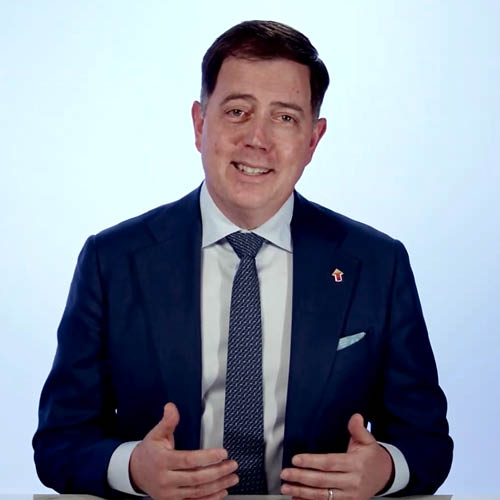
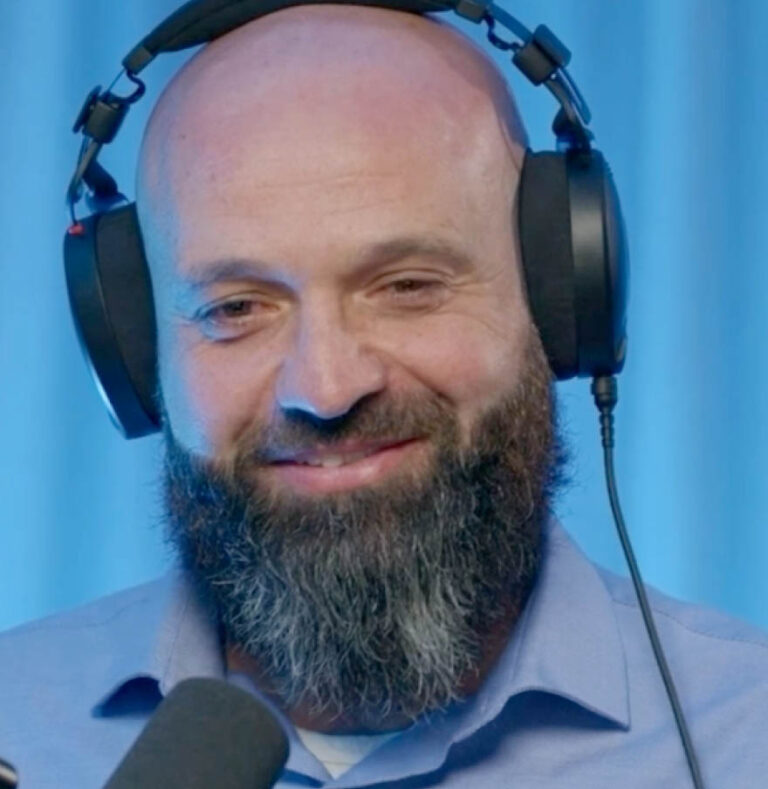
Welcome back to CEO: Behind the Scenes. I'm Laura Nercessian, and today we're exploring what happens when creativity, innovation and leadership collide. Joining me is Jason Fox, Chief Academic Officer at the Savannah College of Art and Design, one of the world's most future focused universities. For nearly five decades, SCAD has been redefining what education can look like, pioneering programs that sit at the intersection of creativity, Business and Technology, from launching applied AI degrees to building Hollywood scale led volume stages for students. SCAD isn't just preparing graduates for the future of work, it's actively shaping it. Jason, welcome to the show. Oh, thank you, Laura, thank you for having me. It's great to be here, where I really wanted to start with this is the fact that Savannah, College of Art and Design, or SCAD, as it's often referred, has always sat at the intersection of creativity, technology and business. Why do you believe that creativity has become such a critical leadership skill, even outside of traditional creative fields? Well, it's an important question to get us kicked off. Creativity is uniquely human, and in an age of technology that's increasingly more important, the value of human judgment and taste inside of all the work we do is very important. And if you take the three pillars of creativity, curiosity, empathy, a care for the audience, a commitment to the audience or the customer or the user, as some might say, when you take intuition, which uniquely connect curiosity and empathy, those things are uniquely human, and they are increasingly more important in a world that is, you know, technologically driven by process and repeatable methods. So I think right now, it's a great time to lean into the uniquely human skill of creativity in in all sectors of industry. When you think about the teaching methodologies, and you know the SCAD classrooms, they don't look like traditional classrooms. They work as these almost creative ecosystems. And so from your perspective, why is this more hands on? Industry aligned learning so essential today. What's centered squarely in our mission to prepare talented students for creative professions. And so our classrooms look like workplaces. Our classrooms look like studios. The technology and the equipment is is at or above the leading edge. So students are using the same equipment that they'll be expected to use when they get on set or they get in the studio or they get on stage, it's very important for us as we mimic and model what it means to be a professional in these industries, in our physical resources, in our built environment, in our technology resources, but also in our teaching expectations, our assignments, our course content, and the way that we ensure that we're consistently and constantly leveling up and evaluating what needs to be taught in the classroom. All of that serves the mission first and ensures that our students are at the top of the stack when it comes to job placement. And you mentioned mission first. What does that really look like? What is the mission behind the methodology, the principles, the way that you do things is so unique. What's really driving that, you know, we our mission comes in three parts, is to prepare stout, talented students for creative professions through Engaged Teaching and Learning in a positively oriented university environment. And that drives everything we do. And so when we have to make big decisions, either financial decisions or tough decisions from a development standpoint, if we can connect it to the mission, will it help students earn better jobs? Will it put us and our students and our alumni in a better position in their careers? Then those are easy decisions to make, regardless of what kind of work it is required to get there. And, you know, I've always loved the adage that good companies have a mission, but great companies have people who are on a mission. And I think that at SCAD, I know that we're so mission driven. Every presentation we start, every time I speak to my leadership teams, we always start with the mission. And that really is, is a testament to our founder and president.
05:00
President, Paula Wallace, who consistently embraces and emphasizes that that point of view, I can see that and speaking about this importance and weight that you put on opportunities for graduates as they enter in the workforce, I read that SCAD was the first university to build led volume stages on campus exclusively for student learning, and students have even designed
full electric vehicles. What has that level of access really done for your graduates when they've entered in the workforce? Well, it's done two things, not only for our graduates, but for our faculty and staff as well. What it does is it amplifies our need to stay in front of what's happening in the industry. It brings that into the classroom, and so students are now equipped with skills. They're equipped with processes. They're equipped with a clear understanding of the environment, not only the academic environment, but the work environment surrounding very expensive technology like that, but also very complicated technology. So they they step on set and they're they're able to work right away. They understand what to do. They understand where to where to walk, they understand where to stand. They understand where you know how to navigate through the technology. So whether they're on set on an LED volume, or in the shop building out an electric vehicle and sanding carbon fiber or tuning the suspension on an electric vehicle. Those are things that when they get out into the workforce, those aren't going to be new experiences for them, and they'll be able to apply their learning in the real world workforce. Say, You know what? I've done this before. I've seen this before. I'm ready for this. We emphasize that in everything that we do in terms of bridging that gap and really giving your students that competitive edge once they do enter the workforce. Do you have any success stories, or any student wins, graduate wins, that you can share that really stand out. I'm sure there's many, but even if there's just like one or two that really are front of mind, we were just talking about Sam and Andrew, who led the electric vehicle projects, and you know how they've gone off and now started their own company around the automobile industry, or Christopher John Rogers, who won the CFDA award, started his own business and picked up by target and among others, he's a fashion designer who who collaborated and connected with his peers who were doing fashion marketing and advertising his colleagues are Now, were his? Were his classmates? Those are quick examples of real learning that happened in the classroom that accelerated business opportunities, accelerated entrepreneurial opportunities for these for these students. But you know, the list goes on. We have students on Broadway who are picked up right out of right out of university. We have alumni who are at senior leadership positions at major organizations. So it's exciting to see that it's an honor to be part of their journey, and we're proud of all of them. And one thing that I really wanted to touch on is AI and Technology and Creative Leadership, because SCAD recently launched a new applied AI degree program and minor
08:24
at an art and design University. And I'm wondering, you know, why was that important to lead AI education from that creative lens? We know that AI is a growing part of all of the industries that we serve, whether it's painting or writing or graphic design, UX Film and Television Animation, it doesn't matter. So we knew that we had to include AI in some capacity, and we we did a couple of phases. First, we started with our AI Summit, which we host annually. We brought leading voices in from from industry, Netflix, Google, some smaller agencies. We had the Motion Picture Association in as well to have it to thought lead and discuss what what AI was. And six in these creative industries. And six months later, we launched the program, which is unique at SCAD because it requires a minor to be attached to it. So you have to major in AI if you minor in photography, or you minor in graphic design, or you minor in animation, which is which is unique at SCAD. And the reason for that is, what we're finding is that students are not creating visuals. They're not creating art or design. You might say, through AI, what they're doing is they're creating they're using AI to improve their workflows. So they come in with a photography point of view. They come in with learning the skills of a modern day photographer, and then they're using AI to build processes and products to make that workflow more efficient. Maybe it's looking through 1000s of images and helping.
10:00
Find inconsistencies. Maybe it's looking through, you know, 1000s of frames of an animation and helping identify color consistencies or rigging consistency. So that's what we're seeing our students using AI right now, and we're excited about it. We're excited the program has been available for about four months now, and each quarter they they be, you know, they show us something, something new and amazing. So we're excited to see how that progresses. And next week is our is our AI summit for 2026 so the conversation continues in the third annual that third annual installment. And what I'm really getting from your response just there as well, is that AI isn't here to replace or restrict the creativity. It's here to amplify it. And so I think that a common misconception, and something that a lot of people are afraid of, is that AI is going to come in and replace all these jobs, or it's going to take away from creativity. But what you're saying and the way that you're positioning it is that it's here as more of an amplification and something that will enhance the creative process. Yeah, I have strong feelings about this, and we could do an entire interview just on this subject, but I'll tell you that there is a misrepresentation that there are just a finite number of jobs out there, and once those jobs are taken over by AI, there'll be no more jobs for humans. Let's say to go broadly with it. The reality is new work. We find new work, and we find new processes, and we find new ways to tell stories and to, you know, to create content. The idea that old jobs or existing jobs will evolve, and some will go away, some will change and evolve, and they'll bolt AI onto it, and it'll look similar to what it used to be, and then new jobs will come out of the AI programs. What I think most people are missing about AI instead, what they're looking for is, what can it do that we can do, as opposed to what can we do with it, and how is work going to change with it? And that's the challenge for any educator right now, is staying in front of that conversation, staying ahead of that that need and that demand in the market, and I think we're uniquely positioned to do that. And one of the things that I wanted to touch on is around bringing technology and this creativity piece together. Because traditionally, people have separated these two constructs. They think that they have a certain conception around what creative careers might look like. They have a certain conception around what more technology careers and and pieces of work could look like. But you're really saying like there's a space and an opportunity to really merge
those two together in what sounds like quite an innovative ways. So could you speak to your perspective on that we've been leading the creative technology space for many, many years. In the early in the 80s, we were the first art and design university to have a computer lab. We started, we launched computer animation and computer art programs. And of course, you know, over the years, it becomes pervasive. And you know, nobody thinks about any of our programs without technology associated with them. And I want to call attention to one in particular that I think that folks might think is a uniquely sort of more industrial type, major like jewelry. We have the largest jewelry design program in the country. They have work benches. They have they cast metal, they melt metal, they hammer metal, they do all the things. But through our sculpture software, they use an animation. It's called ZBrush. There was a connection made between the jewelry program and animation, and now jewelry uses ZBrush, a sculptural software used by animators to help really amplify the vision and the stories that these jewelry artists want to tell. And then that leads to 3d printing and casting and pouring the precious metals and all of those types of things. So that's one example of many where technology is has really enhanced and provided different pathways for our jewelry designers. So the idea that being open to it being consistent with the way it's applied developing curriculum that afford student the opportunity to scaffold learning associated with technology, providing minors and learning opportunities for somebody who might be a one you know, down a down an architecture track, but is dabbling a little bit in accessory design, or wants to minor in ceramics or something to that effect. That's where the true value and advantage of being creative and bolting on and connect making those disparate connections really starts to get exciting and from a really practical perspective and on the students experience as well, how do you help them to not just understand how to use these emerging technologies, but how to shape their impact on their industry and society at large. So we have a fantastic relationship with our industries. I've often folks have often heard me refer to it as a relent being relentlessly connected to the industry.
15:00
We have alumni mentors. We have professional mentors. We have executives and residents who are executives from Hermes and Walt, Disney, Imagineering and Google Ventures and more, who are part of the conversation, not only in the classroom, but in the development of curriculum. And so not only are they providing insight and telling us about how they're doing work and what the expectations are in their organizations. They're also seeing the facilities they're engaging with majors and disciplines that maybe they don't engage with on a daily basis in their organizations, and they're seeing the excitement. They're seeing the opportunities that these students have that this technology provides, and they're saying, How can I get more of that? How can I bring that into my organization? So you might get, you know, fashion designers who've minored in, in applied AI, you know, working at LVMH or at Dior, or you name it. So it's an ecosystem of relational conversation and relational engagement that creates direction. I can see how these kinds of relationships really do help shape that conversation as well, because it goes so much beyond just what you're learning from a theoretical perspective you're really emphasizing not just the application of it, but then those relationships and the emerging trends and industries, and I can see how you partnering with these key industry players, you know, people that are at the top of the game of luxury, like you mentioned, Hermes, you know, or Disney, you know, like all these experiences, how much that really can shape the student experience, and then The impact that they're going on to make in those industries as well. Yeah, imagine for a moment you're, you know, a student you're interested in, you love theme parks. You're interested in our themed entertainment
undergraduate program, which we just launched in the fall. And you can work with, you can you can meet with you can have your work reviewed by the former president of Walt Disney, Imagineering, who led the work at Disney Paris, or Disney Shanghai, who led the work on a galaxy's edge experience in Walt, Disney World Orlando, who can talk about the business impact, who can ask you questions about the return on the return on investment, the revenue generated, what the queue line looks like, how you're going to get people through the line, around all of obviously the creative, the visual execution that you might traditionally focus on. So the theory side starts to get, starts to be reduced into practical, real world application and constraints. And I'll tell you, we have some folks, Bob Chavez, who is the former executive chairman of Hermes America, Bob Weiss, who was the former president of Walt Disney, Imagineering, who students have access to and I have to tell you, when they were in their roles, before they left their roles, when they were in their roles at their organizations, their own employees couldn't get access to them. You know, junior employees cannot call and say, I want to meet with the executive chairman, but our students have access to these folks, and I think that's unique and really exciting and a huge value to the investment that our parents are making, the investment in time that the students are making, and the commitment we have to ensuring that they that we meet the demands of our mission and that they get the jobs that they're looking for. And it seems like, from what you're sharing, that this role of mentorship is something that is really key as well. Could you speak to how you've really seen mentorship play such a pivotal role in, you know, students journeys, but also, perhaps more broadly than that as well. Like, what is your belief about mentorship and the role that it can play on someone's journey? I think everybody needs a mentor, both in their industry, in their organization, but also in life as well. And of course, I've been blessed with mentors that have helped me in every facet of my own life, even disparately connected to the industry that I'm in in education. But you have to imagine that our faculty are coming right out of industry. The majority of our faculty come right out of industry. They're they're mentors off right out of the right out of the gate. And we're teaching them how to teach. We're teaching them the process of of the learning experience and what it means to to scaffold learning in a classroom and help students understand and build these skills. So each each day that that faculty is now teaching is one day further away they get from the industry that they were serving or that they were in prior to coming into the classroom. And so then we add and supplement two things, professional mentors who've not had previously, previous relationship to SCAD. They didn't go to SCAD. But also our alumni mentors, who can say I was sitting in the seat that you're sitting in, and I was here, and I took this class, and I, I remember, you know how, you know, worried I was on this assignment, and what, what the job search looked for, and how.
20:00
I took advantage of this particular event or opportunity while I was at SCAD. So mentorship is critically important to
20:08
the development of all of our students, beyond the skills in the classroom, and we invest heavily into our professional and alumni mentorship programs in the classroom. I want to switch gears just a little bit, because I do want to talk about leadership and your perspective on the road ahead, but looking back at your career, was there a defining moment for you that fundamentally shaped your leadership philosophy? So there's a couple of there's a couple of moments, but I have to with the caveat that, you know, I look at every situation, every moment, every moment with the with the with the people, with the faculty, with the staff that I serve as their as their senior academic leader, as a learning opportunity. And, you know, I am constantly harvesting the good and the bad and learning, you know, where I can amplify, where I can tone down. So to look at a defining moment has always been, you know, a difficult thing for me to do, because I think it the totality of daily work and daily life really is inspiring and is a is a learning journey. But there are two moments that you know. The first moment was in 2012 I had just taken over the graphic design department here at SCAD. It was the first time that I had a leadership role here at the organization where I was leading about 20 faculty. And I had, you know, I was at a moment where I was in front of the group as their leader, and I was, I was their peer, and so now I was their leader. And that sort of the what washed over me was how important the messaging needed to be, how clear the messaging needed to be, and how I needed to model the expectations and the standards that I had of the group and not just talk about them the second time that happened to me. You know, I don't know that I was aware of it. I don't know that I was conscious it was coming. I knew it was coming, but I wasn't conscious. It was the same moment was that I did the same thing when I took the job I'm in now, and I stood on stage in front of 1000 faculty and staff and said, Uh oh, you know, this is this is real, and they're looking to me as the model and as the standard of excellence, and they're going to follow whatever that standard is that I set, trying to model in those moments, and continuing to model and at beyond those moments has been a very humbling and defining, two defining moments. For me, what do you feel like really helped you to step more into that leadership position, because we have a lot of leaders that listen to this podcast. But what do you believe were one of the things, or some of the things that really helped you to step into that leadership, authority or presence and make an impact in a way that you you intended to? You know, I don't know that every, anybody's ever really ready. I would always question somebody who has a clear pathway and pointing to a job and saying, I want to be this one day, or I can't wait to be this role. Or my goal is to be the chief academic officer. It was never a goal of mine. I was just always willing to step up. I was always willing to
23:18
serve the team. I was always willing to deliver the message, to clearly articulate whatever the story or the mission of the project might have been. I think, like most leaders, you stack days on to positive days on top of each other over time, and people start to say, You know what, I like working with him. I think he's got a good attitude. The work he does is, is, is excellent. And I'd like to see more of that, and I'd like that to influence more of the work within the organization. And so that's how I look at people. That's how I look at at future leaders. It's just something that,
23:54
you know, you say yes, and you serve the organization, and you serve the your own mission and your own values, and if those things continue to align,
24:04
you end up as in a senior position. I'm curious to know, speaking about your industry, specifically, what emerging trends or shifts Do you believe that leaders should be paying attention to? Well, part of the early conversation is, is really twofold. One, I'll go back to the part of the earlier part of the conversation where we, you know, creativity is uniquely a human is uniquely and categorically important right now. My industry needs to figure out ways to to develop that and to lean into that. So that's number one. Number two is the job market. We can't be afraid of the job market. We have to stay out of the headlines. We have to stay with the market. We have to understand what Netflix is doing. We have to understand what Google is doing. We have to understand what the luxury houses are doing, and we have to we have to stay with them as they start to as their as their workflows, as their teams, as their jobs.
25:00
As the careers evolve and become something new, and we have to be ready to move quickly to provide that learning to our to our students, because in the end, in the end, the audience is the student. And you know, make, make no mistake, there's a huge, huge responsibility to teach and provide access and provide direction and to provide support and mentorship for a student who wants to be a singer songwriter, a writer, an architect, a designer, and their parents who are investing heavily in this and also committed and all in on those dreams. It's a family decision, and it's very, very important to us that we that we're committed to that in everything we do, not only in the classroom, but in the student experience outside of the classroom and the physical and built environment in our technology resources as well. So those are the two things, lean into the human skills and really stay connected to the industries and be willing to adapt quickly. And for someone that's feeling resistance towards that. Maybe there's a little bit of fear around what that could look like and what that could mean, because the future is uncertain. What what advice or guidance could could you give to those people that are listening? First thing I would say is read up on it or use it when you can ask questions about it. If you're in school, ask your faculty, ask your ask your guidance counselors, your mentors, about it, and then begin to see where it works for you. That's the biggest lesson that our young students can learn to reject outright without knowing, I think, only puts you in a difficult position as it relates to you know, is somewhat, to some degree, the inevitability of progress within these within these disciplines. And so when they're resisting it, they're actually making it a lot more difficult for themselves.
26:52
What's the adage? You know, the AI will not replace graphic designers,
26:58
but graphic designers who you who use AI will replace graphic designers that don't. And there's some, there's some truth to that. There's some real value in that statement. And we are providing the access. Nobody's forced to use AI, use AI, nobody's forced to take an AI class. Or, obviously, if you're, if you choose the AI major, you're forced to minor. But if you're in a major, that's not AI, you could minor in AI, but there's you're not forced to do it, so you get to make those decisions, but it's our responsibility to provide access to the tools, to provide access to the knowledge and the learning. And when it comes to brass tax, and when the industry starts saying you have to have AI in your portfolio, then we have to make some tough decisions about what, what the curriculum, what the curriculum means. But it sounds like you're making decisions in alignment with where those industry shifts are going, before it's forced on you, so to speak. I mean, that's sort of what I'm gathering from you, is it's almost it's the advancement, and staying on the forefront of these emerging shifts is one of the things that you mentioned at the beginning of our conversation was that you were one of those first universities to be bridging that gap between technology and creativity back from the 80s. And so it almost feels like AI is like another iteration of that. Yeah, it is. And today, the computers that were such a, you know, a novelty in 1985 are, is, are ubiquitous. They're in everything. They're they're in our jewelry program. They're in our painting program. I mean, they see all the budget requests. You know, the programs you would think that don't, wouldn't, wouldn't, ask for computers or technology are all asking for it. So we've got, you know, we've got fantastic leaders, we've got fantastic faculty, we've got a fan, we've got fantastic academic leaders who are equally as energized and as excited about serving the industries and providing the resources and the education necessary for these students to go off and live their dreams. And one of the things that you touched on previously was around the student experience, so I would love if you could speak to what that really looks like for someone who may be considering joining SCAD is interested in in learning more, what are some of those things look like, and what could someone expect? Who's Who, who may be new and wanting to come in. So there's two audiences for this. There's there's the prospective student, the student the student is excited about, you know, a career and one of our disciplines. And then there's, there's the parents who are, as I said earlier, part of this journey, part of this commitment to this dream. And the first thing I would do is, I would say, you know, participate in one of our summer programs. We have week long programs. We have five week long programs where students could come in and get a feel in Atlanta, in our campus in Savannah, and get a feel for what the academic experience is like. See the resources engage in some of the the non academic student life. So that's number one. Number two, very quickly, when you start at SCAD, you're going to experience access to all the majors. We have some.
30:00
You know, great majors, minors, fair, very quickly, within the first quarter that students are on campus, students get to ask the department chairs and faculty, you know, they come here thinking, hey, I want to be a motion media designer. And then they find out, Oh, I think visual effects is really what I want to do. And so they start to research and get access to some of these, some of these majors. And it's unique to SCAD in so far as when you choose to come here, you've got a narrow you kind of know what you want to be. 86% of our students identify a major that they're interested in, and they major in that that's that's unique. It's unique to a specialized school like this. As you continue to your program, you're going to be exposed to what we call a business DNA. You're going to be exposed to business classes, business and finance, Intro to business and marketing. You're going to be exposed to the business of whatever your major is. You're going to end and then you're going to be
30:53
exposed to our SCAD pro program. So SCAD Pro is our our sort of boutique consultancy, design consultancy. It's a class that students take for credit faculty led, but it attaches to our to real life partners, whether it's Deloitte or Volvo or Netflix, Reebok and more. It's real projects, real partners, real people from from these companies, working with faculty working with students on a dedicated project, and all students at SCAD are required to participate in that or complete an internship. So now we go back. We've talked a lot about mentorships. We talked a lot about access to professions. We talked a lot about professional mentors and alumni mentors, executives and residents. But in the classroom, SCAD Pro is where you are able to work directly with these brands. It's an outstanding program. Students typically enter it late sophomore, late second, early, early third year, and get access to these brands and to the people in the staff and the hiring managers on these brands. And the ultimate goal is that they experience work with Netflix and ultimately end up on Netflix, Netflix's team at some point in the future. And of course, all that preparation leads to our 99% placement rate with regard to our career. So you know, we're proud of that our 99% of our students within within 12 months of graduating are have jobs or are pursuing higher education. We track that very closely. We are responsible that all of our departments know their numbers and what their numbers are. So it's not something we leave up to students and say, okay, good luck after you graduate. It's very important to us that we track, that we monitor, because that ultimately is the completion of of the mission that we talked about earlier that is such an important distinguishing factor, because I recall back on my own university experiences as an example, and graduating and then going into the real world, so to speak, and having this huge gap that needed to be bridged, and realizing that what was learned in a theoretical classroom was very different than going out and getting the real world experience. And so the fact that you provide that support to ensure that students are able to actually land their first role beyond their time in university is incredible. I'll give you a little anecdote on SCAD pro experience that led to a fun moment in, yes, a young student's career. So they had participated and engaged with Hewlett Packard on a project that we were working on. They had built a relationship with the team at HP. And the team at the time was focused on, you know, augmented augmented reality. And this person graduated SCAD. Ultimately finished the class. Successfully graduated SCAD, and went on to work at an agency. And in the agency, the conversation there was projects, there were projects around the conversation of augmented reality. And this student had access to the augmented reality team at Hewlett Packard, and so she was able to stand up and really step to the front of the room, so to speak, and say, I'll reach out to HP to find out how they think this technology will apply in this situation. And so that's a That, to me, is a is a perfect example of access granted and provided through the education at SCAD that amplified the skill set and put the student at the front of the room in the early days of their career that nobody else in the room had. And there are countless stories like that around around the university. Yeah, that's such a great success story. Jason, I'd love if you could share what you believe is the single most important insight that you would like our audience of leaders to remember, listen and say less. Listen and say less. I think that that, you know, there's so many as you can imagine, higher education. I'm surrounded by some of the smartest people in the world, not only in their education, but they've done amazing things in their careers. They've won Oscars and Emmys.
35:00
And Tony Awards, and they were, you know, VPs of design at major organizations. And so I never try to be the smartest person in the room. It's likely I'm not when I'm in a room, and I always try to listen and try to make sure that I take that excellence, I take that expertise and connect it to what we're trying to do as an organization. And so that's, that's an important message. And what is that saying? If you're the smartest person in the room, then you're probably in the wrong room. That's right. Jason, correct me if I'm wrong, but I read that there's a question that you've said. You've never been asked, but you wish you were.
35:40
What is it?
35:42
What is the question and and how would you answer that? Nobody asks me, why?
35:50
Why I do what I do? Why I come to work with the with the
35:55
attitude that I come to work with, why I commit the time that I commit to the role that I have. I think they assume that the work, the job requires it. But nobody says, hey, look what? How
36:09
come every time you come in here, you know, you've got a positive attitude, or how come every time you come in here, you know? Or how come you stay late? Or How come nobody ever asked me that question and the ant, the simple answer to that question is, you know, I
don't serve the work. You know, I serve the mission. I serve the people and I serve the I love the people that I work with. I try to lead with kindness. I try to, you know, make sure people are included. I try to be clear. But in the end, as I mentioned earlier, we have a very real responsibility to the families who are who are making a collective commitment to send their their children or their students on a journey for their to their dreams. And I don't that's incredibly, incredibly humbling and serious to me, and so that's, that's why I show up, and that's why I do what I do. So I think that's that's the best way I know how to answer that question. Thank you for sharing that. So Jason, here at CEO behind the scenes, we have a closing tradition where we love to wrap up all of our interviews with the same two questions. So the first one is, what is one thing that you've changed your mind about recently, and why?
37:22
Okay, so slightly humbling, but I would say that I've changed my mind. So I'm a second chance person. I always give second chance. I always want to make sure they learn your people are on learning journeys. How can we provide second chances,
37:36
except when they decide to leave? That's something that I used to say, Oh, you Sure. Let me, you know, think about it, you know. Now I just let them go. And I think that, you know, though, that that's, you know, serious way to answer that question. It's, it's something that has become very clear to me, that those decisions are life decisions, and they're not my decisions to all to alter. And now, and now, I let the I let folks make those decisions. A second question I wanted to ask you is, what is one thing that you've not changed your mind about a belief that you'd want to share to help others lead or live better? It's one word. It's trust. It's so easy in this role to begin to not trust people, or begin to not trust work, or begin to not trust that your message is is clear, or that people have heard your message, or they understand the the expectations, or when you walk in something's going to be the way you expect it to be. It's very easy to build a series of transgressions that that erode trust and then begin to not trust. And so I constantly refuse to to not trust. I think that it's important for me to lead with trust, but also be clear when something hasn't gone the way I think it should have gone. And so that puts the ownership on me to communicate that message. And I am very sad for folks who continue to, you know, to you know, move through their career, move through their leadership journey. And trust gets smaller and smaller and smaller and smaller and smaller. And lack of trust, distrust travels. It travels very quickly, and I think it roads erodes an organization. So I've held firm and to the belief that I'm going to lead with trust, and that's something that I've resisted very in some cases, in some cases, in a very difficult way, resisted the urge to not trust. Jason, thank you so much for this conversation. It has been so thought provoking, so engaging, and it's been so wonderful to hear about scads unique approach to education, really blending these elements of creativity, technology, business, together in such a profound way. So thank you so much for joining me for this conversation. I really appreciate your time, and you've made this amazingly easy. Laura, thank you so much. It's been my greatest pleasure.
40:00
Pleasure to have you, Jason. Thank you so much for joining me for this conversation and to our audience. Thank you so much for listening. If you enjoyed this episode, please be sure to subscribe, rate and leave a review and also share this episode with someone who you know will really benefit from listening to Jason's insights and also the wonderful work that SCAD is doing as well. Thank you so much for joining us, and we'll see you next time on CEO: Behind the Scenes. Bye for now.



 140.5K
 1
1


 Host
Host
 POPULAR TOPICS
  FEATURED PODCASTS


 Home
Home
 Podcasts
 Covers
 Community
 Sign In