00:00
Leadership requires influence. Leadership requires understanding the people around you and
making sure that you are connecting with them at a very deeply human level. I think if you can
give people an environment where they can go to work and get meaningful things actually
done every single day, it increases their spirit. It increases their energy. You've made a
conscious decision to have an in person working environment, which you said is is quite rare
and unique, particularly in this day and age for your industry. I realized that up until that point,
I had created a hero based organization, and I was the number one hero you
00:42
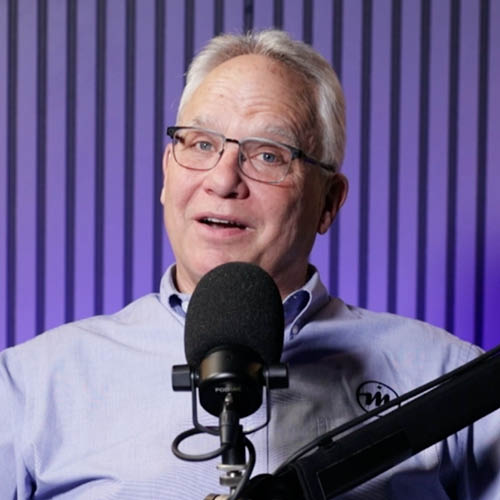
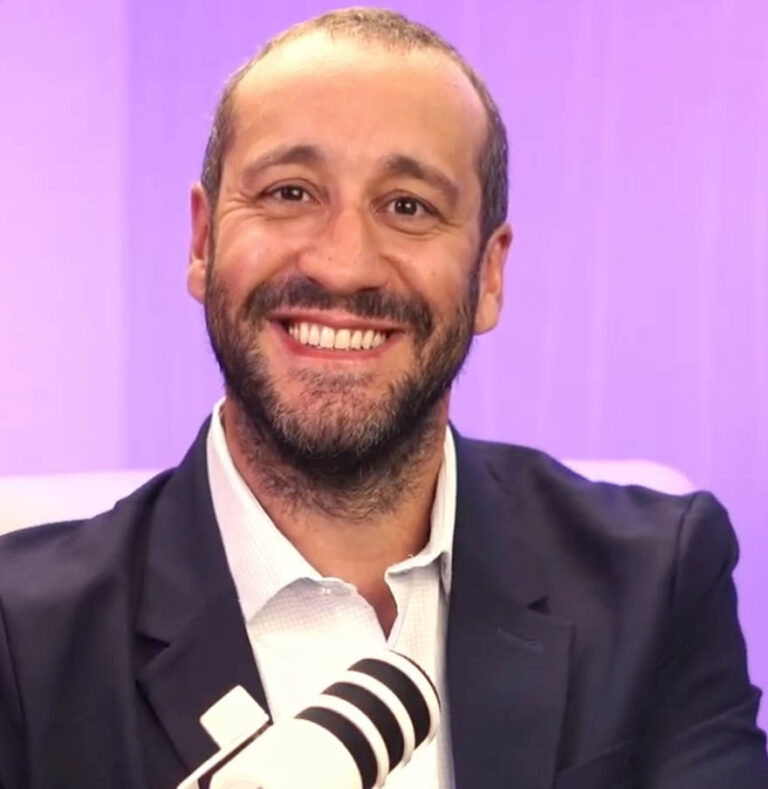
all welcome back to CEO behind the scenes. I'm Lara necessian, and today I'm joined by
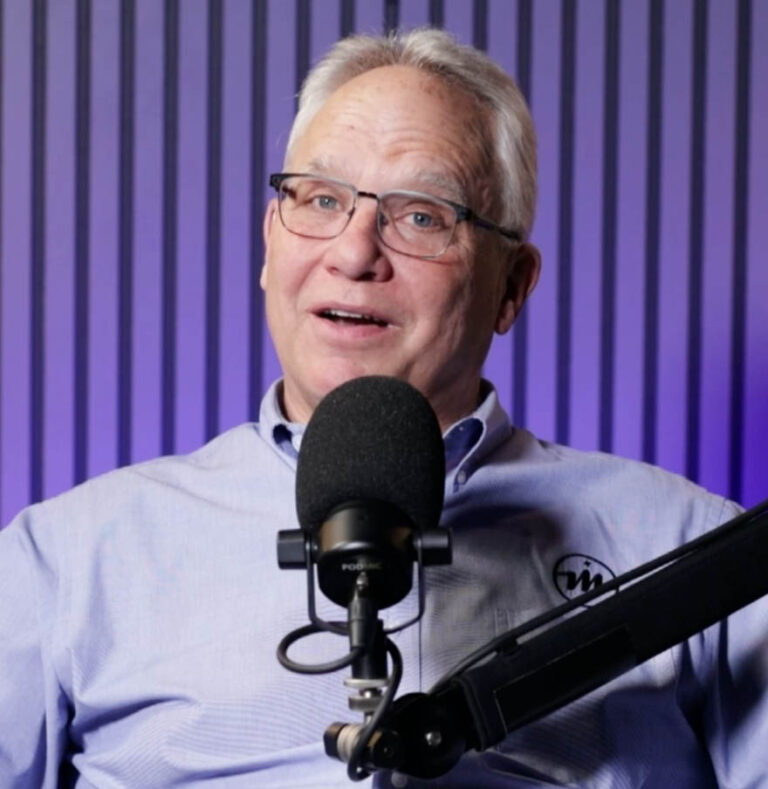
Richard Sheridan, co founder, CEO and chief storyteller of Menlo innovations. Richard has spent
decades proving that joy isn't soft, fluffy or naive, it's a serious business strategy at Menlo
innovations, he's built a global reputation for creating joyful workplaces that deliver
extraordinary outcomes, from space missions to enterprise software transformations. Today
we'll explore how Joy fuels innovation, why paired work is central to learning organizations and
what leaders need to understand about the next great technological breakthroughs. Please
enjoy Richard. Welcome to the show. Great to be with you. Laura. It's so great to have you, and
where I really wanted to start this conversation is the fact that you've built your company
around a bold central theme, joy, not profit first, not scale first, but joy. What does it mean to
make Joy your purpose, and how does that tie into delighting end users with your work. Laura, I
think every company, when they look at their purpose, should be able to ask and answer two
fairly simple questions to ask, not necessarily as easy to answer. Who do you serve and what
would delight look like for them as a custom software design and development firm, our focus
of attention is on the people who one day use the work of our hearts, our hands and our minds.
And if we delight them, if they say what most people never say about software that I love, this
software that is joy for us. So if we can produce joy in the world for those we serve, that's
where we derive joy in what we do for a living, and for leaders who are listening to this who
may feel skeptical about connecting joy, how have you been able to really create measurable
business outcomes and and really find that connection? Well, we've been at this for 25 years,
and we've seen our share of projects over the course of those years, and I'll just start with the
anecdotal evidence. To begin with the people who either find us or seek us out, because we
often don't get to put our names on our work. We are doing software design and development
for others, and they deploy it into their environments, either their enterprises, or perhaps a
product that we've created. And when people find out we did that software, they come back
and tell us, I love this. You made my life better because of what we've done. And we get that
over and over and over again. So that's the first indicator for us that we have produced
something of great value, something that delights the people we intend to serve.
03:43
Beyond that, my previous life, before starting Menlo, was one of disillusionment, and I was a
firefighter. I used to run from fire to fire to fire every single day. For those who know the
software industry Well, you know that we often operate in chaos, and chaos usually leads to big
negative events, firefighting galore. Well, I can say over 25 years, a statistic that I find still
remarkable to this day, is that we've only had two software emergencies in 25 years, and that
isn't a result of having the best programmers in the world or the most capable people. It's
because we created a process within which all the good people who work for us can operate
and produce those kind of joyful results year in and year out.
04:36
Absolutely, I'm curious to know, how did you learn to cultivate calm amongst the chaos?
Because it's very easy for organizations to allow that level of chaos to become the norm. How
did you practically make that shift? And how did you learn to cultivate and create calm?
05:00
Amongst a typically chaotic environment. Yeah, it's almost impossible to ignore my back story
when answering a question like this, because I used to operate in the chaos every single day in
my old life, and at a certain point, I wanted out of the industry entirely. I didn't even want to be
in the software industry anymore. But in that moment, I realized that everybody in my industry
was operating in that same chaotic environment, and I saw opportunity in that. So my journey
led me to authors and books, but not books on technology. I began to realize that the real
problem in the software industry is, how do we organize our humans more effectively. What
simple, repeatable, measurable, visible systems of work can we use that can produce the kind
of results that all of us who got into this industry in the first place really wanted to produce?
Nobody got into this industry to produce bad software to have to firefight every single day. We
always had. Everyone in my industry has this desire to create great things to for a chance to
work with pride. And I began seeking the systems that would produce that kind of work on a
regular and systematic basis. And once I discovered some of these simple, repeatable,
measurable, visible systems of work. I never looked back. And it's been 25 years since we've
been doing this, and I know after that amount of time, what we've found works that's such a
great story. And thank you for sharing that you've said that a joyful purpose changes
everything. I'm curious, what does it change? First, culture, customer experience, financial
performance or something else. You know, I think what you notice when you come to visit
Menlo and many people. Do we get between two and 3000 visitors a year travel from all over
the world just to come see how we do what we do. And when they walk in the room, I often
hear them
07:09
say, Wow, because they can actually feel the human energy of our team. And we are an in
person team, which is very unusual these days, but that palpable human energy is the first
thing people notice, and I believe the first result of producing, of pursuing a joyful purpose. It's
such a powerful depiction of culture, because culture is often something that is actually difficult
to describe in words. It's a it's a felt experience, which I think is what you're really speaking
about. And so when you shifted the focus to be a joy first culture, the first thing that you
experienced was the change in energy, that the change in how people felt, how people would
respond to the environment. Is that correct? You know, I would say that probably the most
squandered energy force on the planet
08:12
is the human energy of our teams in our workplaces. I know this because the Gallup group has
been measuring human organizations, decade in and decade out, and they've been telling us
that 60 to 70% of people are actually disengaged at work. Well, if you walk into a disengaged
workforce, you can feel it. You can see the loss of human energy, the quiet, just people milling
about and not actually getting anything done. I think if you can give people an environment
where they can go to work and get meaningful things actually done every single day, it
increases their spirit. It increases their energy. You get camaraderie. You get banter back and
forth between people solving hard problems over a very long period of time, something that
you touched on is the fact that you've made a conscious decision to have an in person working
environment, which you said is quite rare and unique, particularly in this day and age for your
industry. What was the rationale and thought process behind that decision, yeah, we, like
everyone else, all went home during the pandemic, and that was the first time in our history
that we had been remote from one another. We have always worked in one big, open room, no
walls, no offices, no cubes, no doors. I set out in the room with everyone else, and it was always
this place filled with vibrant energy, with conversation with the people solving problems
together. That's a fundamental element of our culture. When we went home, we made it work,
but we began to notice this degradation in our culture. We began to notice that things weren't
working quite as well as we.
10:00
I remembered them working pre pandemic, and so for us, when we started to recognize that we
work better when we are shoulder to shoulder together, we began calling people back slowly,
gently. We weren't this snap your fingers and everybody's going to come back into the office
tomorrow, kind of culture, but we began reminding people how much stronger we are when we
are together, when we are within eyeshot and earshot of one another, when we can use what
we lovingly refer to as high speed voice technology to get problems solved, rather than sending
electronic messages back and forth all day long. And talk to me about this concept of shoulder
to shoulder leadership, because I think it's quite a powerful but refreshing approach to
leadership. I think I read somewhere that you said something along the lines of, there's no one
in charge, so to speak. There's a chief storyteller, but there's no one that's sitting sort of on top
of the hierarchy. What made you decide that this shoulder to shoulder approach was the way
forward? Yeah, I describe this as preferring leadership over hierarchical authority, and I'm not
saying bosses are bad and leaders are good, because we've probably all had examples in our
careers of good and bad leaders and good and bad bosses. But it's amazing that you don't need
to wait until you get a promotion, till you get the corner office, till you get the box and the org
chart that says you're a big boss now you're in charge. This is the way we're going to do things
from now on. Leadership requires influence. Leadership requires understanding the people
around you and making sure that you are connecting with them at a very deeply human level,
absolutely. And something that you've spoken about and something that you've pioneered
actually is something that you call high tech anthropology. Now this isn't language that we hear
often in the tech space. What is high tech anthropology and how does it shape the way that
you design software? Yeah, people often ask me, why is it that a software team would need
anthropologists on their team. And I simply say that if you accept that, one day the software
will be used by humans. Wouldn't it be neat to understand the humans the way an
anthropologist would in their native environment, learning their workflows, their habits, their
goals as human beings, their vocabulary. And in this way, if we understand the people we
intend to serve the way an anthropologist would more through observation than through
interview. It's not that we don't interview people, but we observe them working. We see where
they make mistakes. We work to design those mistakes out of the ultimate software that we
are creating. And the anthropologists score very high on the empathy meter. Their job is to go
out into the world study people understand what would make their days better when using the
software that we're ultimately going to design, and they assume they're going to make
mistakes, and so they will watch people trying to use their evolving designs, and whenever
they find a place where there is a design construct that the users aren't understanding. We
don't try and explain the user interface to these end users. What we try and do is correct the
interface, to design the errors out of the system, not try and teach people that our wonderful
design will be easily understood once they take a couple of training classes. So we really, really
work hard in our high tech anthropology practice to design the errors out of the system,
understand the humans, use their vocabulary, and make sure that the designs that we are
putting together will be able to be used ubiquitously across the organization, and you've
worked on projects ranging from customizing a CRM package that people initially hated to
designing software for the IMAP space mission.
14:18
Let's talk about that CRM story, how do you take a system that people are telling you they hate
and transform that into something that's really quite special and something that they actually
love? You know, I think it is almost legendary in our industry that when a big package of
software is rolled out to an organization most of the time. The response is, I hate this. It doesn't
do what I need it to do. I don't understand it. Did they ever talk to somebody like me? And the
answer is probably not. And remember, we are the industry that refers to the people we serve
as stupid users, and then we write down.
15:00
These books for those poor people, we believed it could be different. We believe that we could
honor the people we intend to serve by studying them. So when we go in and find a package,
piece of software that everyone hates, we begin to watch them use it. We see where they make
common mistakes. We see where they struggle, where a task that takes 12 Steps could have
been done in four and much more elegantly than the packaged software. The packaged CRM
system typically allows. And so then our designers get in and design a new experience for
those users using the same package software. We're not replacing the package software, we're
enhancing it, and we eventually take those users, from I hate this to I love this, and that, again,
is joy for us when that happens absolutely and something really powerful that you just touched
on is the fact that you're when you're thinking about your end user, you're not just thinking
about how they feel, but you're also thinking of them as highly intelligent individuals. And I
think when you think of people, your dream customers, your buyers, who you're servicing, you
think of them as capable, intelligent human beings, you start to really speak to their power, not
to their weaknesses. And I love that analogy that you gave around writing books for Dummies,
because
16:26
it couldn't be more true. And I think particularly in the tech industry, where it's easy to write off
people as non technical people, but you're really speaking to people. Yeah, we all have our own
source of intelligence in the work that we do, obviously, software people have a very
specialized skill to create complex software on behalf of people who are going to use it. But if
we don't actually attempt to understand the people we're going to serve, we will design
something that works really well for the engineers who built it. And most people don't think like
software engineers. 99% of the planet thinks in a different way, and we want to honor that. We
want to honor how they think in their world, and make sure we honor their vocabulary, their
workflow, their goals as human beings. If we can do that in our software design process, we can
get to joy, and on the other end of the spectrum, the Harrison project for the IMAP space
mission. I'm curious, what does Joy look like when you're building software that will literally
operate in space? I often joke with people that as a software engineer, one of my goals is to
one day build the software for the Starship Enterprise, because I know it's going to need a lot of
software someday. So I feel like the Harrison project and the work we're doing for the IMAP
space mission is my first step to getting to that point of building software for the Starship
Enterprise. But this is a very serious mission. It's studying the interaction of the sun with the
interstellar medium. So it is a project about Helio physics and understanding the interaction of
the heliosphere with the edge of the solar system. And in this way, we are studying people who
do research in those areas. This is a spacecraft that launched just recently, it will be out in
service, probably for the next 20 years, sitting between the Earth and the Sun. For those who
want to get a little technical, it's sitting at the Lagrange l1 point, and at that point, it will simply
use its 10 instruments to gather data about all the things that are going on between the Sun
and the edge of the solar system, and the scientists around the world, the researchers around
the world who want to study what those instruments are collecting will be using software that
my team designed and developed on behalf of that mission. That's incredible. How does that
feel to know that you are working on software that is being utilized for such revolutionary
technology in space. You know, I think everybody who's in the software industry often talks of a
launch date for a piece of software, but in this particular case, there was actually a launch date.
There was a day in late September where the spacecraft took off and started moving the
million miles it was going to move to get between the Earth and the Sun, and that is a feeling I
I've never had in any project I've ever worked on. When the launch date itself was a particular
moment in space and time, Richard, I want to talk about paired work and learning
organizations. So I want to shift the conversation just slightly. One of the most distinctive parts
of menlo's model is this concept of paired work.
20:00
Like two people, one computer in a world that is utterly obsessed by individual productivity.
Why do you believe that paired work is so fundamental in terms of building a learning
organization? I think most people actually aspire to build a learning organization. I was
personally inspired by Peter Senge book The Fifth Discipline on the art and practice of building
a learning organization. I knew this was going to be important this day and age. Everything is
changing so rapidly we have to be learning every minute of every day, or we'll be falling
behind. So our idea of putting two people together, sharing a computer, shoulder to shoulder,
keyboard and mouse, floating effortlessly back and forth between the pair of developers or the
pair of high tech anthropologists, is our fundamental unit of work. We assign those pairs and we
switch them at least every five working days. The human energy that results from that alone
when people are transferring knowledge back and forth, you can actually feel that energy when
you're in the room, because we have to learn to think out loud. If I am sitting with another
person, they need to know what's on my mind as I'm typing in the code that I'm typing in their
job is to question me, to ask me about the work that I'm doing, to challenge me, to make sure
I'm doing it correctly, to see the errors as I'm making them. The effect on quality alone is just
astronomical. But what's happening really between the two people is they're sharing what they
know with one another. They're building up each other's knowledge day by day, minute by
minute, and so our team is growing by an inch every single day simply because of this
construct. And when we switch the pairs, that's another mechanism by which we're transferring
even more knowledge. Because if you and I are paired together for five days, and then I'm
paired with someone else. I have to bring them up to speed on what you and I have worked on.
Well, that means that there's now three of us that are familiar with this, and this avoids a
serious problem in the software industry that has plagued us forever, this idea of a tower of
knowledge where there's one person on your team who is the only person who knows a single
part of the system, and no one else knows what they know. And the trouble with those kinds of
systems is that they are hero based, and the only way to scale them is to scale the heroes, and
the only way to do that is overtime. And once a programmer hits about 51 hours, they start
putting more bugs in than they're taking out. Tired people make bad softer. We don't want to
make bad software so we're not going to have tired people. It's such a unique perspective. It
really is. And I'm curious, for leaders that are thinking about culture transformation, what is
that mindset shift required to move from that individual, heroic perspective and reality to a
more collaborative craftsmanship. Yeah, a team of heroes isn't really a team. It is a bunch of
individual contributors who are learning to work together in a particular way, and often there is
difficulty, difficulty of transferring information, turf wars between the individual heroes. When
you finally shift to a team based environment like we have, you begin to invoke one of our
three core values, helping others succeed. And this idea of helping others succeed is
fundamental to our culture
23:42
at this point. Now I'm at least as concerned of getting the work done as I am making sure the
person who's seated with me is growing along with me as we're doing the work. I'm curious
what gave you the confidence or conviction to be able to make those kinds of decisions to
begin with, because there's something about stepping into a leadership position where you feel
you need to do things a certain way, or there's a certain expectation in terms of the manner in
which you lead. What I'm picking up on throughout this conversation is the fact that you've
been so willing to do things in such a unique way, even when it might not have seemed like a
popular or traditional approach. Where do you feel like that? That confidence came from. The
Sheridan family is an Irish name, and it has a coat of arms that, when translated, says the
staggered Bay becomes a lion. And I asked my dad once, what does that mean exactly? And he
said, Richard cornered rat fights. And I felt like I was cornered in my career, during my trough
of disillusionment, days when I was trying to escape all of the.
25:00
Firefighting and the long nights and the delivery of bad software, I recognized that either I was
going to change this system or I was going to get out, and so I began pursuing serious changes
along the way. And I remember one of my team members, somebody who worked for me at the
time, and this was prior to Menlo, I had had a wonderful two years of experience where I could
prototype much of what would become Menlo. And this gentleman who worked for me for many
years came up to me and he says, Rich. I I can't believe you took these risks. Why were you
willing to do that? And I said, it was actually quite easy. I said, because you're looking at the
fear of change. I was looking at the fear of staying the same.
25:46
I had much greater opportunity to accomplish what I wanted to accomplish if I changed when
the fear of staying the same
25:58
is less than the fear of change, you begin racing towards change once I crossed that bridge, in
my mind, I never turned back. I really love that, and it's leading me towards asking you around
a pivotal moment in your career that you said really stood out for you because you were
offered a promotion to become VP of R and D, you turned it down, and the next day you
changed your mind, and you took it walk us through that moment. What was happening that
initially caused you to say no, and what was it that changed overnight? Yeah, when my boss
then back at the company I worked for before interface systems, when Bob Nero asked me to
take on this role of VP of R and D, my answer was fairly quick, and it was a no, and I said, Bob, I
don't want to sign up for the uncapped personal commitment of being a VP on the executive
board of a troubled public company.
27:04
I was worried that I would have to give my life over to this troubling trajectory, and so I told him
no, and I will tell you, he was fairly upset with me. He was convinced I was the right guy to lead
this team. And I went home that night, and I reflected on the opportunity that was put in front
of me. And I started thinking about all the books I've been reading, and I started thinking about
all the opportunities that I wanted to take control of in my life, to get to a better place in my
career. And I realized this was my moment. This was the moment where I could actually step in,
take charge. I wasn't even sure where I was going to go at that point. I just knew I was ready. I
was going to lead a change inside that team. So I went back to the next morning, and I told Bob
that I would take the job on one condition. And he found me offering him conditions as to be a
little challenging. And he said, rich, you quit on me yesterday, and now you're back saying yes,
but on one condition, what's the condition? And I said, Bob, I need your help. I'm going to build
the best damn software team that this town has ever seen, and I know I'm going to need your
support to do that. And in that moment, everything changed. Bob was absolutely the support I
needed. Every time I slowed down, every time I wavered, every time I doubted his gentle hand
was on my shoulder and he whispered in my ear, I've got you covered. Rich. Keep going. You're
doing the right thing, and that's all I needed to make, all the changes that I needed to make to
get to that point of building this best damn software team that a town had ever seen, and
ultimately that led to the creation of memo innovations such a powerful story. How did that
decision really shape the leader that you became? What impact did that have on your
leadership approach? You know, I realized that up until that point, I had created a hero based
organization, and I was the number one hero. And the only way to scale those hero based
organizations is to scale the heroes. The only way to do that is over time. I still had young
children at that point, and I didn't want to miss the best parts of being a dad. So in that
moment, I realized I needed to let go. I needed to elevate the people around me. I didn't need
to be the strongest, loudest, most powerful voice in the room. I could create an environment
that allowed all the other voices on my team to rise up and actually begin contributing at the
level they were capable of doing. You've spoken about fundamental underlying beliefs, always
finding a better way and taking a long term perspective. How are those beliefs tested in that
moment? I think I.
30:00
Always believed there was a better way of doing things and was customary, and I was simply
determined to find it. And I think the other belief I've always had, and has proven out for me
time and again, is even when I don't know what I'm looking for exactly when I proceed on a
path like this, I know I will know it when I see it, and I did. I really, really love that perspective.
You mentioned your dad, and you've said that there's a question you're rarely asked, but wish
you were how your dad and your oldest brother influence you toward a technology career. So
let's ask that question, how did they really shape your early thinking, and what did you absorb
from them about curiosity, craft or discipline? You know, my dad worked a regular job inside of
a very large automotive company, General Motors, but he worked at the engineering center for
General Motors, and he would take me in there as a young kid, 910, 11 years old, and I would
see all the miraculous things they were working on at the Technical Center at General Motors.
And I remember just being so engaged around seeing these inventions all around me. My dad
was a reader. He was always believing that the next invention would create some great new
advance in medicine or in society, and he was always reading books and putting things in front
of me to make sure I was paying attention to those things. So he really inspired me to
recognize that technological innovation is often the way that our society moves itself forward.
He was always very optimistic in those ways. My brother, on the other hand, was one who
probably was listening to many of the same stories my dad was telling him. He was eight years
older than me, and when I watched him start to work with computers, and he was probably 18
years old at the time, and I was 10, and I was just fascinated when I saw him on a chalkboard in
our garage writing out on that chalkboard for trend code, I just wanted to know what that was
all about. So it's funny, he eventually became a lawyer and left the technology field entirely,
but he inspired me to a technical career of my own. And the hindsight is such a beautiful thing,
and when you look back now, can you see those early seeds of that joyful, learning, focused
organization that you would come to later build Absolutely. For one thing, our house was filled
with books. It had so many books that my two older brothers actually created a card catalog
system and set it up like a library throughout the house. And so I think simply being surrounded
by books like that, all the different kinds of books that were exciting a young person's mind to
learn about what was going on in the world. And for me, that was just such a great environment
to grow up in and always be in that Learning Mode constantly. We're in an era of AI
acceleration, constant disruption and short term pressure. How does your experience building a
company around joy and long term beliefs offer a different perspective when it comes to the
challenges of today? You know, if we look at the word joy, and people often ask me, what is the
opposite of joy? I would say in most organizations, the opposite of joy is fear. If you write a
book called Joy, Inc, I could write the opposite book called fear. Inc, and the trouble with fear,
especially this day and age, is that when we're operating in fear, it literally shuts down a part of
our brain, that part of our brain that makes us the most human, the part of our brain that
produces the four things that I don't believe AI or machine learning or big data or robotics will
ever erase from the human experience, and They are creativity, imagination, innovation and
invention. Those are hours and hours alone as humans. But if we are pumping fear in the room
as we're leading our team, if we're focusing all of our attention on KPIs and stupid quarterly
death marches and all those kind of things, we literally take people out of their most human
brain, reduce them to reptile brain, and we've lost those four ingredients that make us human,
the creativity, the imagination, the innovation and the invention. So I would say for leaders
today, it is incumbent on us to pump fear out of the room and pump joy into the room, and we
will get the best possible performance.
35:00
From our teams. Do you think that leaders sometimes underestimate the power of durable
principles in volatile environments? You know, I think that it is so easy for leaders to get caught
up in
35:17
the moment, in the week, in the quarter, in the year, and we forget that it is actually the long
term efforts of work done very well over a long period of time that produces the greatest
results. Absolutely, when you speak about the compound effect of that, a lot of the time it takes
a long time for that compound effect to actually kick in. So how have you learned to cultivate
that trust that all of those efforts are compounding toward the direction that you want them to
you
35:55
know, I think we always have to look as leaders at
36:01
the accomplishments. That we've already gotten to if we think about creating anything great, it
does feel like a like climbing a mountain. And every once in a while, if you're climbing a difficult
mountain, you should stop, take a breath, turn around, look back down the mountain and see
how far you've come now, then you just turn back around and get climbing again. But those
constant moments of reminding ourselves, look how far we've come, this is critical to us as
leaders, to remind ourselves that those long term investments, those durable principles,
actually produce the kind of results that we want, and yes, it's always slower than any of us
want. I have a patient persistence inside me that actually does lead to impatience, and I want
to push things faster and farther than probably my team does, but I recognize that it is the long
term view that gets us to where we really want to go. And you've also said that big
technological breakthroughs happen on a regular, almost predictable basis, and that quantum
computing may be the next one that eclipses all others. What should leaders be paying
attention to right now to avoid being caught flat footed. Well, build that learning organization
that we talked about earlier. If we're not learning all the time, we will miss something big. We
should be paying attention to everything that's going on around us. We should keep ourselves
in sort of full spectrum mindset to watch what's going on around us. When I refer to quantum
computing, I think one of the things that we should always watch in our industry is that the
inexorable march of Moore's law, for example, where computers get more powerful, twice as
powerful every year and a half or a couple of years. That March has been going on for decades.
That kind of exponential growth is going to continue. People say, Oh, we're going to reach the
limits of the current chips and so on.
38:11
This is the inexorable march of mankind. We will always find a way to get to that next level of
power, of computational speed of density of transistors, all of these things will keep pushing us
forward. And when I see the big challenges that face the world today, I see the opportunity just
over the horizon of the things that we can turn into reality with the hard work of our teams to
change the world in a positive way. And that, to me, is just probably the eternal optimism that
my father put in me so many years ago talking about that
38:53
impact to the world in a positive way. I want to talk about the Menlo magic, your books, Joy Inc,
and chief Joy officer have resonated with leaders all over the world. Why do you think that joy
Inc, has stood the test of time? Yeah, I think there are timeless principles in joy Inc, that do
stand the test of time. The book has been out for about 14 years now, and what I have seen is
the number of people who are reading it today who are still finding valid lessons around this
idea of the lift of human energy, overcoming the weight of bureaucracy and the thrust of
purpose, overcoming the drag of fear. All of these things are operative, just as operative today
as they've always been, some of the challenges that face our business organizations are the
same challenges that have faced them for the last 100 years. We're obviously applying new
technological approaches, but humans are largely still the same, decade in and decade out,
and for someone.
40:00
Listening. Who wants to bring a little bit more of that Menlo magic into their own organization?
Let's just say tomorrow morning, what's that first small step that they can take? Yeah, when I
give talks on this subject, I can usually get a big crowd very excited about making changes the
next day in their environment, but I know that the people who didn't hear what they've heard
and didn't see what they saw won't have the same reaction as this inspired audience will have.
And someone will go back to the office the next day and say, I have this great new idea based
on a talk I heard yesterday, and the other person will say, Well, that won't work here. That's
against policy. We tried that a year ago. It didn't work. Then it won't work now, and I know the
idea dies on the vine right there in that moment, because everybody's busy. We have to go to
our next meeting, we have to get our next email answered. But I want to arm people with a
simple phrase, when that happens, look them in the eye and say, I get it. But why don't we try
it before we defeat it? Let's run the experiment. And it's amazing how powerful that phrase can
be, because when people hear experiment, they shrug their shoulders and say, Yeah, I get it.
Sure we can try it. I mean, what's the worst that can happen? We tried something that didn't
work, and suddenly we get human energy moving forward. We start taking action, versus
taking a meeting. We don't set up a committee to write a policy. We start trying stuff. And if we
can get our organizations on the road to trying things, little things. They don't have to be big
things. Every single day we will begin this see the change we want to see in our world. It's such
a powerful concept. It really is, because human beings, by nature, are very resistant and
reluctant to change. There's something about framing up new concept as an experiment,
something about the impermanent nature of that that actually creates a lot more of a
permission to say, what have we got to lose? So I love that concept, and I love the word
permission. In this case, I think we do need to give our teams permission to try things. And
once we do this, we begin to unleash their potential inside of our organizations. We we start to
see that everyone who works for us is probably stewing some idea in their mind that is being
prevented today simply because we didn't give them that kind of run the experiment
permission in our organization. I really love that concept. Richard, you've achieved so much,
and there's so many incredible pieces of work and projects that you and the team at Menlo
innovations have been working on. What is it that you're really excited for next? What are you
looking forward to? Well, your audience can probably tell I'm getting to be an older guy. I've
been doing this for a long time, and what I'm excited about personally now is essentially
transferring this to the next generation of leadership for memo to make sure that this thing that
we've created survives and and outlives me. I believe that that's the next frontier for me is,
how do I pass the torch? I'm not in a hurry to retire. That doesn't that word doesn't even make
sense to me, but I do know that I'm not going to live forever, so I need to make sure that I have
successfully pass the torch under the next generation of leadership that will carry Menlo and
other organizations like it forward for decades to come. Here at CEO behind the scenes, we
have a closing tradition. We always love to end all of our interviews with the final two
questions. So the first one is, what is one thing that you've changed your mind about recently,
and why? You know, I think always, for me,
44:09
the opportunity to change our minds about people. You know, there are times, even at Menlo,
where I might start to doubt when I start to look at maybe a set of people on a team and
saying, I'm not sure they can do this. And then
44:28
I watch them do something I didn't expect them to do, and I'm astounded by it, and I realize in
that moment I have to change my mind
44:42
in that moment about the team that is carrying us forward to see them accomplish things that
seemed impossible before, and now they're just doing it. And the excitement that they bring to
it, and the energy they bring to it is just palpable.
45:00
People, and so when I see that happen, I realize that I need to always be in that mode of being
willing to accept that I might not always have the beliefs that I need to have, and that the
people around me can change those beliefs in an instant when they start doing the things that
I've seen them do. And question two, what's one thing you've not changed your mind about a
belief you'd want to share to help others lead or live better.
45:33
W Edwards Deming, the quality guru of the 20th century, had this great saying that I just loved,
and it was this, all anyone asked for is a chance to work with pride. And if we leaders can
recognize that our people, our teams, want to work with pride, we can unleash the energy in
those teams and allow them to do the things that they were made to do. Richard, I have so
enjoyed this conversation with you everything from hearing how joy can transform not just
culture, but the very way that we build and design technology, and also your concept around
paired learning and creating a learning culture is really quite profound. So thank you so much
for joining me. Were there any final words, anything that you would like to leave our audience
with today that we haven't yet covered, or just a final message that you'd like to share? You
know, Laura, I think people will hear some of the things we talk about, and they will naturally,
and I understand perfectly, be doubtful, be skeptical of the things we talked about, and we'll
also be skeptical whether those things could come home and help them in their own
organizations. What I would encourage your audience to do is come visit us, and in the old
days, it always used to involve getting an airplane flying into Detroit, driving out to Ann Arbor
and spending a day or two with us there. And that could be cumbersome, that could be
expensive, and that could be time consuming. We have learned since the pandemic how to
allow people to take virtual tours of Menlo. And since 2020 we've had people visit from 77
countries and 47 US states, just simply by the click of a button. And then they can see for
themselves. They can decide for themselves where they they're that they actually want to
believe what it is you and I have spent this time talking about and so I would highly recommend
that people click on that link come visit or get on that airplane and come see us, because there
is no way we can perfectly describe in a conversation what they can see when they actually get
into the room. That is a fantastic offer and opportunity. Thank you, Richard, thank you so much
for this conversation. I've absolutely loved speaking with you today and hearing about all your
valuable insights. Thank you. I really appreciate the opportunity. Thank you so much. And to
our listeners, if today's episode sparked something within you, please don't forget to subscribe,
rate and leave a review and share this episode with someone who you know will really benefit
from listening to Richard's insights that he has shared with us today. Thank you so much for
joining us, and we'll see you next time on CEO: Behind the Scenes.



 387.8K
 3
3
 1
1


 Host
Host
 POPULAR TOPICS
  FEATURED PODCASTS


 Home
Home
 Podcasts
 Covers
 Community
 Sign In