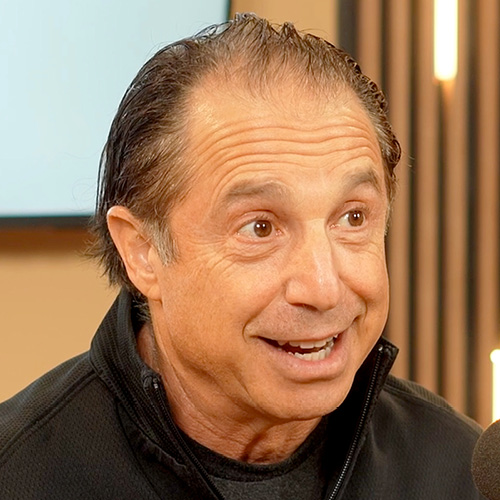
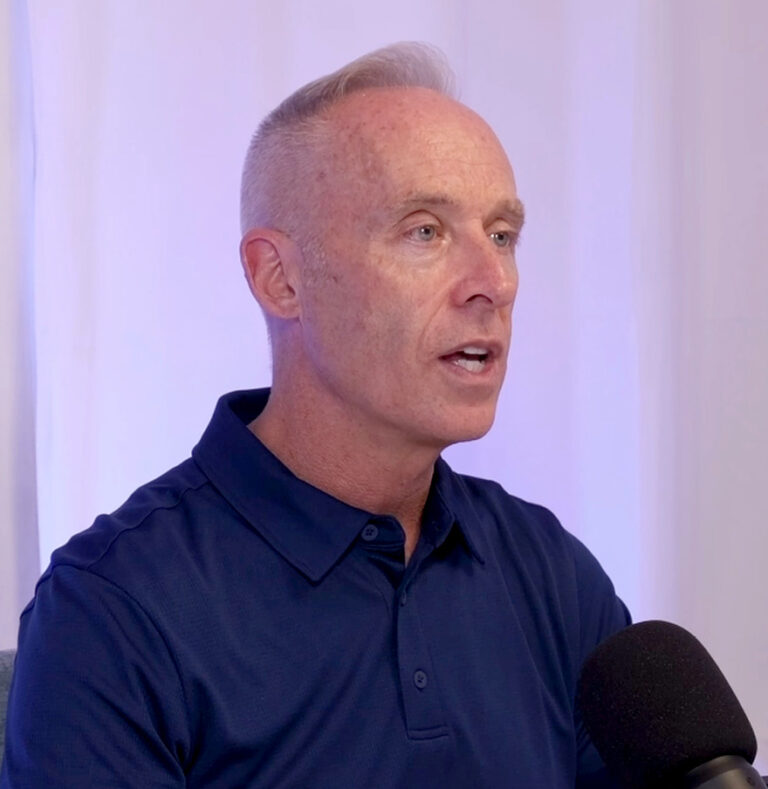
Speaker 1 00:00
So I said to my assistant this year, I like to some crazy like you to find me an elephant. I'd like to ride the elephant into the annual meeting. And I rode the elephant into the annual meeting. And the message was, if you think big and act big, you will be big. Let's do a billion dollars.
S
Speaker 2 00:18
Ai, readiness is leadership. Readiness. What do you mean by that
Speaker 1 00:24
S
there'll be two kinds of companies by the end of the decade, those that have fully embraced AI and those that are out of business. I truly believe in thinking big.
S
Speaker 2 00:44
Welcome back to CEO behind the scenes. I'm Laura necessian, and today we're talking about leadership that's built in the real world, not on paper. My guest is Mark Moses, founding partner and executive chairman of CEO Coaching International. He's coached some of the world's fastest growing CEOs, and his philosophy is simple, think bigger, move faster and build the systems that turn ambition into results. In this conversation, we'll get into AI readiness as a leadership edge, why coaching has become a competitive advantage, and what it really means to live lead and hire big mark. Welcome to the show.
S
Speaker 1 01:34
Thank you for that eloquent Aussie introduction.
Speaker 2 01:38
S
It is my greatest pleasure. I'm very excited to have you on the show, and I feel like we're going to have a great conversation. And where I really wanted to start with this interview is the story that shaped you. There was a moment where your company collapsed almost overnight. What happened and how did you respond to that?
S
Speaker 1 02:04
So this during my entrepreneurial journey. So it was 1998 we were killing it. I was 32 years old, making a million dollars a month in profit, thinking, wow, I am good, until Wall Street decided to pull out of my industry, and we went from making a million dollars a month to losing a million dollars a month overnight and literally over the weekend, we had to Lay off 240 of the 275 people that we had, and it was rough and it was sad and it was very hard to do, and but our industry just ended in a day, and we kept 35 people to try to reinvent ourselves, and it was far too many. It probably should have gone down to maybe two of us, because we burned through all the additional cash that we had, and we suffered for two years trying to reinvent ourselves. We decided we could not. We had borrowed all the money we could from family and friends, credit cards. I was million and a half I borrowed from family and friends, and I couldn't even get $500 more on a credit card. We decided we weren't going to make it. So we decided we were going to file bankruptcy, and had been after suffering for two years. Two days before we were going to file bankruptcy, my business partner went to listen to a speaker who had just sold his business for 150 million in cash. And at the end of the presentation, my business partner was a great guy and a charming sales guy went up to the speaker and said, Hey, that was amazing. We'd like to do that someday, but we're going out of business on Friday, and maybe you consider taking a look at our business plan, and maybe you can consider invest in us, us a couple of young guys, and the next day came back to us, and he had 33 questions, and we had nothing to do because we were going out of business the next day. So we spent a few hours answering his questions. He said, I'll let you know tomorrow. And we said, with time, because we're following bankruptcy at noon, and that morning, at 10 o'clock, he wired a million dollars and saved the company. And then we went on to build an amazing company that we eventually sold in 2006 and we built our business to 1.6 billion in annual business, and then exited we were in the mortgage business. And imagine being so lucky and fortunate to exit in 2006 before. The global meltdown began in 2007 so I learned to better be lucky than good. What a story
Speaker 2 05:10
S
to get to that point where there's literally two hours left to file for bankruptcy and you receiving this funding that just changed the course of everything is is incredible. And what I would love to know is, when you first had that experience of almost everything disappearing in an instant, most people would have walked away from that situation, but you decided to keep going for that two year period. What was it within you that had that feeling that we're not ready to close yet, we don't want to fold yet
S
Speaker 1 05:53
and never give up attitude, just no matter how hard it gets, just never give up and keep trying, keep trying to reinvent yourself and look in life. Timing is never perfect, so when October happened two years later, and my nine month pregnant wife was looking for apartments to rent because we were going to lose our beautiful home, the yacht, even the one year old, was up for sale at the time. Fortunately, we survived. My wife was a great sport and very encouraging despite being nine months pregnant.
S
Speaker 2 06:35
Wow, that's extraordinary. And correct me if I'm wrong, but while I was doing my research for this episode, I read that you once climbed onto the back of an elephant and rode it through a parking lot. Firstly, is that true? And secondly, what did that moment represent for you and for your team?
Speaker 1 07:00
S
That's a good question and a good story. So the guy that was the best man in my wedding, I gave him an opportunity to build a division for our company. It was wild, wildly successful, and we were growing and growing and growing crazy good. And then one day he said, I got this dream job, and I'm sorry, but I got to leave you, and I'm resigning to take this dream job on Wall Street. He didn't really have a dream job on Wall Street. He set up a competing business two blocks away and took 80% of the people out of this new division with him, and walked down the street. We had just signed a lease on a new space that would hold about 300 people, and moved into it with 12 people, and it looked like we weren't going to make it at that time. So I said to my assistant, I'd like to some really big for our annual meeting this year, we would do an annual State of the company where we'd share the vision and recognize the people that made a difference in the past year. And so I said to my assistant this year, I'd like to some crazy I'd like to like you to find me an elephant, and I'd like to ride the elephant into the annual meeting. She said, Well, what about how we're gonna get the elephant in the room? Well, turn on the wall and we can have it built back up. And so anyway, she thought I was under a lot of stress and I was crazy. Maybe that was some of that was true. So she found me an elephant from a company called have drunk will travel. And I rode the elephant down the street in a city called Irvine in Southern California. And she had torn down a wall in the building so the elephant could crawl into the building and and I rode the elephant into the annual meeting, and the message was, if you think big and act big, you will be big. Let's do a billion dollars. So our team was just looking at me like I had gone mad, and it was like they were laughing, they were crying. They just couldn't believe it, you know, taking photos, and thought it was nuts and and it was covered all over the media and front page of all the local papers. And and it was on the evening news, the morning news. And it took eight years, but eventually we did a billion dollars. And the year I sold my business, we had done $1.6 billion and the elephant became part of who we were, and it even is carried with me still today, even though that that was That event was 29 years ago.
S
Speaker 2 09:53
But what I'm really getting from this is there's such an audacity to make such big. Bold moves like what the elephant represented, and then the vision for building this billion dollar organization. How did that experience change the way that you think about belief, momentum and culture inside of an organization,
S
Speaker 1 10:21
I believe first that anybody can achieve anything they want if they first believe in themselves and and then you got to get buy in and alignment from the people around you. So if your vision is very infectious, it's amazing what you can get people to achieve. And it it also taught me what Henry Ford used to say, if you think you're if you can or you can't, you're right. And so taught me a lot of good things about belief and getting things done. And that's why I've always believed in thinking big. I even wrote a book called make big happen. And second book called making big happen, and the third book that I'm publishing here in the coming months is called built to win big. I truly believe
Speaker 2 11:25
S
in thinking big. Well, I really want to get into your think big philosophy, but before we do, I want to touch on something which is around mindset and belief, because you say that coaching is more important today than ever. What do you believe is driving that?
S
Speaker 1 11:45
I think there was a time that people were too proud to ask for help and and there's still some countries around the world where that exists, for example, many in India, for example, believe that coaching comes from family members, and even McKinsey had a really tough time breaking into India. I would also tell you, having done speaking engagements in Spain, in Spain, they believe that coaching is for people that failed out of whatever they were doing, and they decided to name themselves a coach. Well, I have been coached in sports since I played tennis in high school and was the number one tennis player in my city. Then I took up squash and became the US squash champion. And then I took up running and Iron Man and triathlons, and I've done 12 of those and 12 Iron Man's, and done the World Championship in Hawaii Five times. And I had a coach for everything. I've had coach in business since I was 24 I've had a few great coaches over the years, and they've helped bring out the best in me. So a coach can be whatever you need it to be. It could be inspiration to maybe help you believe that you can achieve something that you haven't even thought of yet. It could be to help you think bigger. It could be someone to hold you accountable or check you on your own blind spots, how you're showing up as a leader and dealing with your own insecurities, maybe your own imposter syndrome, whatever it is. So coaching can really make a difference in bringing out the best in in someone. So I would say in many parts of the world. We operate in over 80 countries, coaching is continues to become more and more popular and is growing at a much faster rate than consulting today.
Speaker 2 13:53
S
I think it's so interesting what you said around the shift and the willingness for people to become more open to receiving coaching, and how perhaps some of that previous stigma has really shifted and continues to evolve. Because previously it was something must be broken or something must be wrong. But what you're really saying is that there's this desire to go from good to great, and the greats are the ones that are willing to continuously evolve and grow and refine themselves over and over and so I'm curious to know, from your perspective, what do you believe really separates the CEOs that go on to do great things versus the ones that perhaps stall or stay stagnant.
Speaker 1 14:42
S
Four things. Number one, they think big. I'll take you to the concept of zero. What happens if you take your revenues today, and let's say they're 40 million in revenue or annual turnover, and you add a zero to the end of that, you. That 40 just turned into 400 million. What would
have to change in your organization for you to achieve that? What would have to change about you for you to achieve that? And so number one is the ability to think big. Number two is determine what the specific and measurable activities are that you and your team will keep score on that will drive the outcome that you want. So for example, when I ask I speak all over the world, when I speak to CEOs, I'll ask them, if you to tell me what the number one specific and measurable activity that you and your team are keeping score on that will drive that number one outcome that you want for the year. What is it? They stare at me, and anybody have an answer, anybody want to take a stab at it, and they'll typically give me an outcome. They'll give me the result, not the activity that will lead to the result. And so I'll push them a little further, and then they might give me a theme, like, I need to grow sales. Was gross sales and activity. It's not an activity again, it I'll just call that. That's a concept, grow in sales. And those that can figure out what's the specific activity that will lead to the outcome that they want. Those are the ones that advance. Third point is, hire the absolute best people. If I were to ask, I do it all the time, ask a group of CEOs this question, how many of you would rate every member of your leadership team an A, as in an A, B or C, or maybe worse, show hands. How many would rate every member of their leadership team in a in a group of maybe 300 people, I might get two hands, and one of those hands might be tentative, okay? Would you enthusiastically rehire everybody on your leadership team again if you could? And the answer is almost always no. For all of them, do you believe your current team will take you where you want to be a year from now? You might get 20% say yes. How about three years from now, it's always nobody. So then I have learned that a players want to hang with a players, and like Jim Collins, who wrote Good to Great, as you mentioned earlier, said, The only way to deliver to the people achieving is not to burden them with the people that aren't achieving. I've also learned when in doubt, there is no doubt, and how one shows up some of the time is how one shows up most or all of the time. And then when I've asked CEOs and leaders, well, how many people have you fired too soon, and they'd all laugh. The answer has always been zero. Nobody ever really fires anybody too soon. But they vacillate for a month, six months a year, some 10 years. And then everybody says, you know, after the all that guilt that they felt, the people around them, then say, what took you so long? We thought everybody knew, but you. The fourth point I'd like to make is those that follow best practices accountability systems for running their business. There aren't hundreds of best practices in terms of running your business. There's a set of practices that work for every business. So you open by asking me, What are the traits of characteristics I've seen in those that have far outperformed the others? Look, we've had 106 exits companies that have been sold that we have coached for over $26.6 billion what drove that was the four things I just described.
S
Speaker 2 19:14
It's so powerful, and I want to go back to what you just shared previously around, CEOs really struggling to make that decision to fire someone on the leadership team that is not the correct person. And this is such a common experience, as you've pointed out, for a CEO that's listening to this show that is in that very same predicament where they know that there are people on their leadership team that they need to make difficult decisions around, but for some reason, they cannot find it within themselves to pull the trigger, so to speak. So. What would you advise them?
Speaker 1 20:01
S
I'll speak directly to those CEOs. The longest time in your life will be the time you lose confidence in somebody and the time you decide to do something about it. That period of time could be a short period of time, or can be an eternity. That's ultimately up to you. And look, I get it. Some businesses, there's family in the business. There's brothers and sisters and cousins and moms and dads and aunts and uncles, and some of them are just not very good, but they're there because they're family. It's hard, it's hard to fire family, and there's lots of drama with that. What about my business partner that used to be terrific and now is busy and distracted with other interests in their life and not pulling their weight anymore. What about the person that was around since the beginning, since the business got started, and I feel guilty that sure they're underperforming, but they're really nice person. Well, the last time I looked it up, nice person is into profession. So leaders often deal with these, these, these issues that are holding them back. And those that have the courage to act will not only liberate that person to go do something else where they can truly be successful, whether that's within their own company, the company that they're at today, or at a new company, you're also doing yourself a favor by moving on. I've also learned the people that get a business from A to B are not the same people that take it from B to C, C to D and so on. And I'll give you an example. There was these two young guys out of Santa Monica. They were 28 years old, and they reached out to me and they said, we've been wanting to call you for the last two years, and we're a $6 million business, 6 million in annual revenue or turnover, and, well, what's the dream we'd like to build a billion dollar company? Well, I'm the Think big guy, so I'm not offended by thinking that big. And these guys were determined and along the way, we had to raise some money from a private equity firm, and then we sold a majority interest to Blackstone, one of the largest in private equity firms in the world. Then we took it public on the NASDAQ, and closed opening day at a valuation of $3 billion and now they're well over a billion dollars. Last year, I think they earned $250 million and and so that's an example of thinking big. But along the way, they traded out almost every position on the leadership team three or four times at $6 million it's very different than at 150 million or 500 million or a billion dollars. You need different leadership at different stages, and I typically like having people that have walked down that road ahead of me. And this young guy said to me, when he was 32 years old, when Blackstone bought the bought the majority of the company, they bought 60% he said, Do you think I'm capable of leading a company owned by Blackstone, and then when they went public? Do you think I'm capable of leading a public company on the NASDAQ my answer was, I'm not sure. I'm not sure, but if you want to go for it, and we'll just surround yourself with awesome people on your leadership team to help you be successful.
S
Speaker 2 23:50
It's such a great way to think about it, really, because something that I often say and something that I often see is that leaders have chosen people to surround themselves with certain people, and that may have served a purpose for a season, but what got you here is not the same thing that's going to get you to that next level. So I love the way that you've positioned that I want to switch gears a little bit and talk about AI, because this is a big conversation that we are having across many different industries, and something that you've said is that AI readiness is leadership readiness. What do you mean
Speaker 1 24:33
S
by that? I think it was about almost four years ago now, why YPO Young Presidents Organization was holding their global leadership conference in Las Vegas, and the closing speaker was Peter Diamandis. If you look up Peter Diamandis, he is one of the top speakers on AI in the world, and he said he. There'll be two kinds of companies by the end of the decade, those that have fully brave embraced AI and those that are out of business. I thought about that, oh, that's really, really scary. And then he said, every firm ought to have a chief AI officer. Chief AI officer. Never heard of it. Where does one find a chief AI officer? If that position doesn't exist anywhere today, do you go to one of the colleges and say, Hey, you look like a chief AI officer. Maybe I'll bring you on board. So anyway, three years ago, I made the choice to hire a chief AI officer, and rather, and this is really interesting, because a CEO is busy with oversight of all the disciplines of the business, and if they were tasked with doing AI, And I would say some CEOs are very tech savvy, and I'd say most are not. And so to have the CEO spend their time doing AI part time, or which might mean two or 3% of the time, versus somebody waking up thinking about that all of the time, it can make a very big difference in one's firm. So by by being a I'll say AI readiness is really thinking about having an AI vision. What is your vision for AI over the next three years, and how is your firm going to compete with others as it relates to AI? So I like making a little grid to think about, what are all the things I could do and now, what are the things that I should do that would have the greatest impact on my firm? And then I'll rank them by ease of implementation, cost people that I need to implement that, but it's really first deciding on what your AI vision is going to be, and then getting buy in from the leadership team on what that's going to be, and then actually making the investments and executing on that AI vision. And a lot of firms today will react to what they heard a friend say, maybe in in YPO or another peer group and or they'll read some go, I need to do that. Or the 25 people that reach out to us every single day and say, I'm an AI expert and and react to one of those. So a lot of people are doing a lot of things, but not necessarily what goes in along with their AI vision or strategy. And I'll give you an example. I personally coach a company that went from 70 million to 3 billion in annual revenue. I've been coaching them for 14 years. Their chief technology officer. I'd asked him to present on the AI vision, and he did a great job. And the room was really impressed with his description of all the many, many things he was doing as it relates to AI. I then asked him the question, how do all those things and which of these things will have the greatest impact on our three goals for the year? And he looked at me with a blank face and said, I don't know. And so it's even at these very large firms, they're doing a lot of stuff, but are they doing stuff that's really going to yield them the results that they want? Longer term?
S
Speaker 2 28:52
And from your perspective, and what you've seen, where do you believe that most leaders are getting stuck? Is it in the mindset, the speed, the application of AI, or a combination of all of those things, and potentially something different.
S
Speaker 1 29:08
You say D all of the above, all of the above. Yeah, I'll go with that one. It's hard, and a firm really needs to decide, hey, look what's success as it relates to AI three years from now, and what kind of AI strategy and tactics do I need to be the AI, for example, be the AI leader now. We could move in, for example, and talk about coaching for a moment and say, well, as it relates to AI, is, Do people still need coaches, or they could? Can they go to chat, GPT, Claude, Gemini, or anybody else, and ask them to be their coach? Well, the prom with that is AI today, can't read a room really well. All, especially people that they can't see. They can't facilitate a quarterly meeting or an annual meeting. They can't on a break, walk down the hallway for a cup of coffee with someone and say, Hey, I noticed you were a little out of sorts in that last segment. What was that all about? But I really believe that the hybrid coaching a world class, experienced former CEO, paired with AI to really step up their game, to help them be more effective as a coach and help the client be more effective. I see that as the future, and I also believe that every single business will be impacted by AI, even if they can't yet see it today, it will impact every single business in the world. I do
S
Speaker 2 30:51
want to talk about your big philosophy that we touched on earlier. What does it mean to live big?
Speaker 1 30:59
S
That's one of my favorite topics. Well, listen, I like to live big, and it for me that is starts with family, cool experiences, whatever they are, with my family doing what I want. Personally, whether that is I've been to 121 countries, and I'm just, I love to explore. So to me, it's meet new people from all over the world, experience new things all over the world. For me, living big is making an impact in everything I do, and fortunately, I get to do that with our our clients all over the world and with our our coaching team of 75 coaches, and impact them in their 60s and enable them to feel relevant and purposeful. And what they do, they can mean anything to anybody. To me, it's just living a full life, doing what I like to do, spending my time on the people and the things that increase my energy, and I, long ago, have eliminated all the people and all the things that have depleted it.
S
Speaker 2 32:12
And you may have slightly touched on this, but I'd like to ask you, what does it look like to lead big, especially when the stakes are high.
32:21
Great question. So leading big is whether you're a CEO or whether you are
S
Speaker 1 32:33
member of the leadership team. Leading big is ultimately getting buy in alignment with the people that you're leading. You can have a great vision, but if you don't get people to buy into it, you're not going to get that vision done. Secondly, ensuring you have the right people on the team, as we mentioned earlier, to be with you on that journey to achieve that. And that's really what I mean by leading big, determining what you want, determining what you what you got to do to get what you want, put the right people in place to do that, and then have a process of holding everybody accountable to ultimately do that.
Speaker 2 33:11
S
And you say that there are three kinds of people, those who make big happen, those who watch it happen, and those who wonder what happened? How does a CEO make sure that they are surrounded by that first group?
S
Speaker 1 33:28
Well, let me correct you, if you're going to take my favorite quote, let me get it right. There are three kinds of people, those that make big happen, those that let things happen, and those that ask what happened now and say, Who do you want to be? And of course, they said, Well, I won't be the make big happen one. All right, so what is making big happen mean to you? And why do you care? So it's important to understand first, what that big means to that's different to each individual person. And then why do you care? Why does it matter? Why do you need to do that? And people have different reasons why they want to do whatever it is that they want to do because of the impact it'll have on them or a greater good or cause that they're truly passionate about sum up, I know this woman that I'm in a group with that chose to she made a lot of money in business at a very young age because she wanted to give back and help young women from two To call it 15, that were being raped all over the world, and built this business to go extract them from whatever country they were in. And she married this retired retired from the military, bad ass guy. Okay, and he would take all his buddies that had nothing to do came back after the military, their experience in the military, and we're looking for their own purpose and relevancy. So she took all that money and turned that money into a great cause to help young women that were being tortured and raped all over the world, and they go out, and these badass guys go in and extract them.
35:26
What a powerful mission that is. Yeah.
35:28
Talk about belief when she speaks.
Speaker 2 35:32
S
It's powerful. Yeah, absolutely. Now, Mark, you've got the make big happen 2026 Summit coming up. What's the ambition behind it, and why now?
S
Speaker 1 35:47
So I've been doing an annual summit, which we call the make big happen Summit, since 2014 and we've had some amazing speakers at our summit. Over the years, we've had President George W Bush, who I got to interview for an hour. You and I were talking about that earlier, before we got on, and how I thought I was in charge. But there, there he took control of the interview throughout it was, it was a lot of fun. We've had Jesse Itzler, the Zico coconut water guy after his rapping career in Los Angeles and then marquee jets, and he's married to Sarah Blakely from Spanx. He's amazing. He's so cool. Imagine somebody cool enough to bring their own DJ on stage with them when he's doing his speaking gig this year. We have Peter Diamandis, who I talked about earlier, who's coming back again. He just interviewed Elon Musk last week on his podcast, so he'll be there, inspiring our audience about AI Salim Ismael, who he and Peter dia Monday's set up the Singularity University in Silicon Valley, San Francisco area, which is amazing. So we have a strong focus on ai ai readiness. And how do you position yourself to be world class as it relates to AI, and use this as a platform to advance your AI vision and not get left behind? And we expect 400 500 CEOs from around the world that usually come to our event, and they show up because they want to be inspired, they want to learn. They want to make new friends that are making big happen in other parts and other industries around the world.
S
Speaker 2 37:39
I just wanted to ask you one sort of final question before we get into our closing tradition, which is, if a CEO who's listening feels stuck or overwhelmed, perhaps they have too many inputs, not enough clarity, what is that first reset that you would have them make?
S
Speaker 1 37:59
Well, I think first, it's one of my favorite questions would be, it's three years from now and you are living the dream. What's the dream for you three years from now? And have them articulate that. Secondly, I would ask them why it matters to them and their business. So once we've established what success is, we can then back into and build a plan to help them achieve it. Our average client grows at 26% year over year and grows a top line revenue and grows profit in an average of 39% year over year. That's why we're popular. It's not because our coaches used to run some of the top companies in the world. At the end of the day, it's the results that our clients are looking for. We have a
Speaker 2 38:54
S
closing tradition here at CEO behind the scenes. And so I wanted to ask you these two questions. The first one is, what is one thing you've changed your mind about recently, and why?
S
Speaker 1 39:07
I think I have two answers. So sorry if it's two, one's professional, one's personal. Let's start with AI. I'll start with start with the business. One, two years ago, just two years ago, AI, I didn't even know. I never heard of chat GPT. Two years ago, I might have heard it. Heard about it. 1516, months ago, I believe AI is going to change the world in every profession, in every way, and those that don't embrace it are in deep trouble. And so where I have changed was it was kind of hanging out there AI. Ai, ai, it's like robots, robots, robots, and like I read something a couple of days ago, there might not even need, there might not be a need for surgeons anymore. So why go to why go to college for 100 years to become a surgeon when a robot's gonna be able to do most of that going forward. So AI is gonna change every profession I can't even imagine going to college anymore, and at the pace that they teach versus it's gonna change curriculums done by AI, online or in peer groups, is going to change the whole face education, so AI, I became a believer in the last couple of years, is going to change the world in every single profession. I'm watching it happen every single day. The personal thing I want to say is I delivered the eulogy yesterday at my father in law's funeral in Los Angeles. And when you're at a funeral and and, and you're seeing looking at the casket, you're looking at the people, everybody's super sad, and this is what the end of your life comes to. And I think a lot of people are on the whirlwind of more, more, more on that treadmill that they can't get off. And I think it's the opportunity to step back and determine what you really want in life, and are the actions that you're taking today, leading you there. And so I've always been a hard charger, and the perspective it gave me was and despite leading what I think to be a very balanced life, it just gave me a moment to pause and really think about how I want to spend I'm 60 today, 61 and I think I'm middle aged, so I got another 60 years or so to live. How do I want to spend the next 60 years,
Speaker 2 42:20
S
so powerful. Thank you for sharing that. And my final question is, what is one thing that you've not changed your mind about a belief you pass on to every leader who is listening?
S
Speaker 1 42:35
I think we opened with this back to belief. And if you think you can or you can't, you're right. And I'll just share one little story. My daughter used to do crew, and she did it in high school, and then one day, she said to me, Hey, Dad, today I have a regatta, and I'm real excited about it, as are my girls today, we should play second. And I said, Hey, good for you, congratulations. Go get them. She goes, Dad, that's not the answer I expected from you. I thought you were going to tell me to get out there and do my best. And today might be my day that we could do it and be first today. I guess I didn't get that right. And I said, Well, hey, that's a matter of choice. If you decide she was the coxswain on the team, she's the one that yells at everybody on Hey, faster or slower, whatever, you could go to your team and say, Hey, girls, I know this team's got a better record than we do, but today we're going to work for those three minutes harder than we've ever worked before, and maybe today is going to be our day. So let's go out there and get it done and make big happen. And that day, they won. She ended up going on to school at University of Michigan, and during her tenure, I ended up winning two big 10 championships. And I would say that that's as a result of the power of belief. Anyone can achieve anything they want if they believe in themselves.
Speaker 2 44:25
S
Beautifully said, Mark, I've so enjoyed this conversation with you, and your perspective, your insights have been so valuable in terms of belief and living big, leaving big, hiring big. And what I really get from your message as well is that setbacks don't shrink leaders. They really do shape them. So thank you so much for joining me for this conversation, and thank you so much to our audience for listening. If you enjoyed this episode, then please be sure. Or to share it with someone in your network who you know would really value Mark's insights and rate and review the show. Thank you so much for joining us, and we'll see you next time on CEO: Behind the Scenes.



 148.3K
 39
39


 Host
Host
 POPULAR TOPICS
  FEATURED PODCASTS


 Home
Home
 Podcasts
 Covers
 Community
 Sign In