00:00
Success is not necessarily what you get, it's actually what you do. What does responsible innovation
look like? I know I don't like the term burnout. I'm trying to if you're out there, please stop using you
know, like the whole world needs to stop using that term, because the right term is fulfillment. When
somebody doesn't understand you, it's your fault, and that's a very hard concept for leaders to
accept.
00:29
Welcome back to CEO behind the scenes. I'm Lara necessan, and today we're talking about a form of
leadership you don't often see up close, leadership that's tested on the front line long before it's ever
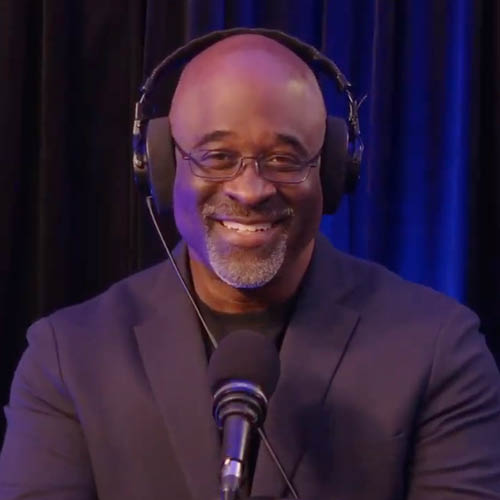
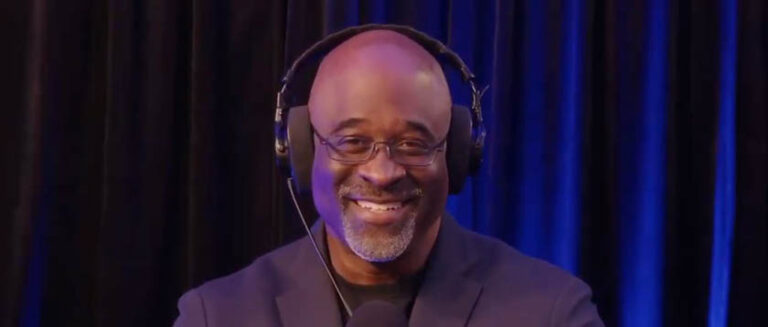
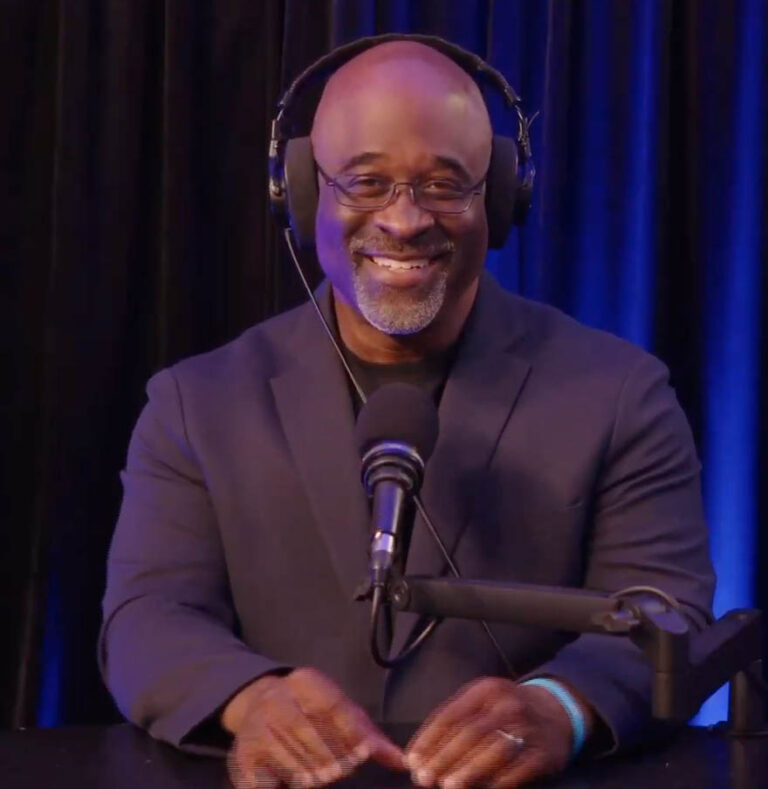
practiced in the boardroom. My guest is Dr imamu Tomlinson, a practicing emergency physician and
CEO of vituity, one of the largest physician owned partnerships in the United States. He also leads
inflect health, a venture arm helping bring next generation healthcare innovation into real clinical
environments. His story is not just about healthcare transformation. It's about adversity, resilience
and what it means to lead with authenticity when people are counting on you in the most vulnerable
moments of their lives. Dr Tomlinson,
01:28
welcome to the show. Oh, thank you for having me. This is awesome.
01:31
I'm so looking forward to having this conversation with you. And where I really wanted to start this
conversation with is, I've often heard you speak about the fact that leadership is not something that's
just constructed from the top. It's actually formed through adversity. I'm wondering if you can take us
back to that turning point that shaped the way that you lead today.
02:02
Oh, wow. How far do you want to go back? But you know, I think if you look at leadership, I think
leadership is, in some ways, leadership development is overrated. I think we often look for the seven
ways, you know, or the 10 highly effective ways that people can be leaders, but the truth is, is that
leadership is forged, and it's usually forged through adversity. It's usually forged through what people
are going through in their lives. And I know, for me personally, I don't feel like, like I fit any of the
boxes for for a leader, but when I look back at my experiences, they definitely, you know, forged me
in a way that has made me a better leader.
02:46
And you had a personal experience earlier on in your career that almost could have ended your your
career in the medical profession. Could you speak to how that experience really shaped your
resiliency, your leadership, the way that you lead today.
03:10
Unfortunately, I've had a few. I've had a few different, you know, sort of career ending or life ending
events. I think one that's probably one of the toughest ones for me was being on fire in medical
school. Actually was in a house fire, and it was in my last year of medical school, burned about 20% of
my body. And you know, at that point in time, I didn't know if I'd finish, I didn't know if I would finish
medical school and what would happen. But you know, after going through that, you know, it took
about six, eight weeks to start to feel a little bit better, to start to not be in the most amazing pain
you can ever imagine. But when I look at my life now, and I look at situations now, my gratitude, my
the things that I look forward to are much different when you compare them to being on fire. So I
think that you know adversity always gives us a sense of gratitude. It gives us a sense of the
opportunity and the duty and responsibility we have when we are in those leadership moments.
04:16
I could only imagine just how life altering an incident like that really could be and when you are able
to get through that kind of adversity, it's inevitable that it leaves a lasting impact on on who you are
as a person. And a lot of CEOs, they do tend to lead more from a distance. And I know you said
earlier, you don't fit into any of the leadership boxes, but from what I understand, you know you are
still practicing medicine whilst acting as the CEO and being the CEO of such a large organization. Talk
to me about that. That and how really, still being on the front line impacts the way that you lead and
show up.
05:08
You know, maybe one of the most frustrating things in the world is people who teach or coach but
have never done you know, I think that's, you know. You think that how frustrating that is for
somebody to say, I know how to do this when they've never done it. You know, at vituity, we believe
that if you're going to tell people what to do, you can't ask people to do things you wouldn't be able
or be willing to do yourself. And so for us, all of our executives have worked on those front lines
currently while we're making those decisions, so we can take patients and also the people providing
care into account. I think that the biggest thing that it does by being closer to the to the patient, to
the client, so to speak, is it gives you a healthy respect for the decisions you're making. And I think
that's the part that we never want to lose. And I think to be honest with you, if you look at the world
or politics or healthcare, or even business, any business, you know, sort of niche, we would be better
off if the people that made the decisions actually knew the consequence of those decisions for both
patients, clients, customers, or even for employees.
06:19
And how does that work from a practical perspective? Because I imagine there is a fine line when
you're working on the front line to then needing the capacity to be in the position of CEO. You're
making so many different decisions every single day. You're handling a lot of pressure. You've got so
much responsibility. You've got people that are really counting on you in so many different ways. How
do you find that balance between being practical, being on the front line, and then actually being able
to take a step back and and really lead?
06:56
Let's see, we're talking about balance, and I don't believe in a balance, you know, at all. I think that. I
think that everywhere I'm at anything that I'm doing, I want to be present in that moment, like this
moment, I'm present with you, and I'm going to, you know, give 187% effort into this moment. I think,
you know, one of the things that my superpower, I call different qualities, your superpowers is
relentlessness. And I think that, you know, it's my responsibility to enhance my leadership, in my
thinking and my strategy by being involved in the front line and be involved at that moment. I don't
necessarily see them as separate. You know, I don't want to be that kind of leader that has to go up
on the hill or to the 27th floor or to some retreat in Boca to be able to think, the best way I think is
when I'm with the people. Best way I think is when I'm with the patients, because I get direct
feedback on things I may want to do. And honestly, even just when you are being strategic, if you ask
patients and employees about a crazy idea, they're going to give you immediate feedback, right? It
may not be the one you want, but it'll also give you information so that you can adjust what you're
thinking about strategically.
08:19
I'm curious to know it seems like you really, when you said you really haven't listened to any sort of
leadership framework in the way that you lead. I'm really seeing this play out through just this
conversation alone. What gave you the confidence to be able to lead in a way that is so authentic and
true to you, and not necessarily go by what the textbooks tell you to do.
08:51
Yeah, you know, first of all, I have to say part of my confidence comes from being Jamaican, so that I
don't know if that's the answer you were looking for. But no, seriously, I think that I wouldn't call it
confidence. I think you said it best in that sort of second part of the question with is, which is
authenticity. I'm not the right person to be the CEO of itunity. I never was. And so, you know, I had a
coach that told me that the chances of me being a CEO we're less than 1% so much so that I wrote a
book about it. Because oftentimes we look for the wrong things. We put people in boxes. We assume
that there's a right way to be a CEO, there's a right, strict set of qualities that are necessary. I think
for me, what I learned through this journey, the reason I am confident is that, you know, about five
years ago I decided, you know, there are things that are great about Moo and there are things that
are not so great, but at the end of the day, I have to be me, and my team, my employees, the rest of
the partnership, they expect me to be me, and they know that when I'm Moo, I'm delivering the
highest level of profo. Possible if you're hiding behind a screen, or if you're trying to be someone
different than you are, you're losing energy from, you know, what is 100% your authentic self?
10:09
And when you speak to this concept of less than 1% what does that really represent for you?
10:18
Yeah, I mean, I told you my coach, I asked him. He said, You I don't think you can be a CEO. And I
asked him for the percentages, the chances that I could be, and he said, Well, it's less than 1% so I
hold grudges, and I use that term, but that term is really focused on all the different ways we build
boxes for people, right? And, you know, we have all these, you know, we talked about, you know, the
Stephen Covey's and highly, you know, effective habits, the Habits of Highly Effective People. And we
miss opportunities for people to not have those habits that we think are amazing. So, for example, I
don't sleep, you know, just, I don't know if I should recommend that for everybody that's listening
today, but I don't sleep. It's something that I use that time to get ahead. That's not a typical strategy
that somebody would espouse. I wouldn't sell many books saying that. But again, that's just one
aspect. I think introversion. I think Malcolm Gladwell writes a lot about dyslexia and how a lot of CEOs
that he interviewed use their Dyslexia as an advantage instead of a disadvantage. And so, you know, my hope is that people that are listening to this or listening to me understand that that less than 1%
framework is about, let's not pick the winners and losers of the race before the race is even run,
11:41
a lot of people would take a comment that's made to them, like your your chances of succeeding,
your chances of being appointed a CEO position, are less than 1% and they would take that to heart
and make it mean that that's not possible for them. But it almost seems like you utilize this being
underestimated to prove people wrong. Where does that internal fire come from?
12:11
Yeah, I love that you use the term fire because I mean my I feel like my base energy is anger, to be
honest with you, it's what fuels me. It's what gets me going and, and you're right. I mean, if, if he'd
have said there was 96% chance you'd be a CEO, I probably wouldn't be one today, but the fact that
he didn't think I could do it was energetic to me. I think that stems from, you know, learn. You know,
as we get a little older, we learned a lot about ourselves. And, you know, my first instinct is to be
disagreeable. I think there's sort of three tenants to disruption and disagreeableness is that first one
and what people think it's disagreeableness is not just being upset or angry or not being a good team
player. It's really about not accepting the status quo. When he said less than 1% he gave me a status
quo, and I immediately wanted to break that the other two tenets of disruption are optimism and
relentlessness. And so those three things don't always go together, disagreeableness and optimist.
But once he said less than 1% I knew that I wanted to prove him wrong. But more than that, I knew
that I could have an impact on the world greater than he ever believed. And I was relentless enough
to try to make that happen,
13:25
speaking about leadership and speaking about belief in people, I do want to switch gears just a little
bit. And there is so much hype about innovation in healthcare, you know, whether we're talking about
AI, apps, virtual care, but very little of that is the reality of what clinicians are actually feeling and
seeing, which goes back to what you said earlier around that intel that you're getting on the front line
is so valuable, I'm wondering, how have you utilized that to then drive innovation in a way that
actually works for you, your people and the organization?
14:09
Yeah, that's an amazing question, because it in the question itself implies that innovation comes from
a place different from where the work is, and I think that's what we're seeing, we have a lot of people
who are really smart, especially with AI, etc, who are coming up with solutions to problems that they
don't really understand because they're not doing that work. So I think for me, I flip it the all the
innovations that we have at vituity, you talked about inflect health earlier, which is our venture arm,
where we spin up small companies, all of those problems that we're solving come from the front lines. We're not creating something in some lab somewhere. So in a great example of that is rely health.
And in rely health, we navigate patients through the tumult and the convolution of receiving care
using. Both AI, but also in person and then tele and so we're able to navigate that patient through
healthcare. We have another product called savant, which is a not just a language model that that
creates a chart for physicians, but it also gives help with differential diagnoses and making sure that
they're creating a chart that is both defensible and that can be built appropriately. And so I think that
the the idea that innovation comes from somewhere else, and then you layer it on to the problem, we
see it as reverse. Innovation comes from the front lines. And both of those companies were born out
of a problem that needed to be solved at the front line, that the we then apply resources to help, you
know, scale that problem solver at a different level.
15:47
And when you're talking about inflect Health, and the fact that this is a different kind of model, it's not
just about capital, it's about that connection to clinicians. What makes that pairing so powerful,
16:02
you know, it reminds me of, you know, the mom and pop, you know, family businesses, right? You
think, you know, if you look at the level of innovation and resource efficiency, it comes from those
companies that, you know, where the mom and pop just have their little, little setup or a little shop,
right? That's where the most innovation comes from. And so I think that that's what we're seeing, is
that, you know, we don't have to build bigger or or, or invest more when we actually have the people
that can solve those problems, that are actually generating the solutions. A lot of them are really
those, those MVP, those minimal viable products, right? They're, in some ways, bootstrapped solution
that then once that solution takes on, we can test it in other places. I know we mentioned earlier
about vituity, but you know, vituity is in 27 states. We took care of 14 million patients last year. We're
in over 900 communities, you know, depending on how you count a community. But so when you get
an idea, the ability to quickly turn it around into something that's just minimally viable, but to test it
with the people who are doing the work that's really that. That's harkens back to that mom and pop
business where you can test things quickly, and if they're not working, you can stop them, but if they
are working, you can scale them really quick, absolutely.
17:29
And I'm wondering, from your perspective, what does responsible innovation look like when the
stakes are so high? You know, we're often talking about life and death situation in in the context of
healthcare, what does that look like for you?
17:47
Yeah, you can't fail when you're dealing with a person's life, right? So innovation, you have to be
really, really careful. And I think you know when you look at trials, and you know sort of medical trials,
and even medical equipment trials that innovation is slow on purpose, right? Because you want to
make sure that you test it in safe situations before you apply it to patients. But I do think that even in
regard to that, you can be bold and you can get to situations where you test them in environments
that are safe. I think that that's what we're seeing a lot with AI. Frankly. I mean, a lot of the
governance around AI is being questioned. You know, are you putting the right patients in the model?
Are you populating the right information into, you know, these language models to be able to care for
patients? But I I'm not a skeptic. I remember the second tenet of optimism, and so I'm optimistic that,
you know, we can do it in safe environments, that we can quickly get those innovations when they're
safe to patients.
18:52
And I'm wondering if you could share with us where you've seen innovation, or an example of when
you've seen this go from a concept to then a real impact for a patient or a provider?
19:05
Yeah, I talked a little bit about reliance of on but I'll change gears. I'll talk about something that isn't
tech based, to give you an example of what innovation should be. And I think that's the challenge is,
we're always talking about innovation in respect to AI and tech, but innovation is just thinking
differently. Innovation is disrupting the status quo, as we talked about earlier. So we have a model. We call it rapid medical evaluation. It's a model in the emergency department that really takes
patients and sees them faster. And I'll explain a little bit. If you look at a typical er today they have a
process called triage, which actually is from the French word for sorting, and it's from a battlefield,
like the idea of triage is from the battlefield, where you take sicker patients first, and you take non
sick patients and kind of make them wait. So if you go to the local emergency department, if you
don't have radical. Rapid and medical evaluation, you'll see some patients just waiting because
they're not that sick. So we kind of flip that on its head. Instead of seeing patients in sequence, taking
the sickest patients first and leaving others to wait, we decided to take care of patients in parallel. So
we just allocated different resources for for different patients. So if you came in with your ear ache or
if you came in with your laceration, you were seen by a different set of resources than the ones you
would be seen if you were in a car accident or having a heart attack. So that was an innovation that
we came up with that didn't require any tech, didn't require any AI. It was probably before AI in the
terms we see today, but it really was about thinking differently, challenging the status quo, and really
flipping a process on its head to come up with a better outcome.
20:49
It's such a great story and such a great example. Thank you for sharing that. And I want to talk about
this, this concept that I've heard you speak to previously, which is that equity is a capability, not a
talking point. And I'm curious to know, how can leaders build organizations that truly reflect diversity,
creativity and imperfection of real life and still then be able to achieve excellency?
21:30
Yeah, I think in some ways that's a rhetorical question. You know, you can't think about your portfolio.
Think about your your your 401, K portfolio. You have lots of different businesses, lots of different
companies, lots of different positions, and the compilation of all those positions creates, you know, more viable portfolio. I think it's the same thing with business. I think we got a little sidetracked with
the term equity and diversity and inclusion. I think that has been obviously polarizing for different
communities, for different reasons. But the truth is, we've always known that the more resilient a
company is, the more resilient your portfolio is. It requires lots of different pieces and parts. I'm
fortunate enough to be from Toronto Canadian and moved to America when I was 18, and you know
that upbringing of seeing multiple cultures and multiple languages, it really shaped me in ways that
today I'm finding out. And just share a little home story with you. You know, I had three good friends,
one was Pascal, one was Leo, and one was Shane, and all of them were from different places. Pascal
was from Pakistan. Leo was from Italy, and Shane was black Canadian from Nova Scotia. But the thing
about them is that their cultures and who they were and where they were from was not as important
as the experiences that they brought to the table, who they were, who they are and where they're
from, shape those experiences, but they added value to me beyond just sort of the cohort they
belong to. I think that's where we have to get to, is understanding that differences are wonderful, and
they make our portfolio better.
23:17
And how are you able to really communicate that to your teams, to your organization. How are you
able to be a real life example of that and set the tone for that as a value throughout your
organization?
23:34
Yeah, I've been fortunate, you know, been the CEO role for 10 years. I think that was a value to our
partnership, even before me. But I think that what we've looked for is just our normal KPIs. We
haven't set any KPIs that are specific to creating a diverse portfolio. We're just our we have three
goals in our strategic plan. Number one is advancing our just cause, which is to improve as many
lives as humanly possible. The second is to help vitals. We call ourselves vitan. It's kind of a cool
name to help us do what we love, and if we are focused on those KPIs, it behooves us to do it in a way
that, as we talked about before, has multiple aspects and multiple perspectives, multiple
personalities, to be able to achieve those goals. So to me, I don't believe in our organization that we
are focused on sort of equity or diversity. I believe that we're focused on the outcomes of which the
only way that we're able to achieve them is with diversity and those and getting multiple
perspectives. You know, we do a lot of things that don't make sense financially. We started a
foundation where we care for people for free. We have about 60 of these clinics around the country
where we go to unhoused community, we go to kids, we go to lots of different places where
healthcare deserts, either urban or rural, and we provide, provide care for free. I mean, I can't stop.
Up, you know, I'm trying to get vitons to do their jobs, but they are so focused on improving the lives
of people like that in those situations that they are even more motivated to do the regular work they
have to do. So I think, you know, really focused on, you know, the goals and really to make the world
a better place. You can't help but know that you have to get lots of different people with lots of
different perspectives. And in some level, I think we've lost some of that.
25:30
It almost seems like, from the way that you're describing it, is that you know, the diversity, the feeling
of belonging, is almost a byproduct of you doing the aligned, authentic work that is true to your
mission, your your purpose, your values. When you focus on that, the sense of belonging, the sense
of culture, it almost seems like it's a by product of what you're doing, rather than a forced construct,
absolutely.
26:03
And I think that when you when you lose focus, when you get sidetracked on to just creating
something and and obviously there are lots of good reasons to do that, and there are lots of
companies that really have to focus on that. But for us, because we're in healthcare, and because
we're taking care of people, and we want to take care of all people. We know that our responsibilities
is, no matter who you are, where you from, or what you look like, we want to give you an opportunity
to both receive and impact health care. And so it's, it's part of the how. It's not necessarily the end
goal. It's at the part of how of what we do. Kind of change gears a little bit to answer this in another
way. You know, I do a podcast less than 1% and on my podcast, I have so many different people from
different places. I have athletes and entertainers and musicians and people in healthcare and doctors
and lawyers and and I even have a cartoonist. And people are like, moo, what are you thinking you're
a healthcare CEO, why are you doing a podcast and having all these different people? And I said, the
solutions in healthcare are not going to come from healthcare, they're going to come from all kinds of
amazing people that have solved weird problems that we never even thought were solvable. And if
we can talk to those people and find out what makes them tick. We're going to make health care
better in that process.
27:24
I'm wondering where did this? I know we touched on previously in terms of coloring outside of the box
and not following the scripted textbook way of doing things, but it feels like you're really willing to go
beyond what other people expect, what other people think. Where did that really come from? Like,
aside from the 1% comment, it feels like it's a bigger theme in your life than that.
28:00
You know, this is a journey. And as much as I want to avoid talking about myself as a leader, I really
want to talk about the people and the work that we're doing. But when I really look back at it, I do
think, I do think that I see things differently, constantly pushing even sometimes pushing myself in
the places that are super uncomfortable. Where did it come from? I think it's a combination of things.
I talked to you earlier, you know, I was moved here. Moved to America when I was 18, from Canada.
I've been all over the United States, living in different places. I have a lot of interests. I was a rapper
till I was 16, you know, and then I played basketball in college. So like the things that have brought
me together in this role, I didn't I didn't grow up thinking I'm going to be a healthcare CEO. I didn't
even grow up thinking I was going to be a physician. I think that has allowed me to not live in those
boxes that I'm in. I don't see myself as a physician. I don't see myself as a healthcare CEO. When I'm
out on the street, I'm just move, and move is complex and move is convoluted and a little different
and a little weird, but I think accepting all of those things that all of those things that I am and then
bringing them to my leadership role has really allowed a way to look at the world that's been very
different than what vitality has done in the past, and I think in the future, my hope is one of the things
I always say to everybody is that I want to create the CEO job. I want to put in the place where I'm no
longer a great candidate, so I want to disrupt myself in the organization such that Moo would not be a
good candidate when I decide to retire or they decide to get rid of me,
29:53
that's very cool. Thank you for sharing that response with me, and I want to know what. You know, for
leaders that are listening across any industry, because we have so many leaders across so many
different industries that that tune in and listen to this show, how have you really designed a system
that serves people that aren't all necessarily already on the same page, or starting from that same
place, like I could imagine, that is such a challenge to bring that unity when you're being met with so
many different perspectives and contexts.
30:33
Yeah, I think that's the key to leadership. I think that, you know, I always say to my team, to myself,
when somebody doesn't understand you. It's your fault, and that's a very hard concept for leaders to
accept, right? What do you mean? You don't understand me, you know. But in the reason I say that is
that for all of these different people, different stakeholders, you're trying to bring 10,000 12,000
people together towards a goal of helping people and doing what they love. You have to meet them
where they are. You have to understand what's important to them. Listen, there are people in our
organization that do it for the check. I mean, let's just be honest, right? And so then you got to make
sure that the check is sufficient by which you can get recruit good people. There are other people that
you could pay them nothing. They just want to impact the world, and you have to appeal to them in
that regard. So I think the key to leadership, if you're out there, is to really look at all your people and
don't just say, hey, I want to get the right person. I think that's terrible. There is no right person.
There's only moves out there, less than 1% people, and they all have different qualities, and they
don't have this seven habits of the Highly Effective People, which, by the way, there is another book
that Stephen wrote after that, which is the eighth habit, right? I mean, so he didn't even, he didn't
even, he wasn't even clear that there was only seven. But you know, there's so many different,
amazing, beautiful people in the world, in the country in healthcare, it's really just accepting them for
who they are, and then you as a leader, have to figure out how to get to them, and it may mean that
you have to change who you are in spots to be able to connect with them. But once you connect with
them in their space, and as is like cooking with gas, you know they they really get it and they run,
they'll do anything for the for the organization, once they know that you're willing, in your high role to
be able to get on their level and connect with them in ways that they do. They don't expect leaders to
32:37
absolutely and particularly because maturity is scaling nationally. And you know, this is where a
mission can get so easily diluted, and so this is almost an extension of what you've just shared. But
I'm wondering, how have you preserved that closeness and connection to purpose whilst you continue
to grow and scale.
33:02
One of my pet peeves is when I have people that will ask me within the partnership and external list
say, how do you keep your culture as you grow? And I always ask them a question back. I said, does
that mean that our culture isn't out there already, that our culture is only unique to us. And I think the
beauty of growth and scaling is that there's so many people out there who really want to do what
we're doing already. So for me, it's not necessarily getting bigger and diluting a culture. It's actually
going out and going out in the world and finding people who have the culture and pulling them in. We've met so many amazing people as we grow. I think a lot of times, when you look at it as sort of
the Death Star from Star Wars that you have to inflict your will on people, that's not the best way. Go
out and find people who already fundamentally believe in what you believe, and then show them
what you're doing. Show them what you're doing in the world. You don't have to worry about scaling
the bigger problem you have is how to stop all these people from coming to try to do the great work
we're doing at fight duty. I think, you know, the thing I tell people all the time is that, you know, I
don't sit around and think about what our culture is like, what I do sit around is, can we improve more
lives, and can we help all these Vikings do what they love? And if I go crazy on those two goals, I don't
have to worry about what the culture looks like, because I have people in here, in the organization
who will constantly focus on how to make, you know, every day there in the world better, absolutely.
34:42
And I'm wondering, there's a lot of commentary to say, you know, and to speak to this increase in say
things like burnout in in the healthcare industry. How do you really protect the. That integrity and
humanity of work when there's constant changes to systems and there's new pressures, and that may
then have a knock on effect to the people within an organization. How do you manage that?
35:16
We just had an officer meeting this morning about that, and you know, we have, we have wild and
crazy officer meetings. This is no there's no group, group think there. Everybody is debating with
everybody. And I love that, because that's how you get the right answers. But you know, my question
to them today was, if you are worried about compensation, there's a base compensation. You got to
pay something, right, if people can't live. But above that, if you're worried about how much work
somebody has as though, as those reasons for burnout, then you're missing the mark, right? The
truth is, is that when people are fulfilled, right? Don't look at engagement, don't look at belonging.
Look at fulfillment. When people are fulfilled. Burnout is much harder. And you You know, I know as a
parent, I am never satisfied. As a parent, I have a 19 year old and a 22 year old, and I'm still to this
day, not satisfied. But wow, am I fulfilled. You know when I'm tired, you know when I'm overworked,
when they were crying all night, when they were kids, when my son had seizures for a year, and I was
still fulfilled. And so I think we need to move away from, I don't, I don't even like the term burnout. I'm
trying to, if you're out there, please stop using, you know, like the whole world needs to stop using
that term, because it's really not the right term. The right term is fulfillment, and how we get people
to do great work and help them, we have to facilitate them impacting the world.
36:50
It's such a powerful insight and almost an unexpected response coming from you. And I love that for
so many different reasons, because in my profession and in in what I've seen in speaking to so many
people, burnout doesn't necessarily come from how many hours one has worked. It comes from the
feelings and the internal experience that someone is having whilst they are performing their work,
which is what you spoke to in terms of the concept of fulfillment. How do you then check in and
ensure your team are fulfilled?
37:30
You actually measure it, you know. So what we, what we're doing is now we're, we're migrating our
engagement survey, or our, you know, or what do you call it satisfaction survey? We're migrating to
fulfillment. It means you have to ask different questions. You know, are you fulfilled by the work you
do? Do you wake up every morning worried? Or do you wake up every morning ready to change the
world? There are several different ways you can ask different questions that changes people's mind
about what they're supposed to do, and move away from the idea that somehow you're going to be
satisfied, because life, as you know, can be fulfilling, but not always satisfied. I'll tell you a quick story
if I could. I did a podcast this week with Katie, and I get emotional on it, so I gotta be careful here. So I
don't want to cry on I don't want to cry on TV. But, um, you know, Katie Hill, he is a young man, 25
year old, who was a college football star. He was going to be a first round draft pick in the NFL, and
he was driving four days before the combine. The NFL Combine, he was in a car accident where his
leg got trapped between a tree and the car, and so for eight hours, he sat there with his leg trapped.
They had to amputate his leg at the scene. It's, you know, if you get a chance to check his story out,
it's amazing. And like I said, we just did a podcast with him. He came to my office in Las Colinas, here
in in in Texas, and he was rolling on a wheel. You know, when the you have one leg that's on a sort of
a roller, like when you hurt your knee, or you hurt your leg, and so he sort of rolled in the office, and
he said, Dr Tomlinson, I'm so sorry. I said, What do you mean? You're so sorry. It's great to see you.
This is six four. He's still muscular, huge, you know, football player. And he said, I wanted to walk in
here on my own. I was like, if you don't understand fulfillment after that, here's a guy who lost his leg
that really, in some ways, has so little, but he has so much. And I think burnout is the opposite. It's
when you have so much, but you think you have so little. So yeah, I think that if you're out there and
you're trying to measure burnout, you're trying to measure. Your fulfillment. You got to do things
differently. You got to ask different questions. You got to put the onus back on people to convince
them that the work they're doing is amazing, and not just, you know, going through the motions.
40:15
It's such a powerful story. Thank you for sharing that I'm wondering, for leaders that are listening to
this podcast, to this conversation, if they took just one principle from your leadership playbook, what
would that be?
40:36
Yeah, the one principle that you know, if you biopsed me on LinkedIn, you'll get a nausea nauseated
with is, is just be a less than one percenter. You know, really don't pick winners and losers before the
races even want run. Don't put people in boxes. Don't put yourself in a boxes. You know, I did a a why
inter, you know, sort of a why statement with Simon Sinek. He does these interviews, and of course,
he made me cry for like an hour. I was not happy with him, but my why statement, which I didn't
know before I went through that with him, was to inspire people to be better than to do the work
necessary to be better than they ever thought they could be. And the only way you can do that is
through challenging yourself, challenging others, not accepting the status quo, and being optimistic
that you can change the world and then never, ever quitting.
41:32
It's so powerful. And this actually really leads into the question that I I had next for you, which is when
you really think about legacy, when you really think about the mark that you really want to leave,
whether it is to your people in your organization, to your industry and to the world at large, what does
what does that look like for you?
42:00
This is another question I feel I'm going to give you an answer that you haven't heard before. So the
legacy I want to leave is to be forgotten. I don't want to be remembered. I feel like if I'm remembered,
I haven't done my job. My goal is to make you know vituity So much better when I leave the people
that I've left, the leaders that I've left, the initiatives, or whatever it is, that they are just soaring, and
they look back and they're like, who is Moo? I don't even know who the CEO was back in 2025 I feel
like, if they remember me, then I was one of the greatest. And I just I don't want to be one of the
greatest. I want to be on the trajectory to greatness, and we're not there yet. So, you know, my kids
might you know that they got to remember me. You know, hopefully my family remembers me. But
as far as my mark, I don't want to be remembered. I just want to be one of the one of the steps on the
way to greatness, and somebody, when they're great, will look back, and I might be in the roster
somewhere down the line, but I don't want anybody to say, Oh, do you remember Moo, how amazing
he was, because that means that whatever is going on then is not as amazing as it is now, and I know
that it can be better, and I hope to put the things in place so that is way better then than it is now.
43:29
That was correct. I was not expecting that, that response from me.
43:34
I apologize. I'm disruptive. Remember.
43:36
So I know, I know I love it, though. Thank you for sharing that. Dr Tomlinson, we love to wrap up all of
our interviews here at CEO behind the scenes with our signature questions. So the first question I
wanted to ask you is, what is one thing that you've changed your mind about recently, and why?
44:04
What I've changed my mind about recently is how to evaluate success. And there's a quote that I
love, and I wrote about it in my first book, that success is not a snapshot. Success is a portrait, right?
And so snapshots, right? You think about it, we take pictures of people, and we say, be like this, or be
like that, and everything's static in that picture, but success is more like a portrait. Colors are
changed. And if you're, if you're an oil painter, you know about this, right? You can erase lines, you
can add new lines, you can emphasize things. You're constantly working on that portrait. So the idea
that you can be successful is crazy, and I've realized that really recently, that success is not
necessarily what you get, it's actually what you do.
44:57
So falling in love. With the process seems to be a big thing for you, for leaders that really struggle to
find that satisfaction or fulfillment with success that you spoke to earlier. How, how would you advise
them to begin to think about that?
45:19
I think the way that, how can you change your mind about that goal that you have, that you achieve
it, and then you say, Now, what is to go back to the tenants you know, that I talked about earlier,
which is, wherever I'm at is not as good as the next place that I'm going to be, so I'm constantly
driving to be able to get there, and I think that that's what leaders should do. But to answer your
question, people have to do it to themselves, and I think that's where it's very difficult as leaders, to
be able to constantly challenge, constantly grind yourself. And that means that when you get and you
got to be careful, because your teams want you to celebrate them, but when you hit that KPI, when
you hit that, you know, this year, we grew by $450 million like nuts, like I it's amazing, and I have to
stop myself to celebrate it, but immediately my mindset is like, what's next? What's next? What are
we gonna do next? Not necessarily that we're gonna eclipse that number, but I have this constant
grind to say, well, there's something different. Are we doing everything we can? Are we being as good
to people as we can? You know, are we being as good to patients? Is the quality the best? You know,
should we be going into different specialties? You know, it's just constant, constant, constant
spinning. So I think that's what I would push people is, is to just keep on disrupting yourself first and
then knowing what that looks like. Then you can bring it to people, then you can bring it to your
organizations, but you got to, you know, if you're not waking up every day wanting to be different, it's
going to be hard for you to lead
47:10
constant evolution and refinement over time, keep painting that portrait. Yes, indeed. And finally, I
wanted to ask you, what is one belief that you haven't changed your mind about a principle you'd
stand by even throughout a storm?
47:29
Yeah, duty, duty and responsibility. You know, listen, I don't, I don't love every aspect of my job. Parts
of my job are difficult. Parts of my job frustrate me, but my duty is to show up and be the CEO. That's
what I signed up for. And so I'll never I'll never give on that. I'm never going to be in a situation
where, in the moment, I'm going to not be that person that I signed up for. I'd rather leave than be
not fulfilling my duty so that I'll never give up on that.
48:05
Dr Tomlinson, thank you so much for joining us today. I have loved every moment of this conversation
with you before we do wrap up, are there any final words or messages that you would like to leave
our audience with?
48:19
I think just reiterating, thank you so much for having me. It's been amazing. I think for everybody out
there, you know, I would constantly push yourself to do the work to be greater than anyone thought
you could be
48:31
such powerful words. Thank you so much for joining me. I've loved this conversation, and I have no
doubt that it's going to leave a lasting impact on everyone that has listened. So thank you very much
for joining me and to our audience. Thank you so much for listening. If you enjoyed this episode and if
you gained some insights from sharing Dr Tomlinson's wisdom and experiences around all things
healthcare, innovation, leadership and beyond. Then please be sure to share this episode with
someone in your network, someone in your community, who you know would really benefit from
these insights, and also be sure to subscribe, rate and review the show. Thank you so much for
joining us, and we'll see you next time on CEO: Behind the Scenes.



 1.8K
1.8K
 2
2


 Host
Host
 POPULAR TOPICS
  FEATURED PODCASTS


 Home
Home
 Podcasts
 Covers
 Community
 Sign In