00:00
We tend to think people as a cost or expense, and if we think about human resources as a cost, we need to find new measure. We need to find a new way of efficiency. You challenge a widely held belief in business that efficiency means doing more with less. I recommend to have at least five mentors, and especially to have younger mentors than you, so we should learn from the history, and that gives us a guidance how to deal with the new technologies or new situations.
00:41
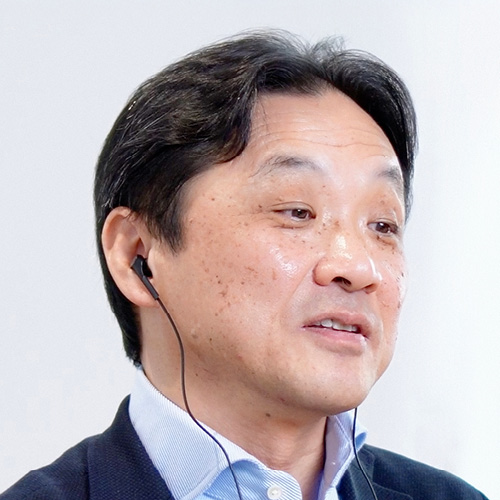
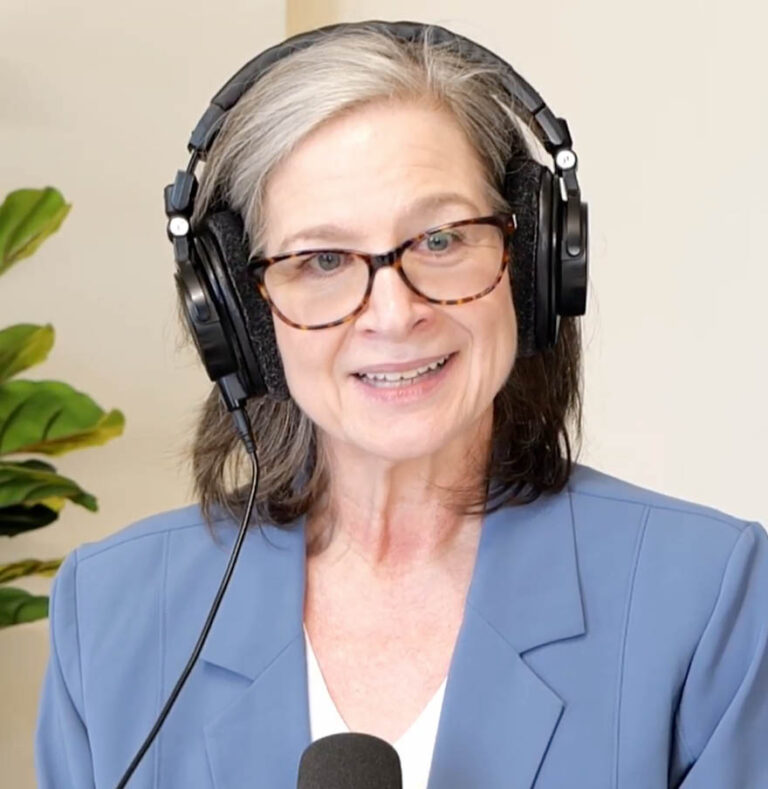
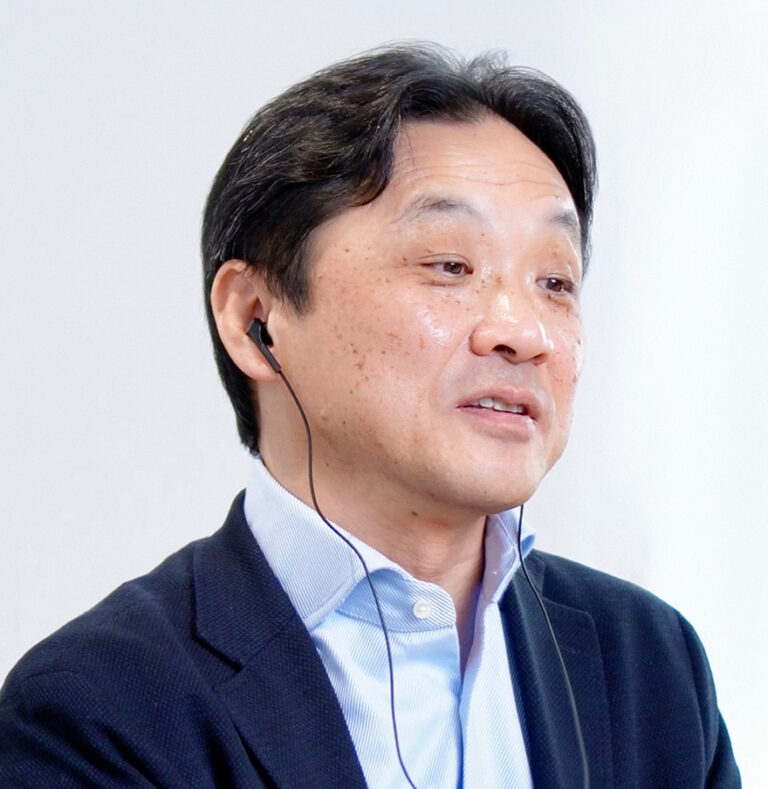
Welcome back to CEO behind the scenes. I'm Lara necession, and today we're exploring a powerful shift in how leaders think about growth, ROI and the future of human capital. My guest is Toru Takahashi, global, Chief Strategy Officer at GLOBIS Europe, a strategist, researcher and leadership educator, shaping a new model of global talent development, from cross continental experience in Iran and Europe to pioneering purpose driven leadership frameworks in Japan. Toto says the real return on investment comes not from speed, but from reflection and alignment. Today we'll unpack redefining efficiency, embracing culture and leading with kokorozashi can transform organizations from the inside out Toru, welcome to the show. Thank you. Thank you for time. So where I really wanted to start with this conversation is the fact that you challenge a widely held belief in business that efficiency means doing more with less. I'm curious to know where did your philosophy of the efficiency of inefficiency begin. Thank you very much for your questions. This concept is from my PhD research about human resources and innovation. People talk about human resources, but it's about human capital, where we should focus on in this conversation, resources sound like people to be used for something. We tend to think people as a cost or expense, and if we think about human resources as a cost, we think as do more with less. So this is a typical, traditional type of efficiency, right? If we can do more with less cost, that's great. That is typical efficiency, but we call it human capital. The story is totally different. Human Capital means the people is asset, so we need to invest the people to work on. So all type of traditional efficiency will not work there. We need to find new measure. We need to find a new way of efficiency. That is my concept. And where do you believe most leaders misunderstand ROI when it comes to developing people rather than processes. I give you one example. Do you know sabbatical leave? Yes, in the company, of course, people, people takes a long leave for employees to relax, reflect, or to learn something, to have a new experiences, right? So sabbatical leave in a short term, this is a cost for the company, in a sense, because people not available, but people have a sabbatical leap, would create a new value for the company in the long term. So this is a typical concept of the short term and long term and short term, it's not efficient, but it's a long time it's efficient. So this is a typical example of my concept. And if you say ROI, the most of the managers still think the human being or human resources as a cost, so they try to apply the typical, traditional type of efficiency for the human resources. But actually we need to think about human capital. In this case, we should change the way of the major efficiency. So that's the point. I'm wondering. If you could speak to this concept of kokorozashi, a personal mission aligned with social good, and this is something that's central to your work. Could you share a little bit more context for someone who isn't familiar with this term and why you believe it's so timely in today's leadership landscape. Have you ever had kokorozashi before? By the way, do you know I hadn't heard of the term until I was doing my homework for this for this interview, and I.
05:00
Realize that it's something that is very prevalent in your principles and in your teachings, and it's something that is very central to your work. So I would love if for for myself and for our audience, if you could share more? Yeah. Thank you very much for showing your interest each Japanese term, like Kaizen Omotenashi, like that. And kokorozashi is a Japanese term, and there might be not a direct translation from Japanese to English. People say aspirations or dream or purposeful life or purpose of careers. That's the translations. But if I say from my point of view, all the right, but I want to emphasize that the kokorozashi has an impact on the social value by using what I like. So it's connections in individual happiness with the social happiness, in their happiness with connected to be with the social happiness. So this is kokorozashi. So for leaders who are wanting to discover their own kokorozashi, what advice would you give to them? I don't know if you have a kokorozashi or not, but sometimes even leaders, they don't know well about their kokorozashi, right? Because they don't know what they like, and what that can be connected with the social value. So they need to explore what would be their proposal that happened in many programs for GLOBIS, and I would say two points for leaders. First one, I will ask the leaders to reflect their decisions in their career or life, and especially difficult or crucial, complex decisions, because people don't know. Option A is good, option B is also good. Option A has a problem, option B has a problem. So they will think which one we should take right. But finally, leader, have to make a decision right, and if they reflect why they choose this option, this path, there are some hints of their kokorozashi, what their values, why they take these decisions depend on the leaders. Kokorozashi, some leader, take B, some leader. Take a, that is one way to find zeko korosashi, that is one way and second way. This is I'm learning from Steve Jobs. He made a presentation some years ago. He's asking us like this, Hey, think about this is today is the last day of your life,
07:42
would you do what you plan to do today? Right? If there is a yes, there might be some core such hint, right? If they say no, they find they need to find some other things as core results for themselves. So these two are my suggestions for my for the leaders to think about, to discover the kokorozashi, yeah, that's such powerful but practical advice as well. And the power of hindsight is undeniable, which I think is why Steve Jobs's speech was something that has lasted and stood the test of time. Because there is benefit to hindsight, and I love the way that you described that I come here even this today is my last day of my life. This is my this is part of micro Prozac. Yes, you often talk about your time working across Iran and Europe as a pivotal shift in your worldview, what changed for you as a leader during that period? It was my first overseas assignment in my career, that was Iran. So I went to Iran in my late 20s, and that changed my life. I found that I was biased by Western media. Right Western media
09:06
that they are talking about terrors, dangerous or riots, etc, etc. That might be true from one side. When I went there, I found the different situations. There's nice people, it's very safe, much safer than some of cities in us.
09:25
And culture wise, I found there a lot of similarities between Iranian culture and Japanese cultures. So I came to know that I should step back from one side information, if I find some, if I received something and I suspect little bit, and I tried to look at one situation from different angles, and that gave me the realities or real situation of the country or people or cultures. So that gave me a very good learning how to work in a different.
10:00
And culture various countries, and I still keep in mind that learning for listeners who are less familiar with Globus and the work that you do, how would you describe its mission and what makes it distinct from traditional business schools, our mission is not education, right? We are doing business school, corporate training and venture capital, so we are heavily rooted on the people education. But education is not our purpose. Our purpose is to change the world. Our mission is to create and innovate societies through developing vision leaders. That means all those people commit to change the world or commit to contribute to the society. So that is our purposes. So whatever we do, we think about societies or purposes but to change the world. I think other business schools may say similar things, but all our people, staff, faculties, researchers, think about the societies. That is our strengths, and that is our uniqueness.
11:17
So in this sense, in this sense, I think we can become the number one, and already we managed to become normal business school in Japan. But I think this is the reason why we came to this level, and we tried to expand this mission to the world. That is what we are doing. Yes, and Globus has long emphasized Human Centered Leadership. It's something that you spoke to earlier in this conversation as well, the importance of that human centered approach. How do you believe that this has helped leaders navigate today's digital, volatile business environment? In many discussions, management talk about AI new technologies. They think it's chance, but they also worried about how to how to deal with the new technology, AI, right? But AI itself isn't problem, right? The problem is a mindset, how people accept the new technology and try to adapt to the new world. That is a point. So the point is not technology, point is not skill gap, but gap is in a mindset. So when we try to think about mindset or how to fill the gap of the mindset of people,
12:39
we need to look back the history, right? If we look back history, it's on first time for human being to face a new technology coming in, right? So in the past, internet come in, person, computer come in, smartphone coming so every time people talk about same things, oh, new technology. What we should do, right? But in the end, people overcome the new technology and adapt themselves and create a new world. So don't worry about this. That's my point. But in order to feel the mindset, there are two points. First one is to encourage people to have curiosity. Curiosity is a big source to get people change right. Without curiosity, it's not easy. That's that's the point. And secondly, we should learn from the startups. Startup mindset is, don't worry about this. Let's take actions and learn. So that is a point, and if we look back the past, the many anxieties or many worries, do not realize, right? People think about the future very negatively, but actually 70%
13:57
of negative points will never come up. So we should learn from the history, and that give us a guidance how to deal with the new technologies or new situations. We do a lot of case studies, so that will work, and we should learn from history. That is my point. And it also seems like your perspective gives a lot of freedom and peace and permission to be able to forge forward without the worry of of what could happen, because it hasn't happened yet. So it's a very interesting perspective that you've shared. I wanted to talk about global talent divide and re globalization, and you've described the talent gap not as a skills problem, but a mindset problem. What does that gap actually look like on the ground, international circumstances, right? We work with Chinese people, US people, or Europeans, Southeast Asians, etc, etc. We work with many different people.
15:00
That is global societies or global business. And I emphasize the concept of people to people, not government to government. So I'm saying to shift from G to G to P to P. For example,
15:17
Japanese people are not same as Japanese government, right? Maybe Chinese people may not same as Chinese government. Maybe American people are not same as the American government, right? So people's thinking and government thinking, of course, some similarities, some common point, but usually there are some different points. If we go into the human centric thinking, if we look at people actually, people the same, that's my running from my experiences working in different countries. So people the same, basically, so they like to create the peaceful circumstances, they like to create a good business. They like to take care of the families, friends, etc. So under these situations, under VOCA situation, I like to encourage the people to connect with the people, regardless of the governmental situations, and that we create the real human centric leadership, human centric society. That's my point, and I like the people diplomacy instead of government diplomacy. So that's my How to say, kind of a dream to realize in the world. And you've said that the next era of globalization will be powered not by capital flow, but by human capital flow. Could you unpack that further for us? Actually, it's already started from a point of view, capital centric. Means maybe shareholder capitalism, typical capital centric way of thinking.
17:10
But if these days, if you look at the Asia, if you look at the Middle East, if you look at other countries, they started thinking about the capitalism as multi stakeholder capitalism, instead of shareholder capitalism, that capitalism is taking care of the many different multi stakeholders, such as employees, buyers, sellers or partners, external partners, internal partners, even society, so that capital will take care of the multi stakeholders, and that will create sustainability, because many problems happen, because they like to return back to shareholder only.
17:54
But if company where people started to think to satisfy all stakeholders, right, they need to take care of the people, employees, suppliers, people in the society, people in developing countries. Right? That mindset create the sustainable circumstances that is all leaders should think about to shift from the shareholder capitalist to stakeholder capitalism. That is my suggestion. I'm curious to know, from your perspective, other than just what you've shared, how do you believe that Asia, the Middle East and Europe are reshaping collaboration differently from that Western centric model of globalization. Is there anything else that you're seeing from your perspective that really differs in that approach? Actually, this that already happened if you come to Japan, many travelers from all over the world come to Japan these days, three, four years ago, only 10 million people inbound for for Japanese, for Japan. But these say maybe three, 30 million, or could be 40 million. What? Why they come to Japan, why they come to Asia?
19:12
People may know there is some hint, there is some situation, there is some way of thinking that the many people in the world should learn and realize so seeing the believing, right? So how people in Japan, what people in Asia
19:34
do live in the world do live in the day to day life, and how they behave, how they think, how they contribute to other people.
19:44
So that is on. That is a good way for the leaders in the world to learn from the age. So seeing the believing, that is my suggestion. Yes, seeing is believing, so coming and experiencing it firsthand is where they will be able to get.
20:00
The greatest lessons and extract some really great wisdom. I would love to speak to you about purpose strategy, because many CEOs today say that they want a purpose driven culture, but they struggle in the implementation of that. They struggle how to actually embed that where do you believe that breakdown usually happens? First of all, I would like to say the organization is mirror of the leader. Have you ever heard this concept? I have Yes.
20:41
If you look at the organization, that is, you right. So if leaders think the purpose is not shared in the organizations, people don't believe some purposes or philosophy
20:56
if the if you if you find that you should reflect yourself. So think about your proposal very carefully, very deeply, and verbalize that is one point. And do you really believe what you are saying purpose you defined. You really believe, and you really devote yourself to realize that purpose. So that's the point people look up leaders, and they can easily evaluate whether the leader really believe his or her purposes or strategies or principles. It's easy, actually, right? So if you believe, then people will believe, if you don't believe yourself, people don't believe that's it. So don't think about the organization. Don't think about the people. Right to think about yourself, and that's your starting point. And if you really, if you really think this is what you like to do, right, people will be you and people will start to the same things that is, that is Japanese philosophy. And I'm wondering if you could share for leaders who are listening, who want to build a more reflective, purpose aligned organization, what is that first discipline that they must unlearn. It's not easy to unlearn, right? It's not
22:28
especially for successful leader.
22:30
For them, it's not easy to unlearn, right? So they have success story. I recommend to have mentors,
22:38
and I recommend to have
22:41
at least five mentors, and especially to have younger mentors than you. Right? People tend to think mentor should be the seniors. Professional Experience. That's great. Maybe we need such a mentor, two or three.
22:58
But instead, on the top of that,
23:02
we need to have two mentors. Actually, one of my mentors is my son,
23:08
his late 20s. And I always ask him my ideas, what do you think? Do you feel empathy sympathy with my idea? And he stayed back to me, Oh, it doesn't make sense for me. Nobody wants to ask me. So I think he's a great he's the greatest mentor to me these days. He's working for IT companies. He is engaged with the latest technology, and he's the online native.
23:38
So he gave me a lot of suggestions, maybe we should have the even younger mentors, like high school student, junior high school student, they are juniors. I believe that successful leaders should listen to the voices from younger generations. That is my recommendations, and they will find what they are saying never be accepted by the younger generations. They may try to think why they don't understand me, and I think that is a good starting point for the leaders who could be reflective, to have a reflective mindset. That's my suggestion here at CEO behind the scenes, we do have a closing tradition. We always end our interviews with the same two questions. So the first question I wanted to ask you is, what is one thing you've changed your mind about recently, and why I believe motivation first and action next, right? So I think how to get people get motivated, right? So that is my thinking. But these days, in the uncertain time, people are not ready, right? So many different things happens. They are worried about future, and if I.
25:00
Wait for ready if I wait for engaged, if I wait for motivated,
25:06
never happens. I have to wait for long. My understanding today is to take action fast, do something, whatever you think, and motivation follows after taking actions. So that is my recent change of my thinking. And second question is, what is one thing that you've not changed your mind about a belief that you'd want to share to help others lead or live better? I still believe the people is the strongest when they have a purpose, when they have kokorozashi. So that is unchanged for me, so I would like to encourage people to have the kokorozashi, and that makes the people be ready, engaged and motivated. Toru, thank you so much for this conversation. Was there any final thoughts, or anything that you would like to leave our audience with that we haven't already covered through this conversation today, I would like to share the kokorozashi with the different people. Actually, I was hesitate in the past to promote kokorozashi Because this is very Japanese term, and I'm not so sure whether people like it or not, but wherever I go, I talk about kokorozashi. People like it. Oh, this is great. And I like to connect with the with the societies, with my individual satisfactions. I want to continue to promote the kokorozashi and the people who like kokorozashi, let's work with me and promote together kokodas To the world and that will create the better world. That's what I believe. That's my message to you. Toru, thank you so much for this conversation. You've really helped us to consider kokorozashi, what real ROI looks like and purpose driven leadership. And for our listeners, if this episode resonated with you, don't forget to subscribe. Leave a review and share it with someone building the next generation of leaders. Thank you for joining us, and we'll see you next time on CEO: Behind the Scenes.



 309.1K
 1
1
 11
11


 Host
Host
 POPULAR TOPICS
  FEATURED PODCASTS


 Home
Home
 Podcasts
 Covers
 Community
 Sign In