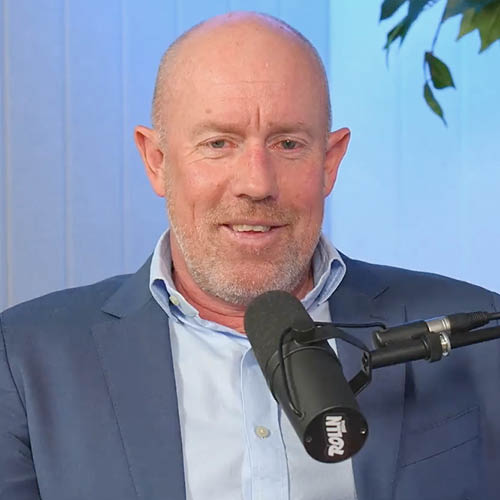
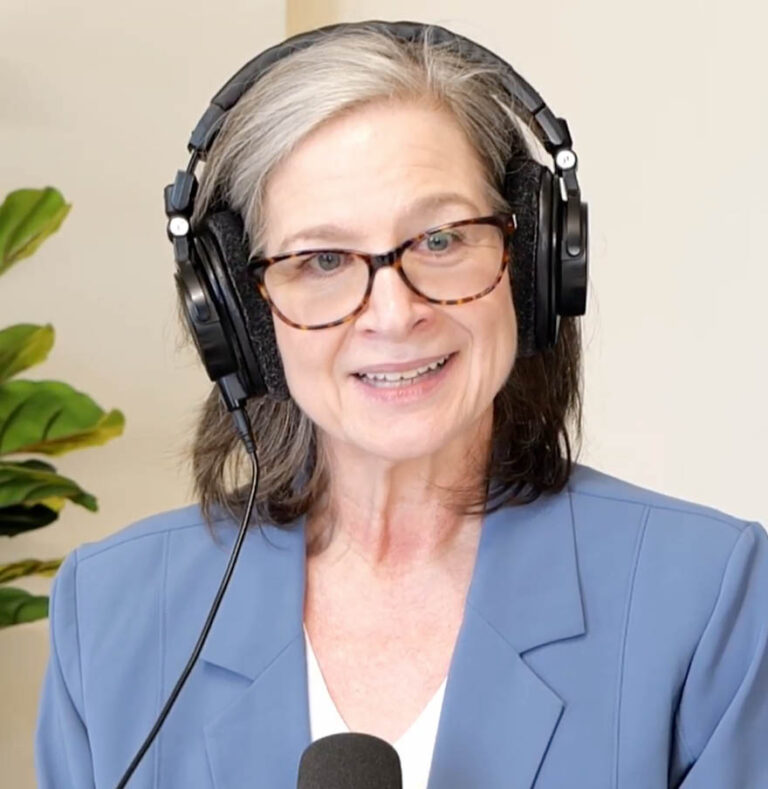
David Jepson: [00:00:00] Greg, welcome to the show.
Greg Stack: Thank you. Looking forward to it.
David Jepson: Yeah, and uh, I was just doing a bit of, bit of research beforehand. We're coming up to your. 20 year anniversary with the company,
Greg Stack: is that right? It is in October. It's, it's amazing. It seems to have gone fast. It doesn't feel like one of those careers that's been 20 years into one place.
It's been, um, there's been a lot of change and, you know, continues to, um, to provide passion for me. So, yeah, it's gone very fast.
David Jepson: Yeah. And what's, um, obviously like in today's, today's age. Um, people change jobs quicker. Uh, look,
Greg Stack: I, I think the world has changed significantly. Uh, I felt when I first went into this role, and, you know, you, you network a lot with, um, long-term CEOs and they're just, um, they've got all the answers.
They've, they've seen it all. And I think. Come COVID, it was a bit of a leveler. You know, we, we started to experience new challenges for business, the environment, and then as individuals and, and CEOs, you needed to be able to, you know, change the way that you work. And I felt like I, I had caught up and I think the [00:01:00] learnings, you know, personally for me since then, and the continual development and, you know, COVID then has morphed into other challenges.
So it's been a, um, a bit of a whirlwind the last few years. But, gee, it's been a, um, and it's been an exciting, uh, role to have.
David Jepson: It's
Greg Stack: definitely
David Jepson: not been a boring few years, has it? As an executive? Absolutely not. Especially as the CEO of a manufacturing business, I would suggest of all the industries.
Greg Stack: Yeah.
It's been, um, look at manufacturing's challenging in Australia, and we've seen a lot of manufacturing go offshore over the last, the last 20 years. It's started with automotive. But look, I'm really proud that we're able to still have a sustainable operation, you know? The obvious challenges around labor costs and costs of energy and, and scale are there.
But I think it, if you can find the right, you know, positioning for your business and try and find that right value proposition and how to leverage that. Um. I think it's still very much sustainable. The challenges are the, you know, all the inputs and the raw materials that have to [00:02:00] come from offshore. So it's certainly got its challenges and I mean, especially now with what we're seeing.
I mean, a lot of our competitors come out of, um, come out of Asia, specifically China, and. The recent geopolitical challenges with Trump and tariffs have seen, you know, intense competition. So I feel like we're about to go through another wave of, uh, of challenges that we're gonna have to overcome.
David Jepson: Yeah, completely.
Have, have you found, I mean you mentioned Trump there, obviously he's part of something bigger, this kind of wave of nationalism. Have you found that the kind of manufactured in Australia badge that you guys wear proudly, is that something that's helping. Your business at the moment?
Greg Stack: I look, I, I, I like to think it is.
And, um, I think there's a, a place for local manufacturing, whether it's, you know, how quickly we can bring innovation to market. How we can, you know, reduce lead times, how we can add certain value to our clients. I think the frustrating part is that there's, you know, there's a lot of investment, [00:03:00] especially government investment and infrastructure and you know, the premise is to be able to invest in infrastructure and support local supply chain and local industry.
And we haven't quite seen that play out yet. I know there's been a. A lot of discussion recently, and this isn't certainly not a political, uh, discussion, but I, I think I'd like to see, um, you know, the, the local industry supported and recognized more. But I think it's up to us, you know, we need to make sure that we're as lower cost as we can be, that we're, that we're efficient and we're providing.
Value that people are willing to pay for. So it's really, the onus is on us, but um, yeah, there are some challenges to, um, to make sure we can compete at that level.
David Jepson: Yeah, we've, we've been fortunate enough to have a number of, um, Australian CEOs on, on the podcast so far involved in, in manufacturing, and I've really been struck by the kind of determination to be innovative, to keep the manufacturing in Australia, to work together, to work with government.
Yeah, it's been very encouraging, certainly for me to hear.
Greg Stack: Yeah. Look, it's, um, I, I [00:04:00] think it's important and I also, um, you know, I'm a member of a number of forums where there's other, um. CEOs of local manufacturing businesses and, you know, we know what our, our challenges are, but I think striving to be, to be different and be able to have that differentiated value proposition is just so important.
But, you know, you can't lose fact that you've gotta be competitive. So we've gotta be low cost, we've gotta be staying ahead of our overseas competitors and offering something different. So the opportunities there, um, certainly for it to be sustainable, we just need to work really hard. Yeah.
David Jepson: You've. Seen so much change, um, within the company.
One of the things you and I spoke about when we had a brief discussion a few weeks ago was Nexans is very much in transition, um, at the moment, moving away from being sort of a manufacturer to a, a solutions. Partner. Talk us through what that, what that transition looks like and, and why you guys are doing that.
Greg Stack: Yeah. Look, I'm, I'm fortunate to be part, or I'm leading a subsidiary business in Australia and New Zealand as part of a, a big [00:05:00] global business. And, you know, our, our global CEO, Christopher Rin, he's, um, you know, he's got a very unique operating model. Um, and it's, it's around what we call E three, which are three pillars around, um, the economic drivers environment and, and engagement.
We look at the, and especially Chris, but we look at the world and I look at it here locally, and we can't be everything to everyone. And we've decided that we want to be a pure player in electrification and we've made those hard decisions to start to exit outta the markets that aren't, um, core to electrification and really double down on those electrification markets.
And for us, it's about. Bringing something that's real. And you know, the vision that we have for our business about the role that we play in electrification, it's just not manufacturing cable or manufacturing accessories. It's providing services and solutions, not just in terms of of products but in technologies and importantly, you know, the role that we can play in.
Contributing to the, you know, [00:06:00] to the climate. And, you know, we've got a, a strong goal of being carbon, uh, neutral by 2050. But it's the actions that you take along that way. And, um, you know, we're all invested and I think that resonates with our employees as well. But I think just being everything to everyone, there's such, um, capacity in our neighboring countries, you know, China, India, they're lower cost.
They've got advantages in certain areas that we need to be very specific and we've gotta be about. And what value can we bring to the, um, verticals that we wanna operate in? Yeah. And I see that as, um, as really exciting and it gives us some, some real focus going forward.
David Jepson: Why electrification? Um, this is probably reasonably obvious question and answer, but Yeah.
Look,
Greg Stack: I, I think electrification is where N Exxons has come from, um, from the pioneers of electrification. But if we look at, um, you know, what the outlook is and the transition that. Countries are going through, um, you know, connecting continents, [00:07:00] but using renewable sources to be able to drive industry. Um, we feel that there's a really strong role to play.
Um, and there's, there's no doubt that they're the markets that I think are going to be absolutely fundamental for us. We look at, um, you know. The source of electricity and whether that moving away from fossil fuel to more renewable sources, especially in this part of the world, um, how that, um, energy is then.
Distributed and transmitted across, um, across the country and then the verticals that we all operate in. And, you know, we're seeing the big onset of, of technology now and the growth in, in data centers. Um, you know, there's a real, um, risk in construction these days of fire. So making sure that we're using sustainable solutions to prevent fire, but still to be able to enable the amount of data that needs to be, that needs to be used.
Other challenges, um, which are more, are real. I mean, you know, the, the housing [00:08:00] crisis and the shorting, the shortage of homes and the number of homes that have to be built, you know, the resources that we have to be able to, to build them. There's real, there's shortages, there's skill shortages and trying to contribute with solutions that will help, you know, reduce the cost to build, reduce the time to build, but still allow, you know, people to be able to have their own, have their own
David Jepson: home is, um, it's very important.
What have been some of the biggest challenges you've faced in your role in terms of implementing this transition into the Australian New Zealand part of the business? Yeah. Thanks there,
Greg Stack: there's been a number, I mean, I, I look at, um, you know, Europe and they're a lot more advanced in terms of where they sit with the whole, um, climate and, and the transition to, um, to low carbon material.
And in Australia here, it's nice to have, and there's a willingness to use, but I don't think there's quite a willingness to pay. So the pace that we're able to transition versus what the market's willing to accept has been, you know, something that we've gotta be a bit patient. I think [00:09:00] also, um, innovation in the construction industry.
Um. We haven't seen any real great innovation over the last, um, you know, 20, 30, 40 years. And I think it's the, the hesitancy to adopt innovation. And that comes from, you know, rigid procurement processes down to, you know, skepticism. And I just think that, you know, you just have to be able to keep bugging away at those sorts of things.
Obviously, um, you know, high labor costs. You know, the other, the other piece is around, you know, our strategy is certainly around, um, sustainability and the environment. And again, you know, if we look at our industry, the, um, the construction industry is a significant contributor to waste to landfill. And whilst everyone wants to see action taken against that, you know, the solutions that have been there have been costly and there's been a real reluctance to wanna pay.
So I think we're. In any transformation where we're trying to fight against, you know, norms and [00:10:00] we've we're, and in ingrained behaviors, and it just takes time to be able to break through those.
David Jepson: Yeah, that's tricky because like you say, the kind of global strategies coming from sort of the European HQ markets are different.
H how are you managing that as kind of the, the person in the middle in terms of. Sort of implementing that overall plan into the, into the local market. There's an education piece. What's that like, kind of being the, the man in the middle?
Greg Stack: Yeah, it's um, it's, it has its challenges. I won't, I won't lie. It's um, you just need to be relentless and we know we need to change mindsets not only of, uh, stakeholders and those in the market, but also of our own people.
And, um, having that belief that, you know, the strategy is sound. It works, and we just need to keep on, keep on trying. And I think there's a number of ways to be able to, to execute. And if the first one doesn't work, you have to be relentless and, and keep trying. But yeah, it is, it, it can be tiring. I mean, there's always that, um, you know, the risk that, [00:11:00] you know, the business can take one step forward and then can slip.
Two, two steps back and trying to keep on top of that and keep the, um, you know, the vision at the forefront of what drives us is, um, is super important.
David Jepson: And what are, what are some of, what are some of the early wins or kind of little proof points you've been able to use to help you?
Greg Stack: I think that's, those small wins are so important in building momentum.
And you know, I think for the first time we've seen some small innovations finally being accepted in the market. Um, you know, what we supply in essence, or the heart of it is, um, you know, is, is cable that goes into power, um, homes, whether that be the, the, the lighting or the, or the power or or other circuits.
And, um, for a long way, the way that. Cable has been installed by the, the contractor has been, been the same. And, you know, the, the, the packaging has been the same and the methodologies have been the same. So we've been able to introduce some, some solutions that have been able to break through that mold.
[00:12:00] And whilst they may only have penetrated, you know, market share by a relatively small amount. They've actually been embedded and they're there to stay now. And now the opportunity for us is to look at version two and version three and make it bigger. So we've seen, you know, on a small scale, a number of innovations, um, work.
I think also now, um, our story is starting to resonate and I think, you know, talking not just about the economics, but talking about, um, the environment, talking about engagement. And that's more than just. Safety. It's about, you know, having diverse teams trying to, to, to lead the thought methodology. It's starting to resonate with a lot of people that we talk to, whether they be customers or or other suppliers into the industry.
And I think the feeling is there that there is a real willingness to want to accelerate the, um, the transformation. So that's exciting. But yeah, we've sort a long way to. Yeah, certainly a process,
David Jepson: but like, like you say, it's kind of one, one brick at a time, and then I'm sure that momentum is gonna build.
And this is not, this is not a trend [00:13:00] that's kind of unique to, to you guys. This is happening across multiple industries. So ab
Greg Stack: absolutely. I look at, um, we've got a, um, a quite a unique, um, recyclable spool that, um, we send our, our basic cable out to sites, to construction sites. For years and years, they were on these small, cheap throwaway, plastic spools that were done just like that.
At the end of the day, once the cable's been installed, they get put into the bin or those big collection bins on site and we've brought a recycling spool in. They, they cost more, but you're able to return them to your local wholesaler where you bought them. You get a small refund and then that comes back to us and we start to recycle and we're now seeing that, you know, over 30% of those spools are now actually being recycled, being.
Repositioned reused, and then, um, going through the cycle again. So for me that's a, that's a milestone win from everything. That was sort of one way to now starting to see genuine circularity is, um, is really pleasing. So wins like that, how do you sort of communicate
David Jepson: that into your [00:14:00] team? What does that process?
Uh, look,
Greg Stack: we've got a, we've got a great marketing team. I have to say that some of them are, are here. But, um, it's all about communication. What we can do, um, what we can do in terms of, you know. Transparency externally through various platforms, but also internally. We spend a lot of time, whether it be, you know, we've got, we've got screens all over our facilities, whether they're in offices or they're in or they're in factories.
Just trying to highlight what we do, what our message is, what the success that we've having, and I think. That's what about building culture's all about, you know, sharing, sharing the successes when we don't succeed, what are we doing about it? And, and keep on and keep on promoting it. So yeah, it's very important.
David Jepson: Yeah. And are you seeing that come through into kind of perhaps improving retention within the business or making it easier to bring. Bring employees in, things like that.
Greg Stack: Look, um, I think at the moment in the environment, um, we talk a lot about productivity and absenteeism and retention, and there's a number of issues around [00:15:00] the challenges that we face, um, in, in all, in all businesses.
But there's no doubt having a compelling story, one that's linked. Um. And hopefully, you know, we can, um, mirror to people's own values will help, um, attract employees and, and help retain them. And that's certainly what we're trying to do is trying to connect our, connect our vision with our people and the more that we can have success in doing that and the more we can share some of these stories, I think the better chance we have of doing it.
David Jepson: Yeah. And there'll be, I'm sure lots of people listening to this who are. Running teams, business units, companies who are part of kind of global, global organizations. What are some of the most important leadership lessons? That you've kind of learned from localizing a global vision?
Greg Stack: Look, I think the, yeah, it's, it's, look, it's, it's, it's one of the, um, I, I, it's one of the areas of my role that I, that I enjoy.
I, I think you really need to buy into the global vision. [00:16:00] That's, that's the business. That's the vision that's being sold all over the world. My role is to implement that locally. And, you know, all countries are different, even, you know, between Australia and New Zealand, around my span of responsibility.
There's different nuances in, in either country, but it's just so important to keep the, the core global fundamental at the heart of your strategy, and then adapt that to be able to suit the local, the local environment. Look, there's a number of ways to, to execute, but I think, you know, we've got a global playbook that, um, is, gives us some really good, really good structure.
It's demonstrated to work in various countries, and it's just having the trust that we can, you know, take the, the methodology and the principles and adapt that and adapt that locally and again, you know. Set yourself bold, bold ambitions and big dreams, but in small pieces, um, break that down and achieve it and then celebrate that success.
David Jepson: And what would you say, just sort of flipping that a bit, what would you say to [00:17:00] perhaps people who are listening to this, who are the global global CEOs and are looking to kind of implement strategy into the, the regions that they oversee? What would advice would you give them on how to really get that buy-in at a local level?
Greg Stack: One of the things that I, you know, would, um, would certainly recommend is that you need to be able to spend the time understanding the strategy, understanding the principles, understanding what defines success, and then, you know, regularly being able to, if you, if you encounter obstacles, you know. To be able to benchmark, you know, have, have these obstacles been faced in, in other parts of the world?
If so, what was done? Um, we're facing this. Is there a way that we can potentially adapt locally? So I think work collaboratively. Um, you know, I think there's a, a risk that a lot of countries can go off and their, their rogue and their operating in silo. And that's not what part of being a, a part of a global business is.
And I think it's been able to. Try to collaborate as effectively as you can across distance and across time.
David Jepson: And [00:18:00] let's talk you, you, you mentioned it earlier, the, the E three. Operating model. Just talk us through that, that again.
Greg Stack: Yeah. So the three pillars of E three, which, um, is, is quite unique. The first one is quite traditional around economic.
And we've all, you know, we all have our economic KPIs. We all have our, our customers. I, I think our view with customers is a little bit, uh, unique. It's not every customer is the same, but you know, those customers that want to go deep with us, we've got, you know, quite a deep. Proposition that we can help support their development and growth.
So the economic piece I, I suppose, is more familiar with people to others with regards to engagement. There's a, there's a few factors to engagement. One of them is safety. Being a manufacturing environment, safety is, um, is, you know, paramount and the routines that we have internally to be able to prevent accidents, you know, I suppose our record stands stands alone.
You know, we've, we're, we're well over a thousand days, [00:19:00] LTI, free. We have. Minimal LTI annually, um, and MTIs, and we've got very good routines in place. But I think also with engagement is making sure our employees are engaged and what those strategies look like. Making sure we've got a diverse workforce. Um.
Diversity, I think has proven that it empowers teams and it delivers better outcomes. So, so those metrics are important. And then environment around, um, you know, reducing not only our own internal scope one, scope two and scope three emissions, but also playing an active role in the environment with regards to the materials we use.
Um, trying to reduce, you know, waste going to landfill. Having, you know, genuine actions. There's a lot of greenwashing that I think happens in the, in the environmental space, but having genuine actions that can be audited, that can be demonstrated to work. You get all of those three pillars. Right. And in terms of my own [00:20:00] personal.
Measurements. I, I can't achieve the KPIs in economic, but not in environment or engagement and have done a good job. I need to be successful in all three to be able to deliver on, um, on what's required of me and my role.
David Jepson: And do you, do you see the three as all feeding each other or are they very separate?
Greg Stack: Yeah. A, a ab absolutely. Um. I think you have to have the three to get, you know, the, the genuine success that you want. I, we, we've got a, you know, a model where we, we partner with a lot of customers, um, predominantly, you know, distributors and wholesalers, and be able to work with them on environmental strategies that can have a genuine impact on the environment.
To be able to work collaboratively with them on, you know, what's best in class with regards to material handling and safety, how we can work on training and education to make them stronger businesses with stronger value in their, in their markets. So I think it all is, uh, interwoven for sure. You,
David Jepson: you [00:21:00] talked about like ethical sourcing, for example, like making sure you're using materials that are recyclable or, or better for the.
Environment. If, if those are gonna cost you more and obviously impact on that economic pillar, how do you go about making those decisions and choosing the areas that you're really gonna focus on?
Greg Stack: Yeah, I'll look, uh, in, in terms of, um, the ethical decisions. I think there, that's an, that's a no-brainer. We will go down the ethical sourcing path.
Hundred percent of the time. And if it's a higher cost than what others are able to provide by non-ethical sources, well then, you know, we need to find other ways to be able to, um, compete at that level. We wanna offer the market, um, low carbon products. And in our business, which is cable, it's either aluminum or copper conductors.
Our offer into the aluminum space is 100% low carbon, and we source low carbon material that goes into our cable. It costs us more, but we are strong about that being, uh, a value proposition that we wanna [00:22:00] deliver to market. So we need to find savings in other areas. We buy all of our copper from BHP locally in Australia.
Uh, at the moment we don't have a, a low carbon source, and we're working. And we'd like to accelerate that, that development. But if it means there's a, um, there's a higher cost, there's a higher cost in materials, and we need to find some efficiencies in some other areas. And I think that's the challenge that we, our strategy does present.
And we, we look at, um, you know, new innovation or new strategies and we look at it across two lenses. Is there a willingness to use and is there a willingness to pay? And we're finding, and I think this is what gives us the confidence, we're finding that there is a willingness to use. There's a willingness to, to try new innovation.
If it's gonna save time and money. There's a willingness to use low carbon materials if we can, you know, try to reduce the amount of waste go into landfill. The challenge that we've got is that, where is the willingness to pay? And I think that's, um, you know, that's a big question. How much value can we create?
Um, and then what support can others help provide? But you know, that's the dilemma that we're facing.
David Jepson: Yeah. [00:23:00] Such a tough balance to find. Does that feed into. Something you mentioned before about not trying to be everything to everyone.
Greg Stack: Yeah. A abs abs, absolutely. Yeah. Ab absolutely. I mean, for us it's all about, um, cell activity.
We, we know there's, we we're in, it's, Australia's not a, um, not a huge market, but for its size. There is a lot of, there is a lot of opportunity, but. A lot of that opportunity may not have any real interest in wanting to be operating in a way that's, you know, gonna have a positive impact on the environment.
They may not necessarily have the same standards around safety and around people the what we do. And from an economic or return on shareholder perspective, they may not want the same sort of return. So that business, those markets, those verticals, then they're not for us. Trying to find the verticals where we can add genuine value and we can achieve all that we want across the E three is just really important.
And that's why, you know, if you're in in the office, you could see the map of electrification and we're very specific about where we think [00:24:00] that we can add genuine value. And you know, it comes to. The large scale wind, large scale solar, the transmission, you know, high fire safety buildings, you know, residential construction, infrastructure, data centers.
And we know that those markets have got genuine needs for the types of, um, services and solutions that we're developing. So yeah, cell activities, the, the key for us,
David Jepson: I mean, given everything you're talking about there, it's quite an interesting conversation 'cause you are thinking about what does the future kind of Australian and New Zealand, what do those economies.
Look like. What are you most excited about Australia going forward?
Greg Stack: That's a big question. I, I mean, we, we are doing a lot of work at the moment on our, um, you know, strategic plan out to 2028 into 2029. And you can, uh, from a, an electrification lens, you can see that. You know, there's a, a huge need to be able to accelerate the amount of green energy that we can, that we can produce.
So we see that the need to [00:25:00] accelerate, whether it be onshore wind or solar or offshore wind, whatever that might be, is a, is a genuine need to accelerate that. So trying to create. Innovative solutions that will help in that. Set Acceleration is very exciting. Um, you know, the amount of, um, you know, data centers now that are needed to be able to house the, the amount of data that's being used, especially with ai, it's just, it's, it's doubling and it's tripling, it know quarter on quarter.
So being able to understand what impact that. Has on the electrification network and tried to look for solutions is just so important. Um, you know, we're starting to see, you know, immigration numbers come back and the amount of housing that's needed to be able to house a growing population there.
There's challenges there, and I don't think it gets talked about a lot, but there's, there's new ways to manufacture and I think I'm a, I'm quite passionate about modern methods [00:26:00] of construction and starting to look at. Um, new solutions such as, you know, offsite, modular building, um, helping to support the, you know, traditional building, just to be able to make sure that we can, you know, keep the types of construction and, and housing numbers up to what levels we need is exciting.
So I just hope that there's enough, um, you know, industry that's willing to embrace new technology, new thinking, new innovation to help us deliver on what the potential is.
David Jepson: Yeah, we had the CEO of one of the biggest modular. Construction companies in the US on the podcast not so long ago. And that was Yeah.
Fascinating to hear how they were approaching.
Greg Stack: Yeah. It's a phenomenal, look. Modern methods of construction, I think is a, um, is a, it's a phenomenon, but it's just about how it gets a start. And I, it was recently at a, um, at a launch in, in New South Wales last week for the, a New South Wales Homes Project where they wanna build 8,000 homes under this, um, modular, um, offsite [00:27:00] construction.
You know, the amount of, um, organizations that have already invested in early stages of the supply chain is, it's great. I just think we really need to some structure now in the industry to be able to support intent being, you know, more broadly, uh, rolled out, but it's a huge opportunity for, you know, for construction going forward.
David Jepson: What would that mean for. For you guys that would make your delivery a lot easier, I presume.
Greg Stack: Look, um, you know, we, we've got some solutions in terms of, um, you know, modular wiring, but even, you know, you still need wiring within homes. If we take, you know, a view on just on, on residential and multi residential homes, you need wiring to be able to power the PowerPoints and, and the lights and, and other things.
And I think it's just the way it, it's more efficient, you know. At the moment, you know, it's quite, it's quite traditional and we're using traditional means. Weather plays a huge role in, in the construction industry. But to be able to, you know, build these homes in enclosed environments where there is no impact to weather, where you can take a [00:28:00] lot of the, the risk or the project delay risk out, it can be a lot more, um, you know, pre-planned.
And I think there's so much more efficiency opportunity. And we'll talk about the problems with regards to productivity. I think there's an answer right there. Mm.
David Jepson: It's interesting when you say you working on your strategic plan for 20 28, 29. Feels it, it feels kind of ridiculous to even plan for 2026, the way things, the way things move at the moment.
But
Greg Stack: it, it does. I, I think, you know, I think you say it every year, you know, the, the pace of change is so fast, it just continues to accelerate. But I, you have to have a planner, you have to have an end game, you know, investment. Takes time and you need to be very clear on what that investment needs to look like.
Um, a lot of these strategies, they, they don't happen overnight. Um, so you need to have a plan, but you need to have the ability to be agile as well. 'cause no doubt we'll face other factors that are gonna, um, change what we think the outlook tomorrow is today.
David Jepson: As we just move on to the final part of the podcast here we have, um, we have a bit of a [00:29:00] tradition, so we like to ask each guest the same two questions.
Um, see what comes out of that. So the first one is, what's one thing you've changed your mind about recently and why?
Greg Stack: Recently there's been a lot of discussion around flexible working arrangements. Um, I think during COVID, especially being where I am in, in Melbourne, um, we were locked down for a significant period of time, which forced big parts of the organization to have to work remotely from home.
Post COVID. Um, I think there people got used to that and the flexibility that that gave, I've been a big believer that, um, you know, to be able to effectively collaborate to improve productivity that teams needed to be together, um, in, in an environment where they can work together and share. And I've been a big one that has been pushing to bring the organization back to working five days in the [00:30:00] office.
Um, just, just recently, I, I suppose from listening to our employees and listening to our, our, our HR organization. Effective, um, productivity or effective outcomes come from engaged employees more so than anything else. So if we can come up with an environment that does have some flexibility, um, you know, certainly not working remotely more than in the office, but giving people flexibility but giving them the support, um, I think we'll get better outcomes.
So that's probably one of the bigger changes that I've had personally in the recent, uh, recent times.
David Jepson: Yeah. Interesting.
Greg Stack: My, um, my marketing manager's laughing at me through the window. I'm not sure she's,
David Jepson: uh, totally on board. Yeah. I imagine the HR team's very, very proud of themselves. Yeah. For, uh, that's, that's right.
Getting that over the line. What's one thing you've not changed your mind about? It's a belief that you hold kind of central to [00:31:00] you and one you'd wanna share.
Greg Stack: Yeah. So. The, the biggest thing that I, I still believe in is it's, and I think I've learned a little bit about this during, um, the last few years where we've started to bring innovations from concept through to, uh, execution and commercialization and in a manufacturing environment to be successful, you, you need to be efficient.
You know, we we're up against some fairly robust low cost competition. So a lot of the traditional manufacturing metrics around, um, you know, equipment oe, machine equipment, OEE, um, you know, scrap line speeds, downtime, um, absenteeism, manufacturing variances, they're, they're fundamental to having a good operation when, when you introduce innovation and it disrupts.
You know, systems and, and processes, and you can accept that for a period of time because it's [00:32:00] something new coming through. But to be able to sustain then the, um, the new innovation in a manufacturing environment, you need to get back to what the fundamentals are of having, you know. Focus on make sure that, you know, your procurement and your purchasing of raw materials or components is low.
That our plant is operating efficiently, that we're a lean operation, that we've got less downtime. So whilst innovation, it's, it's important to have some flexibility during the, um, design and the, the conception stage. To be able to embed that and to sustain it, you need to get back to what have been traditionally, you know, some of the fundamentals of, of manufacturing.
And you know, I think that will never, that will never change.
David Jepson: At what point in that process, if you've implemented a change and perhaps you've still got people in the organization saying, we need more time, this is not quite working yet. How, how do you kind of push, push back on that in terms of no, this needs to happen.
Greg Stack: So that, that's a, um, that that's a learning now. I mean, I've [00:33:00] had some ideas that have been personal to myself that I feel are good and I have probably held onto those. Whilst they've been suboptimal a little bit longer than what I, if I was a little bit removed from that idea, um, would've done so I, I think having strong, um, process and structure in stage gate and having a very clear, um, project plan to say, you know, this is the date that we need to achieved a certain.
Whatever that metric might be. And we have regular reviews, strong project management. We, without that process to oversee anything, um, you know, these, uh, these things just don't work. You know, allowing people to have, um, emotion drive decisions or, um, you know, or not having alignment or having strict.
Routines. Um, you know, that's where things fall down. Yeah.
David Jepson: Are there particular red flags you look for, especially when it comes to emotion being involved in [00:34:00] sort of those decisions and ideas? Is there a way you can pick up on that quite quickly?
Greg Stack: Um, not, not red flags around emotions, but you need to use the data.
Um, you know, ultimately the data will tell you if what you're saying, um, is going to. I mean, any, any project requires an upfront plan and um, you know, assumptions have to be made and at some point in time you need to be delivering against those assumptions. So I think ensuring that you've got strong data, you're able to use that data to assess whether something is on track or isn't off track.
And if it's not making some change is important.
David Jepson: Yeah. And if you can't measure it, it shouldn't be a kind of fundamental part of the project. Absolutely. Greg, thank you so much for today. It's been a real pleasure to speak to you.
Greg Stack: Thank you. Been quite, quite enjoyable. It's amazing how quickly it goes when you're talking about something that, um, you know, you're quite passionate about.
So yeah, thanks very much. It's been a, um, it's been a good discussion.


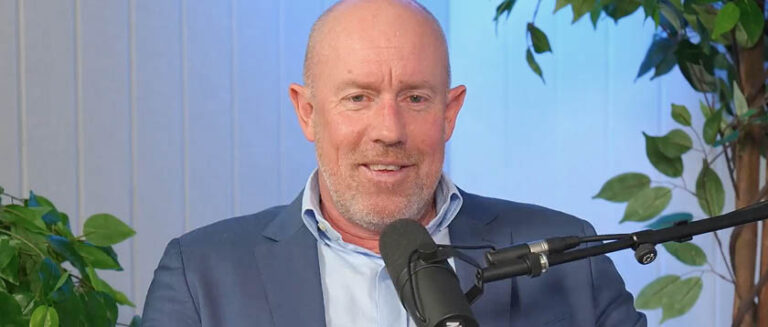

 207.7K
 1
1
 3
3


 POPULAR TOPICS
  FEATURED PODCASTS


 Home
Home
 Podcasts
 Covers
 Community
 Sign In