00:00
I think the best measure of professional success is if you can develop people behind you, because then you're creating sustainability, and you're putting something into others, and you're helping others be successful.
00:12
And how do you make sure that those acquisitions actually create value?
00:18
You know, we've done 17 plus acquisitions and integration is the key to success. We don't just think of the due diligence, the signing of the deal and getting everybody their first paycheck that we're done. That's that's actually the easy part. The hard part is after that,
00:38
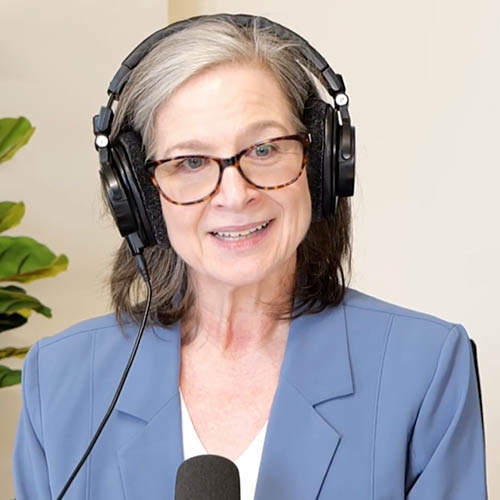
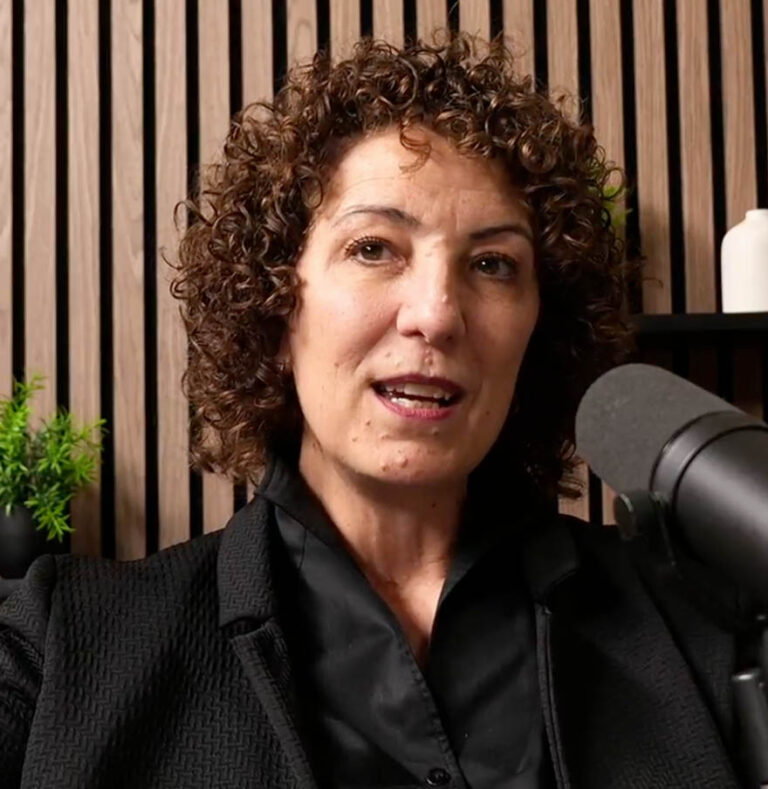
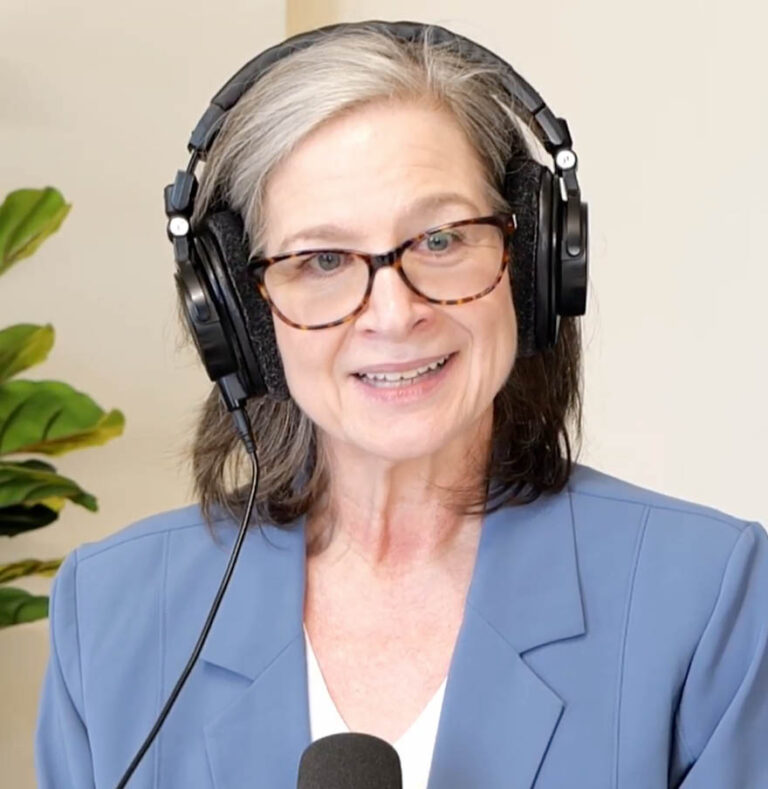
welcome back to CEO behind the scenes. I'm Lara necessian, and today we're looking at how private equity and technology are reshaping one of the most established industries accounting. Joining me is Michelle Thompson, CEO of cherry, beckhardt advisory, a firm that's rapidly scaled recently, ranking number 17 on accounting today's top 100 list. In this episode, we'll unpack what's really happening inside the industry. Terry beckhardt's Private Equity story and what it takes to modernize a firm built on trust regulation and decades of tradition. Please enjoy, Michelle, welcome to the show.
01:23
Thank you. I'm glad to be here.
01:25
I'm so happy to have you on the show. And where I would really love to start this episode is with the big picture, because accounting is going through a real period of disruption. Could you tell us what is actually changing right now? I
01:44
mean, that's a really good question, because there's so many different disruptions. I think if you'd asked me this question six months ago, I would have only talked about the PE story, but you asked me that question today, it would be the PE story and technology and AI, which is becoming, you know, bigger and bigger every day in our industry. But right now, I mean, we started taking PE investments into the accounting profession back in 21 and 22 and so that has taken off. Initially, it wasn't very many of us, and now it's a lot of us, and pretty much the story is always about that level of investment and how it's changed, the way firms operate, and how how firms think,
02:26
and where does cherry Becker sit within this, this period of transformation? How are you thinking about your role in shaping what's next?
02:37
Yeah, that's a great question too. When this first started, when the first PE investments occurred. We sort of sat down as a leadership team. Our firm is almost 80 years old, and I'm the fifth CEO, and I followed somebody who'd been in the role for 27 years. And so we were sort of at the point I took over in 2018 we were at the point that we knew we had to modernize the firm. And, you know, we were operating as a traditional accounting firm, and we needed to modernize. And so when PE started being part of the equation, we were sat down and we said, will this help us speed up our strategic transformation, and is this the kind of the direction we want to go? And as a team, we sat down, we sat down with our board, and we said, Yeah, this is the direction we think we get, we think this will speed us up. It'll also give us a chance to have a little bit of an edge. Now, if it doesn't go, we took a chance, but if it goes, we're out front, and so that's really how we've approached it, that we were out front and we were really using that opportunity to modernize as quickly as we could, the things that we felt we could speed up strategically. That's where that strategic partner really made a difference for us.
03:45
And I'd really love to touch further on that private equity piece, because it's such a pivotal part of your your transformation and your growth trajectory. What was it that made cherry Becker really think about pursuing that path in the first place. What was the conversation and the intention behind that?
04:09
It really sort of boils down to the way that firms funded themselves, and they funded themselves. We wouldn't go to banks. We would fund ourselves from the partners, and so we would be able to make change, but in a very slow pace, because it's what the partners could handle year in and year out, and that would get us there, but not there quickly. And so really taking the opportunity to explore what it could mean to be PE backed, and that meant educating ourselves, even though, you know, we interact with PE firms and the work that we do all the time, really looking at what it would mean to be partnered with a PE firm and what that would look like. So we spent a lot of time educating ourselves and decided that there was a couple of things that would really work in our advantage. One was the strategic partner, the experience they had running companies. You know, we're accountants that turn in. To CEOs or accountants that turn into coos, and so having that access to that type of expertise of running lots of different companies was going to help accelerate our ability to lead and develop leaders. Second was the ability to have the funding that we needed to be able to expand quicker the technology investment. But probably the other piece that I think doesn't get talked about as much is this is a profession that we're constantly trying to attract people to, and the previous model really had this long trajectory of the reward comes when you're 65 and what PE does is it changes the way in which rewards come for people at all stages of their career, and it really de risks people's career. And so instead of dangling out to a young person that you're going to you know, you work for the next 40 years, and this is your payoff, now you have these five and seven year sort of stints where there's opportunities that go at a completely different pace. And so de risking people's retirement was another part of it. So it changed the model completely with how reward worked for our partners.
06:11
And what did you see as that opportunity? And second to that, what were the risks that you really had to get comfortable with
06:21
the risk were, what's next? You know, the questions I would always get was, okay, you've found your first partner, and you like your partner a lot. You guys have a great thing going, but you're going to go to another partner when it's time for that PE firm to exit. And what does that mean? What does that look like? And so that was one of the things that people would like, you don't know what the future is. I'm like, you don't know what the future is in the old model. Either you don't know. You've got to make your bets now on what you think the path is that's going to get you there. And for us, it was that path. I never really felt like it was risky. I felt like it was the right path. The accounting profession is a very close knit. The CEOs are very close to each other and want each other to be successful. We're friendly competitors, and so the people that had already gone before me, I trusted I trusted their judgment, and they were mentors to us along the way. And so I felt really confident in the decision to go the direction we went. But it was a shift from partners voting to make that decision, and and they had to, and they had to vote at a certain level, so I had to get 130 partners to agree to do this. And they're also in agreeing to do this, won't vote again on anything, because now it's a board run. It's run more like a corporation. So the positives they got. They gave up some of those sort of traditional things that existed in an accounting firm.
07:45
Yeah, it's so interesting. Welcome back to CEO really surrounded by so much tradition in terms of the way that you do things, in terms of the way that things are structured. And I could imagine it would have taken a lot of confidence and conviction to actually take this new path and new way of doing things. Where do you feel like that internal confidence came from? I know that you said you had mentors that were sort of guiding this way also, but it takes a lot of courage to break free from those more traditional measures and paths. What do you think gave you the confidence to do that?
08:29
Yeah, I think it's because I'm an auditor, and I know that. I mean, I'm an auditor by training, which I know is a little bit weird of an answer, but I learned about so many different companies and how companies were run, as as an auditor throughout my career, and felt that we were stuck. I mean, I felt like that we were stuck. I was the fifth CEO. There's a lot of politics that go in that, and not to say there's not politics now, it's just different politics, but that we weren't going to make the progress that we needed to I mean, when we follow somebody who's been in the role for 27 years, there's a lot of things we need to do. We need to think about where we are in the world and where we need to go. To just give you perspective, we were the 25th largest firm in the country for 20 years. Okay? Every year we were 25 so we were keeping up, but we weren't getting further ahead. And so for me, for us to do that, that was the bet I felt like we had to make.
09:28
I want to touch more about leadership a little bit later in this conversation, but I do want to talk about the growth trajectory that you've been on, because to your point, you've been actively growing, including these recent acquisitions. What are you looking for when you're bringing in new firms or capabilities into cherry beckard?
09:52
That's a good question, because one of the things that if you look at the size we were when we took PE investment and the size we will be this year. We've tripled in four years, and that's a very different organization than it was at the time. And so that sort of growth trajectory changes the kinds of people you need, the way you should structure yourselves. But at the heart of it, there's a time in our history, again, almost 80 years old, there was a time in our history where we had 50 offices, and then we went down to around 15. We were right at 20 offices when I took over a CEO, and we knew that acquisitions was part of the growth. But as a firm, we had always had multiple offices, which means culturally, we knew how to lead a firm across a distributed geography, which I think is an important thing, and which has made our acquisition strategy really successful. We don't have one office. That's the mothership, that we have a hub, and then we have all these spokes. That's not who we are. We have a lot of offices of the same size, and our leaders are all over the place, and they always have been. So as a firm, we've always run as as one firm, irrespective of the number of locations. So when we're going to look for acquisitions, the first thing we care about is culture. And do we think the culture fits? And you're not going to find everything out in those you know dating days, when you're getting to know each other, but you get a good feel for that, and if the culture fit isn't there, then there's it's a no go. You know, the next thing we're looking at is, does it fit a strategic thing we're trying to do? And that might be, is it critical mass in an existing location? Is it a location that we actually need to be in because it advances one of our industry focuses? So, for example, we have a very strong private equity practice, and for us to continue to not be excluded from opportunities, we needed to have offices in a major financial market. We're in a lot of locations, but we weren't in a major US financial market. And so going into Chicago was part of what we had set out that we wanted to do because that was a critical piece. So we looked very specifically for a firm in Chicago, and it was one of our first firms that we did acquire. So when we're out there looking it has to hit that or it has to go deeper in an existing service, or it's something we feel that's complementary to the client that we serve, and that we feel that we are under serving them by not having that service. And so that's really how we break out what we're looking for in that strategy. But I think what makes us really good at it is the fact that we don't have that central mothership. We know how to lead a lot of offices. It's not something that we've had to learn. It's just in our DNA,
12:42
and how do you make sure that those acquisitions actually create value beyond just growth on paper,
12:52
that is a great question, because it's a conversation we always have, and there is a path to that value, and it's not always straight up. Sometimes it's a J curve, and part of that is a lot of the services that we provide run on an annual basis, you know. So they happen once a year, and so when that acquisition occurs really dictates how long it takes to start seeing that initial push on value. But I would tell you, it takes two to three years to really see that they get acclimated, they go through the change, and then we're able to really the story that we strategically felt we could tell together. We're starting to tell it in a very meaningful way.
13:30
It sounds like it's very much an ongoing conversation, an ongoing focus as well. It's not just focusing on the acquisition itself, but it's all the regular conversations and checks that happen well beyond that initial period.
13:46
Yeah, one of the things that we do every year is we're focused on something to modernize the firm, and one of the very first things out of the gate was formalizing corporate development. So it meant that our whole process around acquisitions was a lot more formalized. But the other piece of high, high focus is integration. You know, we've done 17 plus acquisitions, and integration is the key to success. We don't just think of the due diligence, the signing of the deal and getting everybody their first paycheck that we're done. That's that's actually the easy part. The hard part is after that, how do we help those people get through their change curve as quickly as possible? And how do we make them feel as fast as possible, part of the firm, not us and them? And so it is an ongoing thing. The first ones we did back in 22 and 23 you know, we're now past. We're at that value creation stage of those that's very strong, and the business case for what we were doing is living out every single day. We don't think of them as acquired firms anymore, and they don't think of themselves as acquired firms anymore. So that's to me, is a testament to an integration strategy that really helps us cross pollinate as quickly as possible.
14:57
And when you talk about modernizing the firm. What does that actually look like in practice?
15:03
You know, it's more than technology, but technology is certainly a piece of it, and at this at this day and age, technology is changing so quickly, you have to be very, very agile in that. But it's the structures that support the firm, and so it's the commercial excellence function, you know, the growth function that having a really sophisticated growth engine to help drive growth is a big Modernization Initiative in our profession. Most of the growth comes from the same people that produce the revenue. They got to find the revenue and produce the revenue. So you really need other avenues to support that growth engine, so that commercial excellence, something very sophisticated is important. The integration function is a modernization thing, an F, P and a function, a financial planning and analysis function, to really support, you know, accounting firms feel like they don't really need to have strong accounting because they're accountants. That's when you modernize your firm. You got to have strong accountants. But the CFO of an accounting firm, I feel bad for them, because they got accountants asking them questions all day long. But that modernization of that function is something that's important as well. And then you actually go out and say the services that continue to tell the story your client's story, what are those that we need to be delivering beyond what's traditionally thought of as accounting firm services,
16:25
and your CFO finance modernization survey touched on how organizations are evolving. Could you speak to what stood out and where leaders may still be falling behind.
16:41
So glad we did that. And you know, you you go into something like that. You think you know what you're going to hear, because you you're talking to these people every single day when you're doing the work we do. And so you think you know what you're going to hear, but you're always surprised. But what really came out of it for me, and then I would have to say that if I had taken the survey, this would have been the way that I would have also answered is data, the importance of data, and all the other things fall apart if you don't get data right. And I think what was really interesting is that the CFO role is becoming much, much more strategic and less compliance oriented, and the importance of being strategic, they're really expected in a small to middle market company, to be able to have the breadth of understanding beyond the debits and the credits, but how the business is running. The importance of things like data, the importance of analysis, the port, the importance of forecasting, the importance of being part of the technology strategy and leading that. Those are the types of things that came out of that survey.
17:41
And this is an industry that's built on trust and regulation. How do you push innovation without compromising those foundations?
17:53
Yeah, I don't think it's an either or. I mean, we talk about this a lot. The things that I did when I started, nobody does anymore. Those roles don't exist. The tasks I did have long since been automated. And so when you can look back, you can see all that change that happened and all that innovation that happened that made you better and made you better at serving your clients. It made you better at getting to the right answer. You can see it in hindsight. Sometimes it's hard to see in front of you, because you're like, what's the next thing? And how? How much risk do I take? The risks we take in accounting are around the processes, but we never, ever change on, on the whole purpose of our being, which is public trust and giving that third party a test station, giving the markets, the banks, people, confidence that there's another party looking at it. There's a set of standards that we follow now. Standards need to continue to modernize. They need to keep up with what's happening and but we have to continue to evolve, because our clients expect it. They expect us to be able to deliver in a different way, and so I don't look at innovation as something that is in conflict with what it is that we do.
19:11
It's such a great perspective, because often it's seen as it's one or the other, but you you really been able to merge both of those constructs together and and create a way forward that doesn't compromise the things that are core to your values.
19:29
One of the things that is really important for our leaders is there's a big gap between what the rules are and what the client's books say. There's there's a whole bunch of things that we can make, choices out about in between of how we get comfort in the rules applied to their numbers, there's a lot of choices we can make. It's not all black and white, but the processes we put in place and the controls we put in place are ours, and they're what makes what we do unique, and that's where the innovation continues. Use. And so each of our leaders are expected to not just watch the numbers daily make sure people are trained, but they're expected to constantly be improving what it is that they do and how they do it.
20:12
Something that you touched on earlier was around where the firm has been positioned, and it's also climbed from being number 20 to number 17 in the top 100 rankings. What were the key moves behind that momentum?
20:32
I think it goes back to like I said, we were 25 for 20 years, and then we moved to 20 about two years ago, and then we moved to 17, and the difference is the taking of the PE investment when we did because what it did is it gave us about a two year head start on everyone else, so we were able to come to market buying other firms. So there's an organic and an inorganic strategy to the growth. But part of that acquisition strategy, we had an advantage because we had a different way of valuing firms and a different way of paying for firms, and we were competing against an old model, and so that gave us the early mover advantage for two years. So we were playing on a different playing field, and that allowed us to go faster, not just to go fast, but to have the right types of firms. Now everybody's on the same playing field, so we're sort of back to the same playing field again. So we're all competing with the same, you know, tools in the in the toolbox, but we had that couple of years where we were really able to differentiate from other buyers. Now we're back to the same things we differentiate on, which is why our culture is better, you know why, strategically, why being part of us is better, and those are all valuable things, but the economic advantage we had for a couple of years really helped us catapult where we were at.
21:51
I want to go back to talking about leadership. You've said that your leadership journey wasn't defined by one moment, but it was more about gradually finding your own style. Could you talk to what that journey looked like for you?
22:10
Absolutely, when I started my career, it was technical. I mean, that's the role you're playing. You're serving. You start out learning your craft, you're serving clients, you're understanding the standards. And, you know, at that time, I considered myself to be a really technical person. I'm like, I'm, you know, the text, technical expert. But the reality is, in our profession, you need technical people, you need sales people, you need leaders, you need creative people. You need all of those people. But I'm not, I'm more naturally creative. And so as I moved up in my profession, in the profession, I started taking on different roles, and I I ended up having the responsibility to sell business. Really good at that. Okay, I'm going to be a salesperson. So spent a lot of time learning how to do that, and got really good at that, enjoyed that, and thought, Okay, now I'm not the technical person. I'm the salesperson. Well, then I was like, You know what? We need a new service. I don't know why we're not doing the service. We should start this service. And so I started a new service for the firm. I'm like, because our clients need the service. And so then it was like, Oh, she's creative. And so as time went on, I realized I was really more of a forward thinker about where we should be going, and I need to make sure I surround myself with people that don't let me go too fast, you know. So I really realized that my sort of gift was systems, thinking and looking out and seeing where things where paths connect, where we ought to be going. And so as time went on, I found that that was where I was. It was most natural. I didn't feel stressed when I was doing those sorts of things. They were natural. I always felt stressed doing all the other things, because they were part of the job, and you're expected to do them. But every time I get good at I think, well, this is what I'm supposed to be doing. But it was when I really got the opportunity to create a new service that I realized that that was really what I was good at. And that really sort of showed up when we restructured our firm. Like I said, we've always had this distributed geography, and we restructured our firm in 2010 to go from running by geographies to running by service lines. And our CEO at the time, came to me, and he said, I want you to read these job descriptions and tell me which job you think you should do. And first of all, I didn't really know him. So it was a strange sort of thing to get that call. And I was like, okay, so I read him, and I said, Well, I think I should be this job. And he goes, No, I think you should be this job. And I was like, but I've never done that job. And he goes, here are the people that are applying for that job. And I said, Oh, I can do that job. You know, like, immediately I was like, Oh, I can absolutely do that job. So I ended up running our audit division, and I didn't think that that was a fit for my skills. But what was was it needed a vision of where it needed to go. It didn't need someone to watch the day to day. It needed to have a path forward about where are we trying to go, and how do we continue to improve and evolve, how we. Do things which leads kind of back to that idea of looking forward and where we're going. So I have to surround myself with people that do the look at the today all the time well, because I'm always looking out to where we're going. And so having that person sort of pick me out and tell me to take that role is when I realized, gosh, I'm really, really good at these things, and I enjoy it, and I like to get people engaged with those sorts of things. And so it's sort of like a journey of the job I was doing. I thought it was the best job I was at. But I've been doing this kind of job now for almost 20 years, and I never feel really stressed about it, because it feels really natural.
25:39
It's so incredible the power of having someone, whether they're close to you or maybe not even that close to you, to see things that you may not be able to see for yourself, and how that can have such a profound impact on your trajectory. What I would love to know from you is, what do you think is the best measure of professional success, and what is it that you really love helping others to achieve?
26:07
I think the best measure of professional success is the fact, if you can develop people behind you, you can continue to move up, because you've built people that can move into the role you were at. So building succession and building people behind you, to me, is the number one success factor, because then you're creating sustainability, and you're putting something into others, and you're helping others be successful. I think the other part of that is not everyone's going to take the path you do, and they're going to be better at some things and not so good at others. And part of your role as you're helping develop them is understanding what they're good at, and just like you said, helping them see that and putting them in positions to be successful. You know, I can't tell you how many times there'll be situations where someone's in Job, and ultimately, we just look at each other and go, you know, that person's in the wrong job, they're miserable. They're not doing what we need them to do. They're in the wrong job. Doesn't mean they're not a good person and not a good leader. They're in the wrong leadership job. So get people where they can shine. To me, that'll be something that I'll look at always and say, the people that I've been able to develop are going to be the thing that I'm most proud of in my career.
27:19
Very well said. Well, Michelle, here at CEO behind the scenes, we do have a closing tradition where we love to wrap up all of our interviews with the same two questions. So the first question I wanted to ask you is, what is one thing that you've changed your mind about recently, and why
27:40
it's going to be on the speed of change with AI and technology. I'm a change person. I like to go fast, and I think things are going to happen a lot faster than they normally do. And so for me to change my mind, to say, I think the changes impacting the profession are now measured in months, not years, is the thing I've changed my mind on, I think it's a month's thing and no longer a year's thing, and I think that's the biggest thing.
28:07
And Question two is, what is one thing that you've not changed your mind about a belief that you'd want to share to help others lead or live better?
28:18
Yeah, the thing I haven't changed my mind about is investing in people, and you can't lead if nobody's willing to follow you. And so you have to make sure you're inspiring them, you're speaking to them, and you're making sure that they understand the vision. And so that has not changed for me, and then maybe in a broader way that my belief in this profession that we're in, and the importance of that profession to everything that you know, our economies try to do, it's important to have the people that have that level of expertise, and how important that is to help people make really good decisions.
28:59
Michelle, it has been such a joy to have you on the show and to hear about your insights around how private equity and technology are really reshaping the accounting industry. So thank you so much for joining me for this conversation, for sharing your brilliant insights.
29:17
Thank you so much.
29:18
Thank you so much, and to our audience. If you enjoyed this episode and if this sparked ideas, then please be sure to subscribe, rate and review the show and share it with someone in your network who you know would really benefit from Michelle's insights that she has shared with us today. Thank you so much for joining us, and we'll see you next time on CEO: Behind the Scenes.



 15.4K
15.4K
 5
5
 1
1
 3
3


 Host
Host
 POPULAR TOPICS
  FEATURED PODCASTS


 Home
Home
 Podcasts
 Covers
 Community
 Sign In