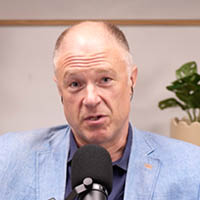
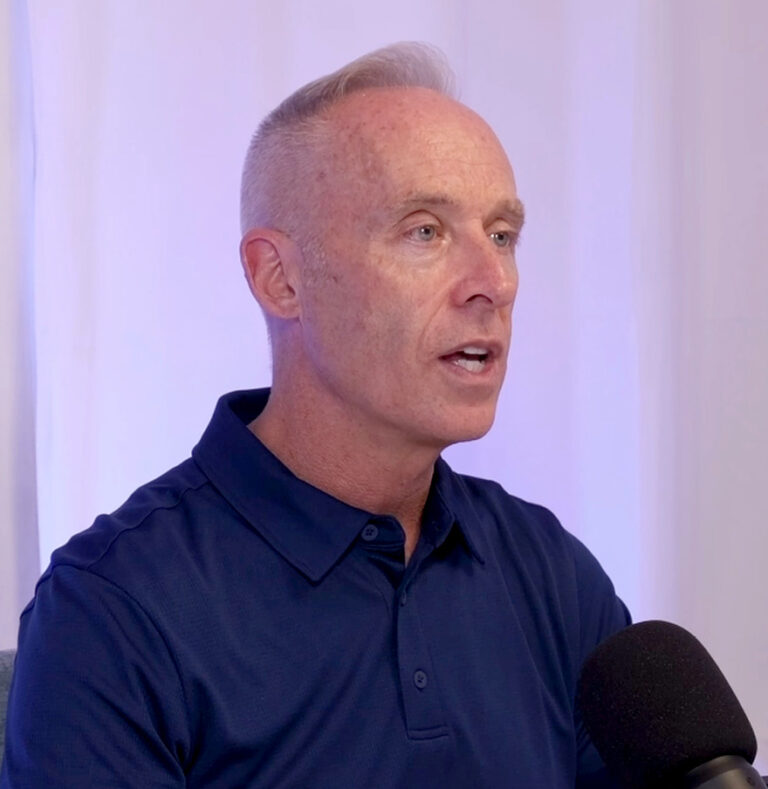
David: [00:00:00] Andrew, thank you for joining us today. Great to be here. Thank you so much for having me. Let's start with your academic credentials, if we may. Uh, very impressive career you've had, um, to teaching at Oxford and now coming to a UR today leading executive programs globally. Can you just walk us through your, your journey that led to where you are today?
Andrew: Yeah, I kind of, I started really as a, what I would call an accidental academic. I never had a strong intention to go there. I discovered a doctorate program on the subject of innovation management, um, about 25 years ago. I was really interested in that. Applied, got in, did that for four years, never intended to stay in academia, um, to be honest.
But back then there was a mini recession. Um, and the consultancies and, um, private equity where I was looking to go weren't recruiting. So I ended up in a business school. Frankly, I was researching stuff I wasn't that interested [00:01:00] in. Um, but I discovered this thing called executive education and then ended up in Oxford, um, running leadership programs.
I spent 10 years as the associate dean overseeing that whole portfolio, which was about a $50 million business operating globally. Um, and then laterally in my time at Oxford, I was running the advance management and leadership program. Um, so this was an incredible experience. 45 leaders from 30 countries, you know, for three weeks in Oxford.
Um, and it was a real privilege to work with them. Um, and I did that for three years and then left in November last year.
David: Fantastic. Um, what was it like to sort of climb through the ranks at Oxford? Why was it that you were so successful, do you think?
Andrew: God, that's a good question. Um, I think because I, I enjoy really good practical academic stuff.
I. Really good research that executives find useful [00:02:00] and that being taken into a place where it connects with their issues. Um, so it's not research for the sake of research. It's research which is really relevant to the issues that executives. And leaders are facing. Um, and on the on, on the other hand, I found I actually enjoyed running a business, which is what I was running.
Um, and in all of that I love working globally. Um, so I've worked across, I. Clients in Japan, Australia, New Zealand, Malaysia, Singapore, China, you know, Brunai, um, Myanmar, you know, you come across the world. Um, there's, I find it hard to find countries where I haven't got some experience. I think it's a combination of those three things really.
David: And as you've just mentioned, uh, you've worked with top tier leaders around the world. What was it that drew you toward leadership transformation? Yeah, life's work.
Andrew: [00:03:00] So I think I naturally gravitated, particularly in the last five years, to a place where I. I am trusted by leaders of some of the biggest organizations in the world, the CEOs, and also by some ministers of government as well.
And I think it's the ability that I have to both work with the big strategic challenges that they're facing, but also the development challenges they're facing. Who do they need to be to successfully take their organizations forward? Also, what does that mean in the context of where the world is today?
And it's the intersection of those three things, which is I think what really energizes me. Um, and my view is that we need different types of leaders going forward. I. That there's been a kind of a, a shift in how the world is working and [00:04:00] that's, you know, it's a privilege to be able to work in that space.
Fantastic. And I,
David: I presume what you've just talked about there was what led you to found Transcend Exactly What was the particular problem that you were looking to, to
Andrew: solve? So I think I can take this from two perspectives. One is I think the problem is the traditional teaching. Coming outta business schools is not enough.
It's not enough just to talk about what you need to do. Um, traditional consulting's not enough. It's not enough just to create a deck of slides and then think about how you make that happen. And it's not enough just to coach people, you know, in, in a vacuum sometimes of what the really big strategic challenges are.
It, it's a combination of all three. Um, and that's really what transcend space is about. The second problem we're solving is the leaders we're working with are increasingly. Extremely busy. And that affects their ability to [00:05:00] think. It affects their ability to strategize, to make decisions. So transcend space is lit is as it says, it's a space to transcend.
Transcend means to move beyond. Um, and, and that can mean move to a different business model. It can be moved to a different place of operating, uh, you know, to become a, a, a different type of leader to address the challenges that you're facing. And even to transcend some of the, the world's biggest challenges with solutions, practical solutions that work and that drive profitable growth.
So, and, and the space could be a coaching space, it could be a space for an executive team. Often it means them stepping outta the busyness. So I'm right now in the city of London, you know, full of busyness. Um, and sometimes I work here. Sometimes you've gotta go into, you know, nature. Um, because we know if you spend two or three days in nature, it changes you.
And, and I've seen that with executive teams. Um, they slow down and go into a different, more reflective space and they can address [00:06:00] some of those, those challenges, um, that I'm talking about.
David: How do you think your combination of your academic and your consulting experiences, how do they come together to really compliment each other in achieving these goals that you've laid out there?
Andrew: Yeah, so I think having spent 25 years or so in the business school world, I'm pretty familiar with a lot of different models. Call them theories, you know, ways of thinking, empirical data, et cetera. Also through my coaching and consulting, I'm familiar with how do you really listen? So my primary focus is to really listen.
It's to really be with where a leader's at, where an organization's at, um, where necessary. I can bring some. You know, academic understanding to that. Sometimes it's useful, sometimes it's not. Frankly, most of the time it's about [00:07:00] helping them understand the way forward, understanding the thresholds that they need to cross the edges that they're at, um, becoming deeply aware of those so that they then can move beyond them or move through them.
In some ways, the anything that I have that's academic is. Service of that. And so it's one of a number of different things that I use, um, in terms of my work.
David: Sounds like a, a really key part of what you do as well as relationship building and particularly, I guess, building trust Exactly. These execs.
Exactly. I mean, you're working with some of the, like you said, some of the busiest and most high profile executives around the world. How do you go about even just getting that first block of time with them? Yeah. Um, and then how do you develop that into a, a close and trusting relationship that you, that you share going forward?
Andrew: Yeah, so often the starting point is through personal recommendation. I [00:08:00] guess. The person has to be ready. I. They have to see the time as being a worthwhile investment. I'll talk a little bit more about that because you know, I've got some really examples of how people have created quite a lot of time and they're not as well.
The busyness actually comes from a need to control. Um, and some of what we're doing is letting go of that. Um, and, and then I think it's about personal chemistry. You know, um, do they want to work with me? I think there are certain things which are a given confidentiality. Um, and I really try to listen, I really try to understand when you're working globally, you, you can't really, you know, come with a lot of assumptions.
I. Um, you know, where people are in a business, in, you know, a fast growing economy like Saudi Arabia compared to, you know, an emerging market in another part of the world compared to a more mature [00:09:00] economy like the us but that still might have some fast growing businesses. You know, it's about deeply listening to people and deeply listening to what they're struggling with, deeply listening to where the opportunities are.
If I could touch on, you know, the busyness aspect, um, um, one of the CEOs I'm working with when I met him, I. If you can just picture this, I walked into his office and he had about 20 files stacked up paper files, um, and probably as many on his iPad as well. Yeah. Um, and he had a lot of energy. This guy could work like a machine, to be honest, and so I.
Very quickly I realized that there was a certain type of leadership there and you know, and first of all, I needed to listen to him. I needed to listen to where he was struggling, and what basically said was that was some things he needed to spend time on that he didn't have time to do. So I gave him a challenge.
I said, right, I want you to first of all, audit your time. Just, [00:10:00] just basically for the next four weeks, write down all the things you are working on. Um, use your assistant to code your diary if that's useful. And then let's have a look. So we met after that and I said, right. I want you to either give away or stop doing 10% of what you're doing.
I. And he said, that's impossible. I said, no, go away and have a go. You know, he was really into sport and fitness, so I said, consider me like a trainer. You know, we're gonna go from doing a deadlift of 70 kilograms and we're gonna go to 80, so go away and have a go or two. So anyway, he came back and said, I've done it.
And he said, actually, I'm, I've got more time with my family. I'm not working as late. So it took a bit of the pressure off. So I said, right, I want you to go to 20%. He said, oh, that's impossible. So I said, go and have a go. So give it away or stop doing it. Um, got to 20%, right? And then I said, all right, I want you to go to 30%.
And he said, listen Andrew, this is just way too much. I said, go and give it a go. Anyway, next time we met, um, he came to me, he said, you're not gonna believe it. I've got to [00:11:00] 30%, and over the next six to nine months, I can see my weight is 70%. And he said it's opening up a massive opportunity around working more with regulators 'cause it was a regulated company working more on business development, really doubling down on the digitization agenda.
And in front of me, he, he pointed to this file, um, and he said There are 10 documents in there. There are no documents on my desk. And my, I have got now bought a shredder. Um, and. My cap is 10 documents, so I don't take more than 10. So if the discipline is, if another one comes in, one has to go, it has to be basically either completed or handed over to somebody and it's totally transformed the way he's led.
Yeah, it's, it's opened up space for him to work on. The real bigger priorities, I would say, as important. It's also meant his team have had to step up. [00:12:00] So it's changed the dynamic with his team. Um, and so the, the whole organization is more resilient, so to speak,
David: um, and engaged, I would imagine they're being trusted
Andrew: and engaged and developing themselves and growing themselves.
So this has huge impact. It moves the needle on some of the biggest metrics in that organization, um, and gives him the head space to really lead. Um, so he's had, but he's had to let go of something he's had to let go of at a practical level, some of the stuff he was doing, but he's also had to let go of his need to control.
And that's where the, the interplay between the strategic and the personal, um, actually, you know, really come together. Yeah.
David: And for this, for this individual. And I imagine we can speak about this individual 'cause it's probably familiar to lots of people that are listening to this kind of case. Yeah. Um, were there any, was it purely a mindset issue or were there some skills [00:13:00] that, um, he needed to develop in terms of how to delegate?
Andrew: Yes. Um, there were some skills. So there was a kind of. A shift in terms of how much he was speaking, the ratio between how much he was speaking and how much he was listening. Yeah. Um, and so that ratio needed to move more towards listening than speaking. It required the use of open questions. Rather than closed questions because that really brings somebody in.
It required a, a, a way of delegating, um, and him not taking things on. Um, and in, in some ways pushing a lot more back on the team to do the job that they were paid to do.
David: And you, you mentioned before, sort of previously, it's really important that people are in the right space and that they're open to.
Sort of [00:14:00] grow and learn. Making time is, is one thing, but actually being open to, to learning. How do you know if you are speaking with someone, how do you know that that person's truly ready to, to listen and to to learn?
Andrew: Yeah. So often what I'm doing is trying to understand are they at a threshold? Um, so is there something going on in the organization that.
Requiring them to lead in a different way and the organization to operate in a different way. So I can give you some concrete examples of this. I worked with one person who said that we are spending more on fines than we are on r and d. So essentially we're spending more on the past and the problems of the past than we are investing in the future.
Um, another organization that was right in the middle of disruption, um, and they had too much capital and time [00:15:00] invested in the old paradigm and not enough capital and time invested in the new paradigm. You know, I. It can even be that they're doing too much firefighting around the current model and not enough thinking about the future model.
Too much time spent on operational problems and not enough time with customers. Um, you know, they may even say, I feel like we're just going round and round in a circle and we're not moving forward. So I'm looking for, I suppose, a couple of things. What's outta balance? Because when things are outta balance, they don't thrive.
I'm also looking for, are they at a threshold? You know, are they at a point where things have to change in the organization in themselves? Um, and that can simply be that they are at risk of falling over, um, because they're just taking on too much and they need to. Evolve into a different form of leadership, [00:16:00] um, and to be more settled.
And so helping them through that, they can also be at a, at a much more, I suppose, um, a threshold where they're moving from being a privately held business, going through an IPO or through a big shift in terms of how their board or their governance structure is constructed as well. But it's where something, the needle needs to move on something and we see that.
Manifest in, you know, changes in major metrics. Yes. Um, so that could be things like cost of income, you know, revenues, flatlining, we need to get that growing again, or, you know, so that's what really what I'm looking for. Yeah.
David: And I guess the point is with that is that, you know, if there needs to be a major change kind of business as usual or doing things in the same way, isn't gonna, isn't gonna meet that goal.
So being able to bring in that external support, who can. Help you look at things completely differently.
Andrew: Exactly. Exactly. Yeah. Um, and you know, sometimes I get, well, you know, this is gonna cost a [00:17:00] certain amount. And I'm like, if, if our work together brings about success, my fee should be a fraction of the business improvement.
Right. And so, um, you know, because we're moving, 'cause we're working with senior people, we're moving the needle on some pretty big metrics. Um, and so whether that's return on equity or, um, you know, top line growth, you know, reduction in cost or something like that completely.
David: And what, what advice would you give to an executive who finds themself.
In this kind of space that we've just described, they need to take the company in a different direction. There's a major metric that needs to be, um, addressed. How, how do they, how should they go about sort of seeking support or help?
Andrew: Yeah, so I think you've, first of all gotta find somebody that you trust, [00:18:00] um, that you have some rapport with.
That is gonna bring some experience of having seen this before. Um, can really help you understand how to move forward. Um, and I, I'm amazed actually sometimes, David, that I can be, particularly if I'm doing this remote, um, sometimes I feel like, not always, but sometimes that I don't know what I'm doing other than listening.
So I can be on a Zoom on a teams call or zoom call. And with a CEO, and they talk for probably 55 minutes. I am asking a couple of clarifying questions and at the end of it, there's a part of me that I'm not sure how useful I was, so I'll ask. Was that useful? Oh my goodness, Andrew, it's been so useful. You know, I've just been able to talk and I, and then, you know, you discover I can't [00:19:00] talk to my board in this way.
I can't talk to my team in this way. I don't wanna bring this home to my family. Um, I just need to be able to talk. I need to be able to talk it through, talk about options, talk in a way where I can almost hear the echo of my own voice and. Through that process start to understand the way forward. So I think if that gives you a, a sense of it now, then it might move into a much more practical piece of work where we are, you know, crafting a deck of slides to really make the strategy go from being implicit to explicit.
Um, we're thinking through how that gets presented to shareholders, um, or to a board or to an executive team. We're working out where the risks are. Um, we're trying to understand where the upside is, how to position the messaging. Now, that's a much more hands-on, but, but to before that, you know, the cer, there just needs to be a set of space to [00:20:00] talk and to process some things.
David: Isn't that amazing when, when people do give themselves that safe space to just. Communicate and think through. Very often those answers are inside them. It's just
Andrew: exactly.
David: They have to quiet the noise and, and get there. I think that's also the role of nature you talked about before, can be very helpful in that journey.
Andrew: Exactly. And sometimes that can be a teams call, a Zoom call sometimes that's a, you know, I go into their office to do that. Um. With some of my clients, I take them walking. Um, you know, sometimes we take whole teams out into nature. Um, and that's usually when there's something a bit bigger that needs to have some time to really focus on it, um, needs some time to really focus on it.
Um, but nature is a, you know, it's a, it, it has a way of quietening the mind and taking people into a different space.
David: Talk to us a bit, [00:21:00] a bit of a segue here, but I know you are. You're working on a, an event later this year, an executive gathering. Um, yep. Talk to us about that event. Um, what the goal is of it and who should be attending.
Andrew: Yeah, so this is our first global leadership retreat. Um, it's being held at a beautiful location, about two and a half hours from London. It is aimed at. Leaders from around the world who want to spend four days in in nature, but also going through a reflective process about themselves, what their purpose is, what their contribution is, what their.
Real impact is on the world, um, but also practically where their organization might be stuck, what the opportunities are. It's really taking a lot of the things that we're talking about and putting it into a compressed four day process, um, with a lot of [00:22:00] support with a, an incredible community of other leaders from around the world who will bring difference and will bring something similar and.
With some support after the event as well, um, in terms of what we might call integration work. Yeah. Um, so how do you take the learnings back into the organization? And we've als already got people signed up from, uh, governments around the world from, uh, business around the world. Um, and we're building the, um, well, we've got the content and the process and the venue booked and we're just finishing off the recruitment of the participants.
David: Fantastic. And you, can you take us just through what a, what an agenda of a sort of four day event like that looks like?
Andrew: Yes. So we would start with a, a very exp experiential process essentially of who is in the room. Um, I did this recently, and it was quite interesting. We asked 50 leaders as to a number of questions to get, help 'em get to [00:23:00] know each other.
But one of them was what was the transformation challenge that they were working on? And historically what we would've seen is. Uh, supply chain or customer or finance or operating model. This time 70% of them said whole organization and it was a notable difference. Um, so there's something interesting there.
So something to go back to your question, something about how. You know, we need to build them as a group. We need to understand what are the specific challenges that they're working on, um, and what do they want to get out of the event. Um, we then need to kind of bring in some topics. So we'll start to bring in the, the, the whole concept of purpose.
You know, why are you doing what you're doing? Are you in the right place? What is your organization doing? Is it in the right place? We'll go then more into a deeper reflective process. Um, and we, we actually use some [00:24:00] poetry, which works incredibly well to move people in that place quickly. As surprising as that might sound.
And that's really around what is the sound of the genuine for you. Um, and it gets to the, I suppose, the deepest and the, in some ways, the quietest part of a person. Um, and it's where the most profound energy is. From that, we start to come out and we start to say, well, okay, what does all this mean? How does this change the way you lead?
How does it change the way the organization operates? Um, and we finish in a very practical action planning type format.
David: Got it. So the, you start with sort of the personal work, looking at the grand challenge and then coming out of this. This retreat with real sort of actionable items that you can take back into the Exactly.
Andrew: Exactly. And what we might, what we will bring in as well. We're [00:25:00] relevant because there are some big changes going on in the world, which we might wanna touch on. What are the types of leaders and the types of business models that are emerging that we might want to look at and learn from, and what might that mean mean to current businesses?
Yeah. Um, and how might that inspire really, um, and open people's minds to what might be possible.
David: Completely. I think you mentioned there 70% of leaders thinking they needed to do. Large organizational change. I mean, what, yeah. What do you think are the biggest challenges generally that, that leaders are facing?
Andrew: Yeah, I'm gonna talk about five that I see. Um, and I'll start with what I think is the most shocking and, and this is based on what I've heard over the last three months. Um, and it's about the extent to which AI is going to transform organizations. So these are four people I've spoken to. [00:26:00] One said that it's going to reduce their head count down to 20% of what it currently is, so they will only need 20% of their employees to run their current business.
Somebody else said this gets more dramatic. They only need 10%. Somebody else said they only need 5%. Somebody else said that they think they can only need it, need two and a half percent. This was to run a finance function, not the whole business. This was just to run a finance function. Now that is the potential of the technology at the moment.
They said they realize that it's a big job to get there. Um. But it is coming. So that's kind of challenge one, which is a complete re rewiring of an organization through technology. The second is about the consequences of climate change. And I know this is kind of, it's politicized in some parts of the world [00:27:00] at one level, but you can't deny the data at another level.
And you know, we're seeing parts of the world. In drought, in flood, you know, we're seeing the consequences of that across, you know, the US across Latin America, across Europe. Um, I think in the UK we had wildfires in April, which I can never remember. They usually came in August or early September. Um, and I don't think we've, we've, I can remember one or two days of serious rain.
In the last three months, 0.2, 0.3, I think there's something around human potential and I think the organizations that can get the best outta people, um, that in many ways can integrate. Individual's personal purpose and values and what they care about and their ambitions into a bigger goal of what the organization cares about and what it's trying to do.
To me, this is an absolute critical [00:28:00] leadership skill. We're seeing some interesting academic evidence around this, um, as being at the heart of successful transformation. So something about human potential, something about globalization. Um, and I think this is about adjusting to new normals around the tariff agenda, around the sanctions, agendas around the way in which the global economy is being re rewired.
Um, and I think we'll continue to be re rewired. Um, and then the final one is just continual profitable growth. It's the thing that all shareholders are looking for. It's the thing that funds our pensions. Um, and it's the thing that funds taxation. Um, and so in some ways it's, um, it's, um, there's a whole combination of things in there.
What I would say is, is when you put all those things together. There's something really important, and I, and I would put it like this, I think we are now in an age of disruption. I think most people would say that that [00:29:00] is beyond debate. The problem we've got is that most organizations, particularly larger organizations, and the leaders.
Of larger organ, of larger organizations have been trained and developed and operate in an incremental way. They've got governance structures that underpin incremental change, and what we need is leaders that can lead through disruption to produce a transformation, often a total transformation of a business model.
And I would see as that as being. One or a major part of what I and we are trying to do.
David: That's, it's huge. There's, there's, there's so much there. And it's, yeah. You know, as a leader who's trying to lead through all these things, could feel quite lonely, I guess at times when you're taking on these challenges.
Um, fatigue can be a very real thing. Right? When you feel [00:30:00] like every day there's a new, a new problem. Um, are you seeing that in your work? I.
Andrew: Absolutely. Um, I think the, I would add a few more. So the loneliness? Yes. Um, who can I trust? Mm-hmm. Who can I talk to about this? Um, the fatigue, um, particularly for people who are under huge delivery pressures, I.
Or are working across global time zones. I mean, I know in my work sometimes I can be on a call at six in the morning to the Middle East or Asia and then on a call, you know, towards 8, 9, 10 o'clock at night into the us. So those of us who work across time zones, it can be exacerbated. And then when you put travel onto that as well, exacerbated even more.
Um, you know, I think as well, fear. You know, anxiety, stress, sometimes it [00:31:00] takes a while for people to be honest about what they're really feeling, um, because they have to portray a, a sense of confidence quite rightly. Yeah. You know, even that they just don't know. Yeah. You know, and being able to be comfortable with the, the fact they don't know.
I think having somebody who can. Be there for that, not judge them, um, not see that as a point of weakness and at the same time. Say, okay, we need to address the fact that your cost of income ratio is going in the wrong direction, or we need to address the fact that your capital allocation is not in the right place.
And what could success look like because that's what's motivating. What could transformation look like? What could a vision of the future look like? How might we get there? How do you create an inspirational message around that? Um, so it's about being able to be present with both, um, both [00:32:00] the technical and the personal, the strategic and the personal.
Um, and you know, I think that is where the real essence of leadership transformation is today
David: completely. And, and. That's why doing things like executive retreats can be, can be so important. Right? Like giving yourself that time and space to review what your purpose is. 'cause if you're not sort of purpose driven and doing something that you're centered towards doing
Andrew: Yep.
David: Life can get very, very difficult and you, you end up fighting battles that you don't even know you are fighting. Right?
Andrew: Yeah. Well, it can get difficult. It can be. De-energize. Um, when you have a real sense of what your vocation or purpose, and, you know, I'm indifferent to the language that people use to describe it.
It can be hugely energizing. It can be hugely clarifying to an organization to know what [00:33:00] its purpose is. Um, it can guide investment decisions, it can then guide priorities. Um, you know, I often find that when you work one or two levels down in an organization. People are crying out to know what that is because it's inspirational.
Um, and we know from some of the research that we've done is that it creates a massive increase in discretionary effort. So it's hugely motivating. Um, and it opens people's minds to what is possible for them, um, what is possible for the organization. Um, and it gives resilience to get through some of the challenges.
That addressing some of the shifts that I talk about can, can mean.
David: And what, what do some of the, the great leaders that you work with, what is it they do differently when the pressure is high and the pace is, is relentless like it is, [00:34:00]
Andrew: they know how to schedule their time. So this isn't time management.
It's much more sophisticated than that, I would say is number one, they know who they need to talk to. They have an ability to maintain an anchor of stillness within themselves or come back to an anchor of stillness. Um, and that is found either through sport, through exercise, through meditation, through walking in nature.
So there's something around the renewal. Um. They know how to work politically, um, both within the organization and with the board. They know how to listen and I think this is probably one of the most underestimated and yet profound skills that is out there. So in my work, I've [00:35:00] asked about two and a half thousand.
Leaders, not people who are at the very top of organizations, but generally two or three levels down about their experiences of successful and unsuccessful transformation. I. Um, and one of the questions we ask is, what were leaders doing? What differentiates successful leaders from unsuccessful leaders?
And it is nearly always about listening and communication. It's a bit more complicated than straightforward listening because it's listening and doing things that ensure that people feel heard, and it's listening and responding in a way that. Creates actions that in a sense, clarify and allow people to move forward with positive energy.
Um, a a allows situations to be [00:36:00] unstuck. So, so to go back to your question, it's about listening and understanding. You know, if we're at a threshold or an edge or a turning point. What needs to be unlocked? What needs to shift, who needs to get together? Um, and what do we need to focus on to move either a part of the organization or the whole organization forward?
And so there are some approaches that we've seen that lead to profound success if they got right. Um, and to really moving to a. You know, a new level of operating and a new level of performance
David: and the listening and communication. I mean, it hear it all the time, right? I think everyone know, yeah. Knows they need to listen and they need to communicate, but, um, I always kind of think it's a, it's an art form, perhaps more than a, than a science sometimes.
Yeah. What do you say to, let's say you're coaching an exec. Um, you probably ask [00:37:00] them, have you, have you communicated. What the purpose is, are you listening to your people? What are some of the signs that execs are listening well and communicating well, and what are some of the perhaps warning signs that they're not doing that maybe as well as they think?
Andrew: Okay. So I use a couple of techniques whenever I'm working with a CEO to really understand them, not just through their own words, but through the words of the people that are around them. So I use a very sophisticated, uh, questionnaire based tool. Um, which has got a lot of very good, uh, theory around organizational success baked into it.
And I also use interviews with a number of people, so I'm trying to paint a picture so I will pick up whether or not they are listening and communicating. Some of the traps that they can fall into is that they, on the one hand, sugarcoat the pill. [00:38:00] So they don't address the elephant in the room or whatever you want, however you want to describe it.
Um, and for whatever reason, the they are allowing things in the organization to fester or to, you know, not be resolved, number one. Number two, they withdraw. Um, into a place of judgment and, you know, into more of an inner state, and they shut up. But not in a way that allows other people to speak. They, they, they withdraw.
Mm. Um, and then the final one is they can go into excessive or hyper controlling. Mm. And, and that re you know, if we've, if you've ever been, and I've been in places where you've got somebody like that, you withdraw. Mm. Um, you become very responsive. You stop thinking for yourself. So. Um, the data profile that I use will give me an indication of those things.[00:39:00]
To go back to your point about listening, there are some thing techniques you can use. So I think some of this can be taught. Bits are about more of an inner state. The bits can, that can be taught are rather than responding with what you think, you can summarize what the other person has said. So it would go, David, what I think you are saying is, this is what I've heard.
Can I check it if I'm correct? And you can use open questions, not a closed question. A closed question would be, what time did you arrive at work today? You might say 8:00 AM or 7:00 AM And an open question would be, um, David, I understand you've just been on holiday. How was it? Um, and, and one you just give a straight answer.
Another is much more expansive and shows you that I'm listening. So there are some techniques you can use here, um, as, as, [00:40:00] as well as having to be in a different inner state and some, perhaps some, um, uh, you know, areas where there needs to be a deeper level of development.
David: Yeah. And I can completely see how when a, when a leader enters the withdrawn.
Sort of state or phase that you, you laid out there, how that can become damaging. Um, what's, uh, for execs and leaders listening to this, what's a thought that might enter your mind that indicates you're probably in a withdrawn type of state?
Andrew: Uh, that, yeah, so that you have a lot of internal narrative.
Going on about people and situations in the organization. Um, you are, you feel like you're holding quite a lot of stress about that. Um, you might be being quite critical or judgmental about the [00:41:00] organization without fully understanding. Um, you ma you may have looked at your diary and realized that you have.
Practically withdrawn. You're not spending time walking the floor, you know, doing professional socializing. Um, you know, you know, even to the more extreme. And, you know, I witnessed this in one organization where two senior execs hadn't spoken for nine months. So where is conflict kind of present in the organization and is not being resolved?
Um, where are relationships breaking down? Um, where are there difficulties with certain board members or certain direct reports where, you know, there is a, uh, a, a shift in the relationship into not a good place and, and in a sense, where have you become passive around that? Um, rather than actively trying to resolve it.
These are some of the things I would look at
David: [00:42:00] as you list those. I think anyone listening will clearly understand. Those are all bad things.
Andrew: Yeah.
David: No one wants these things to be present, but unfortunately it's life. They're life and they're probably everywhere in every business, no matter how good that business is.
Yeah, exactly.
Andrew: Exactly. Which is, yeah. Yeah. And you know, they are also, let's reframe them. They are areas where there is profound opportunity. Um, and why do I say that? Because whenever energy is stuck, and that's really what we're talking about here, it can also flow. Um, and we've all probably got experiences where a relationship's not been in a good place, but through certain interventions the airs cleared.
People have got things off their chest, they've been able to move forward, and energy starts to flow again. You, you know, you can feel it. Um, and in [00:43:00] an organization that can have a profound effect because if there is a breakdown in relationship at the top between the CEO and a direct report, or for between two people in the organization who are on the executive, the teams know about it.
It, it doesn't just affect those two individuals. It affects, you know, perhaps tens or even hundreds of people. Um, in terms of how the organization isn't moving forward. So. Conflict has a huge financial consequence to an organization or, you know, the types of things we're talking about because of the leveraged negative impact.
Consequently, if you can find a way to resolve it, it can have a, a virtuous circle of leveraged impact on the upside. Um, and so having people who are skilled at knowing how to resolve this as a leadership skill, I think is critical because when disruption goes up, so does stress, you know, [00:44:00] when things start to become more difficult, so does stress.
It brings the, I suppose the, whether we call it the shadows or the, you know, the, the, the more dysfunctional places that we might go to as leaders to the surface. Hmm.
David: I often find as well, sort of the anxiety or or stress that you can face as a lady, quite often that comes not from worrying about what's to come, but you're anxious because there's something you've not done or there's an issue you've not addressed in that that can Yes.
Yeah. Really create that anxiety. Exactly. So by cleaning that up, you can release that energy, like you said. And what do you think? We talked before you, you, you broke down some sort of the five or five key areas where leaders are facing, um, challenges. What does the future of leadership look like to you?
Yeah.
Andrew: [00:45:00] In
David: this new world,
Andrew: so. I think there is going to be something about the profound rewiring of organizations due to AI and other digital technologies. So that is a critical skill, which is, I would say at best 30% about technology, um, probably less. And it's about organizational change. There is also a, a really critical skill around how do you get, how do you create organizations that get the best outta people?
I. Um, and I would say that the social contract between people and organizations has changed, particularly for the younger generation. And so you can't assume that a salary and a set of terms and conditions is enough. It's about weaving their uniqueness. Into belonging. Um, and that's a, you [00:46:00] know, something that I think so far some people do really well.
Um, but it's not through training. Um, and then when you wrap all of that, those, those things up and put climate in there as well, I think we're gonna start to see the emergences of some very different business models. Um, some very different organizations. Some organizations are gonna make it, some won't.
We're gonna see some new organizations be developed by entrepreneurs. Um, so it's, I think we're gonna go further into a time of profound destruct destruction and creation. And at times like this, there are significant business opportunities. I think leaders have a choice. What side of history are you going to be on?
Are you going to stay in your incrementalist box and try and preserve the status quo or. Across the thresholds, the personal [00:47:00] thresholds, the business thresholds, and actually create the future. Um, and you know, that process isn't easy. It isn't always clear. Um, but it's about what your intention is. Um, and you know, so I think history is gonna look back on, you know, perhaps the next 10, 20 years as a prof, as a time when a profound change took place.
You know, it's like who are the leaders that are gonna be successful going through that? Um, and who are the ones that aren't? That's, I think, quite a, a, a basic choice. Yeah.
David: I think most people will say they want to be on the correct side of Yes. History of given the choice. Um, yeah. How do you, how do you put yourself on that path?
Andrew: Yeah. I think the starting point that I have seen is that you. Have to acknowledge that an aspect of the [00:48:00] status quo is unsustainable, um, and start to bring that into consciousness. Um, that's, um, like a muscle, right? So it can be that a relationship between two execs is unsustainable. It could be that our strategy is running out of road.
It could be that we are producing too much carbon as a business, and we know we're gonna get taxed for that. It can be that we know our culture is a status quo. That's not sustainable. And so by recognizing something's unsustainable, you are open to it being different and it's the first place. Or the first part of doing it.
Now, what I would add is a word of caution. Be careful who you do that with, um, because it can throw an organization into [00:49:00] a state of chaos or a state of dysfunction if, but, so that's about having a trusted group of people, um, that you can go through that process with. Um, so that's the starting point. And, and from there you can start to understand what needs to change and, and, and how do we go through both a process to reimagine the future, and then to understand what that means to us as leaders.
How do we need to step up? What does the pathway look like? For that. Um, and what does the action plan look like?
David: How optimistic are you about the direction that leadership is, is heading? And do you feel that the leaders of today are gonna make that choice to be on the right side of history?
Andrew: Yeah. Two great questions.
I am optimistic by nature and I'm optimistic when [00:50:00] I look at history. I think we are. With the benefit of hindsight, profoundly creative, profoundly adaptive, um, we've created incredible technology. I don't know what society is gonna look like when even if we take a conservative estimate, 60% of today's jobs won't exist.
What are the new jobs that might be created? Or what does it mean in, in a world where there's less employment? I think there are some big unknowns. Yeah. There will today's leaders make that transition. It's a good question. Hmm. Will it require a younger generation of leaders to step in? I don't know, frankly.
Um, I think it will depend. Organization by organization, country by country, industry by industry. Um, [00:51:00] and so, and, and where will the ideas, where will the businesses, the technologies come from? You know, will they come from today's big businesses or will they come from startups and the venture capital world, and I, I suspect it will be a combination of both.
Um, what I do know is that there is a different. Call it spirit, call it culture, call it mindset in some large businesses that they are up for more disruptive change, um, particularly with what AI may enable. And we know change is a bit like a muscle. I. Once you start to exercise it, um, it, it starts to be more capable.
Um, and if you think about what we've gone through really since 2008, that muscle has got much stronger. The global financial markets seem to be more resilient to things. Um, so there is more of a, an, an adaptive [00:52:00] or an innovative or a transformational capability, I think in large organizations, um, which makes me more.
Confident that they will, you know, still be around in 20, 30 years, some of them, um, because of that.
David: Yeah. And I think even, even in people generally, if you look at the way people have had to adopt sort of new technologies, new ways of working, new ways of living exactly. Over the last 10 to 15 years, um, that tells me that there's a lot of.
This kind of wave of change and adversity will hopefully unleash an even bigger wave of innovation and ideas. Exactly. And opportunities. Exactly.
Andrew: Yeah. Yeah, yeah. Yeah. And, and you think about just since, since 2010, the familiarity that we've got with technologies like this. Yeah. Um, and how cheap this has become to do this recording.
You are in Nashville. I'm in London. Um, you know, we would've [00:53:00] needed a lot of big infrastructure to do this before. Now it's, it's still quite sophisticated, but it's a, it's, it's a lot cheaper. I haven't been in a bank in 10 years. Um, you know, it's all done on an app. You know, there's some incredible technologies out there.
Um, I'm starting to use AI in my work, um, and. Finding ways to make it really useful. Um, so I think you are right. Our, our ability to adapt is quite, is quite incredible. Um, and particularly adapt under stress. Yes.
David: Yes. I think so too. I think we're a far more capable species than perhaps we give ourselves credit for sometimes.
Yep. And finally, um, yes. What message? Would you give to CEOs and leaders listening today who feel they're at a crossroads?
Andrew: Yeah. Don't be, don't [00:54:00] stay in the prison of busyness. Find a way to create the space for you at an appropriate point for the teams around you, um, to balance that state of busyness with a space of reflection.
Try and find the right questions that are gonna unlock what's stuck and where the potential is. Um, I use someone's like, what are we not talking about that we need to talk about? What do we always talk about? What we never resolve? You know, what would be different in three years if we address the things that we're not talking about?
And so let's go from the problem to the solution. Um, you know. A simple bit of paper. I actually did a post on LinkedIn today, um, um, and it's a, a very basic map that I use with a lot of the CEOs that I work with. Kind of where are you today? Bottom left hand corner. And where, [00:55:00] where do you want to be? What do you want to be doing by when?
Top right hand corner. And what does the pathway between those two things look like? So. Coming down to some simple, you know, things that capture the essence of how a conversation needs to be opened. Um, and you know, I. So within all of that, helping people to process through some of the emotion where necessary, um, to, to really go from a place of perhaps stress or anxiety, even fear, um, to possibility, intention, um, clarity on the way forward, high performance potential in all of these things.
David: Andrew, thank you very much. It's been a pleasure.
Andrew: It's been great. Thank you. Really interesting conversation.



 69.8K
69.8K
 1.2K
1.2K
 12
12


 POPULAR TOPICS
  FEATURED PODCASTS


 Home
Home
 Podcasts
 Covers
 Community
 Sign In