Language
You can read the magazine in one of the following languages

4-min read

 Bookmark now

 Copy Link
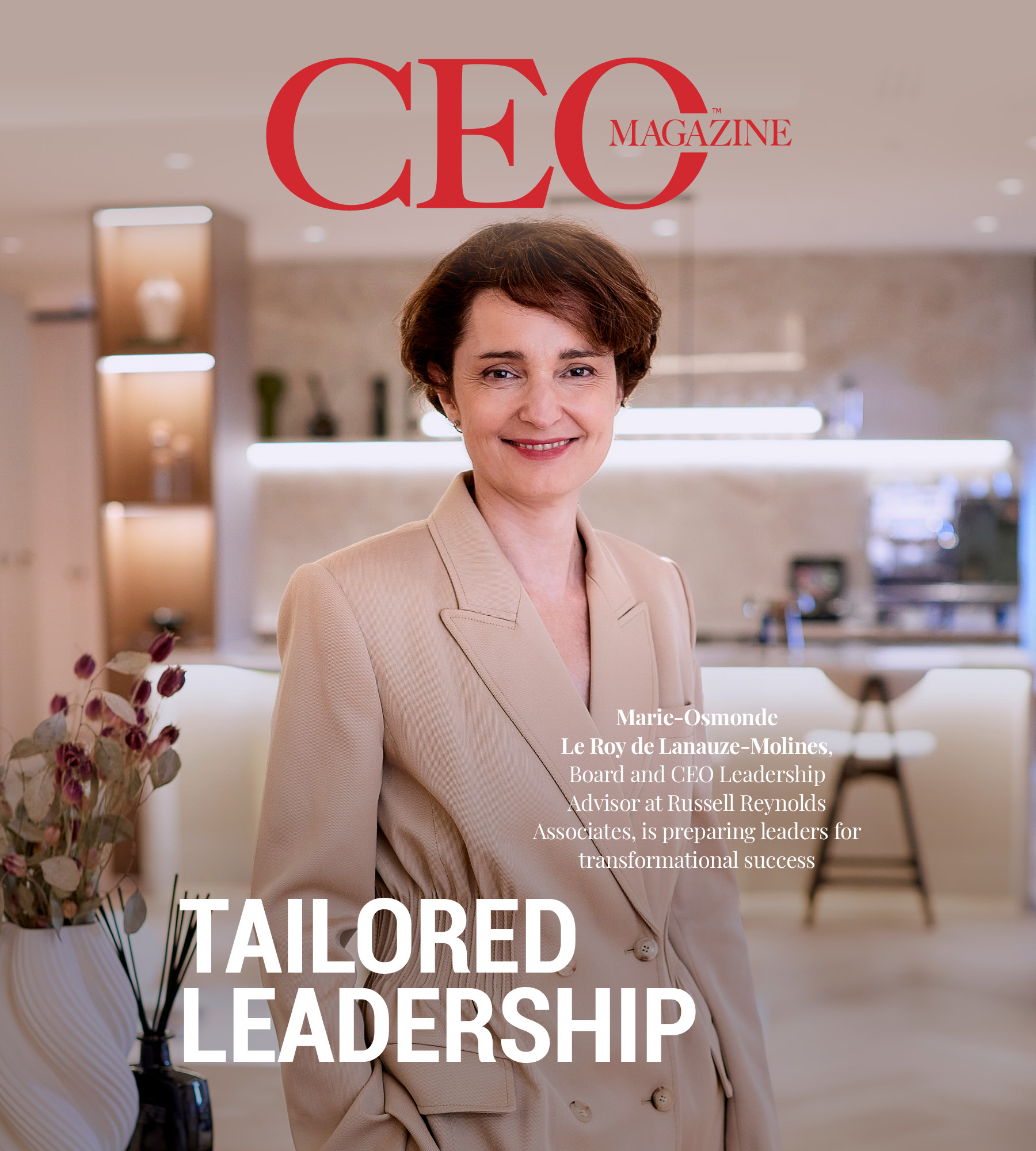
As Board and CEO Leadership Advisor at executive search and leadership advisory firm Russell Reynolds Associates (RRA), based for many years in the Paris office, it’s no surprise that Marie-Osmonde Le Roy de Lanauze-Molines draws comparisons between her role and the world of high fashion.
“What we do is the haute couture of leadership,” Marie-Osmonde tells The CEO Magazine.
Among RRA’s bespoke offerings is CEO Activation, a tailored leadership plan for the critical first 18 months in the role.
“It’s a program developed uniquely for the executive,” she adds. “It’s completely a la carte.”

“It’s about continually evolving, building trust and aligning the organization around a shared purpose.”
This structured advisory program supports new CEOs through key inflection points, such as strategy clarification, executive team alignment, board engagement and cultural transformation – laying the groundwork for long-term success.
The journey for a new CEO is not a linear checklist, but a dynamic process of adaptation and learning – as explored in Ty Wiggins’ book, The New CEO: Lessons from CEOs on How to Start Well and Perform Quickly (Minus the Common Mistakes). Wiggins challenges the conventional ‘first 100 days’ approach, emphasizing the importance of ongoing, context-driven leadership that evolves with the complexities of the role.
As Marie-Osmonde notes, “The real work begins after the appointment. It’s about continually evolving, building trust and aligning the organization around a shared purpose.”
As CEO turnover continues to evolve, 2024 saw 73 percent of CEOs recruited internally and 22 percent of departures resulting from planned succession processes, according to RRA’s Global CEO Turnover Index. In this context, such a platform has never been more important, especially for leaders hired to drive transformation.
“We work on the relationship between the CEO and the chair on the two elements that are critical: trust and collaboration,” she says of the program.
“It’s a game-changing journey, because not only does dysfunctional governance cost a lot of money, but it creates a lot of disturbance in the organization and can damage its reputation,” she says.
As Marie-Osmonde explains, CEOs leading organizations through disruptive transformation require a specific mindset.
“You have to think about what your levels are, which are tangible, and what your enablers are, which are intangible. You have to ask how you influence the board – and partner with it – because you have some very complex decisions to make,” she says.
What makes it all the more intricate is the fluid nature of change.
“It’s moving all the time,” she says.
That’s why she makes sure to have weekly calls with the CEO to review every topic.
“We rebalance, refine the equilibrium.”
The secret power of RRA is to help the client see the unseen and to make the intangible tangible. For that, it turns to robust data points and Leadership Portrait – a proprietary, research-driven model that brings a new level of precision and predictive power to executive assessment.
“When we assess a profile, we use Leadership Portrait, which goes far beyond traditional psychometric tools. It’s a multilayered, predictive approach that evaluates not only competencies and experience but also growth factors like curiosity, resilience and systems thinking, as well as deeper elements such as self-knowledge, values and the legacy a leader aims to leave,” she says.
“We apply the same rigor to the organization’s ecosystem, conducting extensive research into what it means for the CEO to have a healthy organization.”
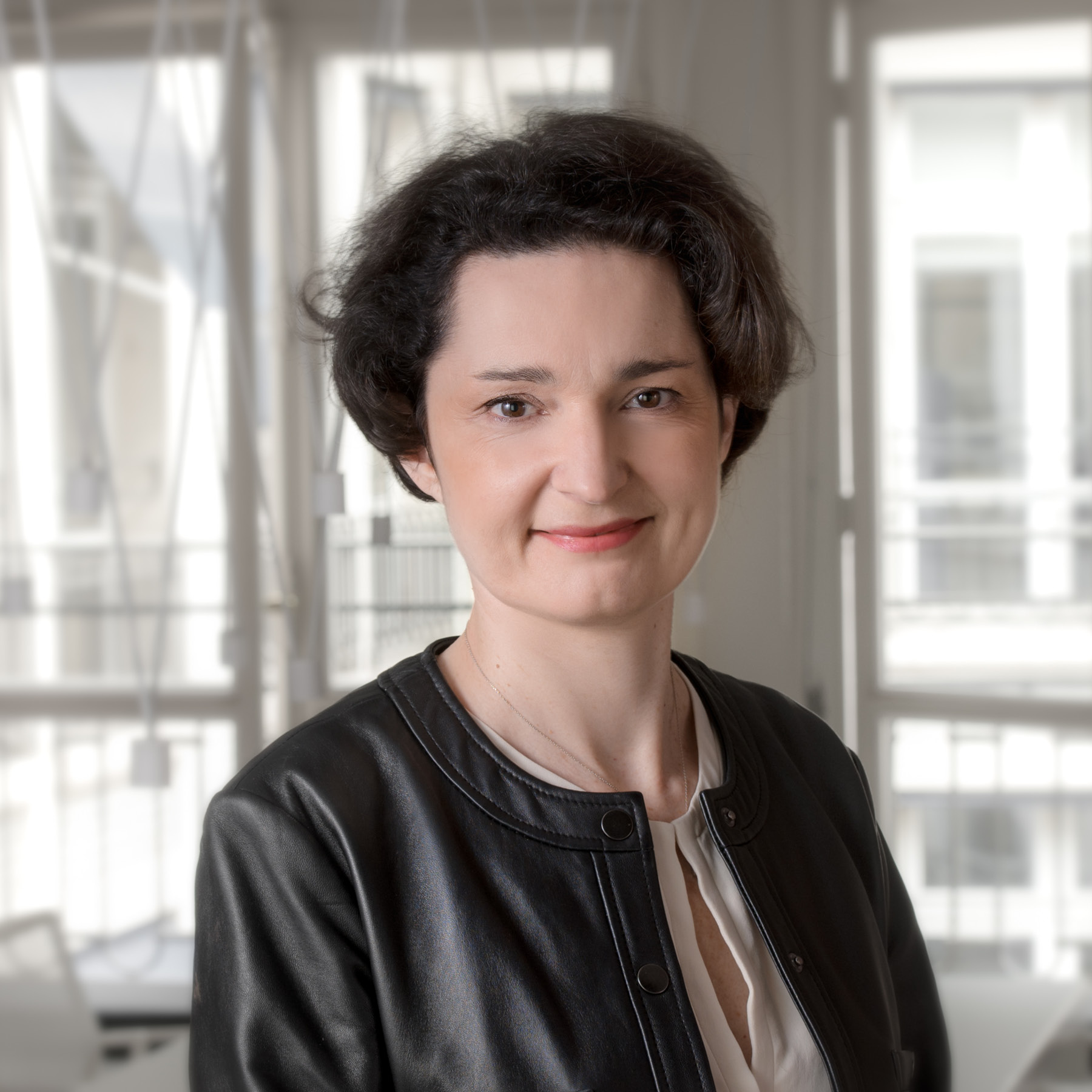
“CEO preparation is complex and without these external eyes to challenge you, you have some blind spots.”
Through surveys and interviews, the company gathers information to help the CEO understand three questions: the ‘why’ – ‘Why this organization exists, what’s its raison d’etre?’; the ‘who’ – ‘Who is the leader you want to be, how are you going to assess and develop talent, what does success look like?’; the ‘what’ – ‘What is your organization, your culture and your ability as an organization to be a learning organization?’
With these tangible data points, the team compares and contrasts the perception of the CEO with the perception of the key stakeholders. The gaps that emerge become the basis for the activation plan – designed to close them.
“One year later, we do the same to measure not only the financial metrics, but also how the perception of the CEO has evolved and how the CEO has closed the gap,” she continues.
Leadership has been Marie-Osmonde’s driving passion for the last 25 years, and she has carved out her reputation on helping incoming CEOs to view the entire ecosystem of an organization.
“I tell the truth, I challenge and I bring this change mindset of seeing an organization in a holistic way,” she explains.
She might illuminate the path to transformational leadership, but her way of working is also transformational.
“We go very deep to unlock a very strong self-awareness and a very broad view of every situation,” she says.

“We go very deep to unlock a very strong self-awareness and a very broad view of every situation.”
Many CEOs have fed back that, without her, they would not be where they are.
“CEO preparation is complex and without these external eyes to challenge you, you have some blind spots,” she says.
The same can be said for the services RRA provides.
“There is tremendous value for an organization in transforming the intangible into something tangible – by working on leadership at the top and helping CEOs lead at scale,” she says.
“Good leadership builds a strong organization and drives overall performance. Without the right leadership, however, the costs can be significant. That’s why the return on investment in what we do is often immediate and very real.”

 RELATED ARTICLES
 6-min read
4-min read



 Home
Home
 Podcasts
 Covers
 Be Featured
 Community